Where wild things live
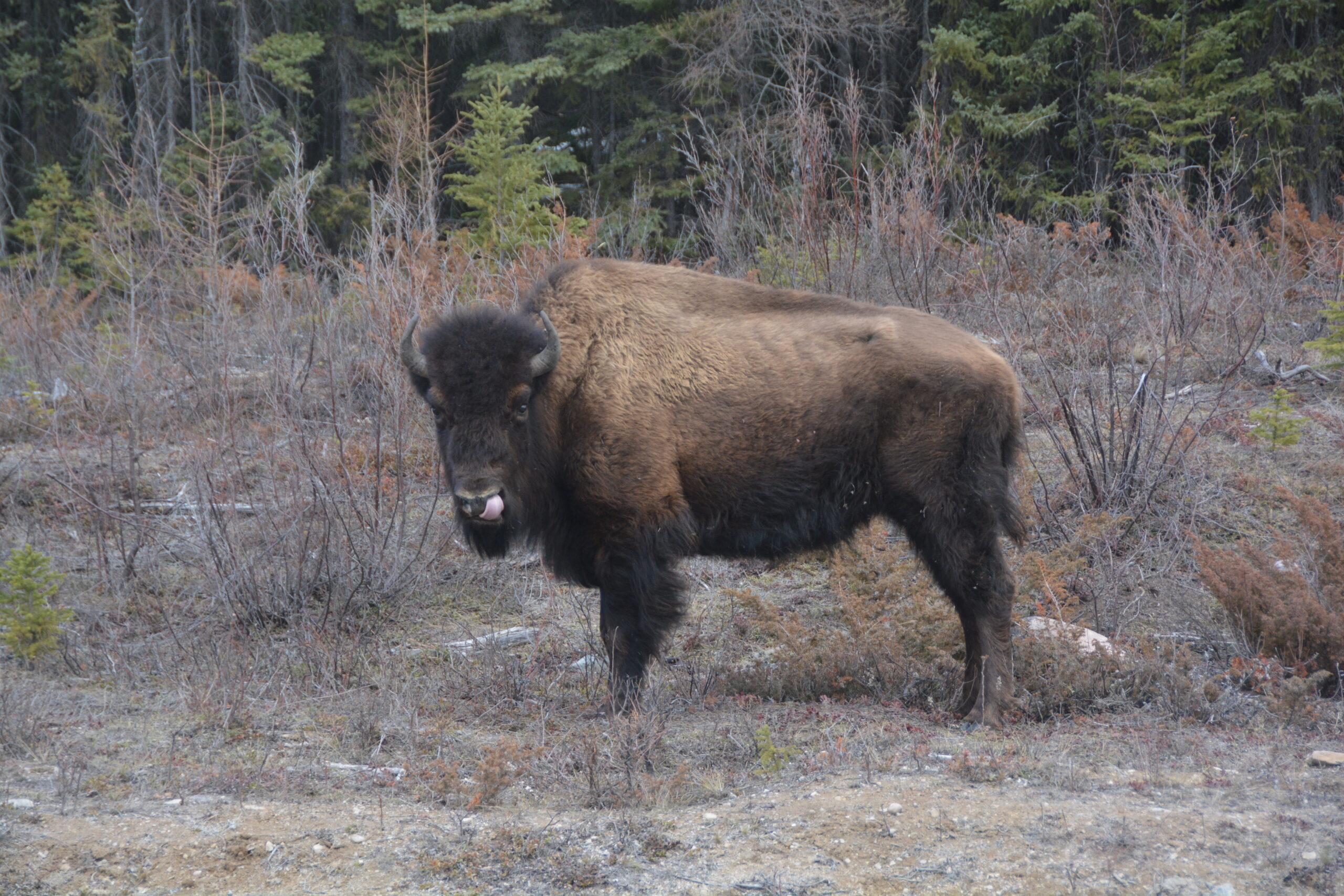
There can be nothing wilder and more remote than the furthest northern reaches of Canada. In a place where winter can last eight months and where small communities, usually home to First Nations people, live a harsh, resourceful and simple life. And mixing in with the endless boreal forests, huge rivers and open plains are a wonderful array of animals such as bears, moose, bison, beavers and wolves. It is definitely where the wild things live.
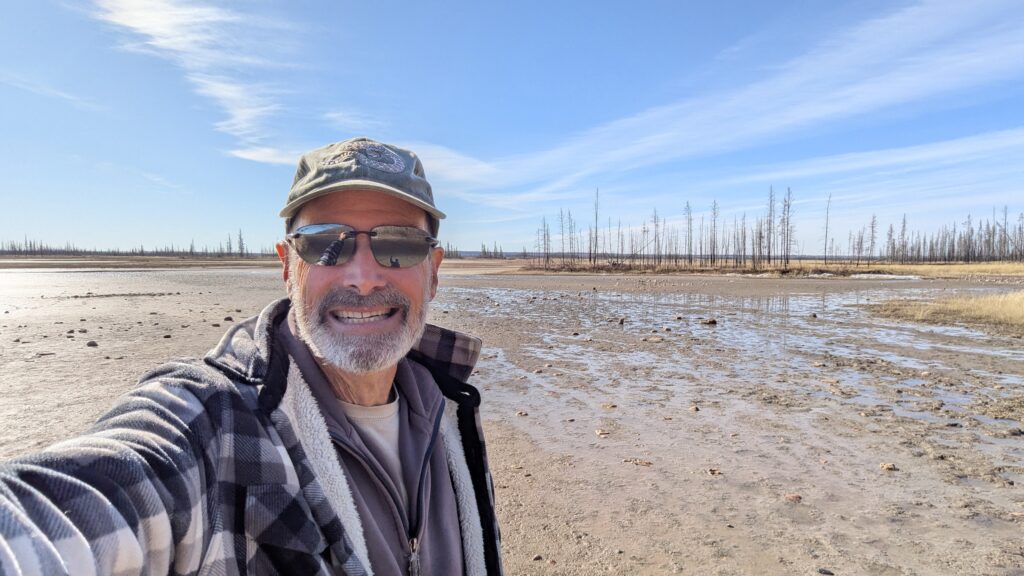
Inside Wood Buffalo Park there was a side track which took us to what they called the Salt Plains. It was a great drive where we saw some cool things but salt plains was not one of them.
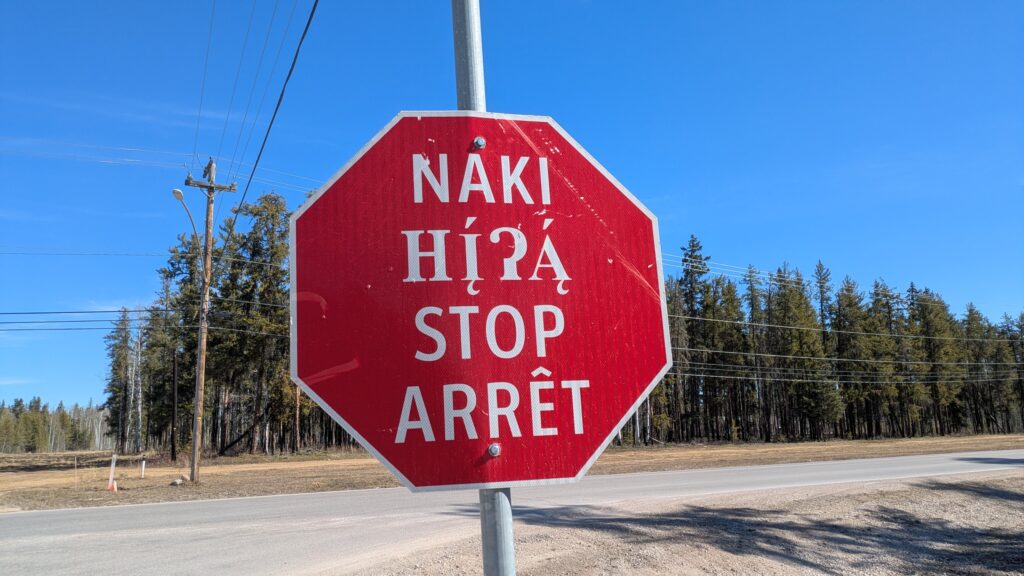
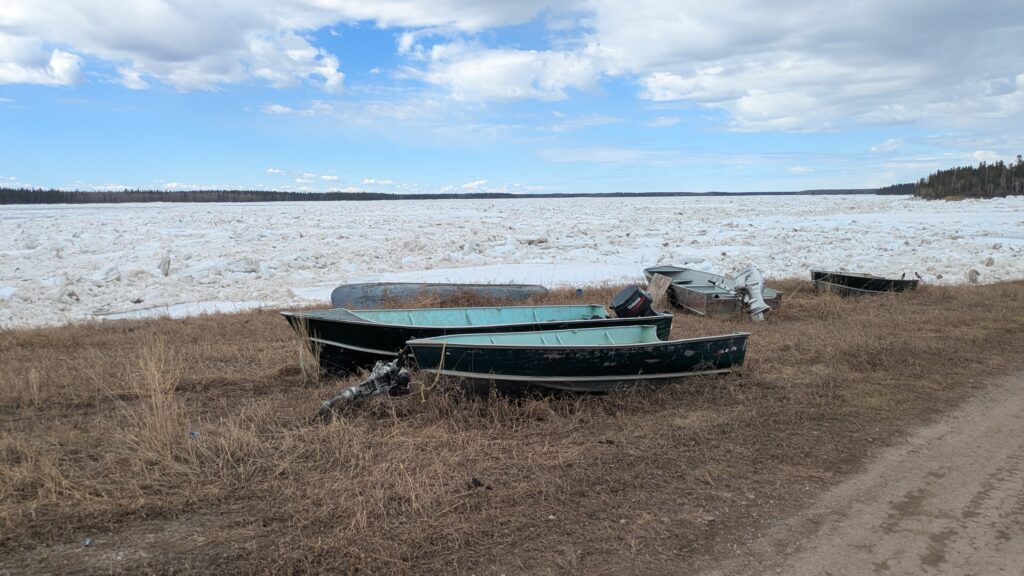
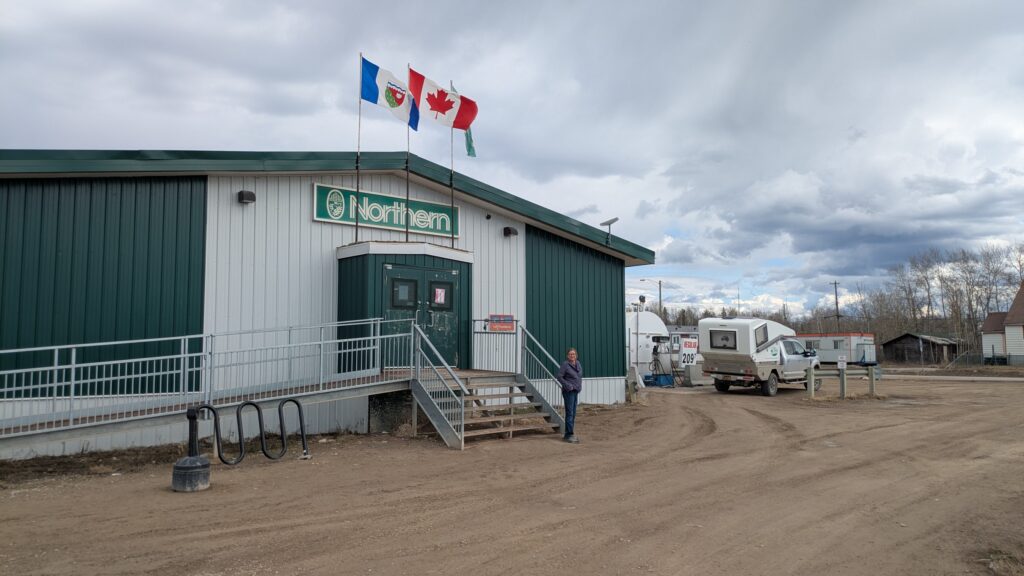
We pointed Tramp towards the remote town of Fort Smith, population about 2,000, which sits on the brown and wide Slave River before it reaches Great Slave Lake. Fort Smith is a modest town, that’s for sure, with neat but unpretentious homes lining the streets, some government buildings, a bank or two, an impressive conference centre, a couple of grocery stores and one petrol station. Fancy, no.
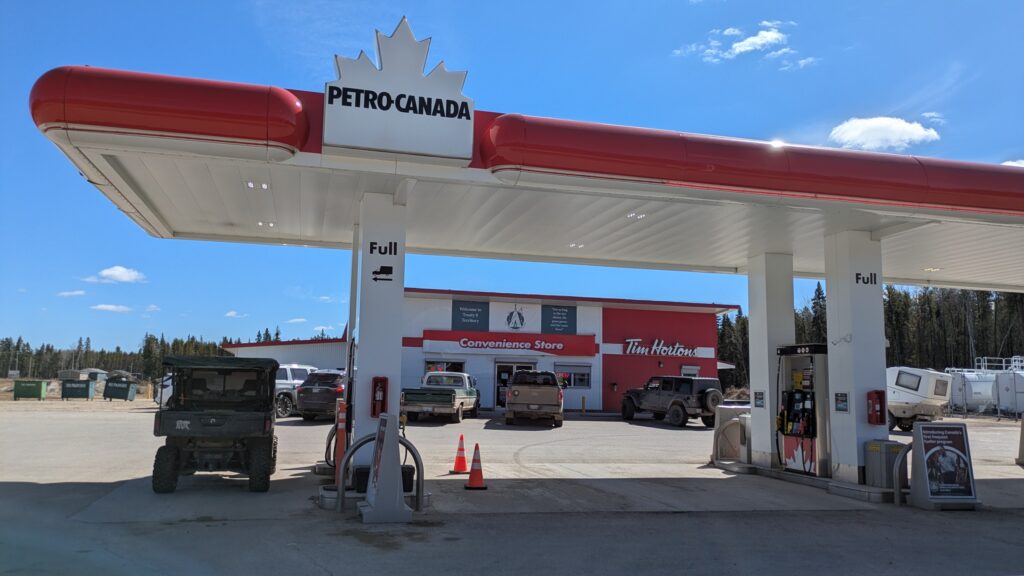
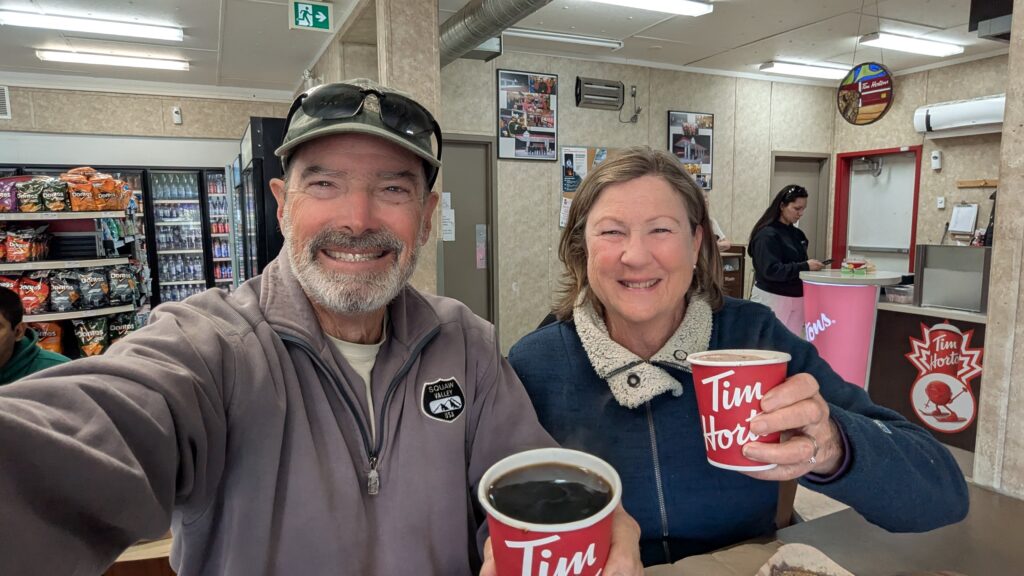
We were told by perhaps a jealous resident of the larger town of Hay River that Fort Smith’s claim to fame is that it has a Tim Hortons. Tim Hortons is chain of coffee shops that has permeated all towns of merit in Canada (it’s outlets outnumber both Starbucks and McDonalds by three to one) and is an absolute institution in the country, for better or worse. So of course we had to go to our first Tim Hortons when we were in Fort Smith.
Our caffeine fix applied, we headed further upstream through more endless forests to the small settlement of Fort Fitzgerald at the end of the paved road. Fort Fitzgerald, today with a population of six, played a critical role in the history of this area. Any goods coming upstream or downstream on the Slave River had to portage a series of rapids between Fort Fitzgerald and Fort Smith, making it a key stopover point for any trade.
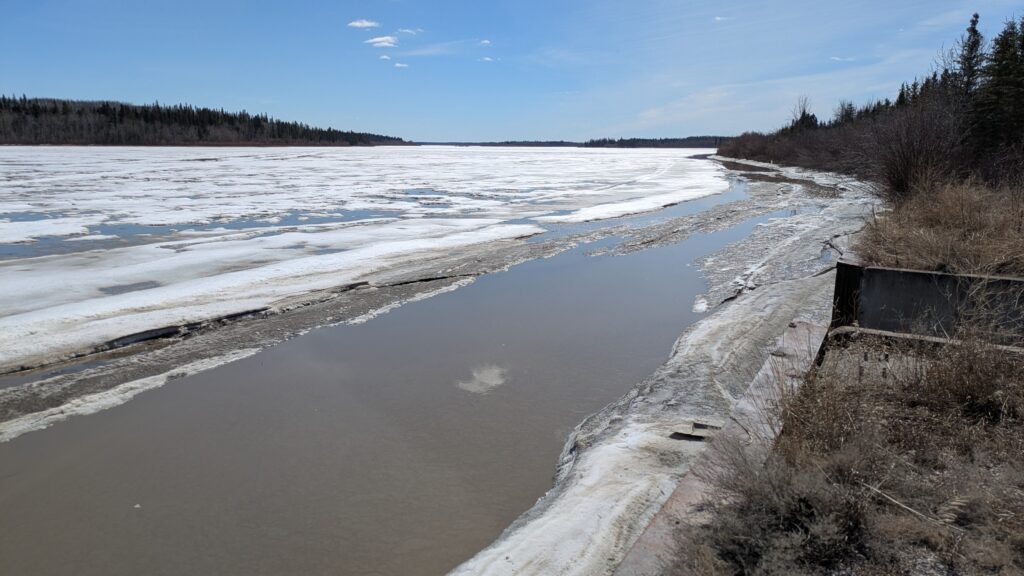
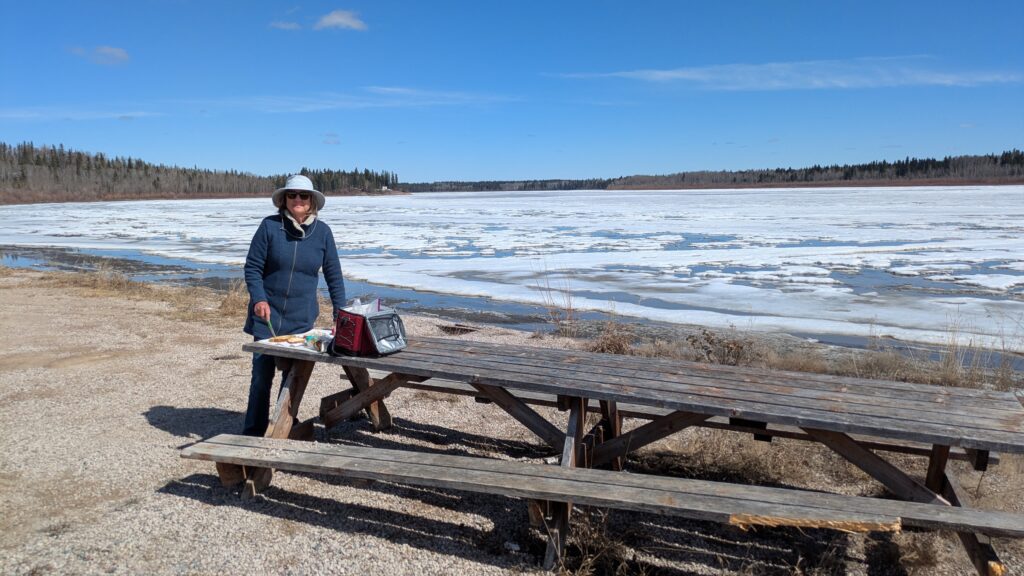
Today Fort Fitzgerald has a few modest homes, a small plaque commemorating a peace treaty between the local indigenous tribes and the new European administrators, and great views of the Slave River. While we were there we saw one pickup driving by but no other signs of life.
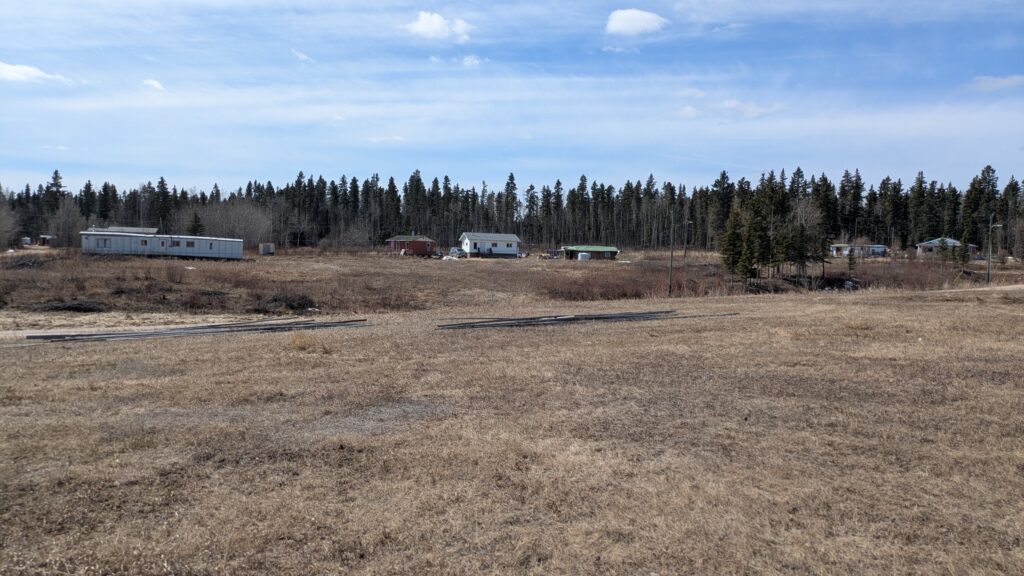
We retraced our steps to Fort Smith and then headed south (actually crossing back into Alberta) into the bowels of huge Wood Buffalo National Park. This huge park, which was devastated by fires a couple years ago, is the home to thousands of wood bison (as opposed to plains bison which are further south). And yes, they are officially and technically bison even though everyone, including governments, still call them buffalo. Whatever.
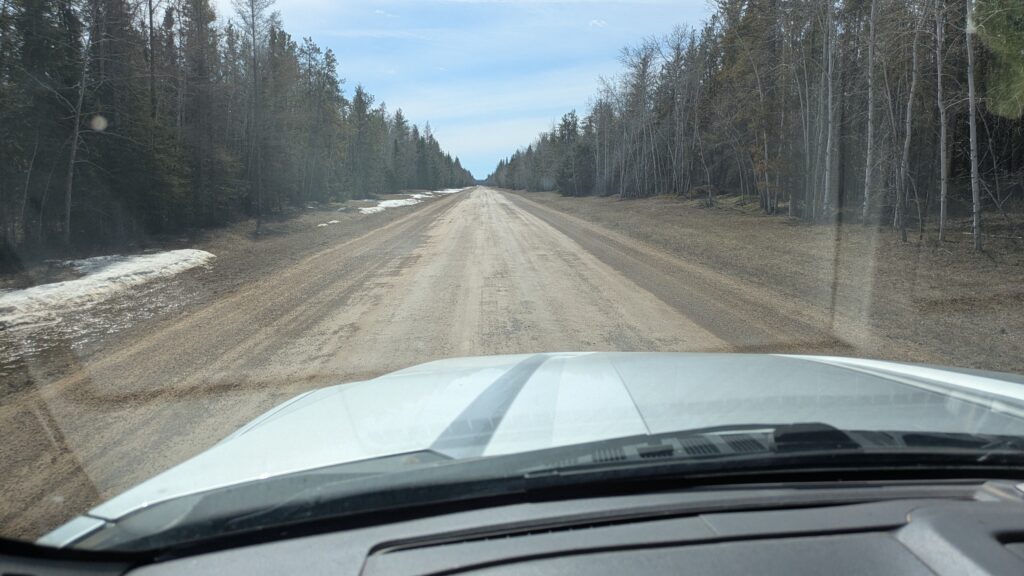
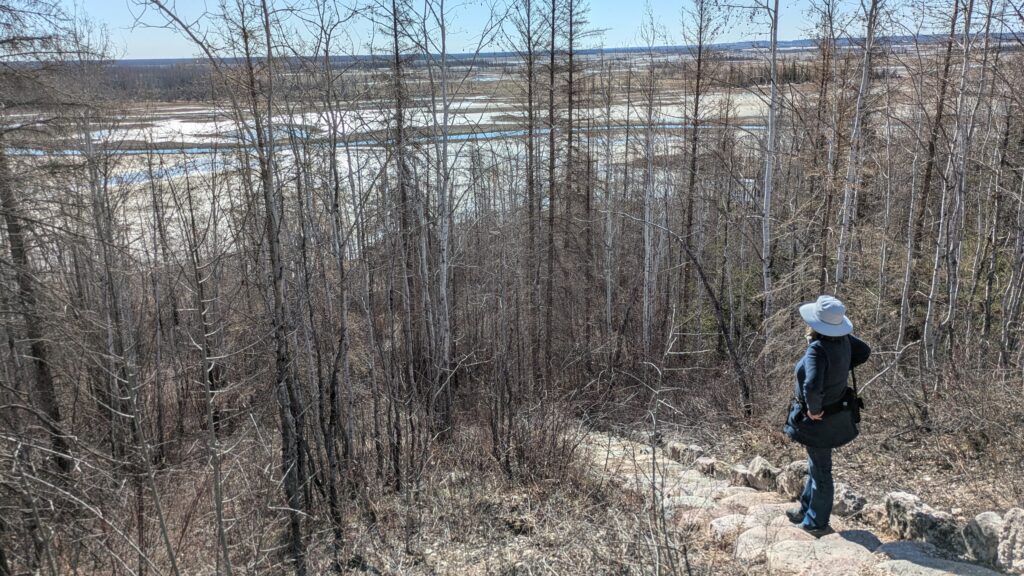
We drove over 200 kilometres (120 miles) along mostly straight road through more of the endless – and after a while, slightly tedious, boreal forest to reach our destination – Peace Point. The road ends at the cliff line formed by the huge Peace River as it slowly flows northward, eventually joining the Slave River and flowing into Great Slave Lake.
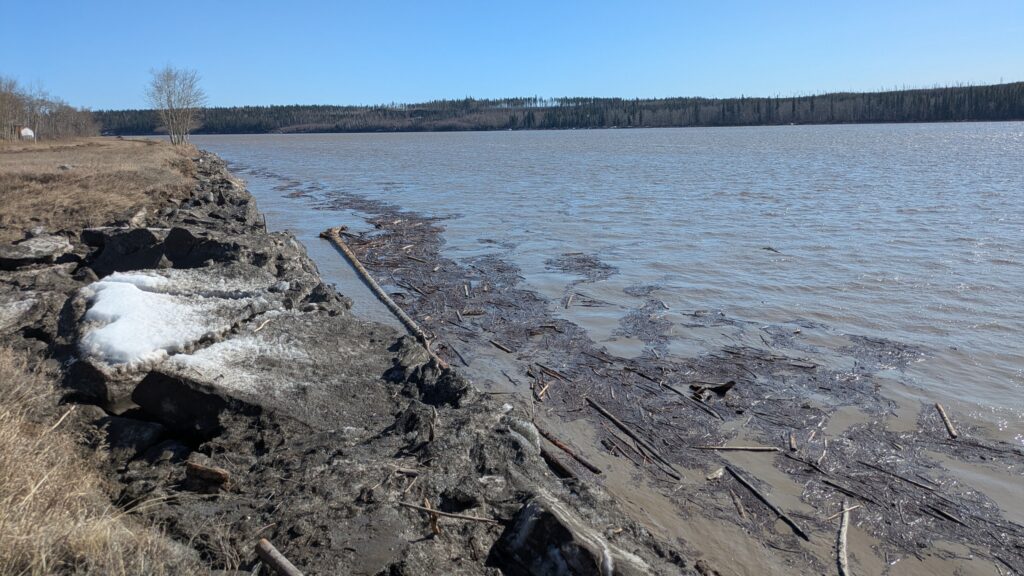
We were overwhelmed at this spectacular scene in such a remote and isolated place. We walked along the cliff edge for a while in total awe of what laid out in front of us. I just couldn’t stop saying WOW.
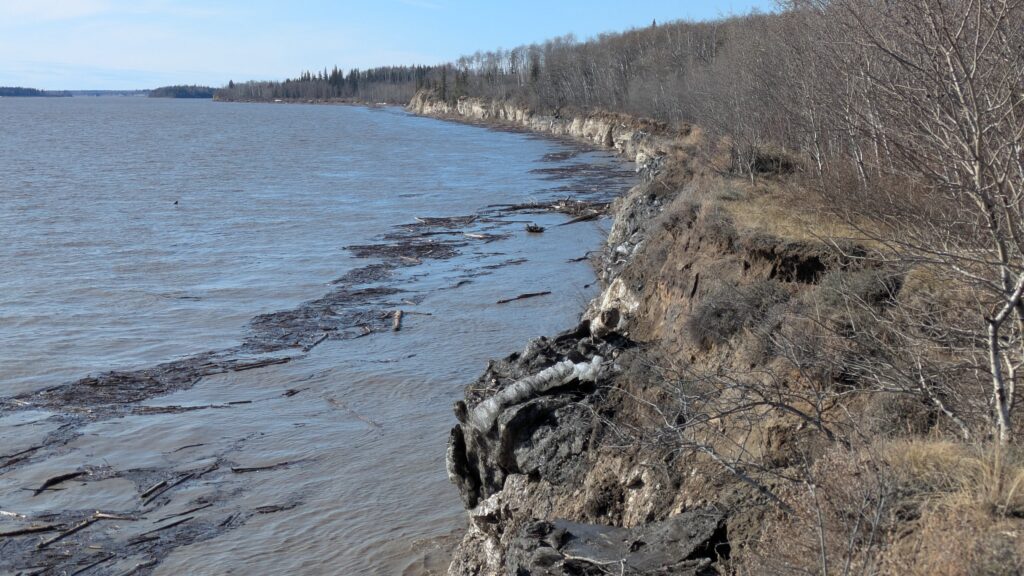
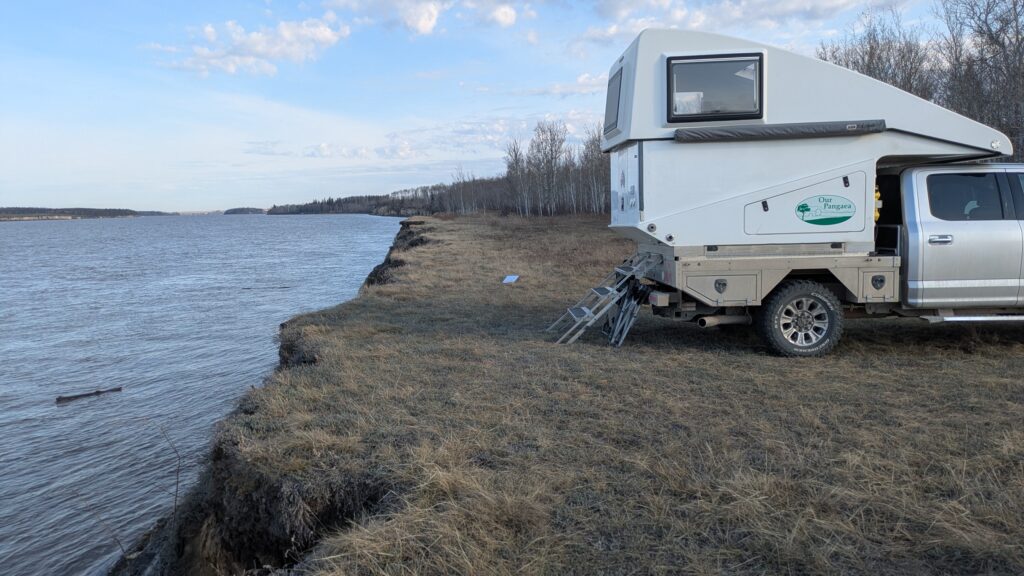
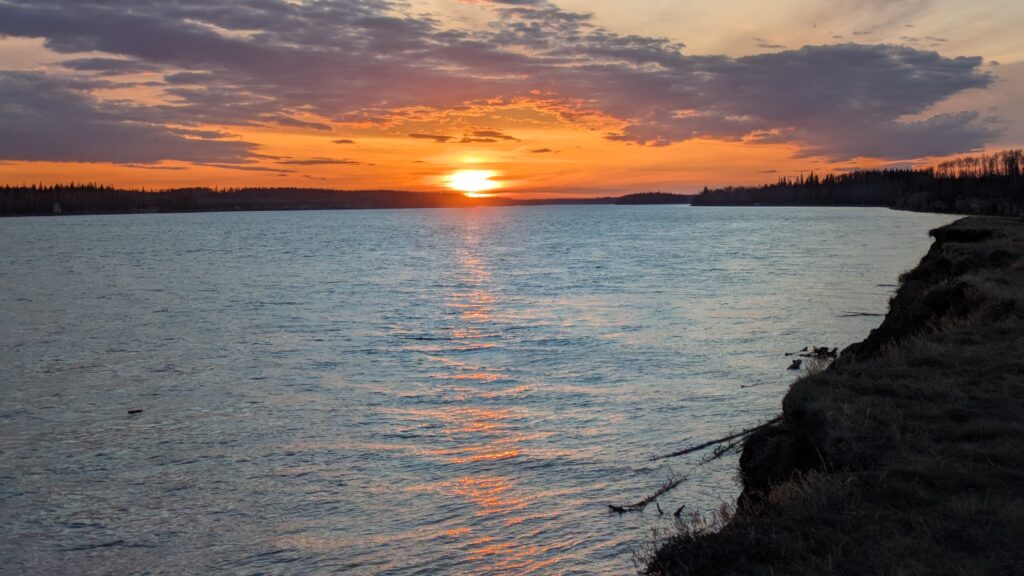
It was a slam dunk that we would camp here and we parked Tramp just metres away from the edge so we could have maximum impact from the scene. We set up our chairs and watched huge trees, large chunks of ice and a steady stream of forest debris slowly float past. I built a fire and we dined like royalty, pinching ourselves for such an experience. If you’re curious, search on Google Maps for Peace Point in Alberta and you’ll get an idea of it all.
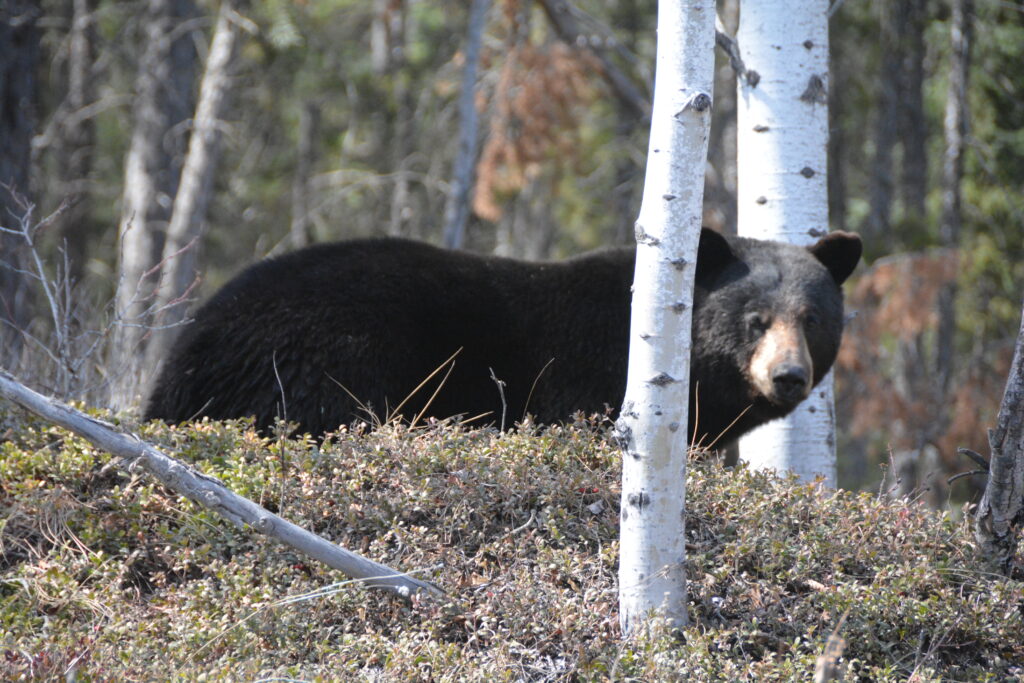
The next morning we reluctantly headed back on basically what was a 200 kilometre (120 mile) return on the same road. Within a kilometre of our camp we came across a big black bear in the middle of the road, lounging about like he owned the place. If he had been in the neighbourhood the previous night he apparently hadn’t been interested in the beautiful fillet of Walleye Julie cooked up. Bad luck for him.
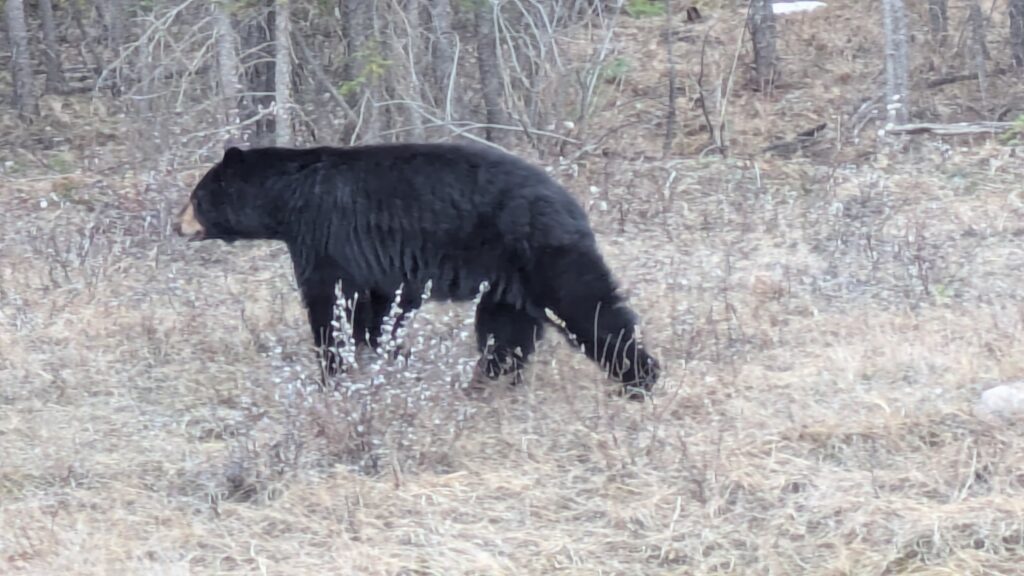
The long drive on the good dirt road through the endless boreal forest was sometimes broken by coming across small groups of bison or a couple more bears. We certainly had this long stretch completely to ourselves. In Fort Smith we refuelled and then continued on the long straight roads, pretending that we weren’t tiring of the spruce and aspen forests or saddened by the huge swathes of forests burned to a crisp two years ago.
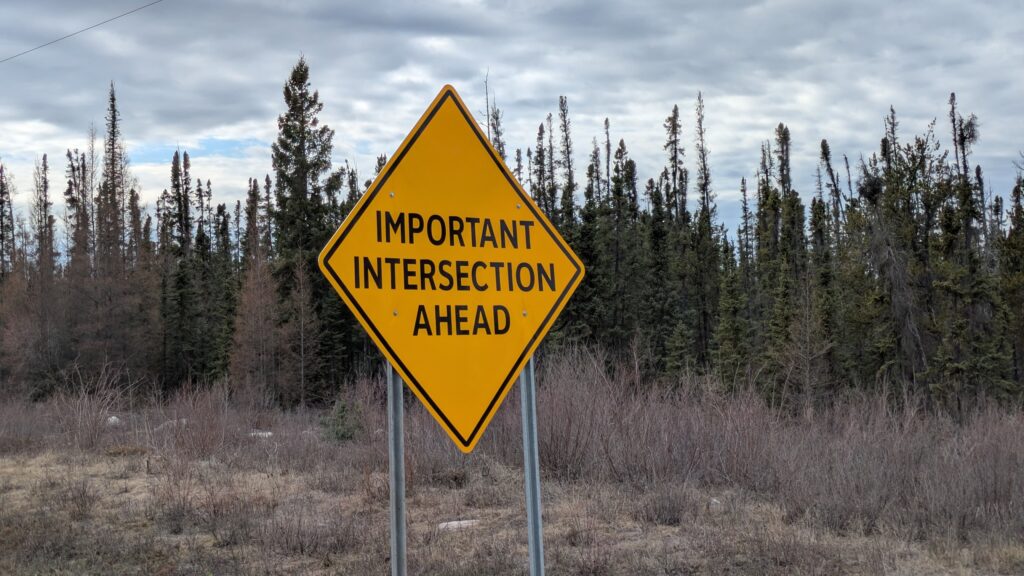
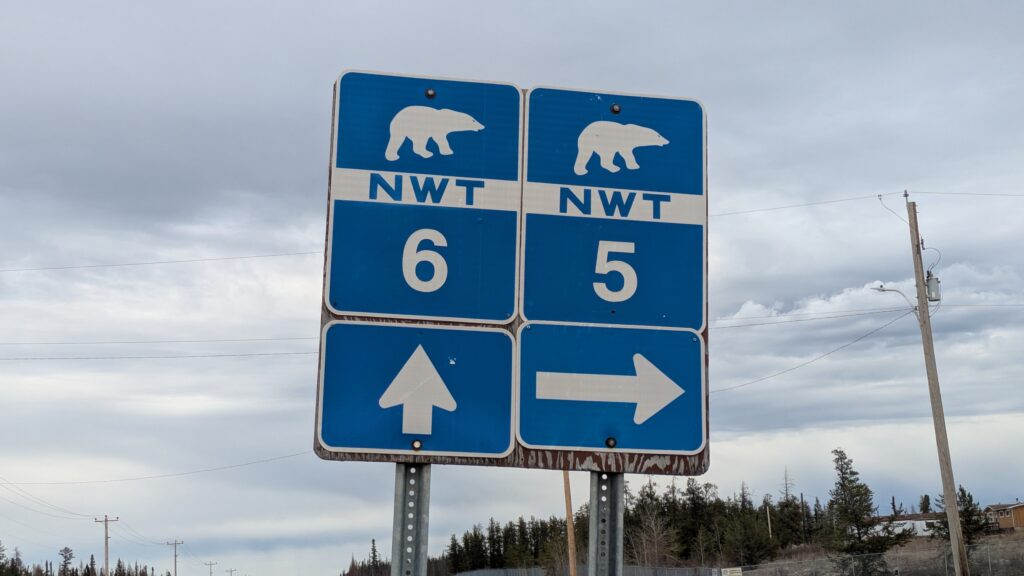
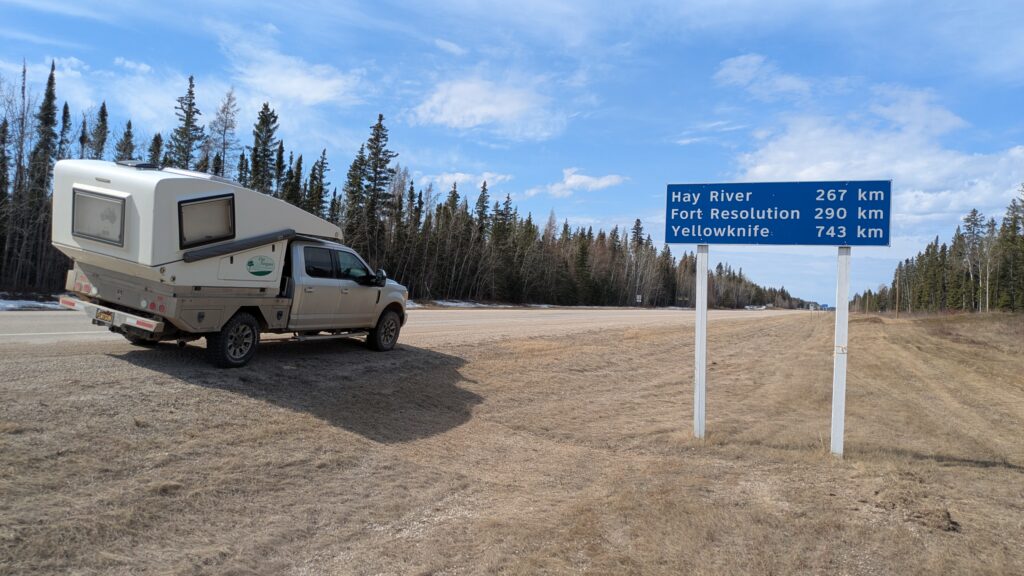
After a long day of making good time we found a quiet and private spot off the road near the Hay River and set up for the night. The frequent wildlife sightings – for after all, we are where wild things live – was the highlight for the day. And this huge wilderness area makes a magnificent background scene.
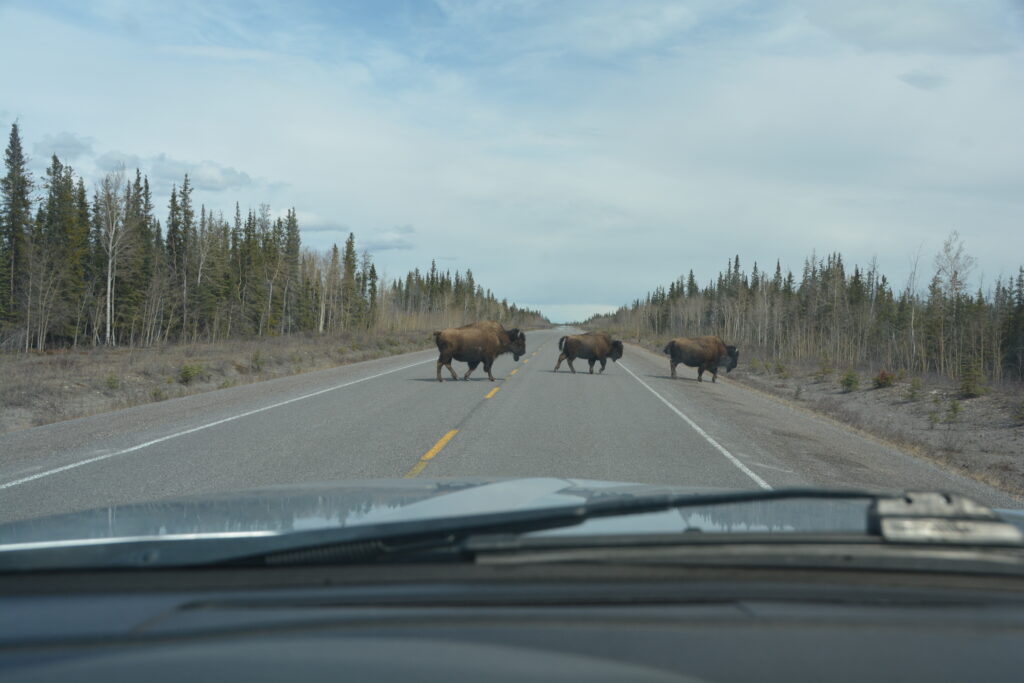
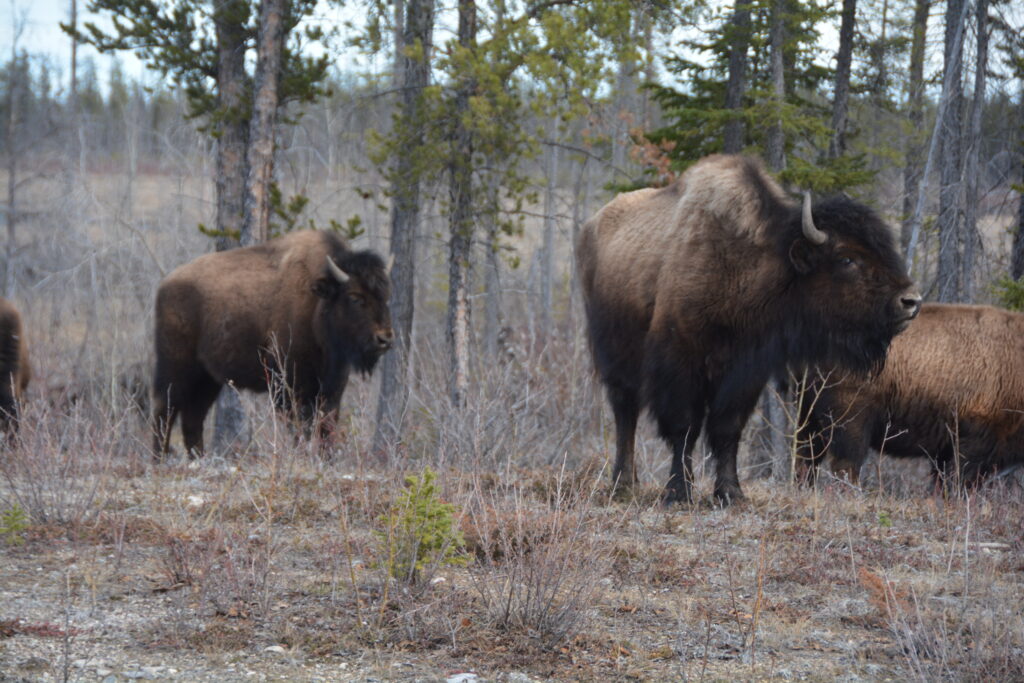
After some overnight rain, the first we’ve had on this trip, we headed towards our next major destination, the town of Yellowknife which is the capital of the Northwest Territories. But Yellowknife is inconveniently positioned on the north shore of Great Slave Lake and we were on the south shore so that meant more than a day’s driving around the lake.
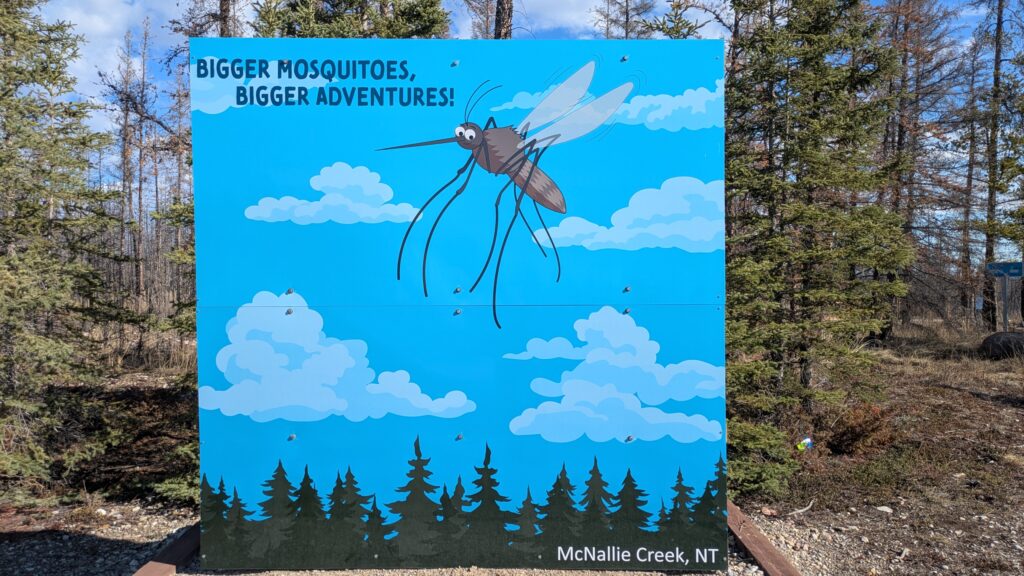
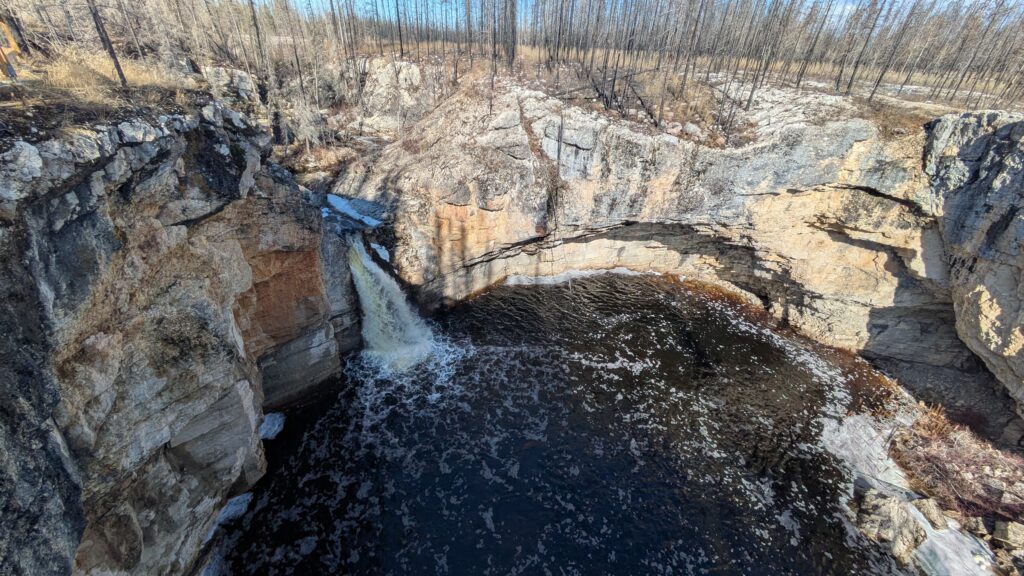
When you drive through a region with a lot of rivers you tend to have a lot of waterfalls. And when you drive through a massive bison wildlife sanctuary you tend to get a lot of…bison. On top of all that we crossed the mighty Mackenzie River, one of the powerhouse waterways in all of Canada and a real treat to see with so much ice on it.
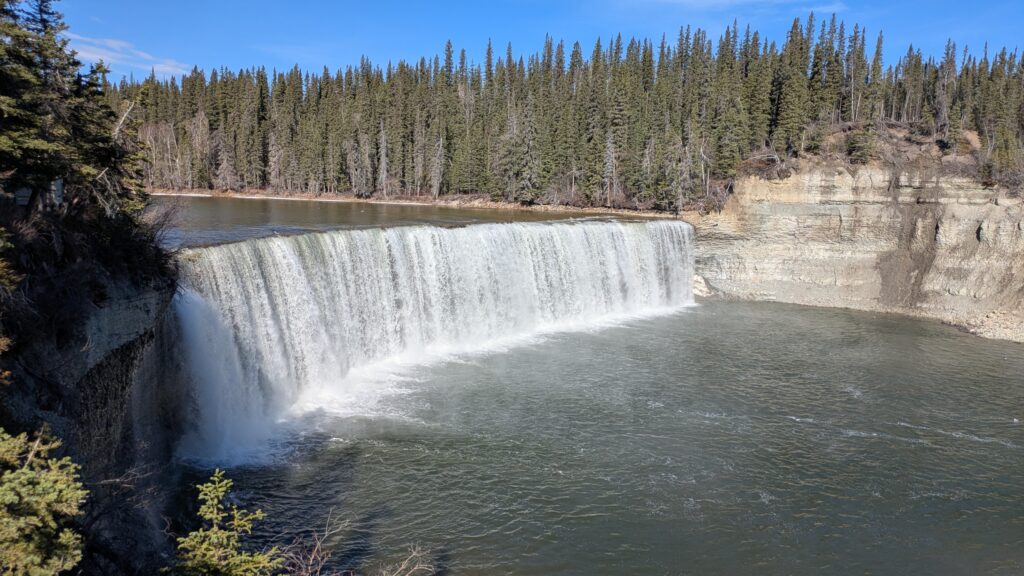
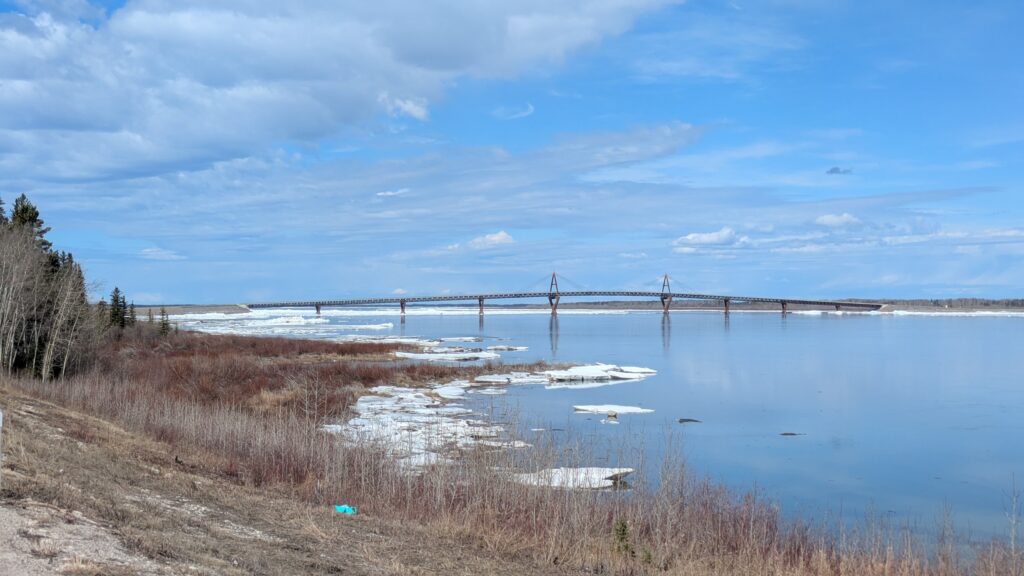
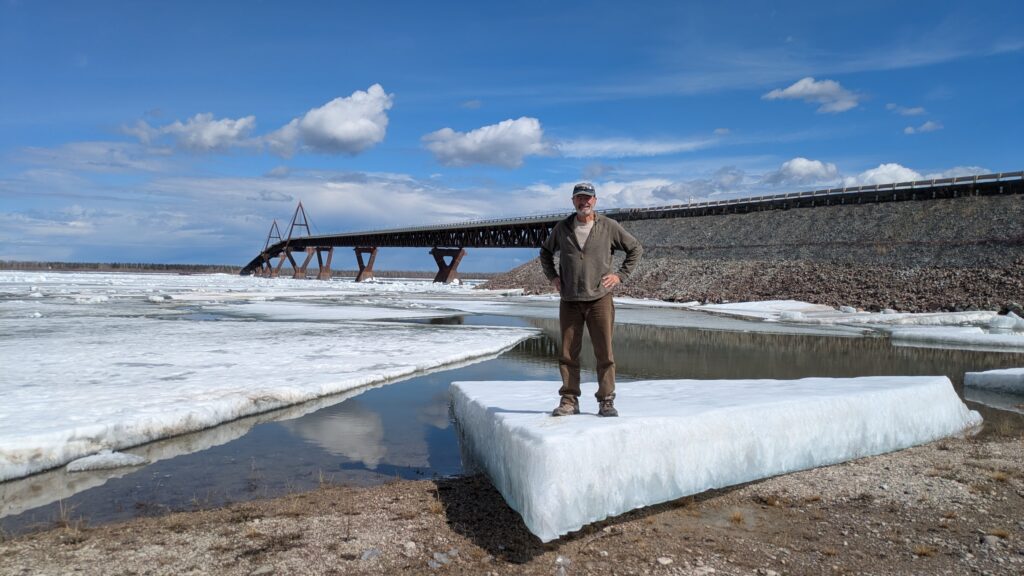
This wonderful day of driving was long but fascinating as we visited no fewer than six territorial parks which preserved land or a place, saw a couple of great waterfalls and had multiple encounters with bison. Yes, we had more unrelenting boreal forest, much much more, but we came to value the non-burned green parts of the forest because so much of it was burned.
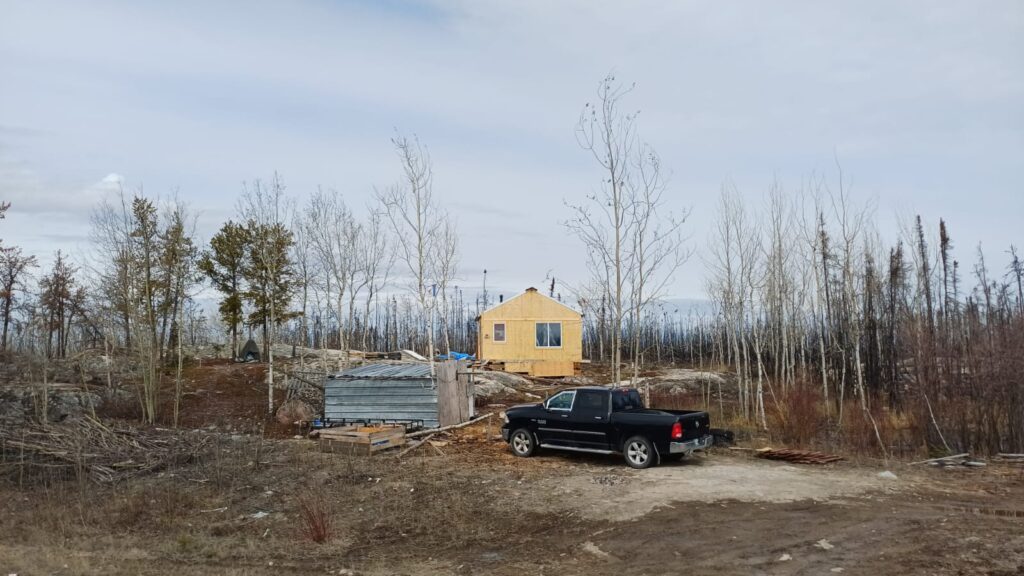
The last hundred kilometres to Yellowknife highlighted a unique feature of this land – the melting permafrost under the road means certain sections get soft and the road sinks – very unevenly – turning the ride into a wild rolly-polly twisty-turny adventure, almost roller coaster-like in parts with two hands on the wheel and a big smile on the face. Any houses on the side of the road were built on the exposed rounded rocks that rose above ground level.
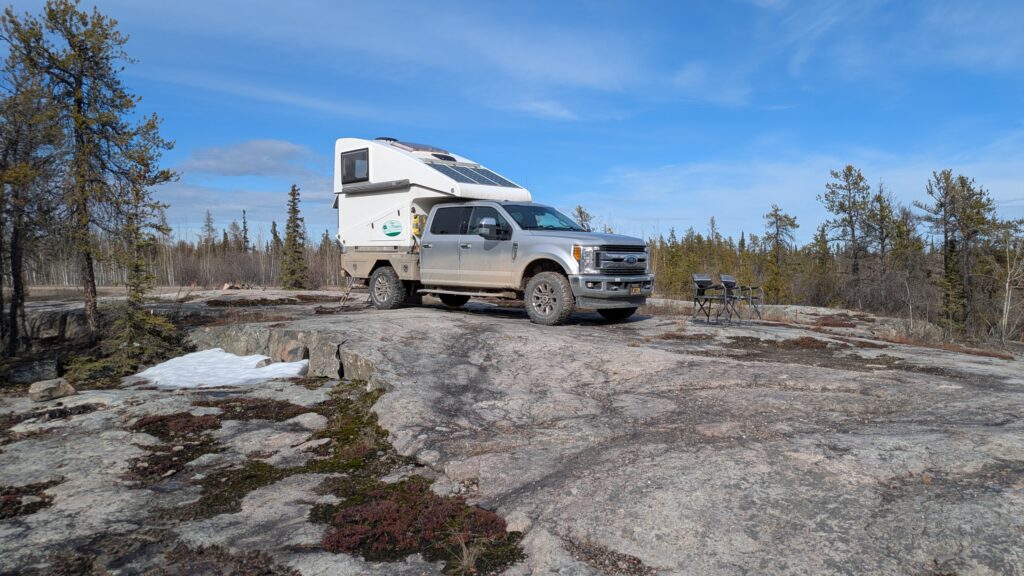
And that’s where we camped for the night – on a huge rounded granite rock that sat above the soil, Tramp the king of his castle sitting up on the highest point. What a unique and special place to spend the night.
You guys certainly know how to do remote! Just you and the wild things out there. Brilliant 😁 I’m really enjoying your travels from the comfort of my couch 😊
Hi Jan, great that you can join us, one way or another. Having travelled with you before I know you’d fit right in here. Cheers, Bill
Really enjoying your journey Bill and Julie. Very jealous of your interactions with bears and bison. When the forests burn, do they resprout like our trees or do they have to grow again from seeds?
Hi Marg, great to hear from you. We’re loving all the big animal interaction, even if some of it is from the side of the road. But we have had a bear come into our camp on two different occasions which is good for our cardio. Sadly, the spruce trees – which is the main tree in these boreal forests – do not regrow like gums back home. They have to grow from whatever seeds survived the fires and sometimes it can take decades. Hi to Col.