Yellowknife and beyond
The Northwest Territories has a population of about 40,000 people spread out across an area larger than some European countries. The Capital of the Northwest Territories is Yellowknife, itself home to about half the people who call the territory home. So up in these parts, Yellowknife is definitely the big smoke. Which is lucky because we had quite a long list of administration, repair and shopping tasks to address while we were there.
Yellowknife has been home to indigenous tribes for hundreds of years but when the fur traders arrived in the early 19th century they soon also started looking for the natural copper found in the granite rocks of the area. The locals had been using it for some of their weapons and tools, hence the name given to the area and it’s people – Yellowknife.
Yellowknife prospered in the 1930’s when gold was discovered nearby and by the 1960’s had been declared the capital of the new territory. It was then described as ‘a small drinking town with a government problem’. In 2003 diamonds were discovered nearby which gave the town another spurt of life. Then, in 2023 the entire town was evacuated because of a nearby raging fire that burned most of the neighbouring boreal forest.
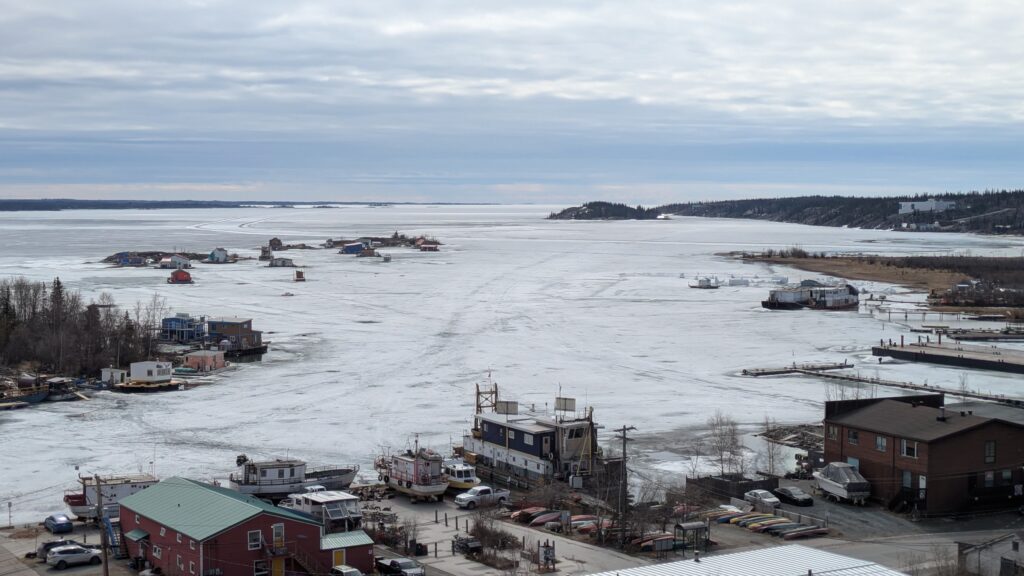
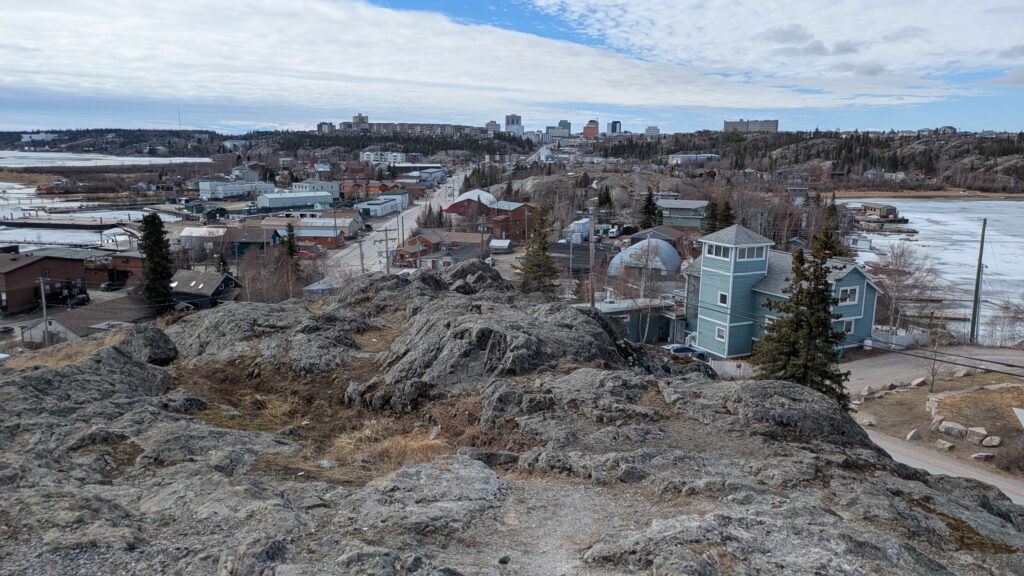
Today Yellowknife is a busy administration, cultural and economic centre for the people in this northern region. But visitors are drawn to the Old Town, where the original European structures, mainly tents, were built on the granite rocks above the lake. And it is on this highest point of the Old Town that you are awarded magnificent views of the town, the frozen lake and the mountains all around.
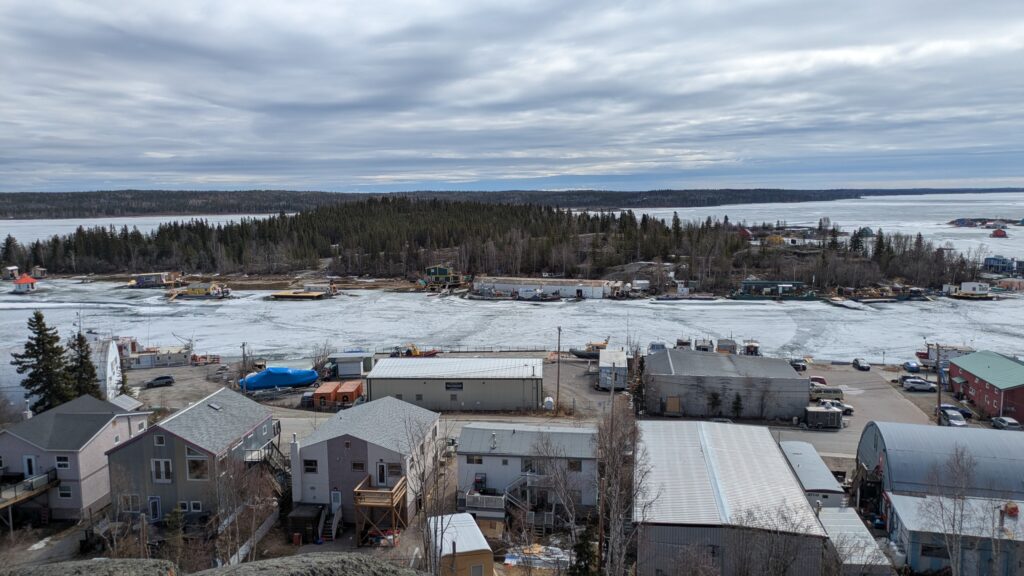
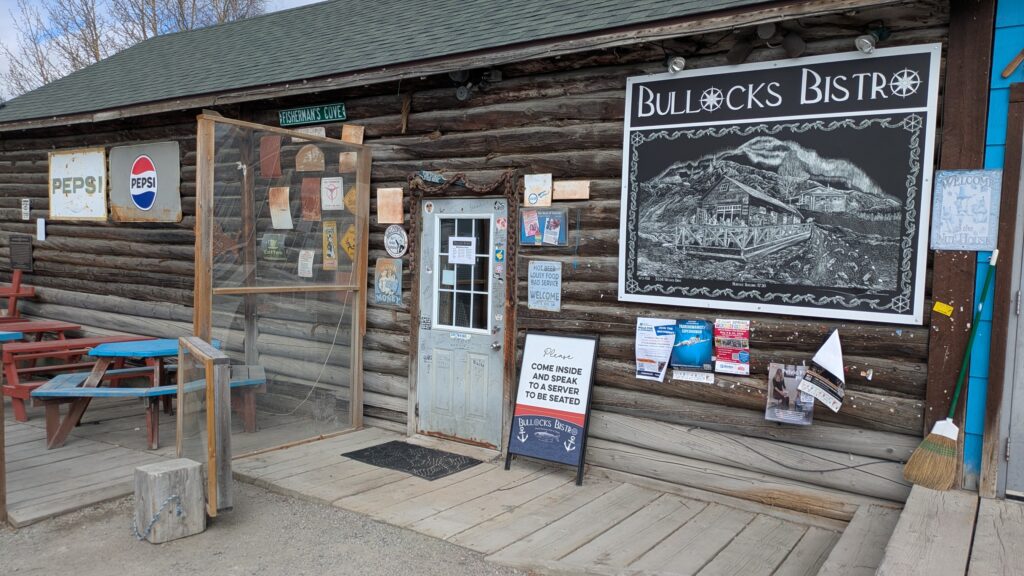
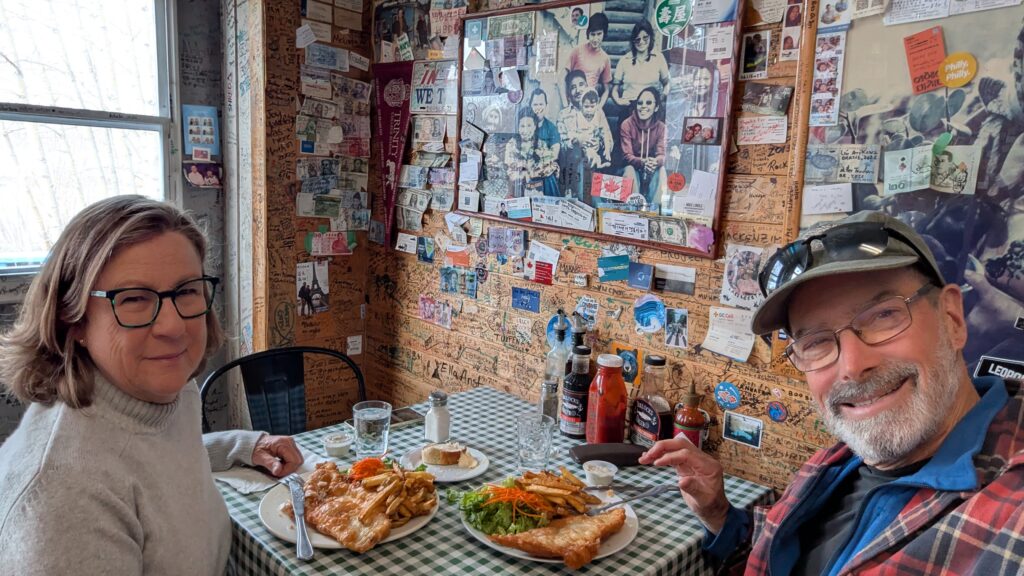
After visiting a couple of industrial shops where we had hoped to get one of our hydraulic cylinders replaced – absolutely no way despite nice guys trying everything they could to help us – we settled into a fish and chips lunch at a very cool little café in the Old Town. We were lucky because it was also the only place open in the very sleepy historic district.
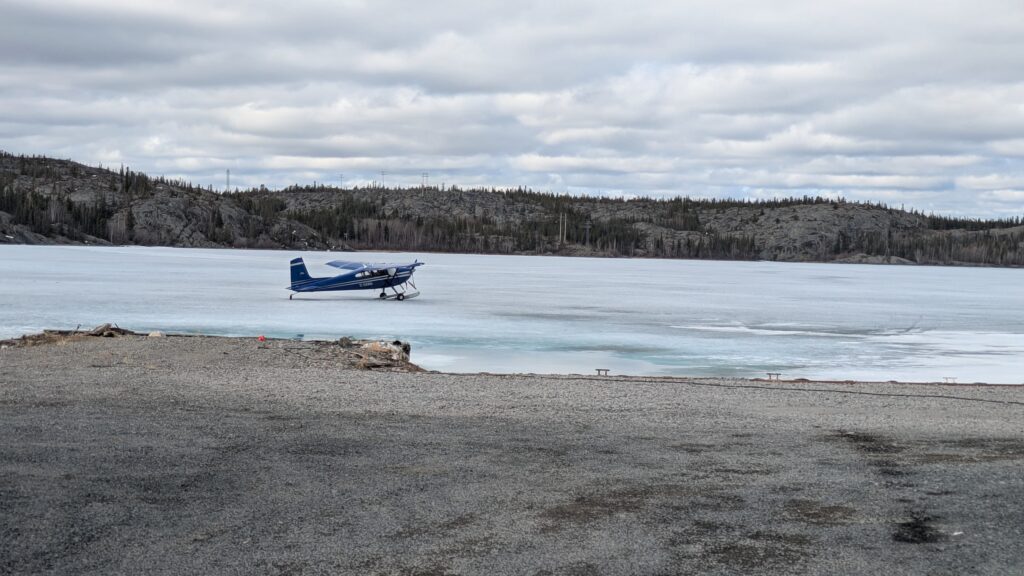
The afternoon was absorbed in the laundromat, Walmart, trying – but failing – to find water to put in our tank and other assorted duties before driving through town and camping in a gravel area north of town near the Yellowknife River. It wasn’t fancy, that’s for sure, but after a long and somewhat frustrating day we were happy to call it home.
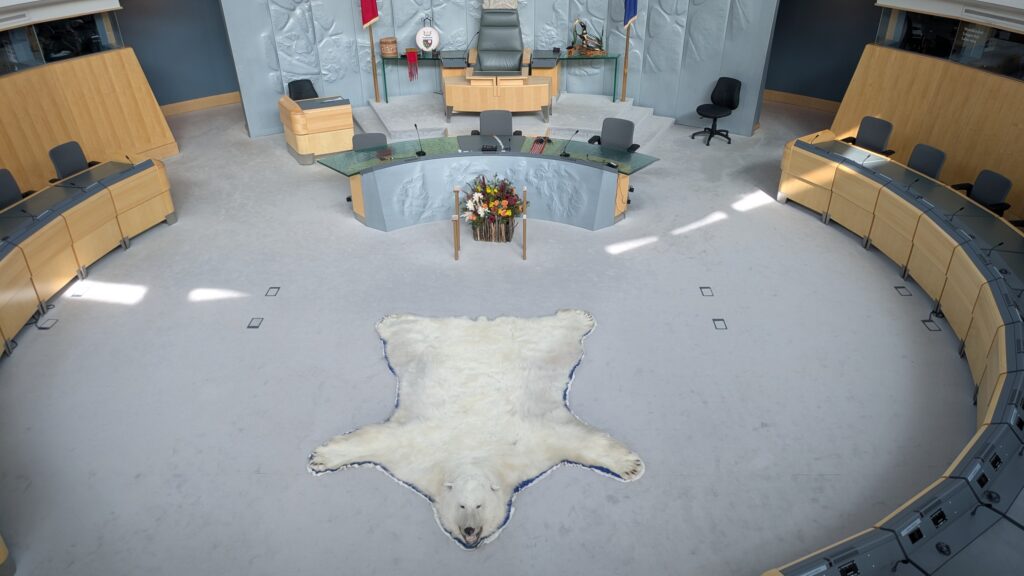
The next day we headed back into town after driving up to Prosperous Lake and spotting a pair of bald eagles, and visited the Legislative Assembly, a handsome building which houses of the government of the land.
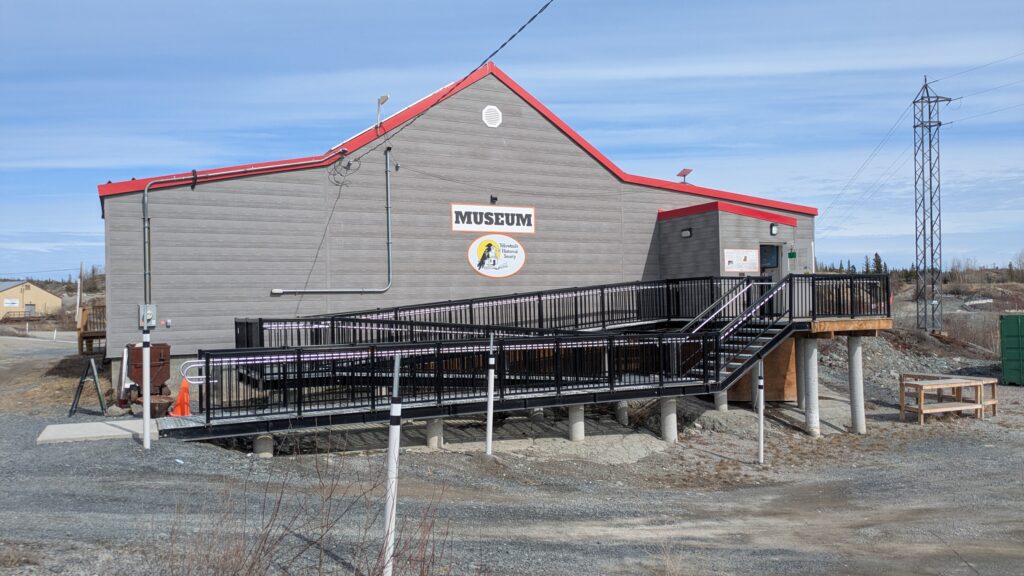
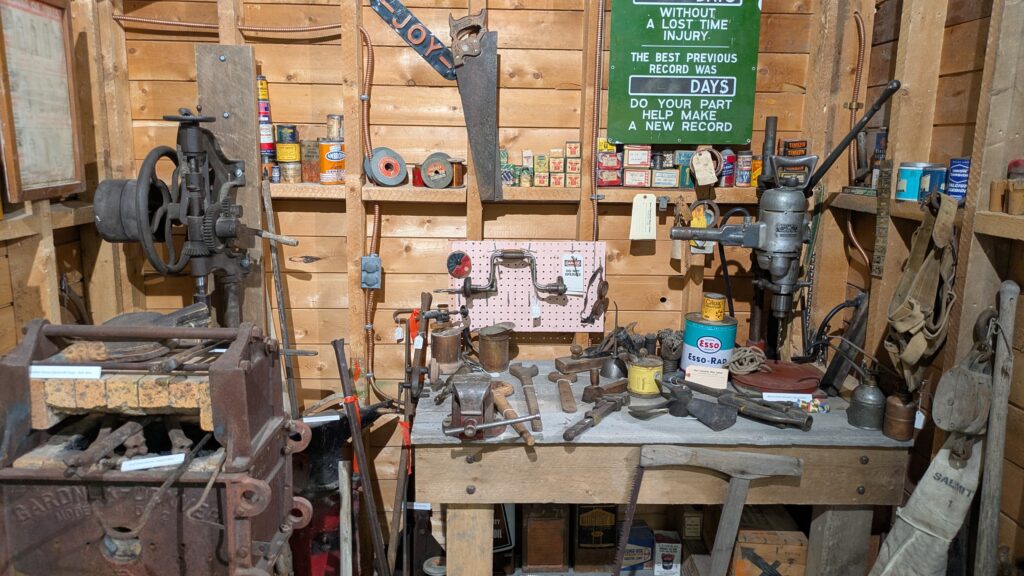
We also took in the nearby Yellowknife Historical Museum which mainly celebrated the colourful – and at times challenging – birth of Yellowknife in the 1930’s during the mining boom and how a thriving community coped with such isolation – there were no roads to the town at that stage – and became the city it is today.
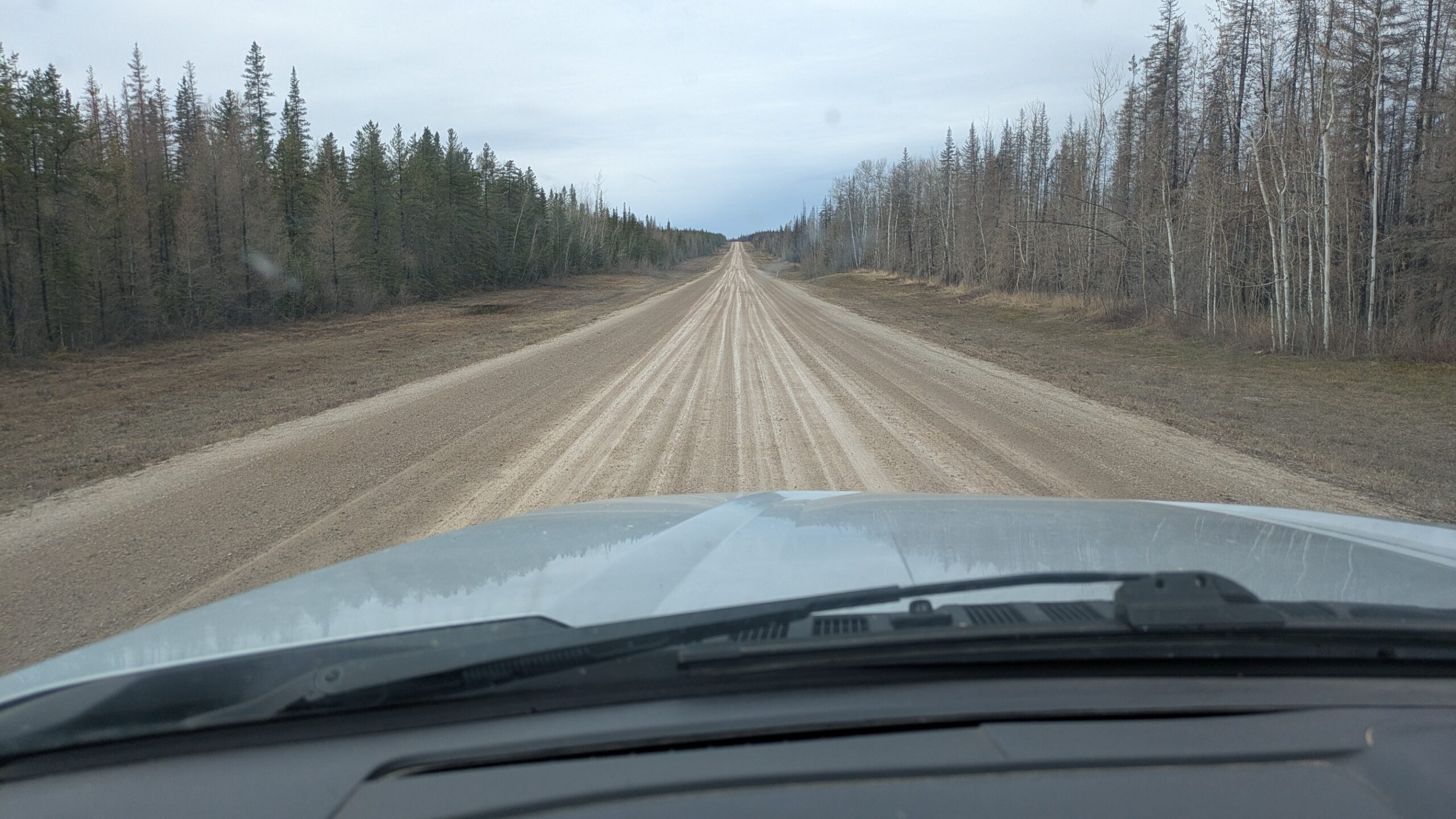
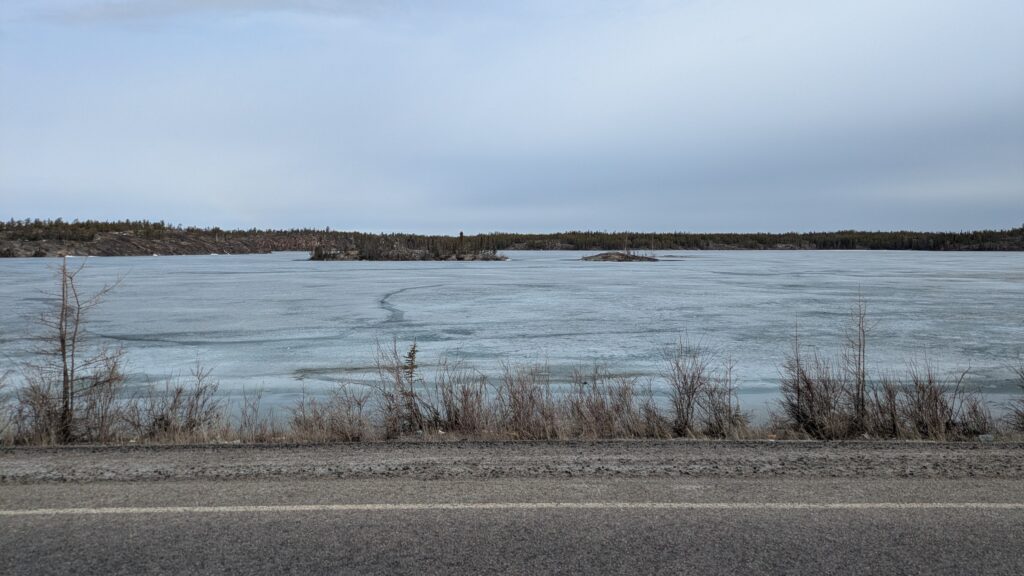
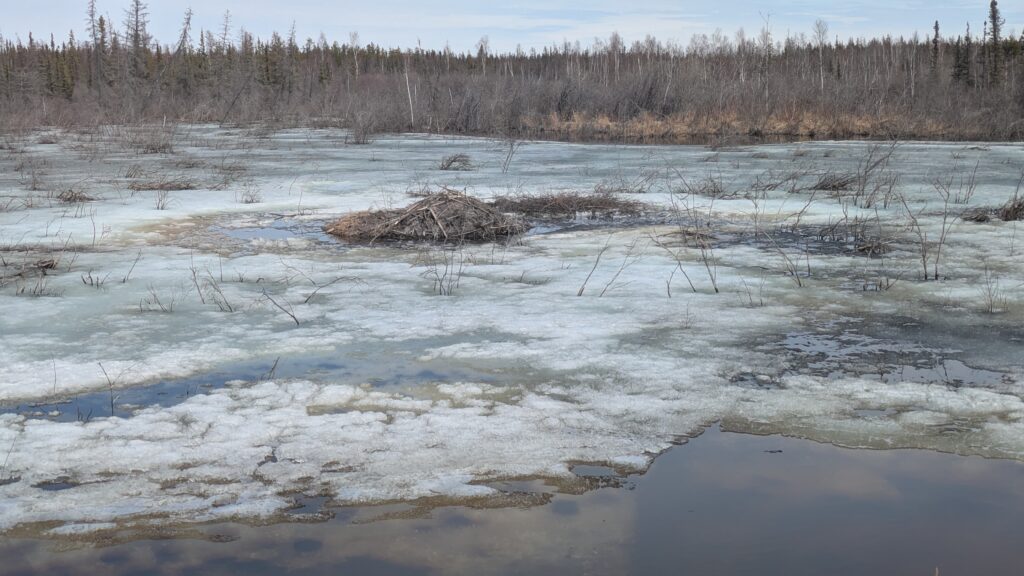
After stocking up on supplies, including bottled water because we couldn’t fill our tank due to frozen pipes, we headed back out the long road we came into town on. After about three hours of riding the rolly-polly road, buckled by melting permafrost and soft soggy ground, we called it a day next to a very pretty but frigid lake, the wind whipping through the area, wind chill around freezing. It was a cosy night inside for us, warmed by our heater and the sight of a lone moose wandering by.
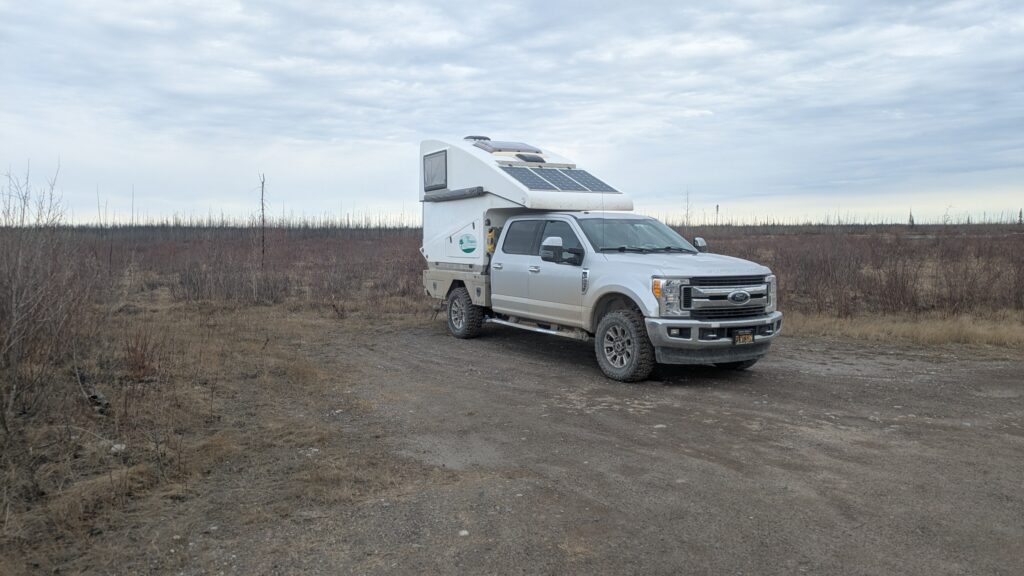
Our goal over the next ten days or so was to head westward when the roads permit it, taking a few detours when the mood strikes us, and camp in the wild when the day is over. We knew we were facing long roads, some of them unpaved, with hundreds of kilometres each day but would eventually hit Whitehorse in the Yukon Territory and after that Fairbanks in Alaska. To give you an idea of these distances, the most direct roads from Yellowknife to Fairbanks is 2,900 kilometres or 1,800 miles. Yikes.
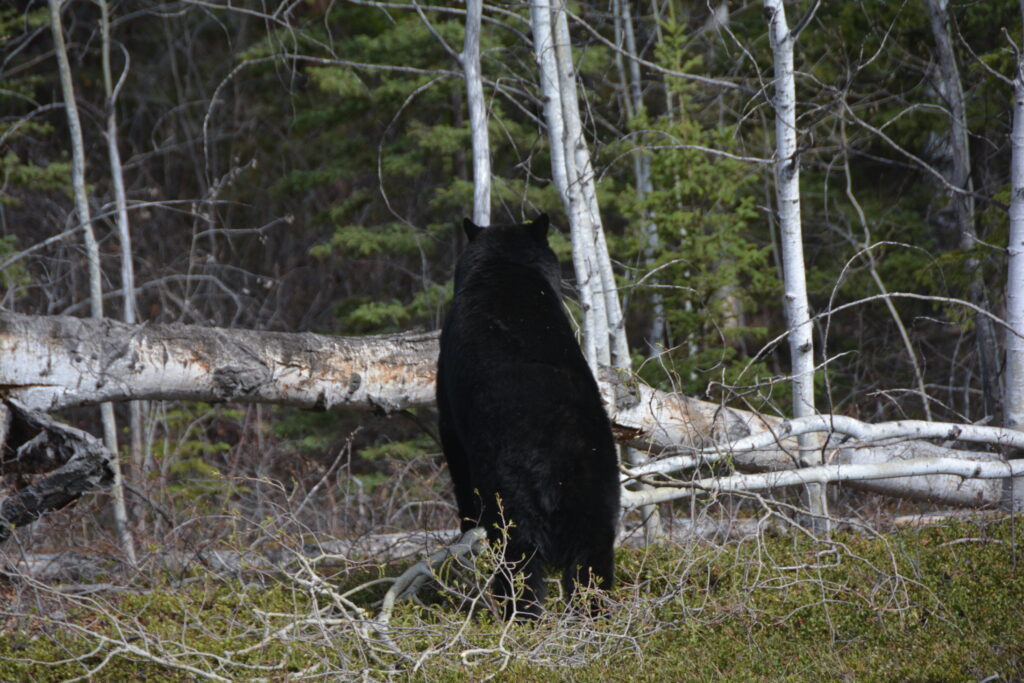
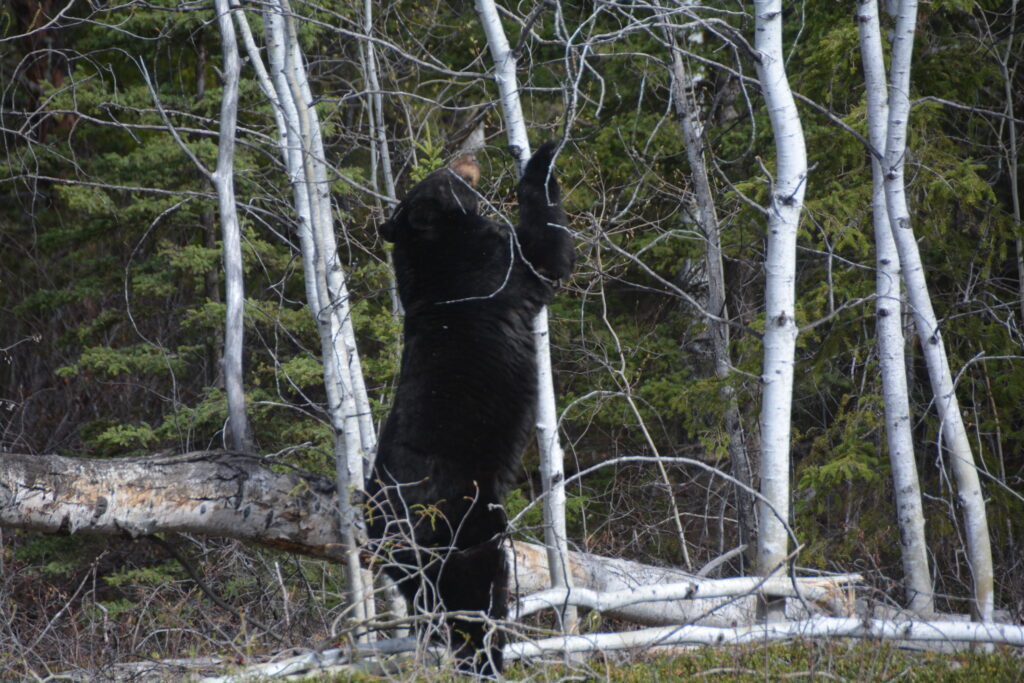
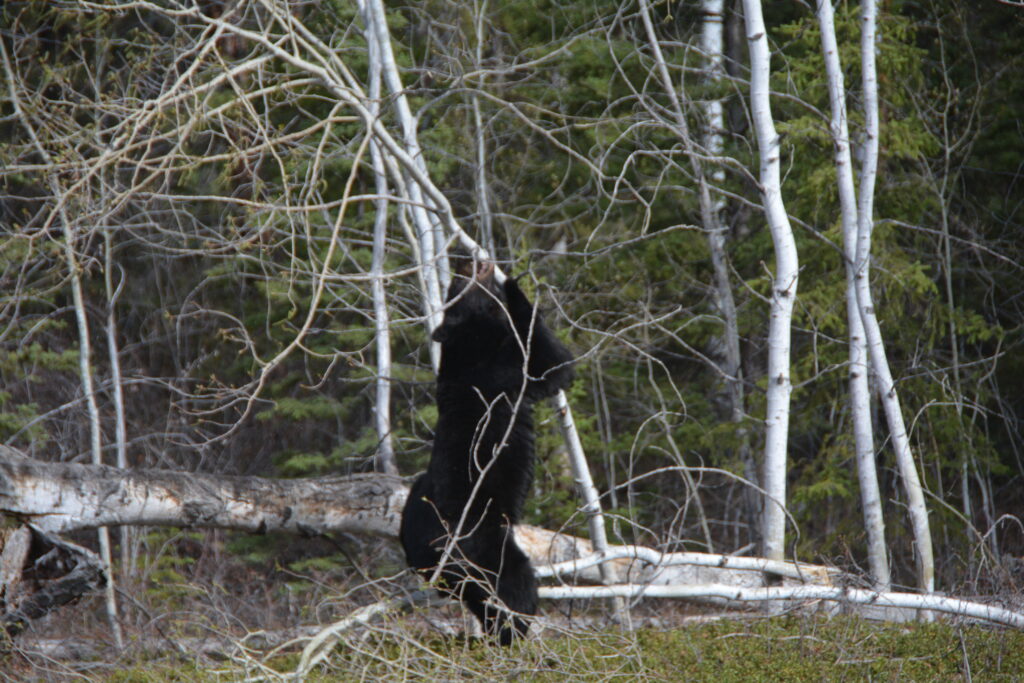
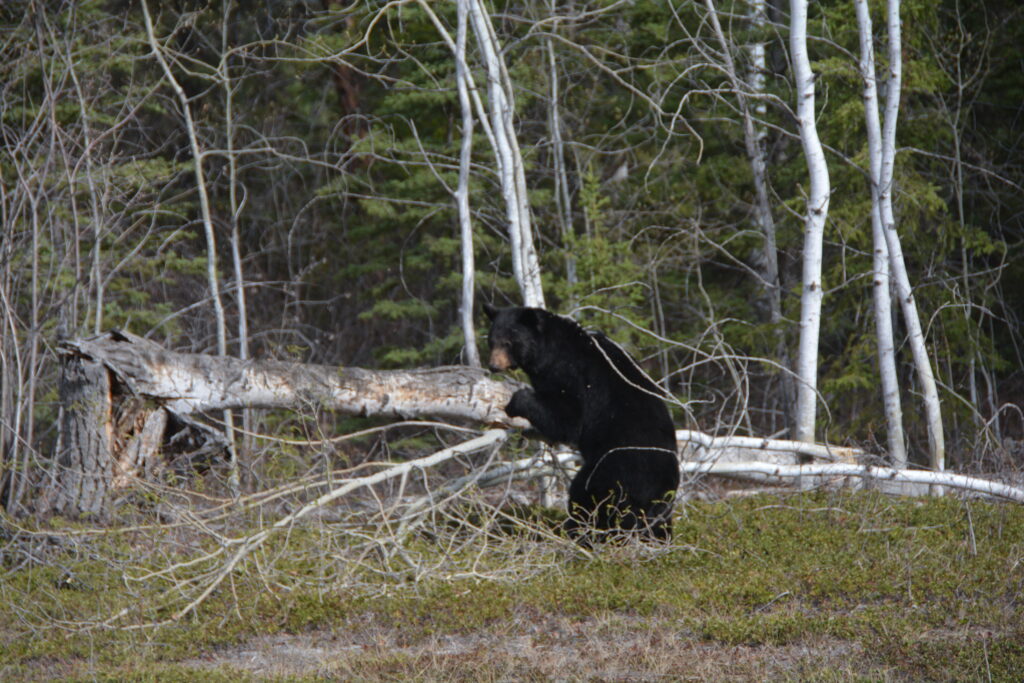
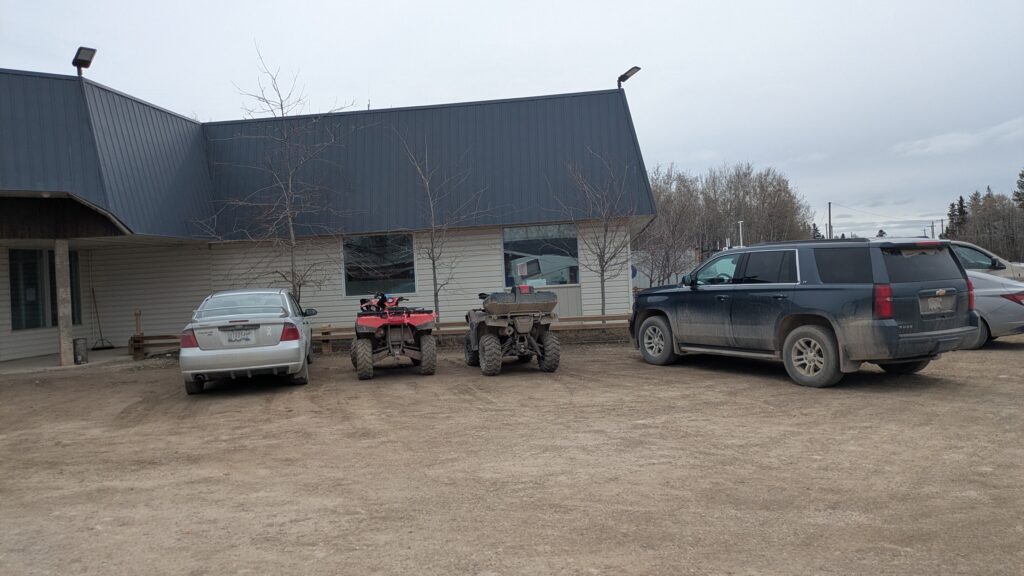
So on we go, more long straight roads through more boreal forest, temperatures around freezing all morning. Back in Fort Providence, where we were four days ago, we bought fuel before crossing the mighty Mackenzie River again and hitting NWT Highway 1, which basically runs as close to East-West as a road can run in these parts.
It wasn’t long before we noticed fresh snow on the ground, and then more and more, sticking to the trees and turning the scene into a faux-winter wonderland. By the time we stopped for lunch snow was lightly falling and it looked like we were in November, not May.
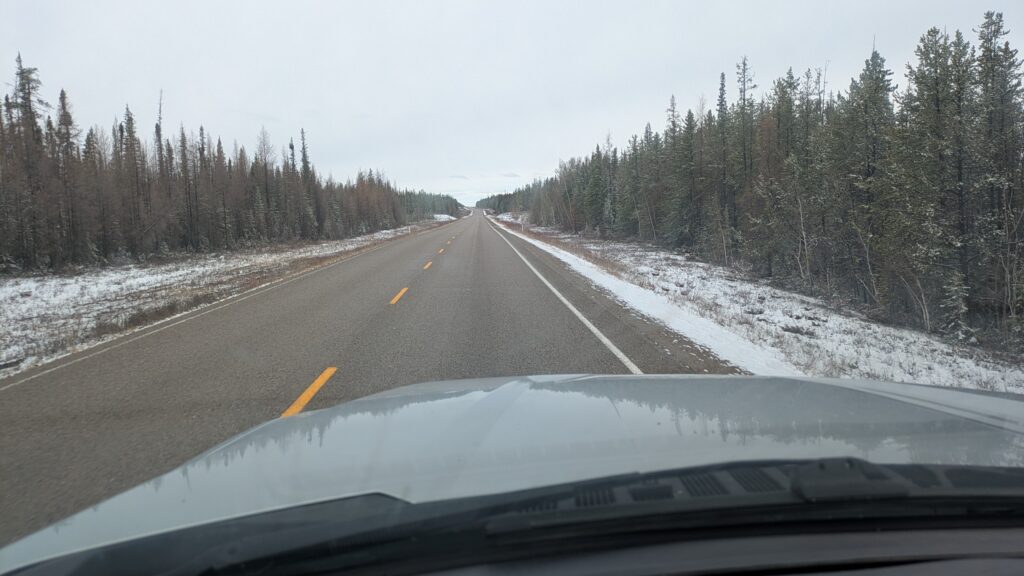
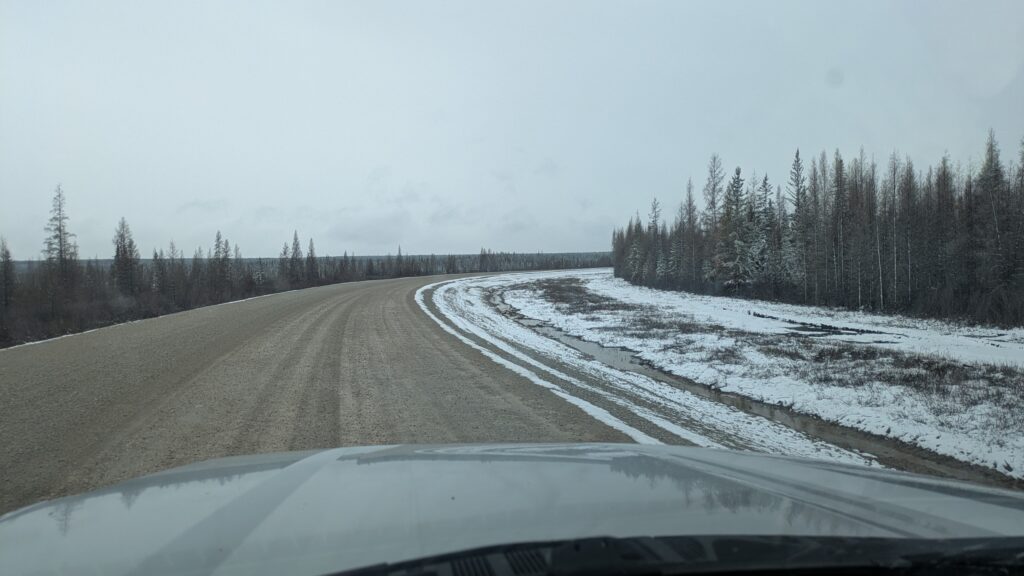
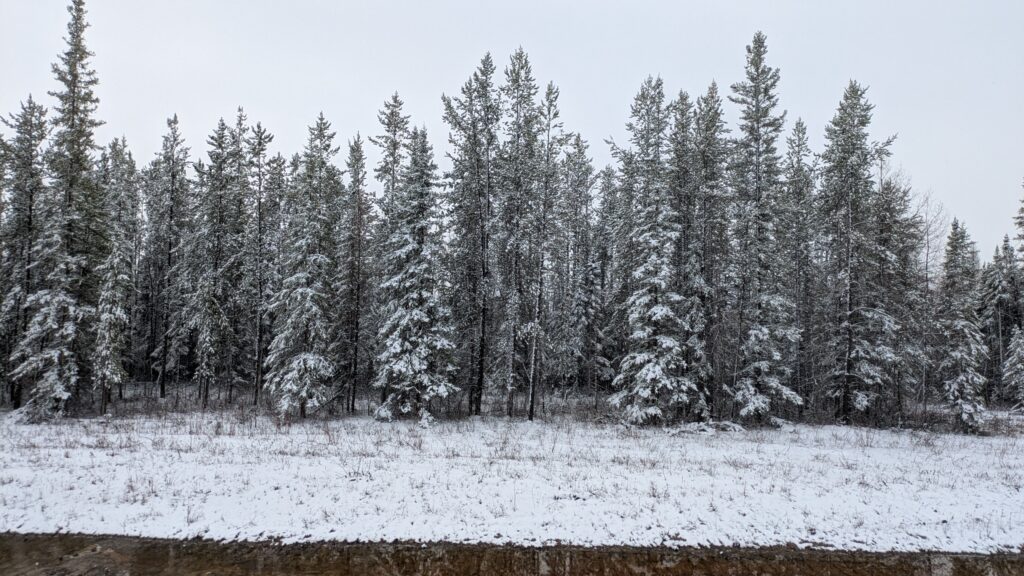
Shortly after our indoor lunch stop the paved road ended and a muddy and gooey dirt road began. This was not gravel, more a hard-packed dirt and the road definitely got a little tricky for the driver. I slowed down a fair bit and used 4WD High because at over three tonnes Tramp doesn’t stop easily once he starts going sideways.
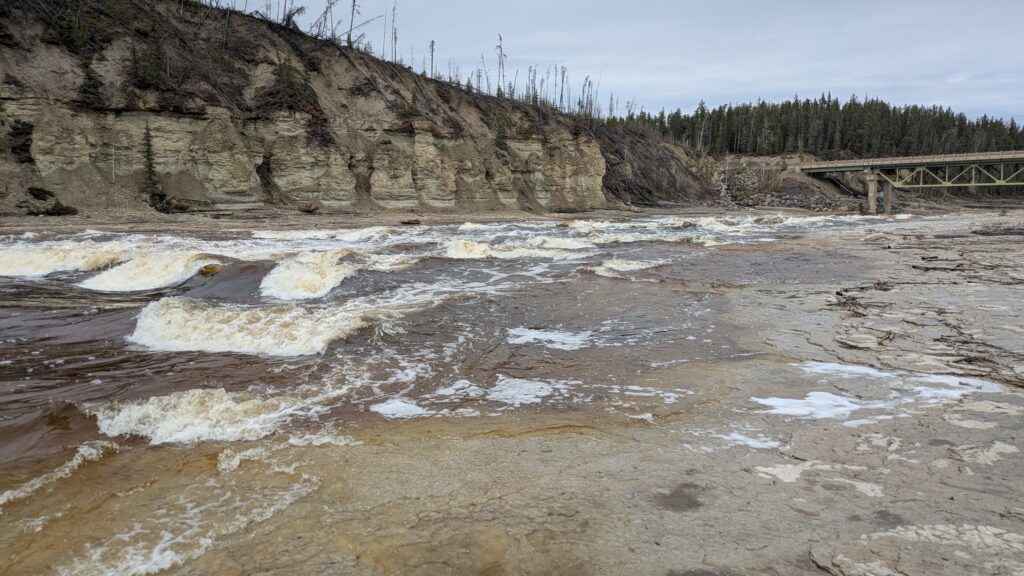
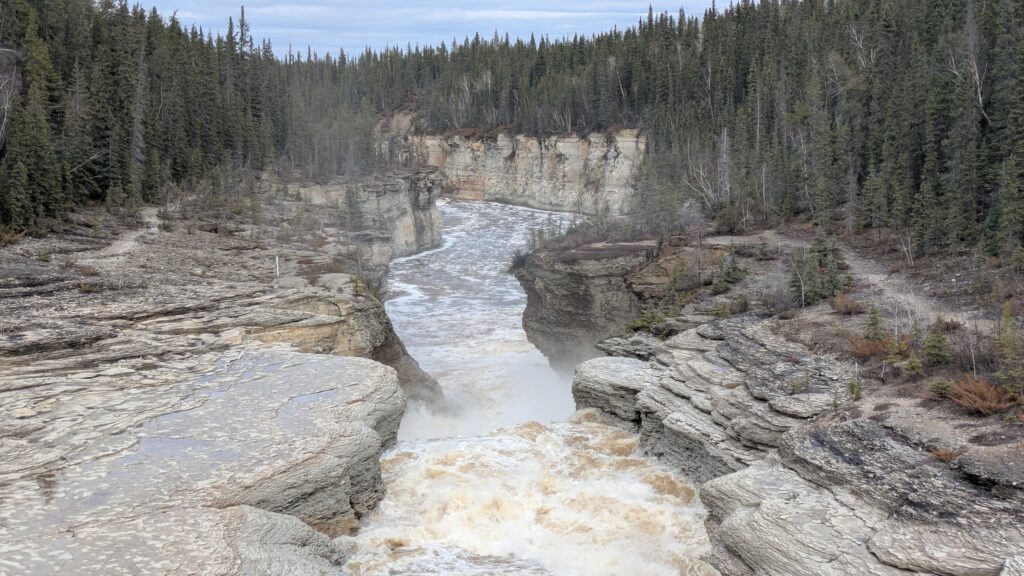
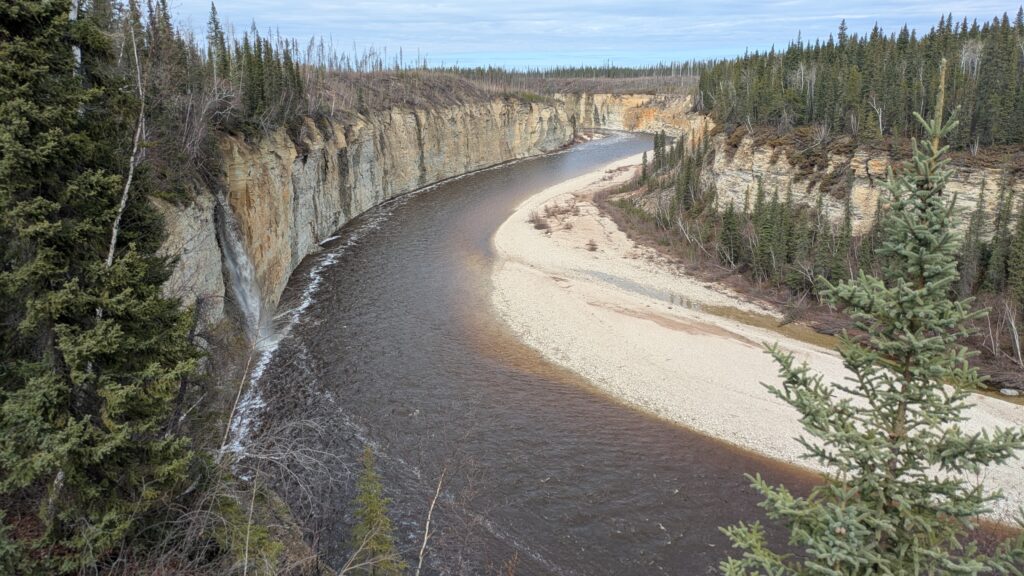
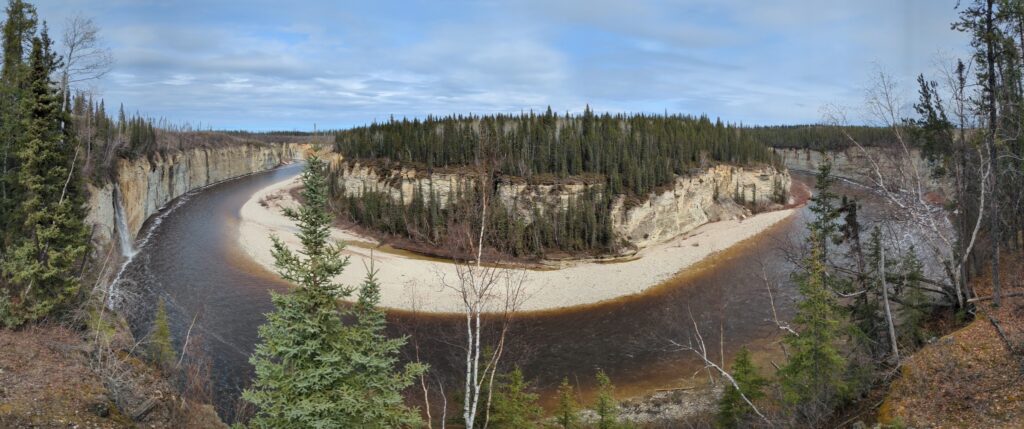
We pulled into Sambah Deh Falls Territorial Park, which was still closed for the season, but parked outside the gate and as we’ve done in other parks – just walked in. We strolled along the fast-moving Trout River and spotted the falls up ahead before circling back and chatting to the workers who were putting on the final touches on the park for it to open the next day. This was going to be a long weekend and the official start to the ‘season’, after which we are expecting more parks and campgrounds to be open.
The muddy and slippery road locals call Highway 1, but which really had less traffic because the distances to go anywhere in this direction are so long, took us westward until we detoured to the First Nations community of Jean Marie River which is situated on the Mackenzie River. The community is reported to have 89 residents but we thought perhaps most of them were seasonal because it was an exceptionally quiet but tidy little town. We only saw one guy on his front porch and another car moving.
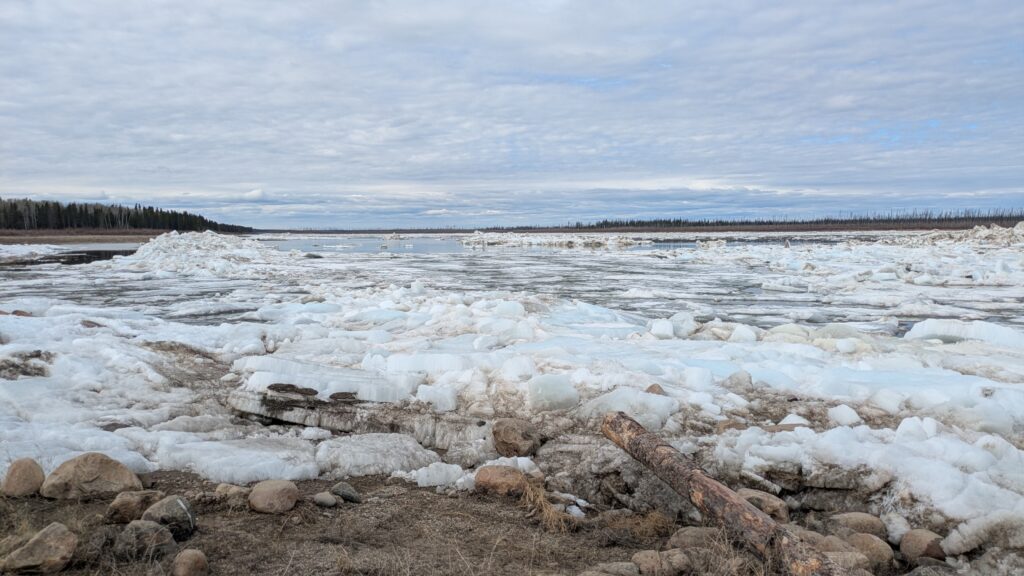
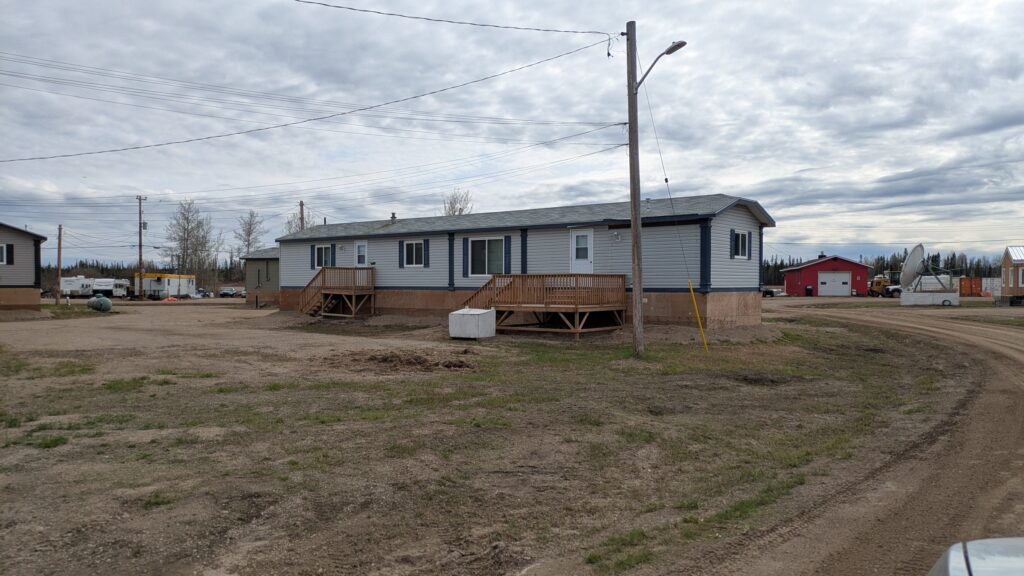
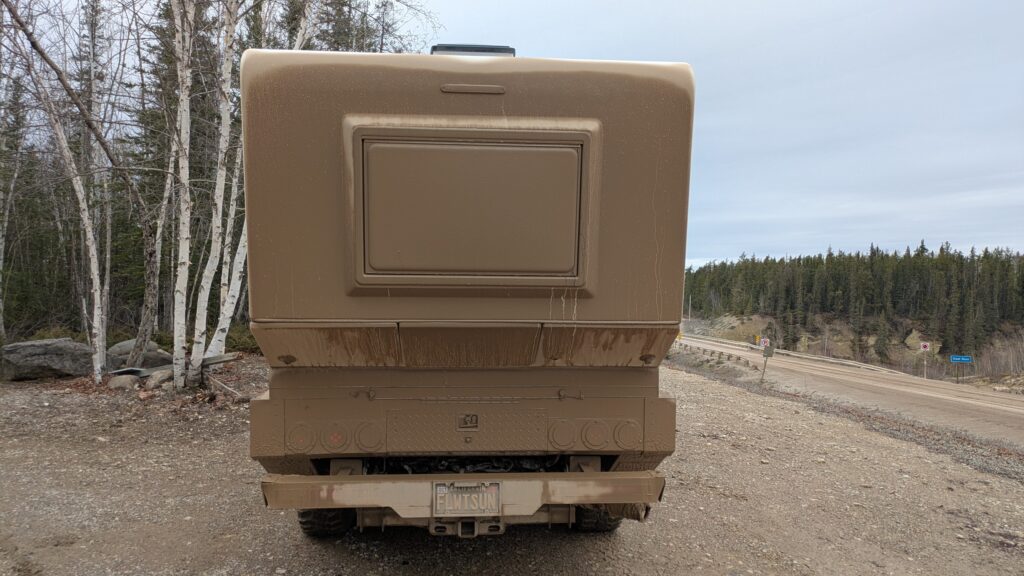
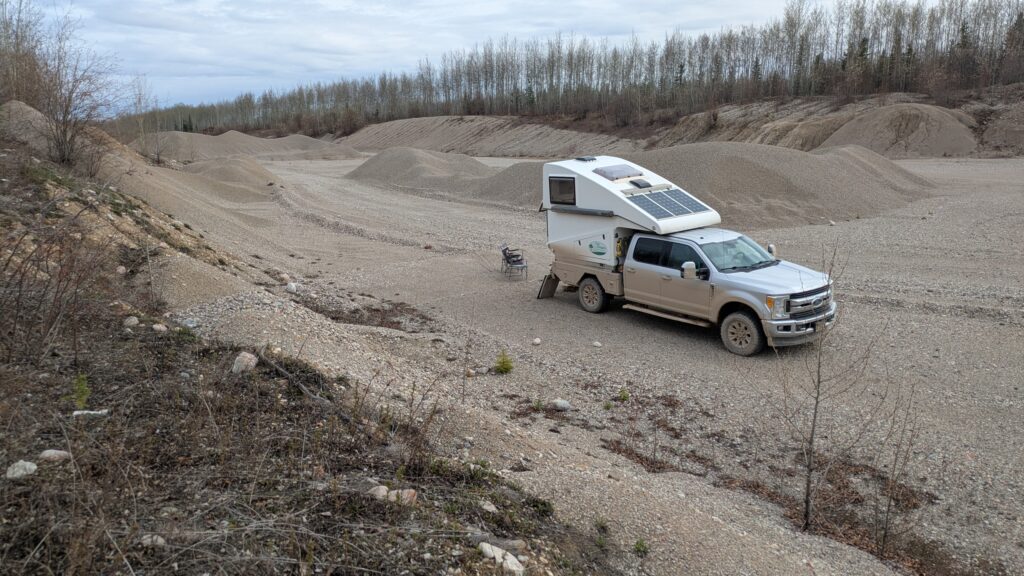
We camped that night in the mother of all gravel pits, big enough that opposing armies could camp there and not know the other was nearby, we tucked ourselves away in a protected spot to minimise the cold wind. The weather barely got into double digits today, the truck is covered in a thick layer of mud and we are seriously on our own.
Go you good things. Loving the commentary, beavers, bison, bears, waterfalls with their frozen chunks, fish & chips ✨✨✨✨✨, rivers, camps, vistas & local townships. Hopefully you get a few issues sorted sooner rather than later.
Fairbanks will be a real saviour. It is a great town with plenty of services.
Happy trails, stay safe & keep the muddy Tramp focussed!
😘😜😘 Bernie & Andrew
Hi Bernie and Andrew, thanks for the note. We can’t get enough of this big beautiful land, maybe because it is so completely opposite what we love in Australia. Take care, Bill