
Uzbekistan
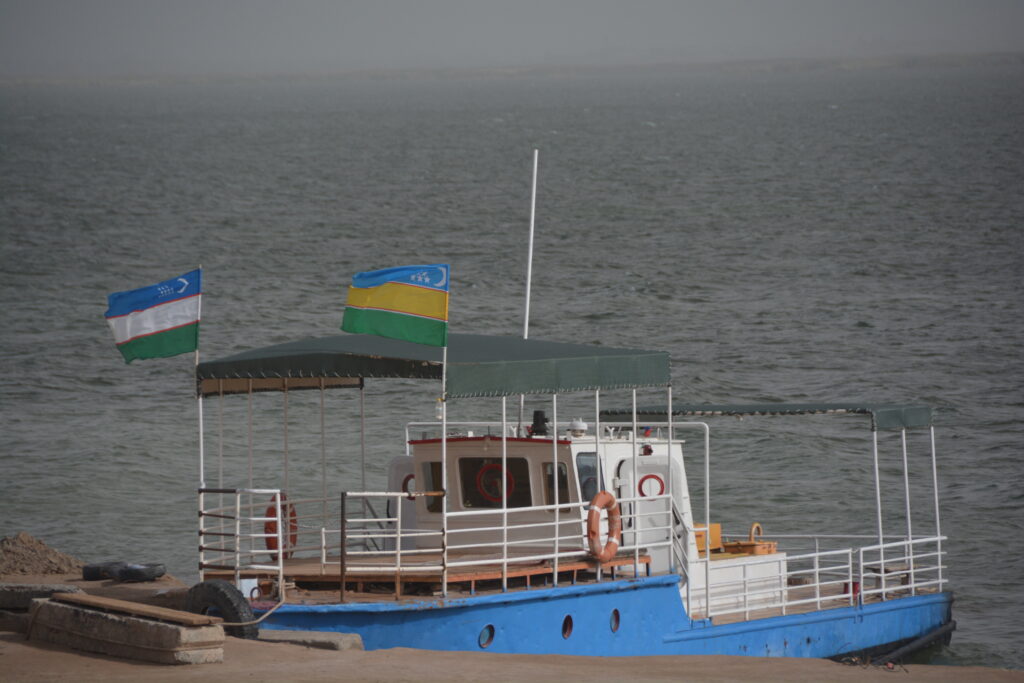
Walking across a border into a new country is not a common thing – usually you do it by plane or car, maybe by ship or train. But just walking across a border is an unusual feat and yet here we were, the six of us, dragging our bags from a taxi who dropped us off in Kyrgyzstan, through the gates, stamped out of the country, more dragging of bags, up to the new Immigration desks and finally stamped into Uzbekistan. Easy. We then organised a couple of little mini vans to take us to the first major town, Andijan.
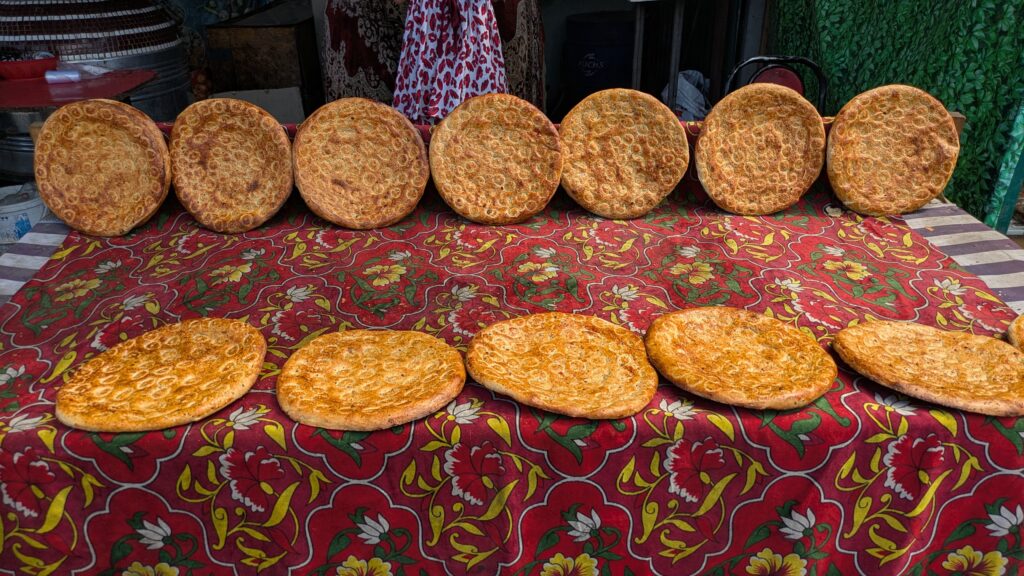
Uzbekistan is the most popular tourist destination in Central Asia – it receives more visitors than the other countries in this region put together. That is mainly because it is super-rich in Silk Road history, culture and architectural gems from that era. The guidebooks are quick to say, if you’re coming to this region, you need to do Uzbekistan in spades.
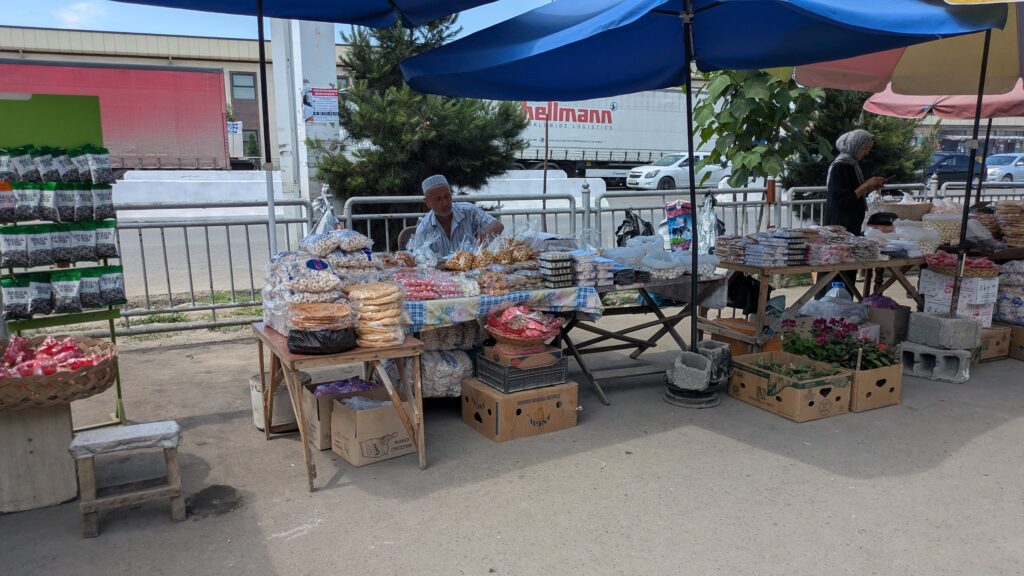
Well, we’ll be the judge of that. We’ve already had a fabulous time in our brief visits to Kazakhstan and Kyrgyzstan, and in particular a wonderful experience travelling the Pamir Highway in Tajikistan, and we’ll be returning to all these countries later, so Uzbekistan has to jump over a high bar.
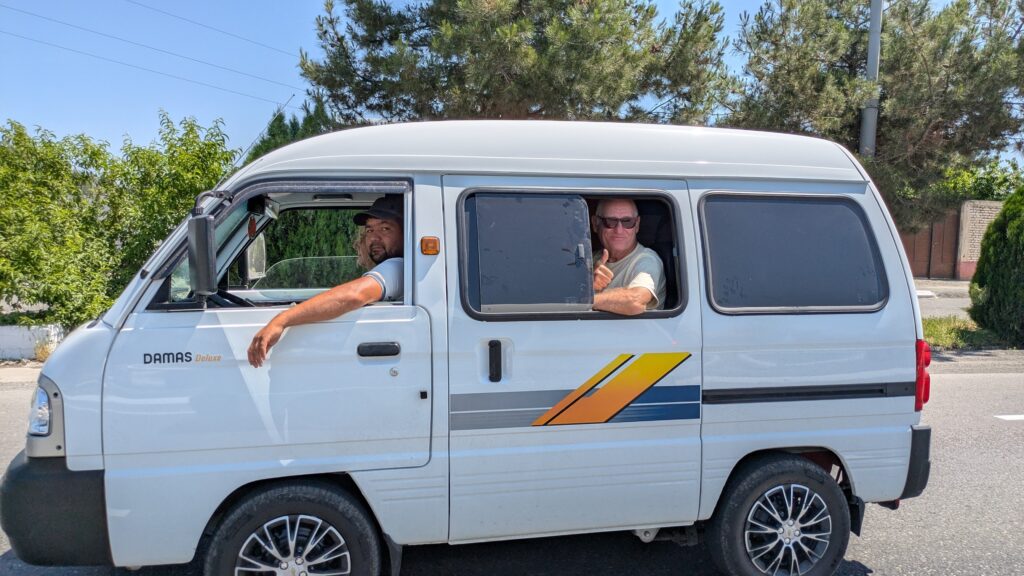
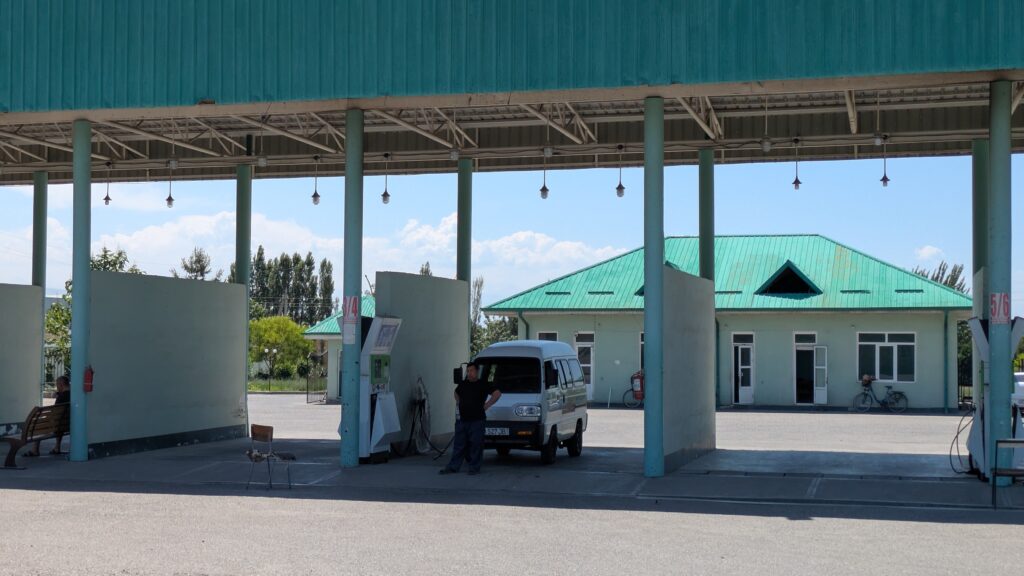
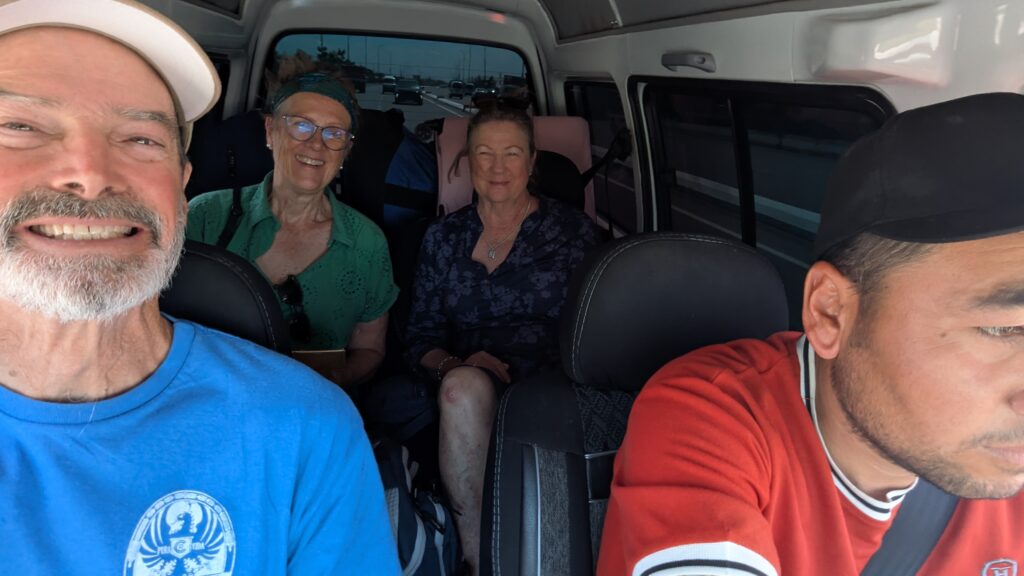
Before this trip when we were asked how we would be getting around Central Asia without Tramp I would say it’s a trip of planes, trains and automobiles. Planes and automobiles definitely so far but today we jumped on a train in Andijan and rode a very efficient and slick service through the Fergana Valley all the way to Uzbekistan’s capital, Tashkent.
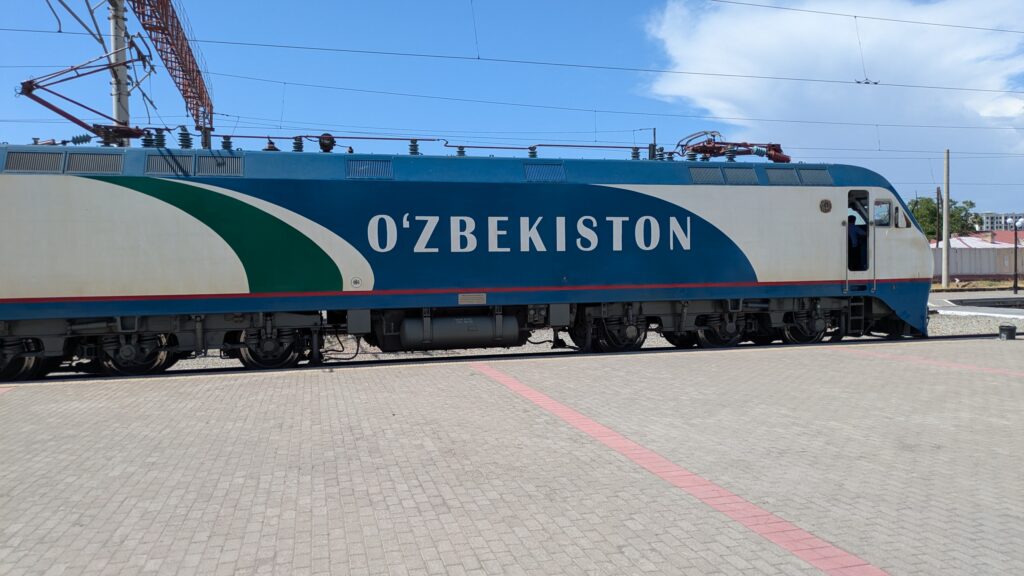
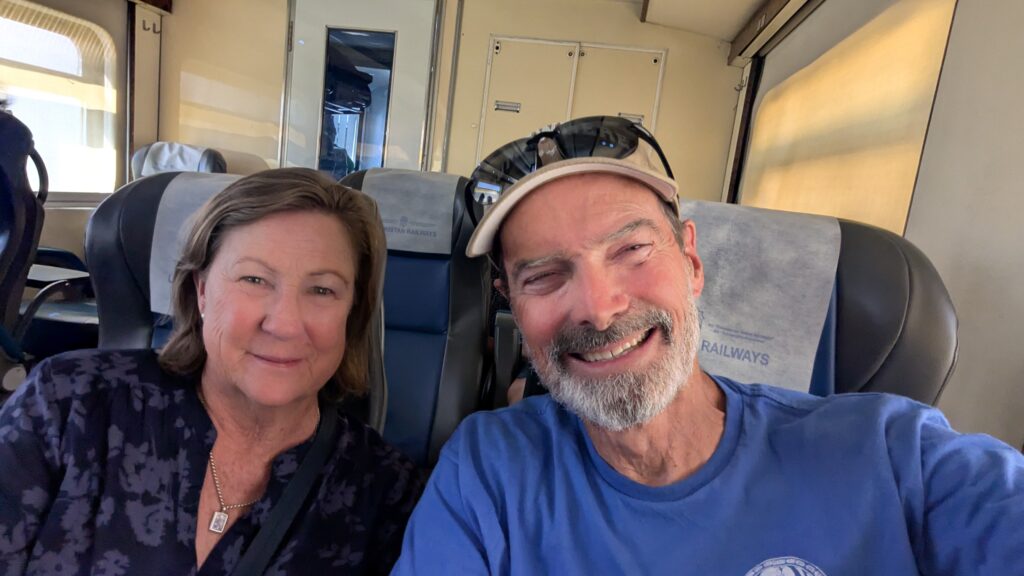
Hmm, Tashkent, where should I start? I could start at the train station where very aggressive scamming thugs tried to pretend they were honest taxi drivers to get us to our hotel (they failed). Or I could say that while Tashkent featured beautiful wide tree-lined streets from their Soviet era and an impressive metro system it lacked the charisma and magnetic appeal that travellers might be looking for in this nation’s capital. It was good, it was nice, it was clean, it worked very well as the largest city in the region.
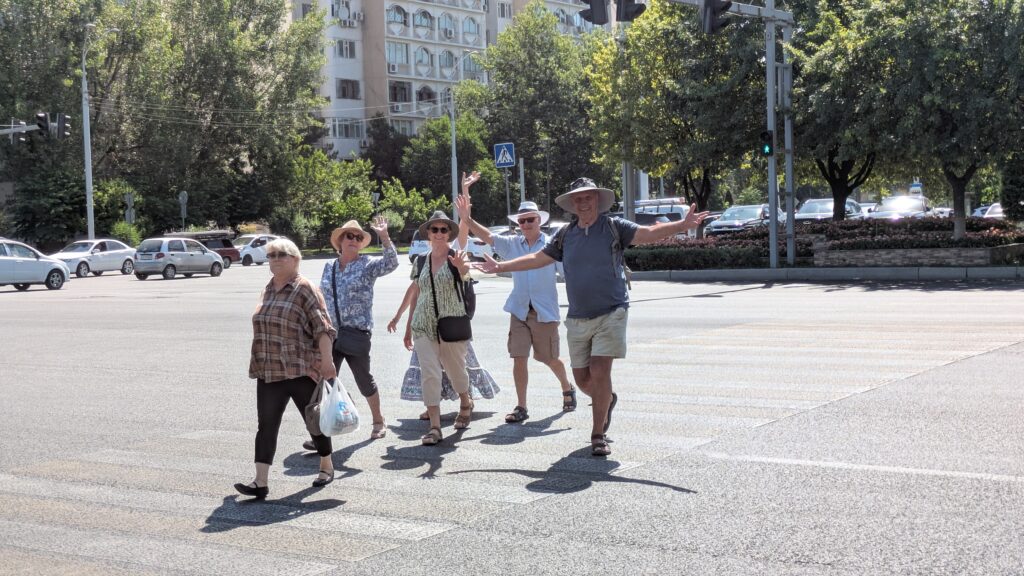
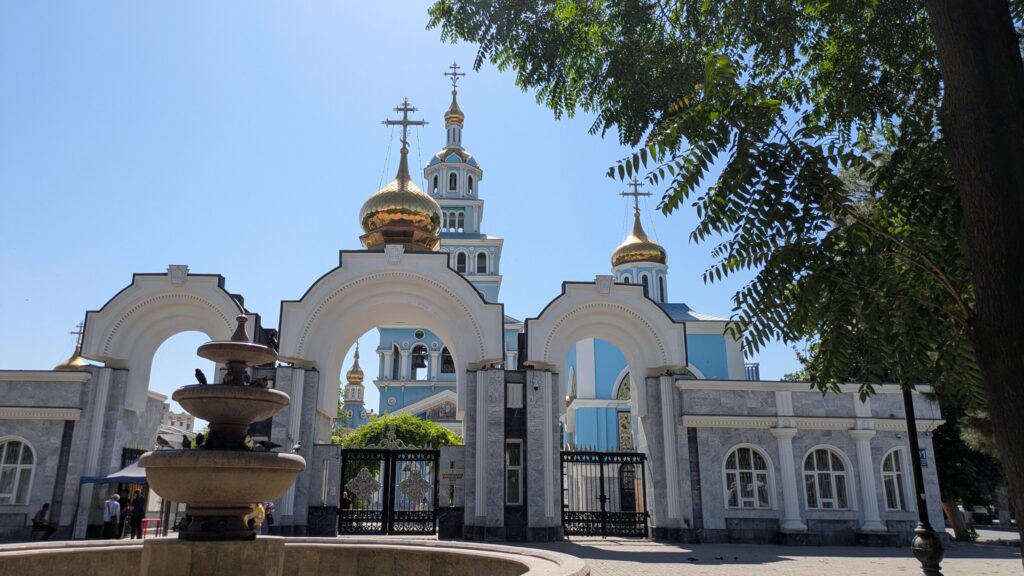
Maybe it was the 41°C (106°F) heat but Tashkent didn’t grab us with great history, culture, personality or architecture. It was just Tashkent.
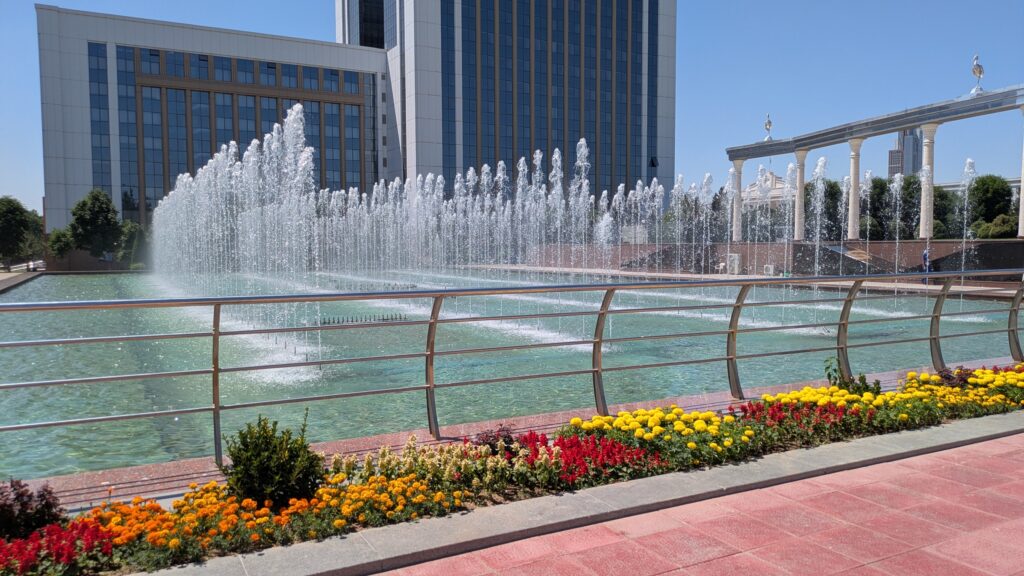
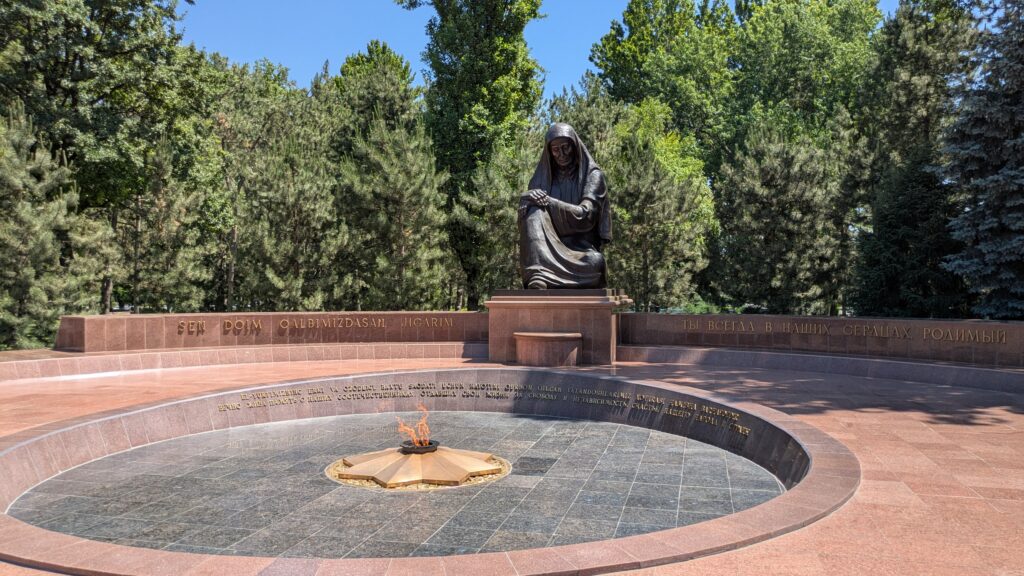
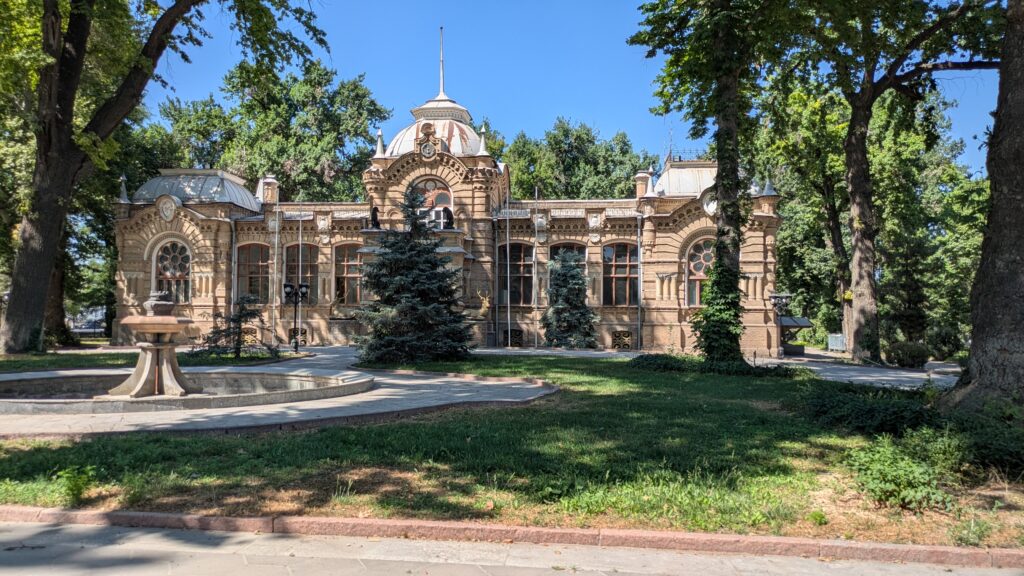
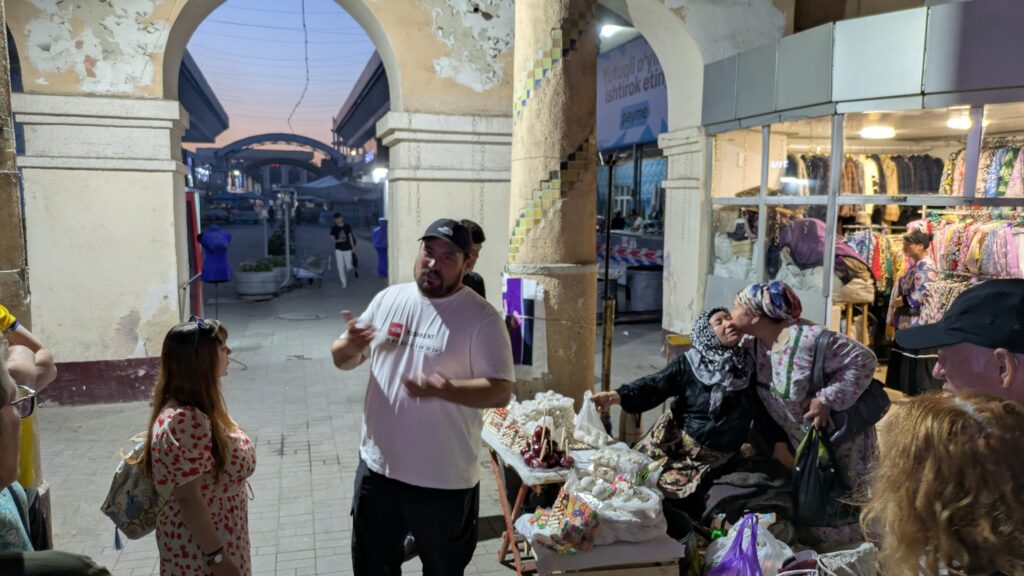
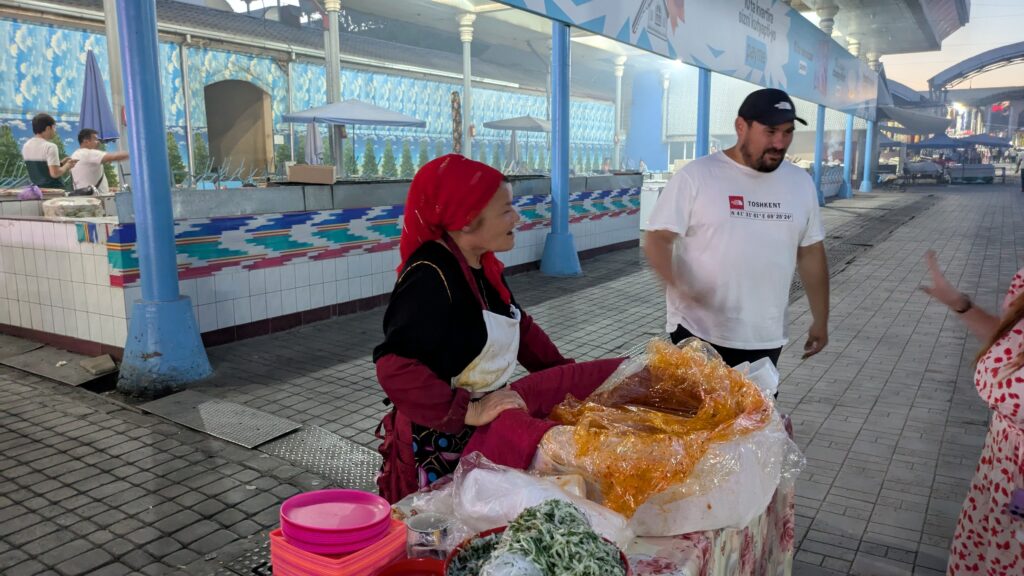
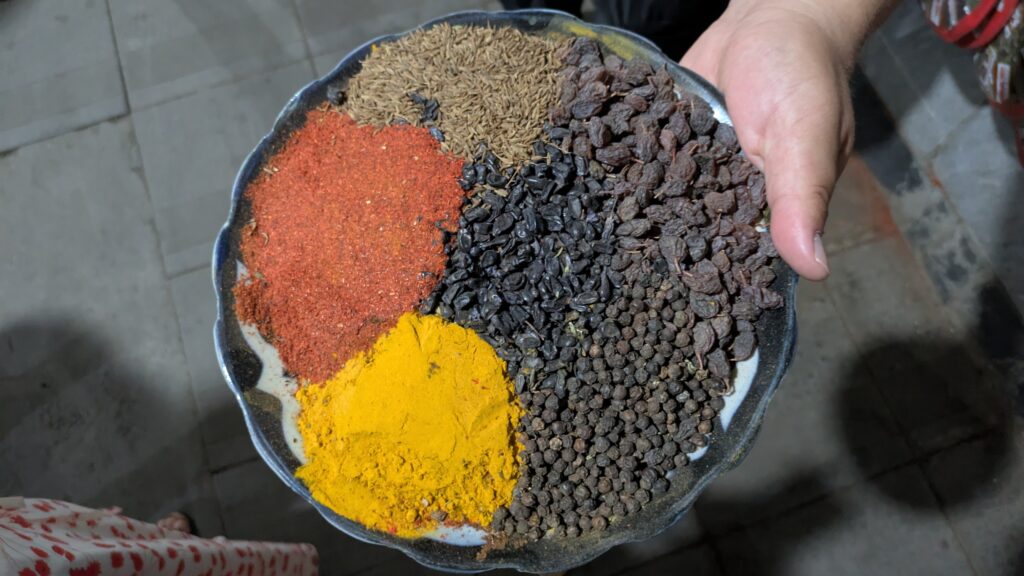
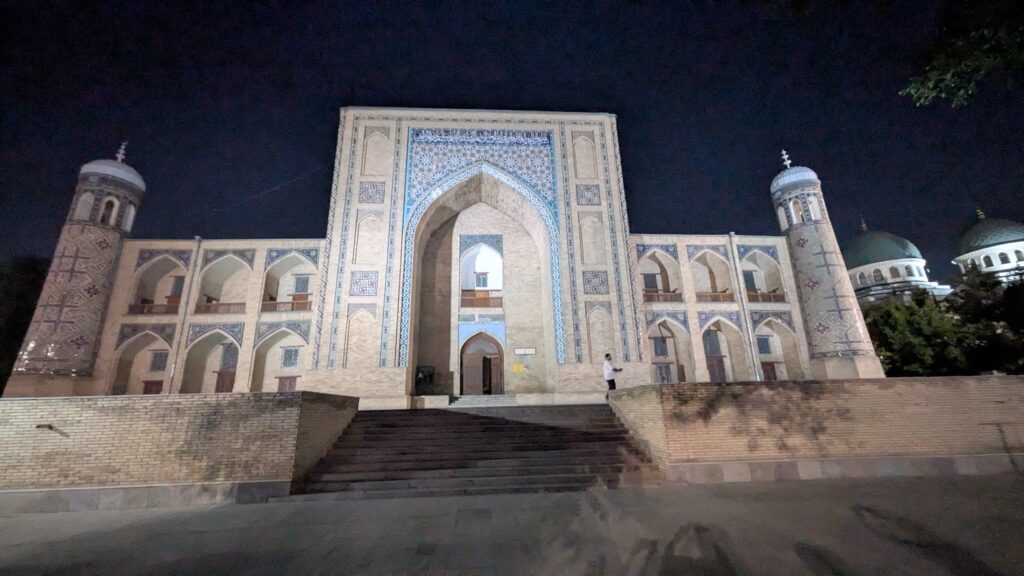
We did two walking tours that day, the first a self-guiding tour that took us to a number of highlights in the city and just about melted us. The second was that evening when a local guide gave us more detailed and surprisingly honest explanations of the history of this region and city in addition to taking us to the major Chorsu Bazaar where we learned more about how the markets worked and tasted some local delicacies before finishing at the impressive 16th century Kokaldash Madrassa, a training and learning centre for the Muslim faith.
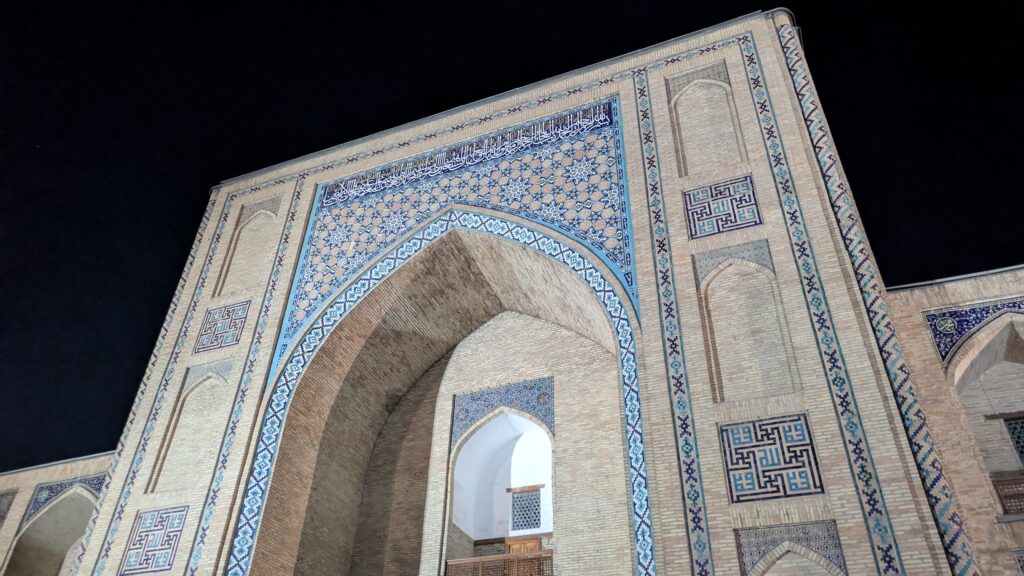
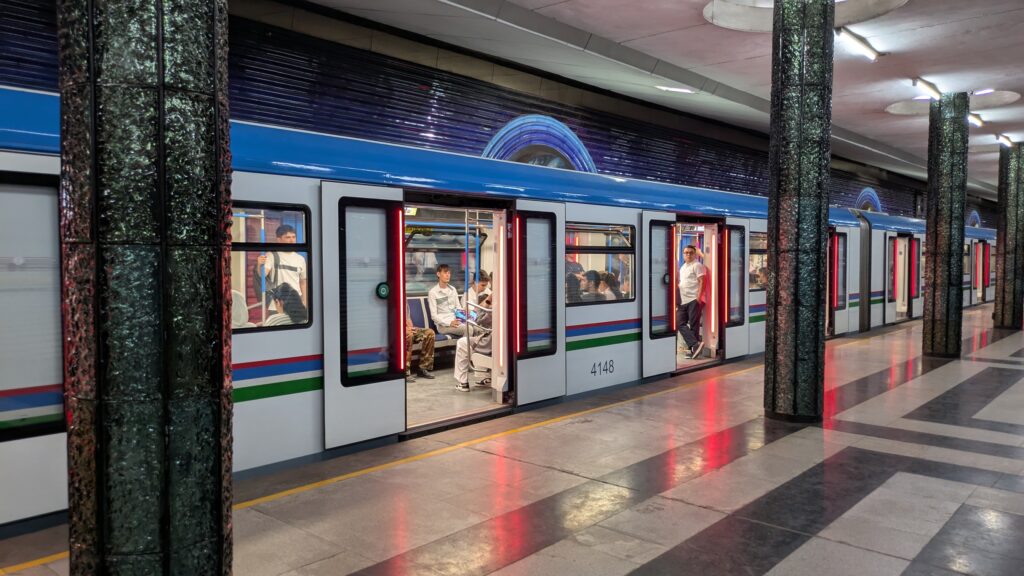
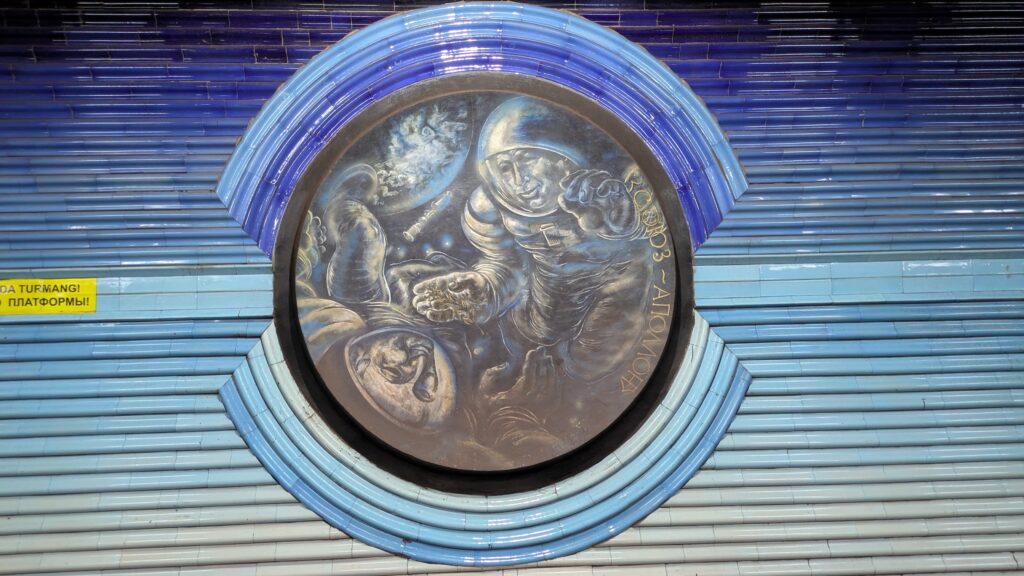
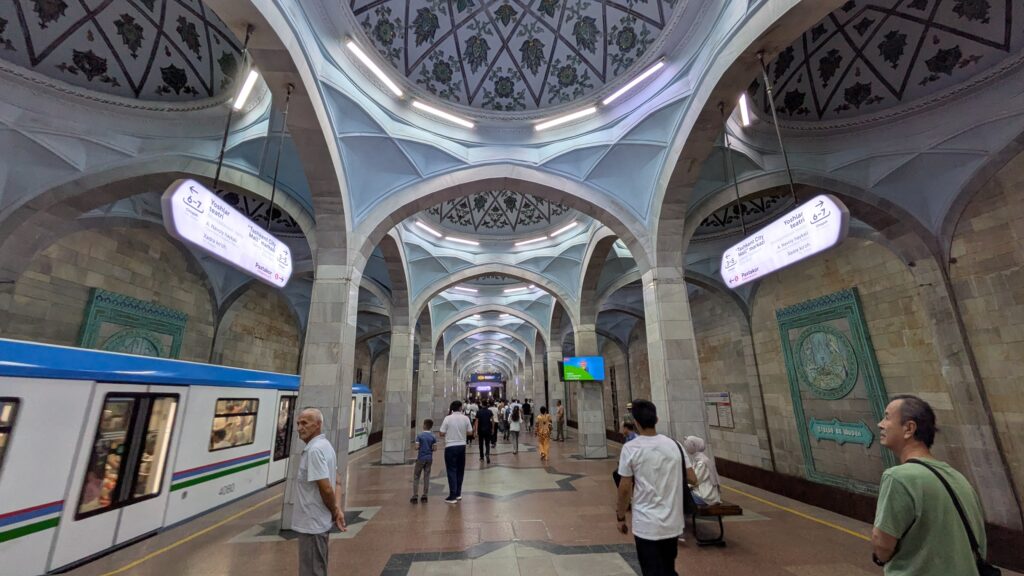
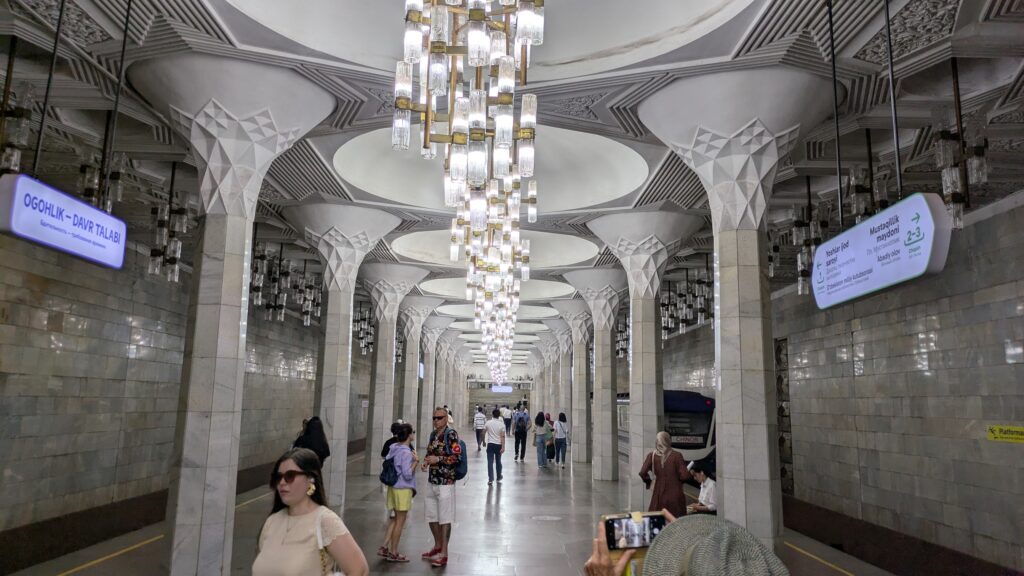
One excellent feature of this huge city of 2.2 million people was the art work and depictions of history in their underground metro system. We rode the metro a few different times, each time gazing at the art or depictions of history or events in Uzbek’s history. We’ve seen this before, particularly in Moscow and Vienna, but this was very cool. Thumbs up there.
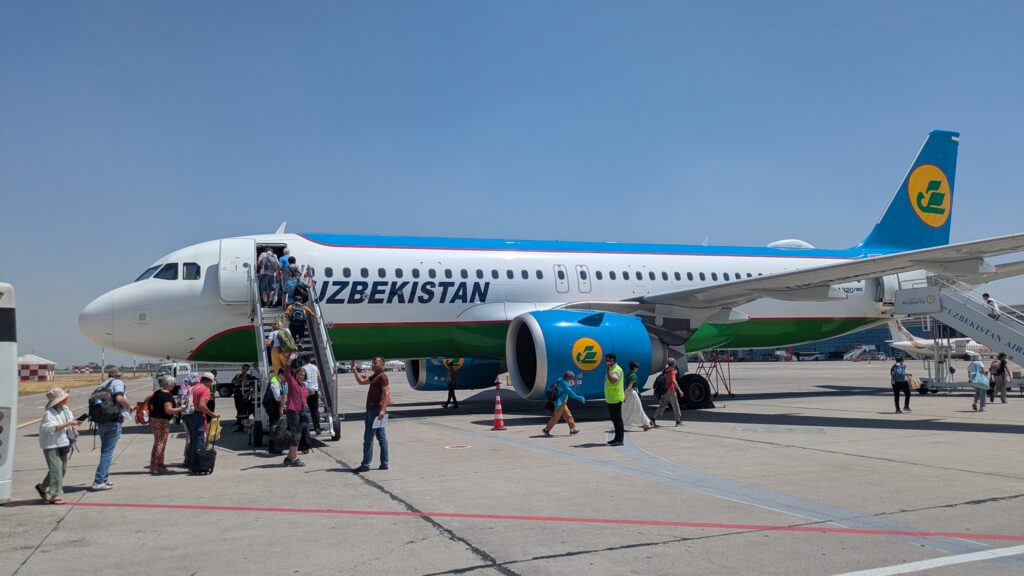
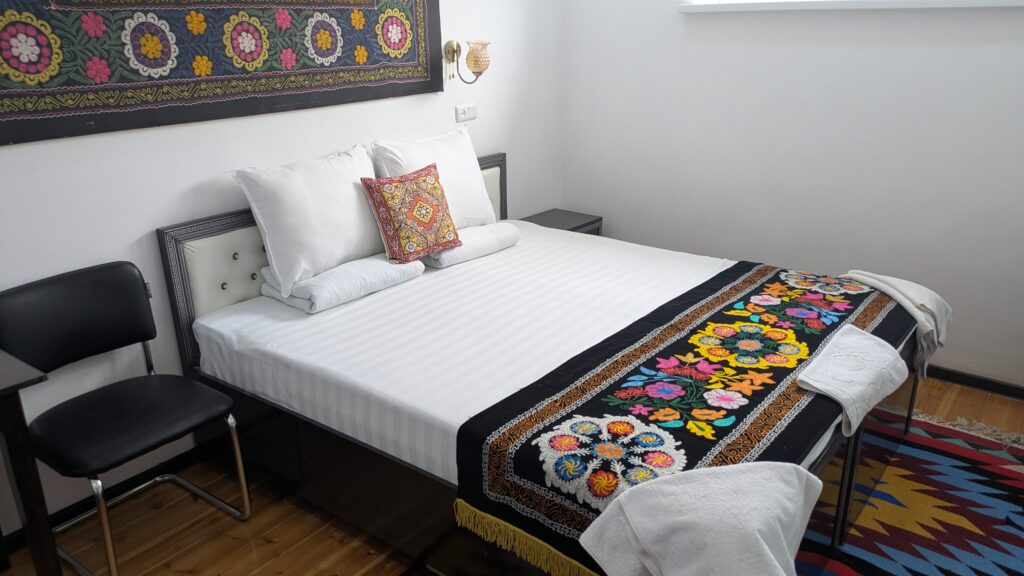
Our long, hot and melting day of sightseeing in Tashkent accomplished, the next day we headed for the airport and caught a domestic flight to the western regional centre of Urgench. This was a 90 minute flight on an impressive Uzbekistan Airways to visit the area near the Turkmenistan border which reeks of Silk Road. Never mind that we had another colossal encounter with very dishonest taxi drivers in Tashkent, that’s become totally normalised by now, we found our way to our great little boutique hotel within the ancient city walls of Khiva, the focus of our attention for the next couple of days.
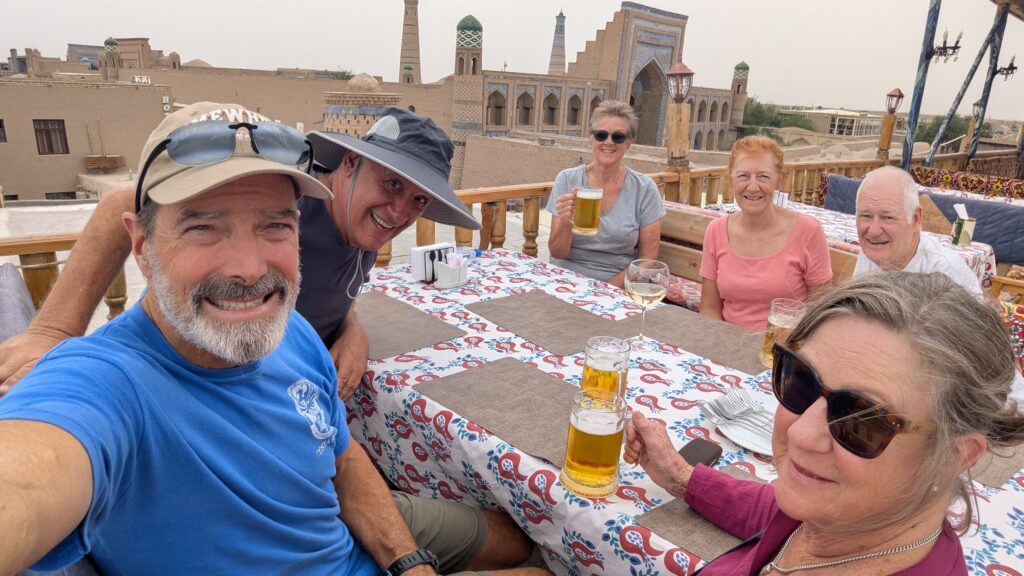
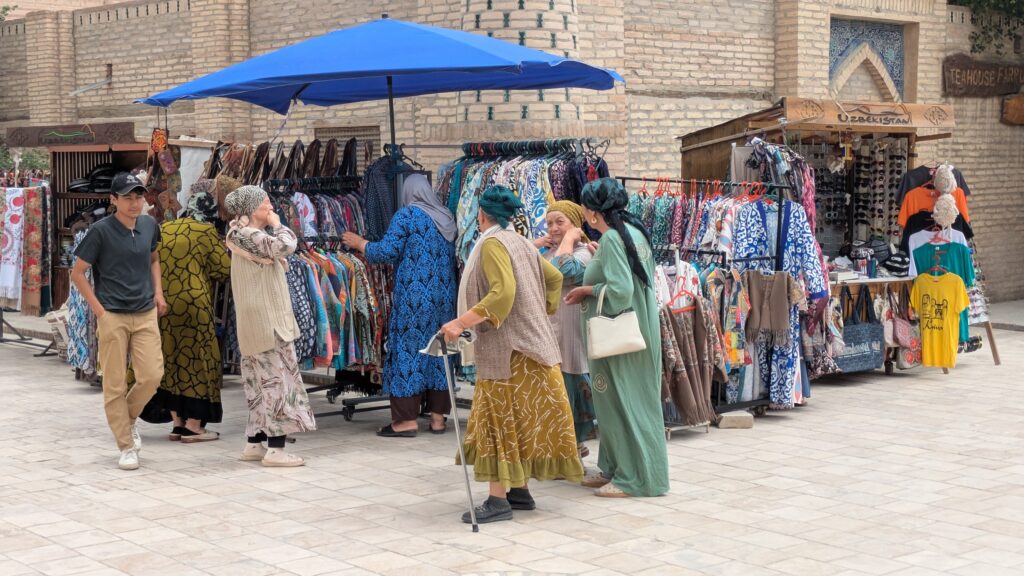
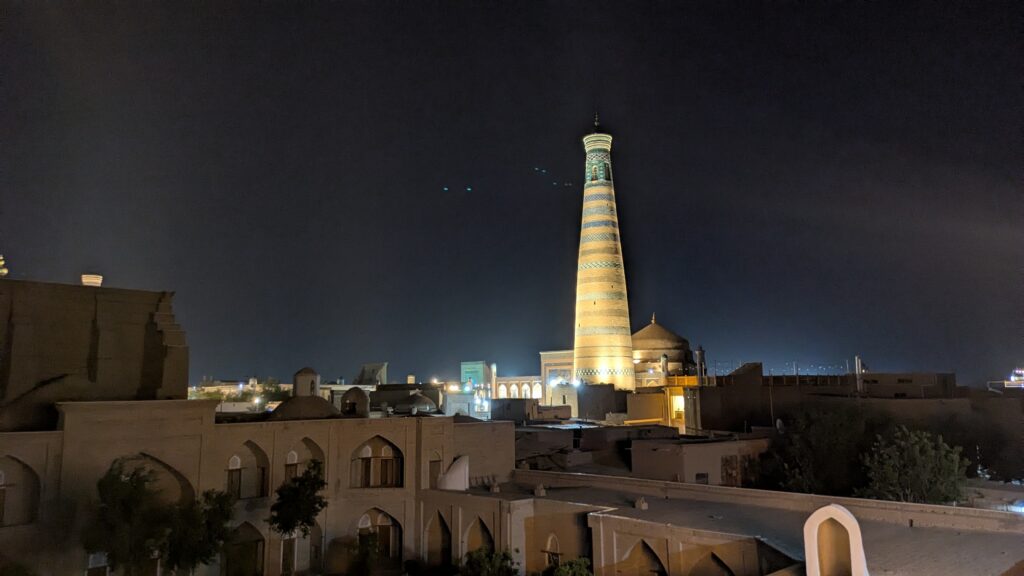
That late afternoon as the searing heat slowly diminished we strolled through the labyrinth of narrow streets of this ancient walled city, past the shiny tiled minarets, around the old adobe-coloured mosques, avoided most of the tourist shops selling colourful things we didn’t need and finally ended up at a roof-top bar where we enjoyed the early evening breeze and a few cold bevvies before finding another place for dinner. Khiva presented a fabulous first impression of a rebuilt ancient city on the Silk Road, full of history, character and a rich culture.
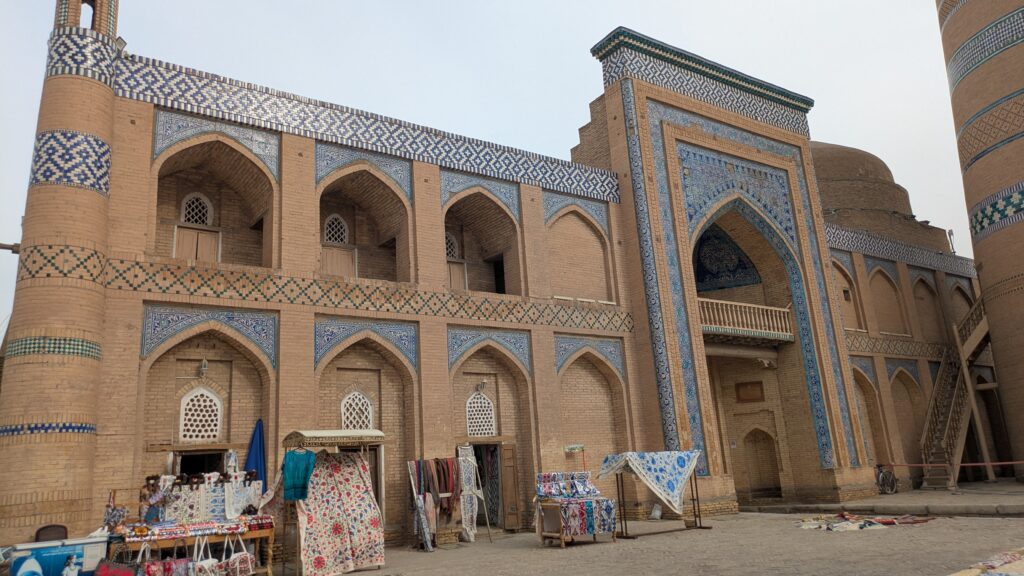
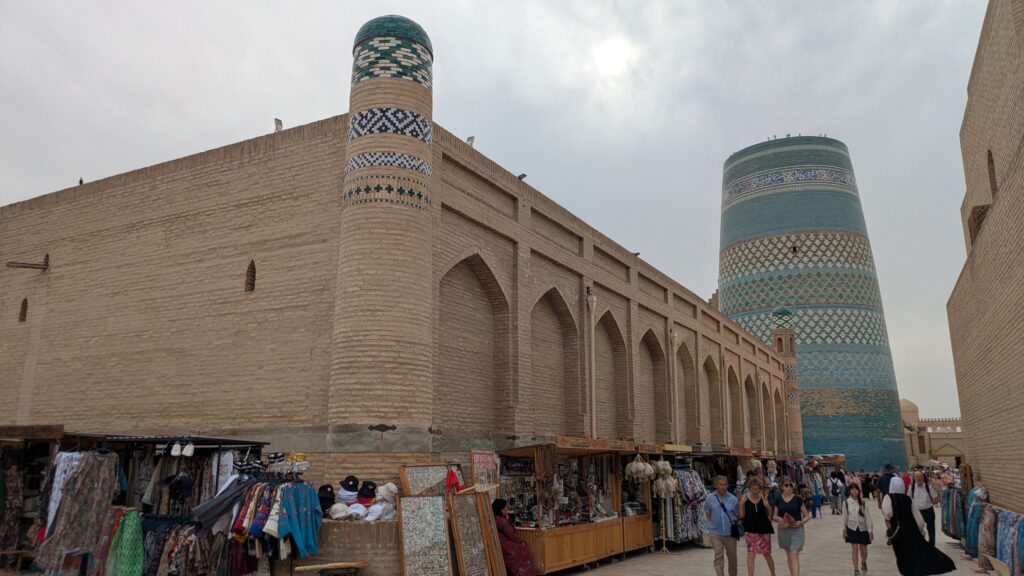
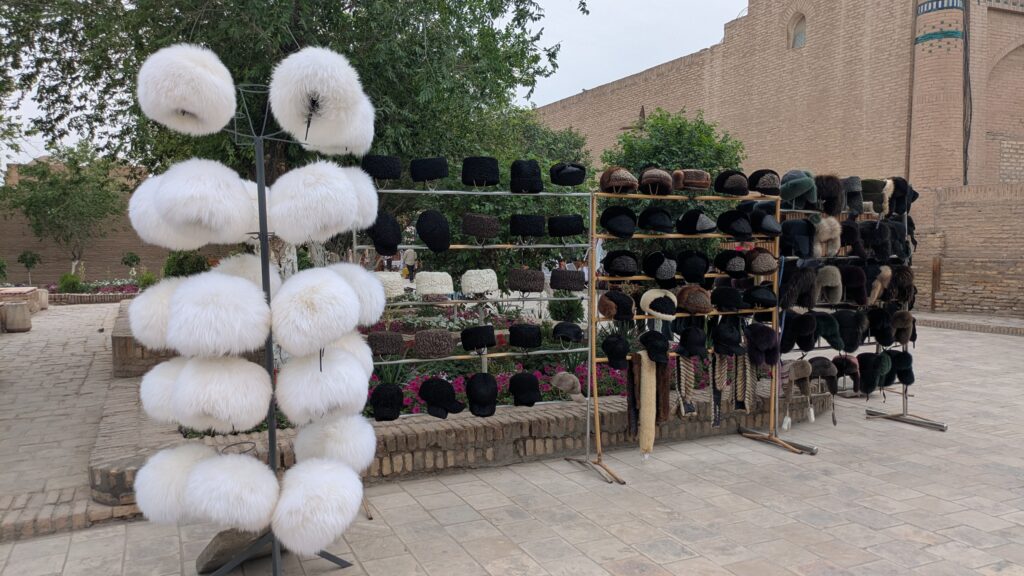

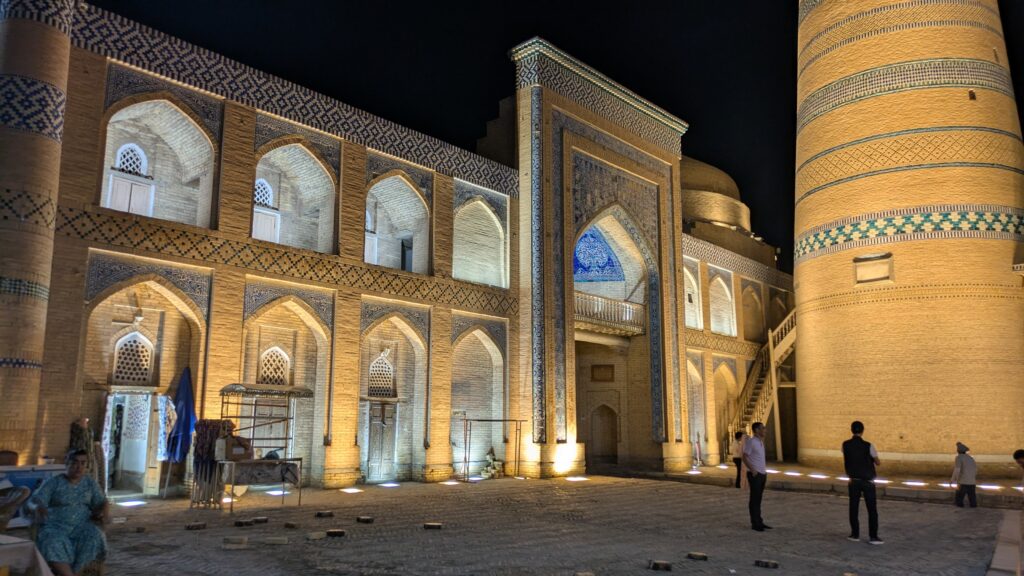
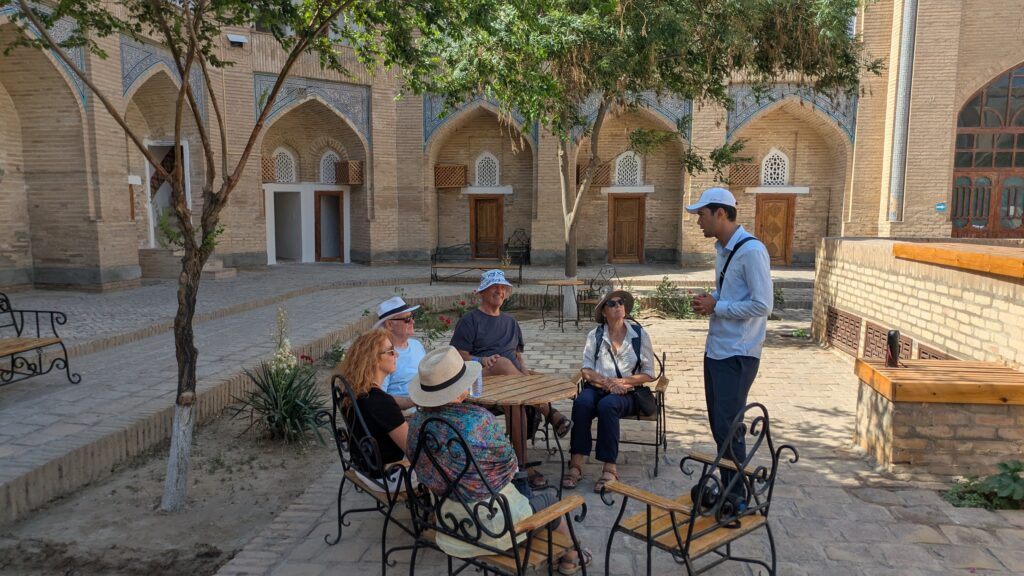
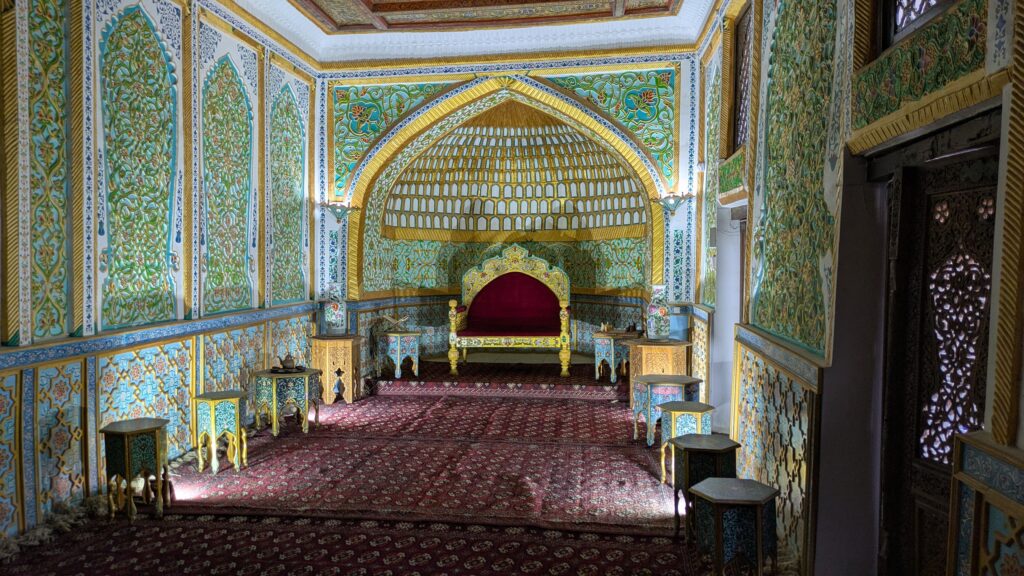
The next day we dove into the history of Khiva with a three-hour walking tour by a 22 year old tourism student called Shohrux. Shohrux took us to a number of beautiful madrassas, or Islamic schools, a couple of mosques, a large palace for the ruling Khan complete with an extensive harem and all points in between.
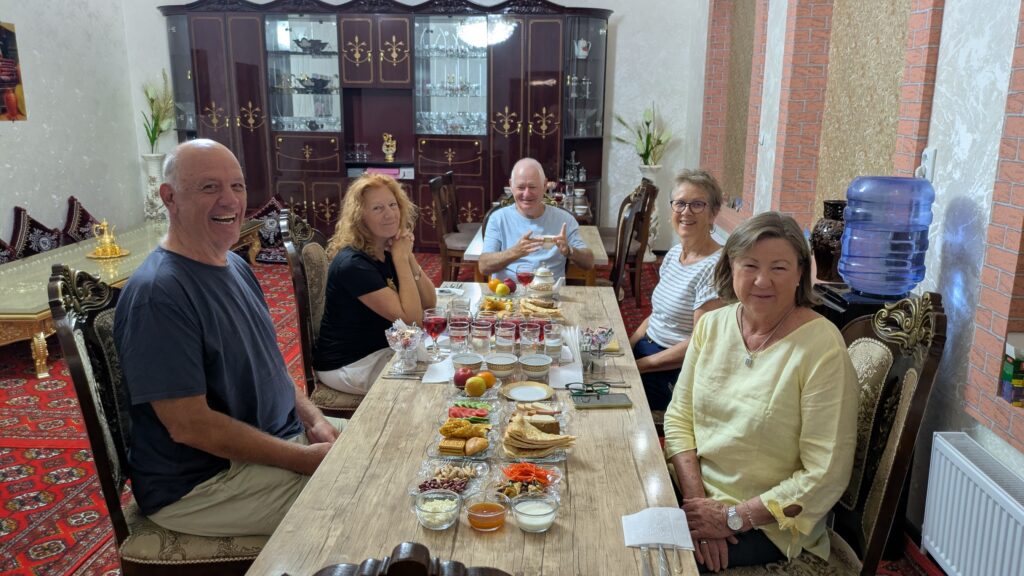
Khiva’s history spans over two and a half millennia going back way before Christ, ebbing and flowing as cities do, destroyed by Genghis Khan, as cities in this region were, then rebuilding and flourishing during the Silk Road era under a long dynasty of Khan kings until the Soviets moved in by the late 1800s. It has been almost entirely rebuilt to it’s former splendour and has a slight Disneyland feel to it but there’s no doubting how cool the whole place looks.
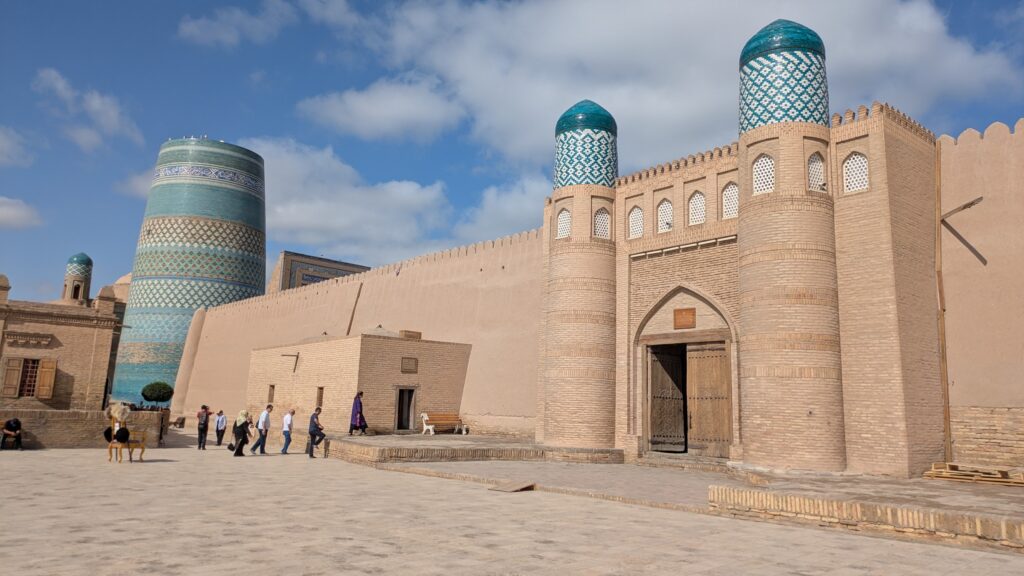
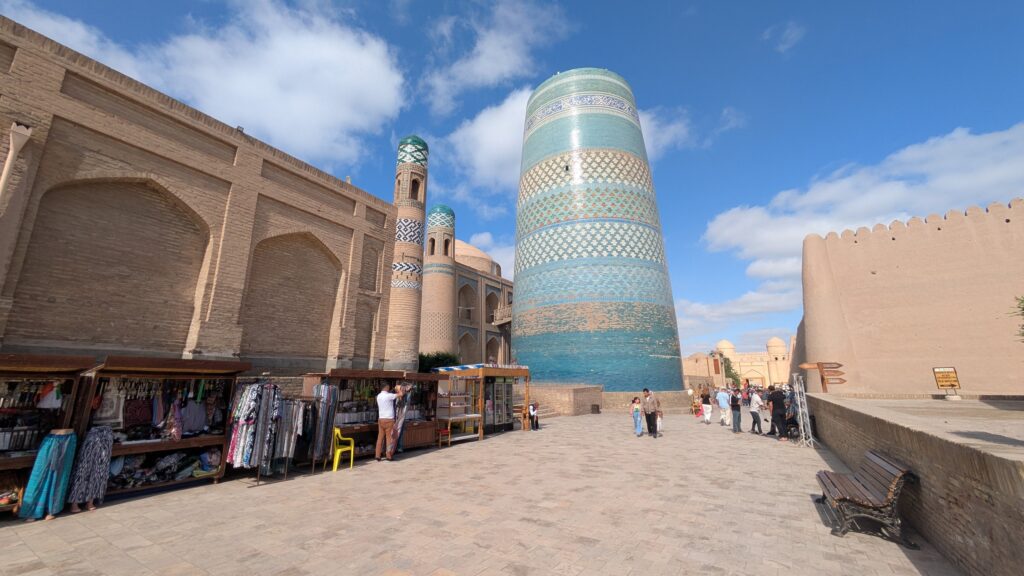
And with that slightly unreal polished feel to the place came the tourists. Visitors mainly from Europe were moving about the old town, usually in large groups led by a tour leader waving a flag, different languages heard from all directions, restaurants full, a little surreal after the beautiful remoteness of the Pamir Highway and Tajikistan. It’s okay, we can’t have Central Asia all to ourselves even if we want to.
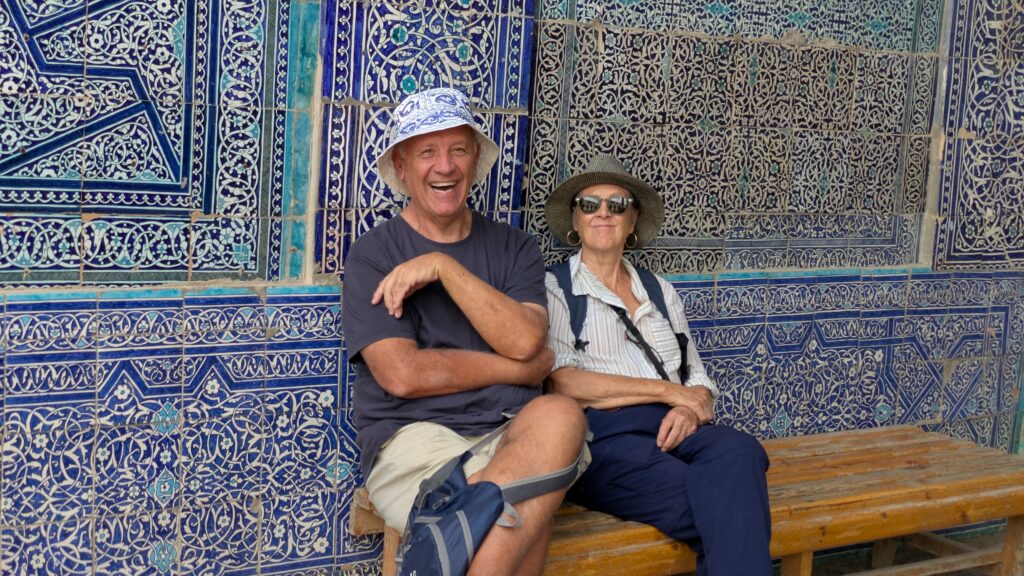
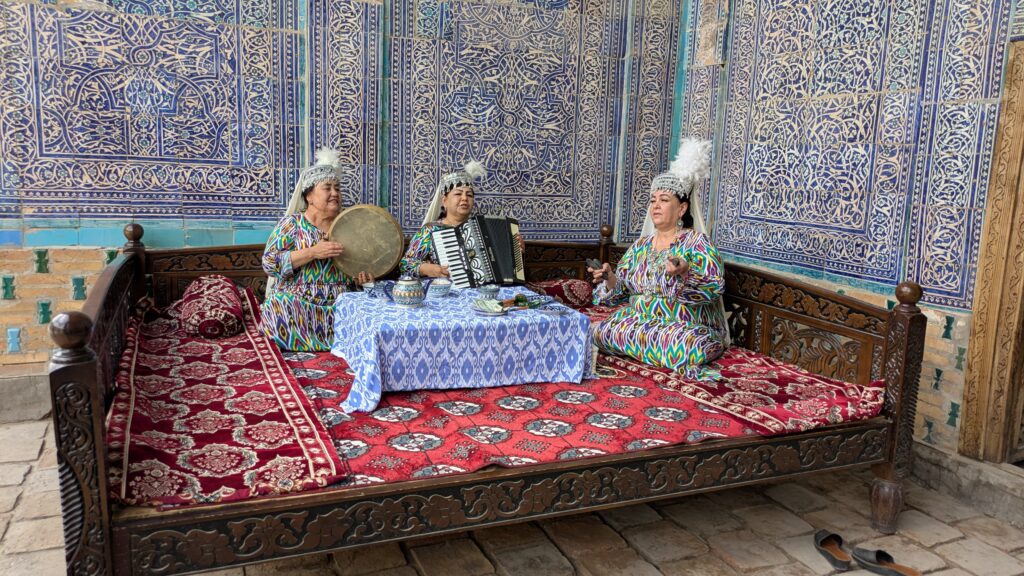
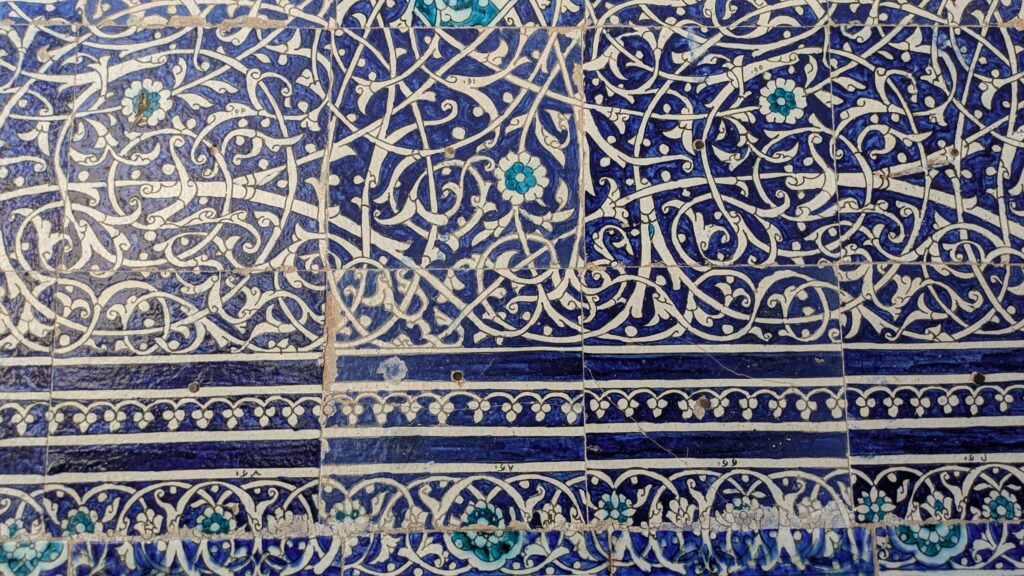
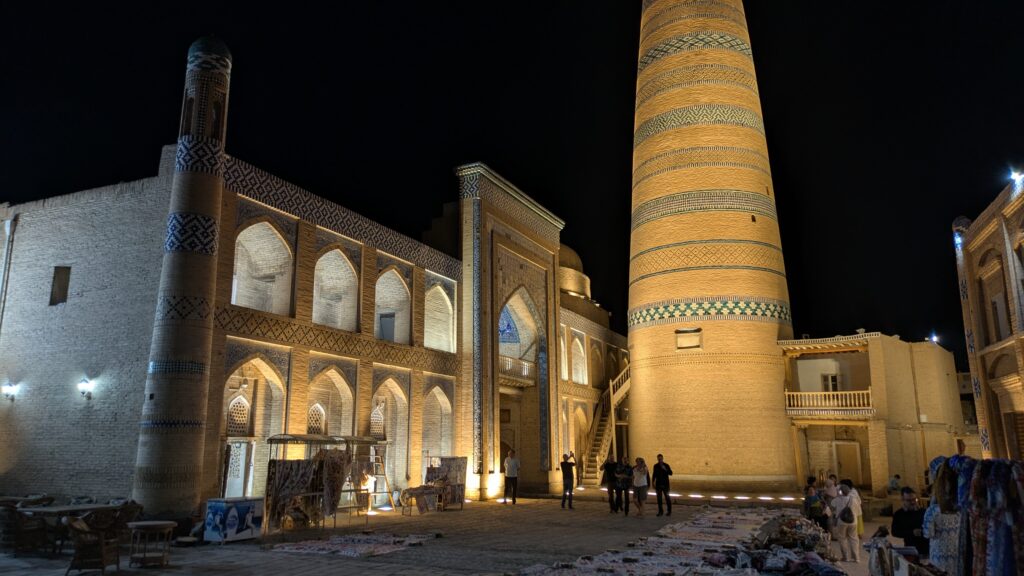
The two winners to my mind in Khiva were the spectacular minarets that rise up into the sky – and are beautifully lit up at night – and the gorgeous blue tiles that line the walls of the madrassas, mosques and palaces. Some of these tiles are the originals from the 16th century and are just fabulous.
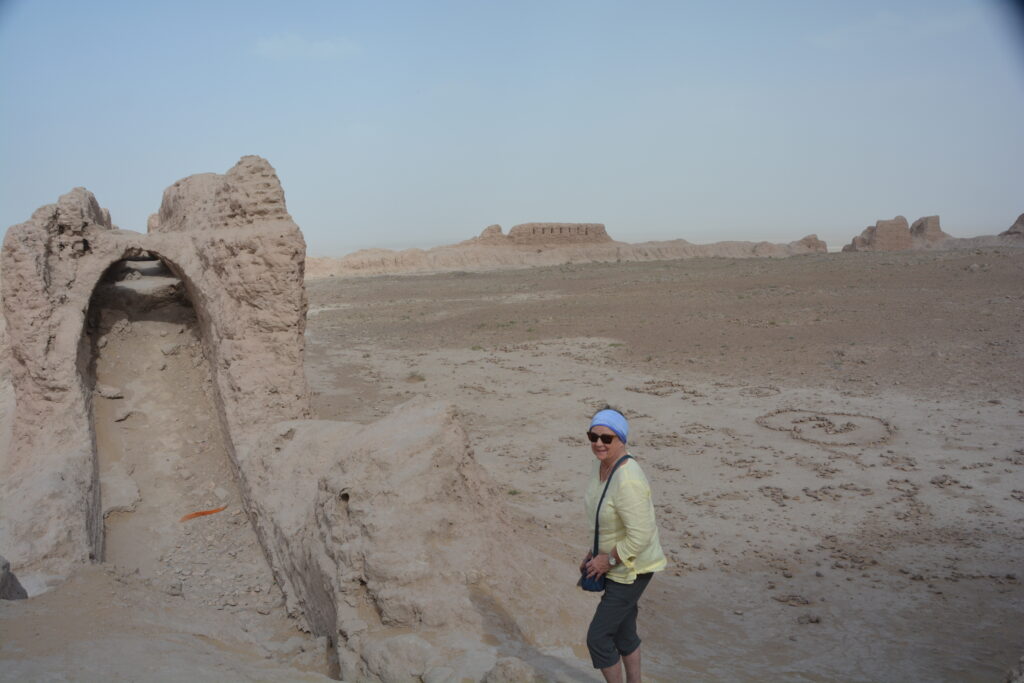
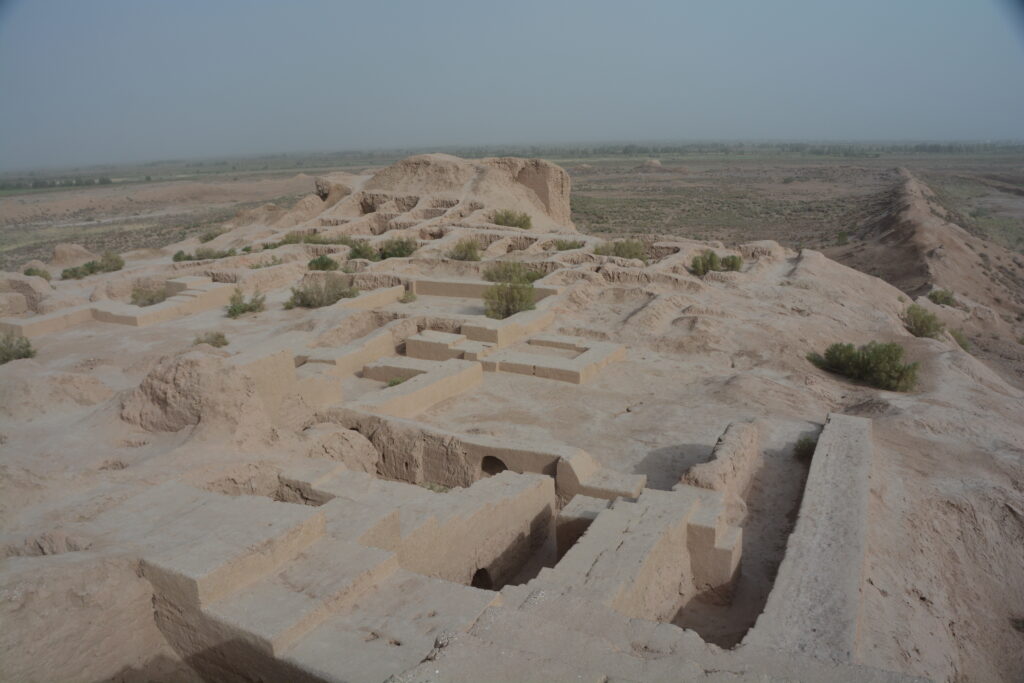
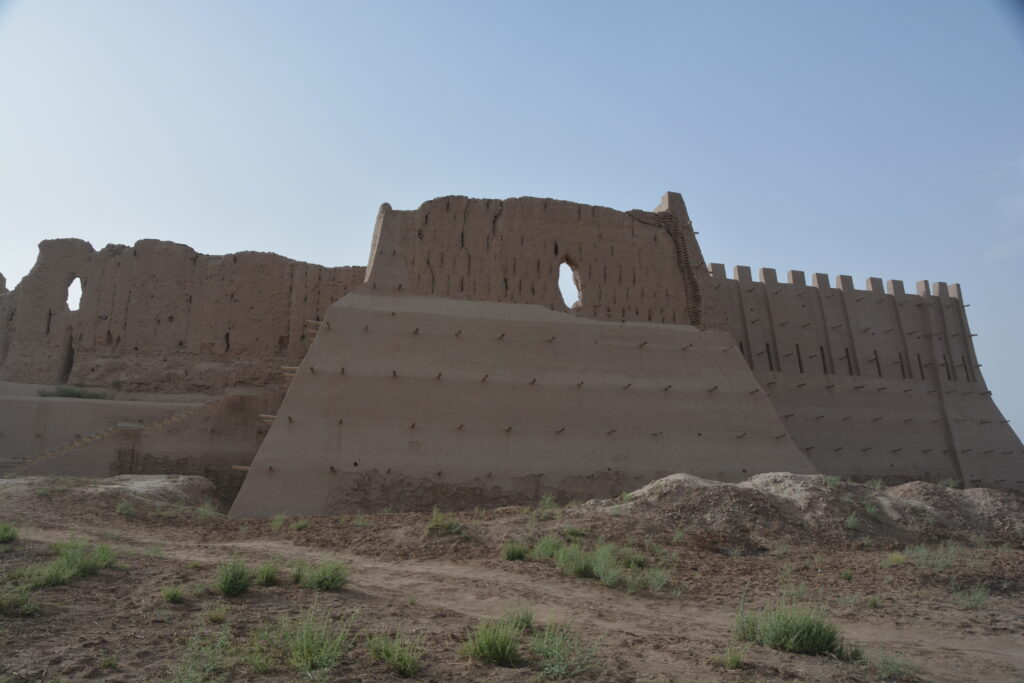
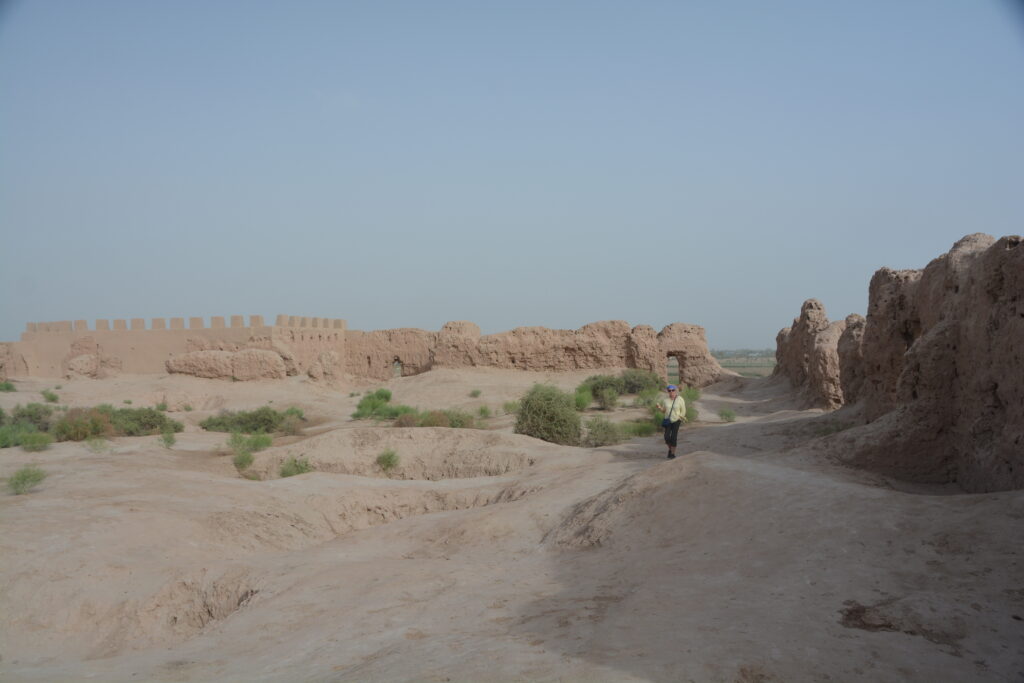
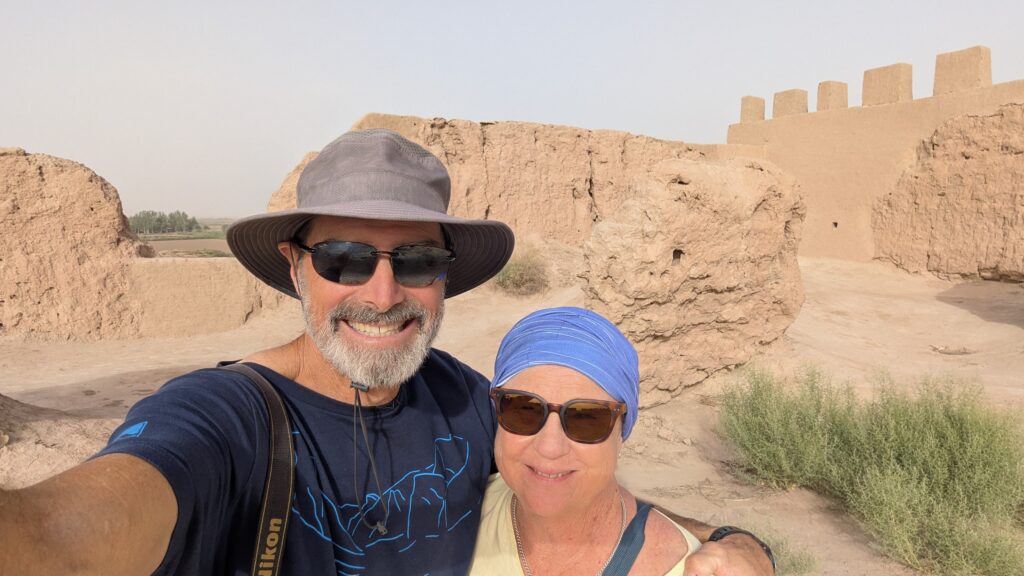
That afternoon we booked a mini-van to take us out into the countryside – read desert – to see three ancient mud-walled fortresses that were all built in the BC era. Today their ruins command prominent positions on bluffs and hill tops, acting as a historical reminder to how this ancient land has been ruled for thousands of years.
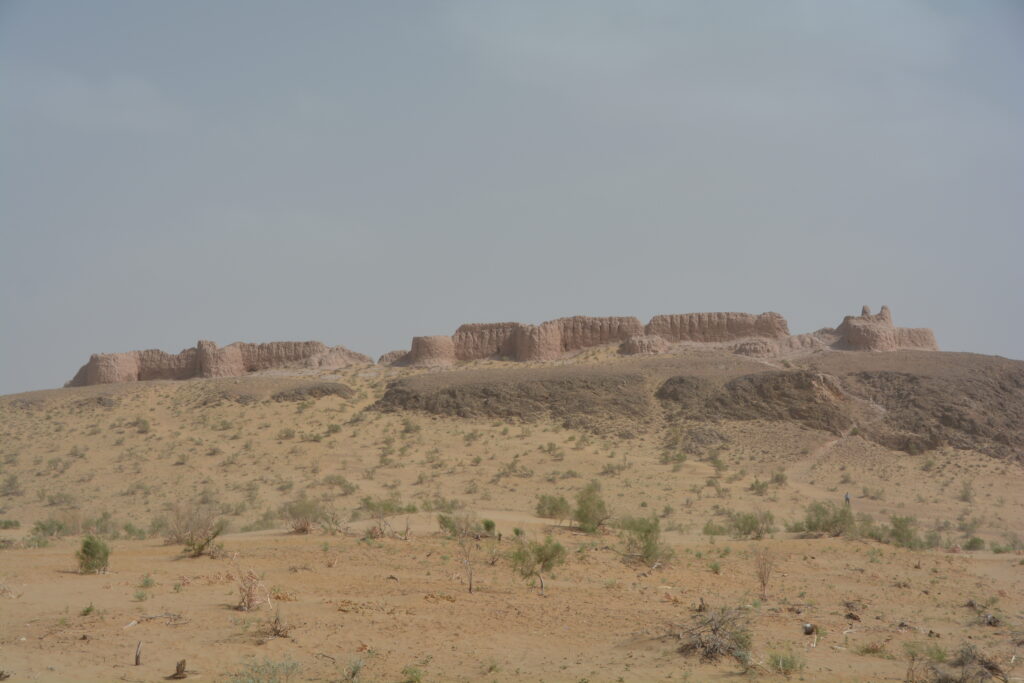
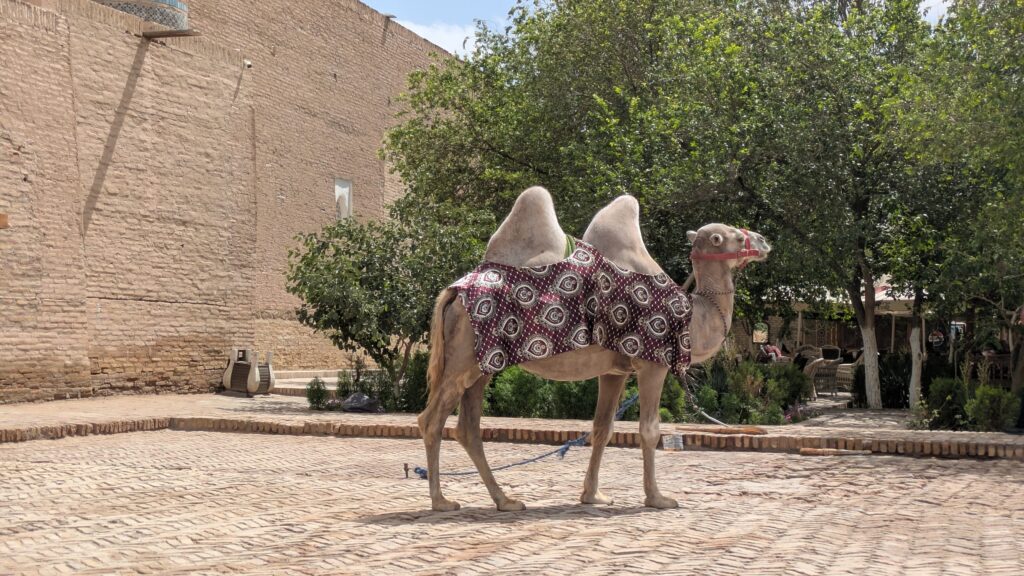
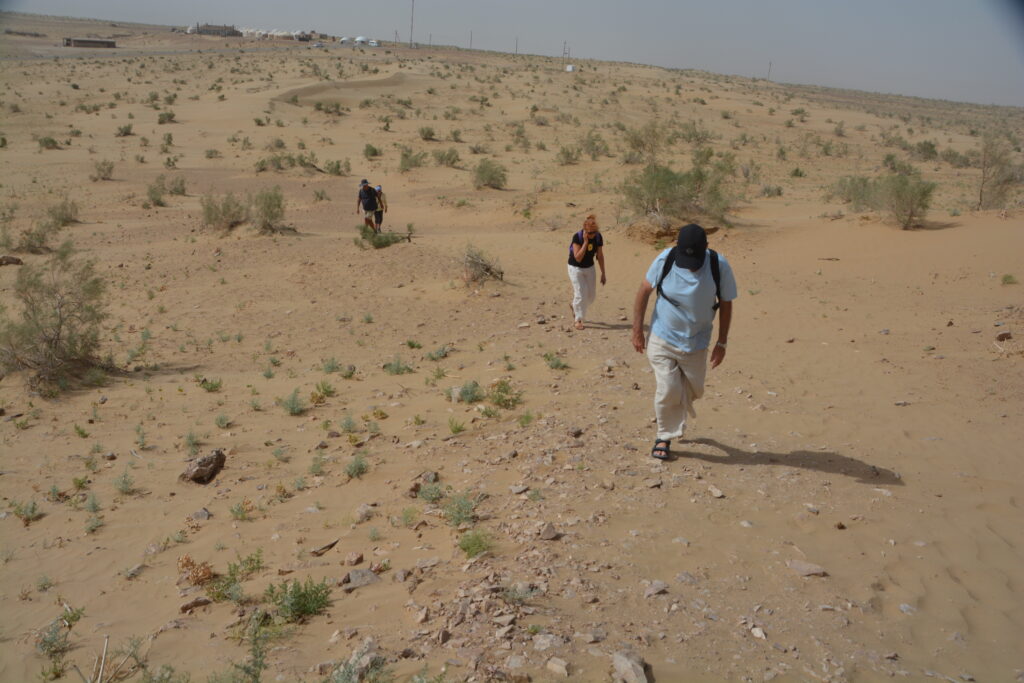
The first fortress we went to, called Ayaz Kala, by far the biggest and the only one without any reconstructed walls, needed a 20 minute walk across the sand dunes to get to it. That’s fine except the wind was absolutely howling and the sand was blasting our faces, invading our mouths and eyes, just brutal. A real Lawrence of Arabia moment without the camels (although there were some camels nearby). If you want the full Uzbekistan desert ancient history experience, this was it.
There’s no doubt Uzbekistan is the jewel in the Central Asia crown and so far it has delivered. But now we were headed southward to the two most famous cities of the region – Bukhara and Samarkand. This should be good.
Comments
Uzbekistan — No Comments
HTML tags allowed in your comment: <a href="" title=""> <abbr title=""> <acronym title=""> <b> <blockquote cite=""> <cite> <code> <del datetime=""> <em> <i> <q cite=""> <s> <strike> <strong>