Dutch Harbor
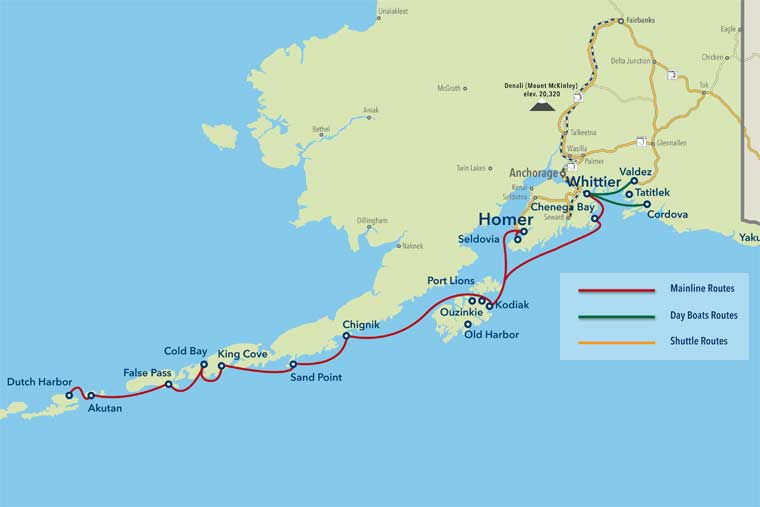
Human habitation of the Aleutian Islands ends at the remote port of Dutch Harbor on the distant island and town of Unalaska. To say Unalaska is at the end of the road is misleading – there are no meaningful roads within probably 600 miles – but it is at the end of the public ferry system run by the Alaska Maritime Highway System. And this is not a normal ferry service – it takes four days and four nights to get to Dutch Harbor, making seven stops at small fishing communities along the way. And we were halfway there.
We had left the small community of Old Harbor the night before and woke to blue sunny skies and smooth seas after sailing south along the eastern edges of the Alaskan Peninsula. The ship was fairly full and there was an element of controlled chaos as people slept on the floor, in the booths (including us) or in the reclining chairs. Others had camped out on the top deck, braving the conditions.
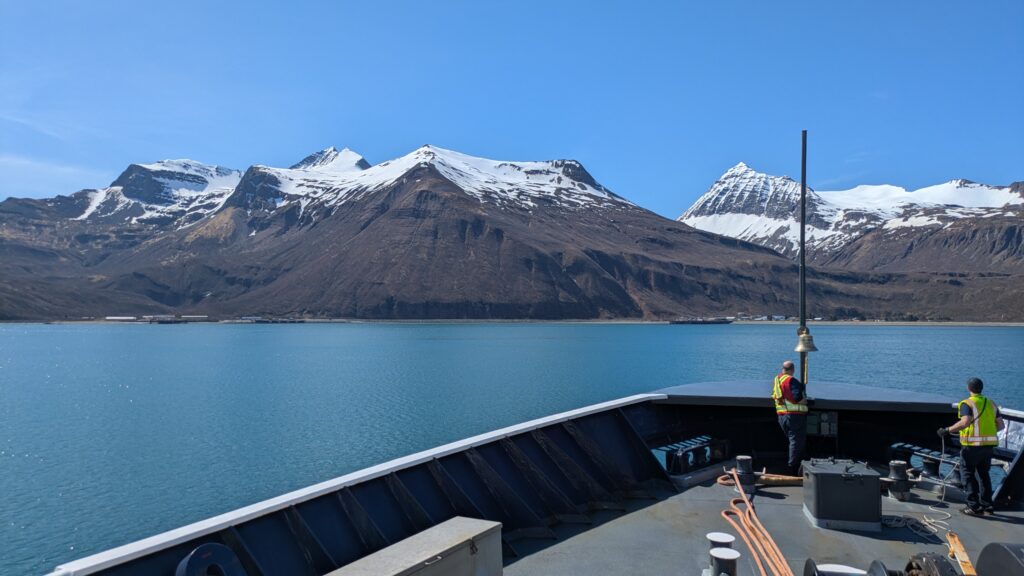
The contoured coastline featured many inland bays, snow-capped mountains in the background and offshore islands nearby. The routine onboard was relaxed, sometimes indoors and sometimes outdoors on the rails watching Alaska float by.
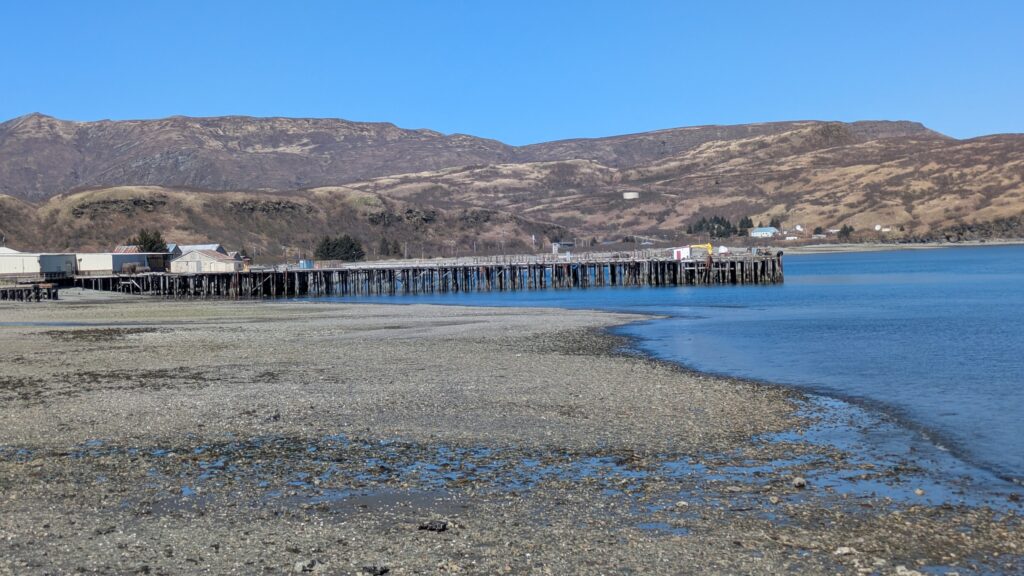
Before lunch we pulled into the small fishing community of Chignik, meaning ‘big wind’, with a population of 96 although that seemed a exaggeration based on the evidence. We had an hour ashore but the options were limited – Julie and I enjoyed a walk down towards the old jetty in the crisp sunshine and tried to recover our land legs.
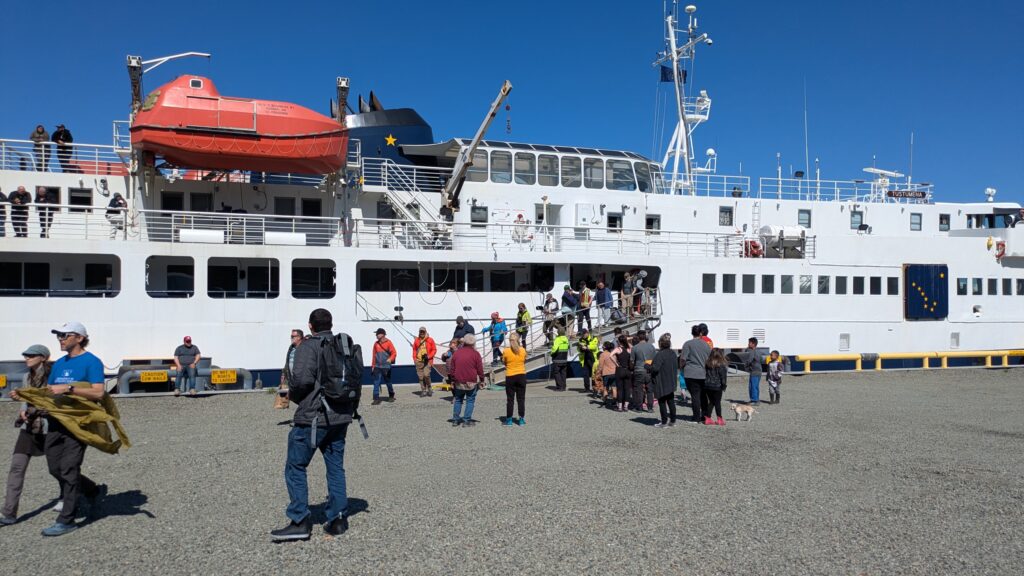
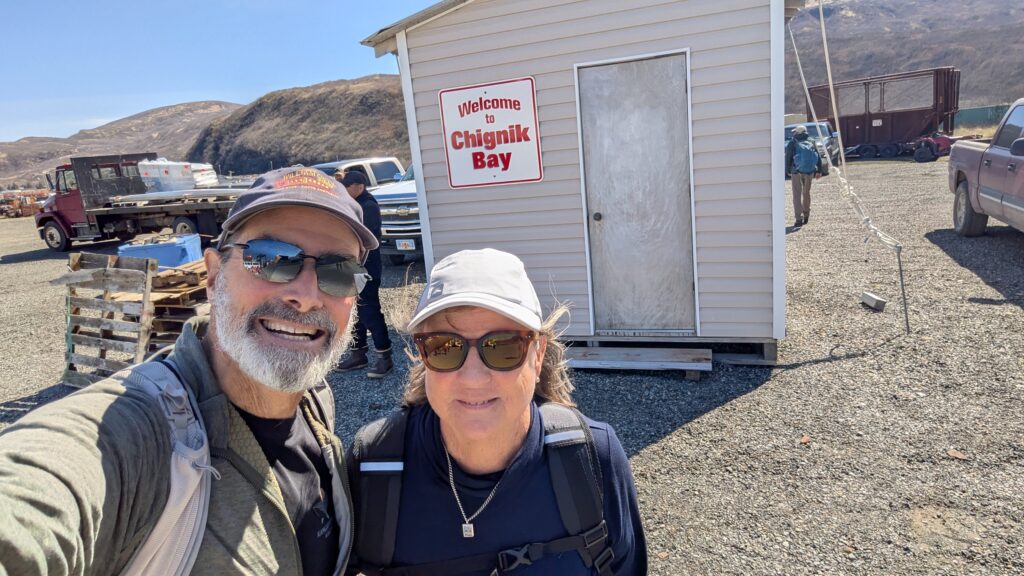
Surprisingly, about half the passengers left us at Chignik, potentially doubling the population of the town. As this was the first ferry service to these communities this year we watched numerous heavily packed vehicles drive off the Tustumena as families were resupplying their homes for the summer.
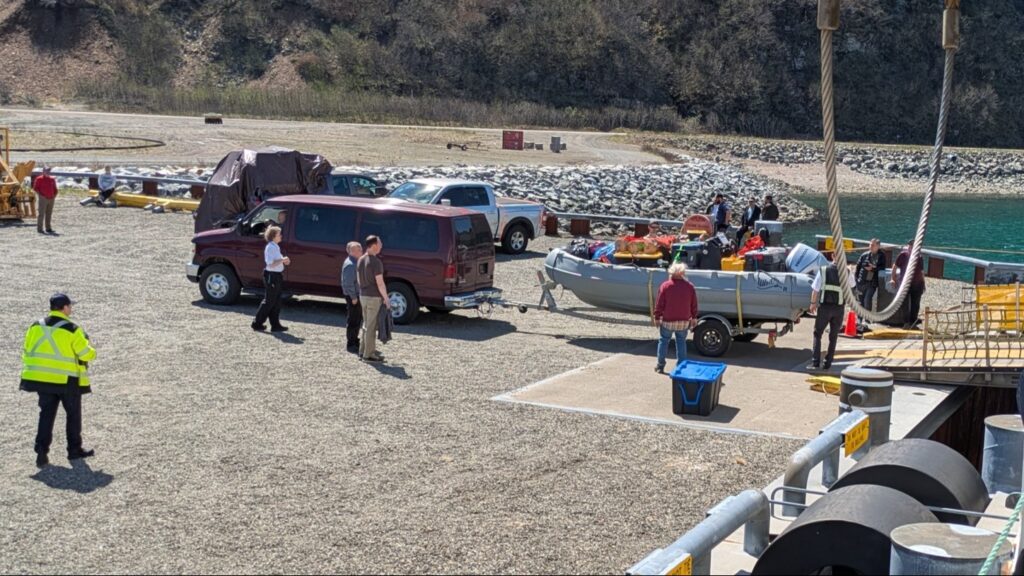
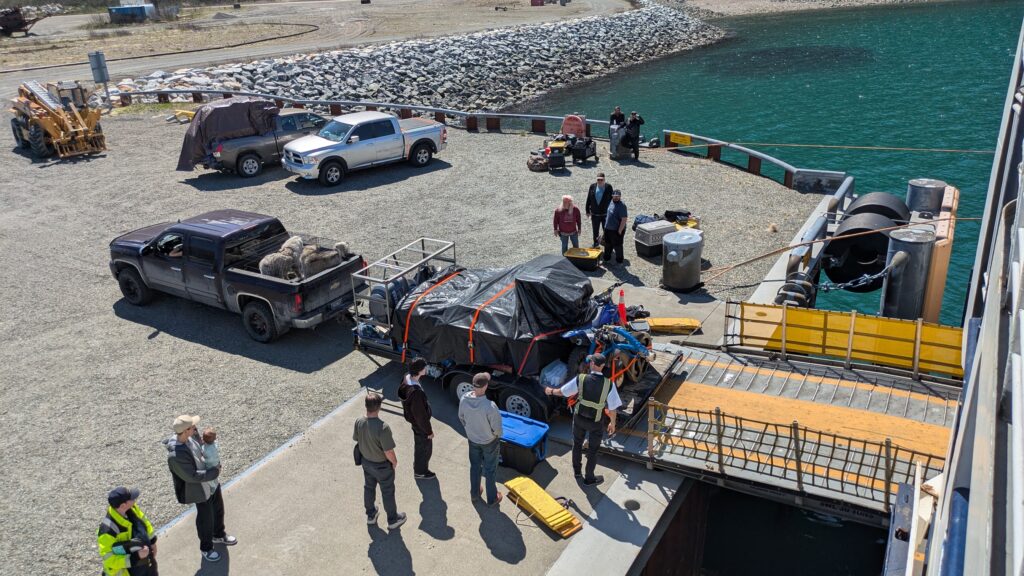
Our mighty vessel finally pulled away, another hour behind a schedule which always seems more like wishful thinking than anything else, and rounded the majestic Castle Cape before heading further south along a coastline filled with bays, fjords and tall cliffs. We settled into another afternoon onboard before enjoying a decent dinner in their ridiculously cheap restaurant (cheeseburger and fries for $10, soft drinks from the vending machine for only $1.00) and headed for our next port of call – Sand Point.
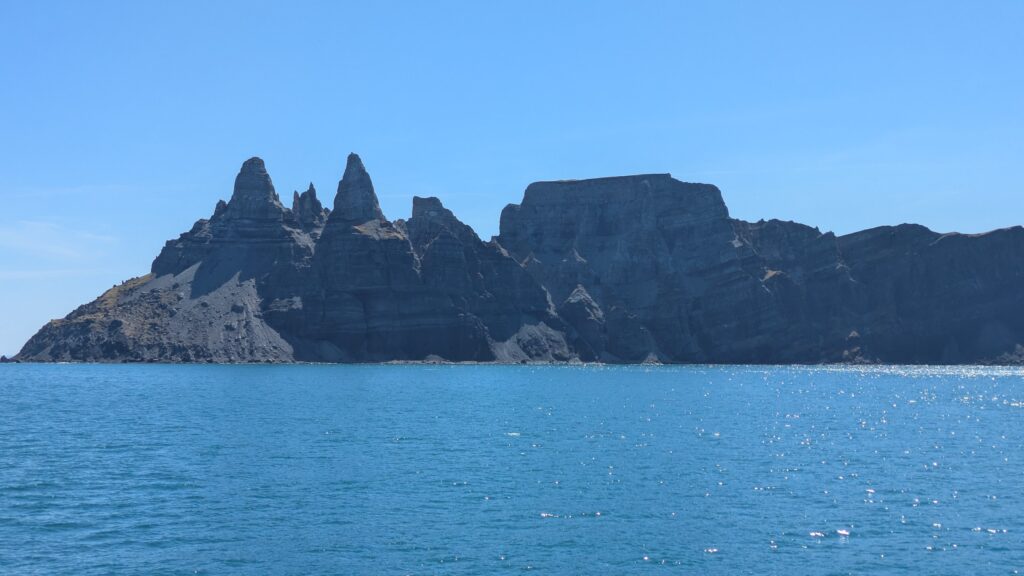
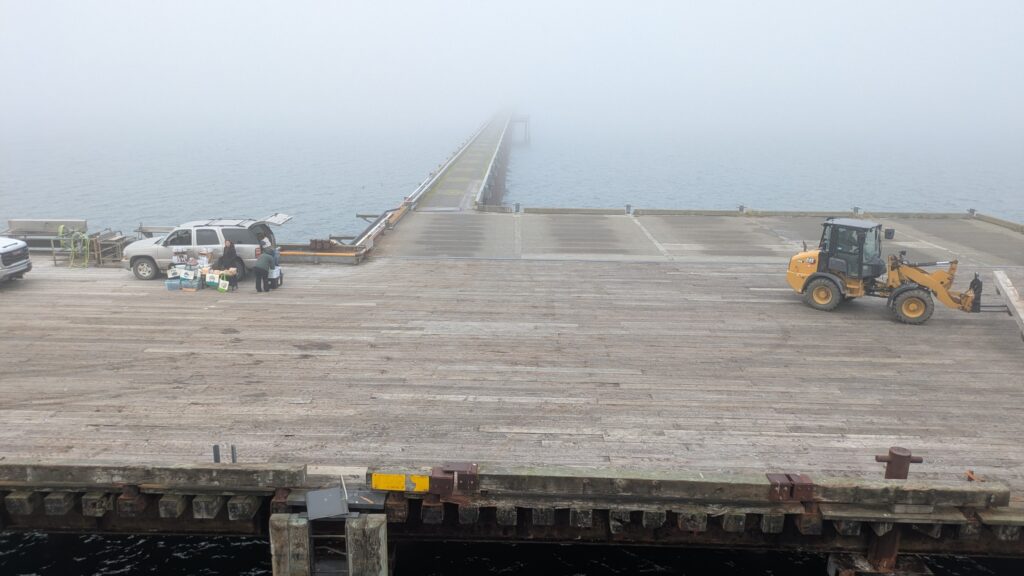
We arrived at Sand Point near 11pm, in other words – at sunset – but only had time to stretch our legs on the large wooden jetty before climbing the gangplank again and settling in for another night in our booth.
The next morning we woke early as the Trusty Rusty Tusty pulled into King Cove, noted for it’s large collection of crab pots piled up in the port and the large dry dock facilities. We took a short walk near the wharf, enjoying the sun climbing over the nearby mountains. King Cove seemed abandoned but had all the signs of past life and potential for future life.
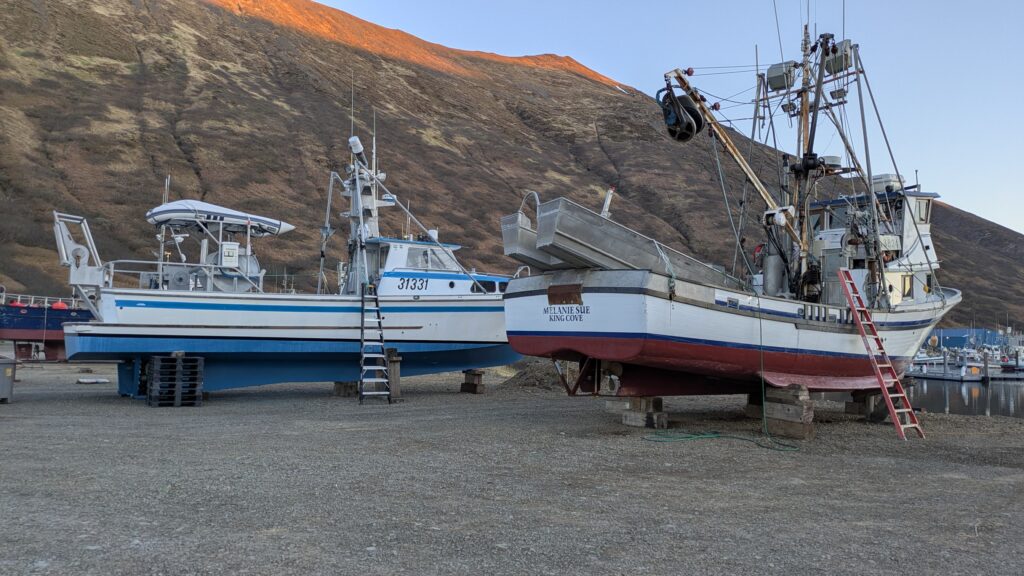
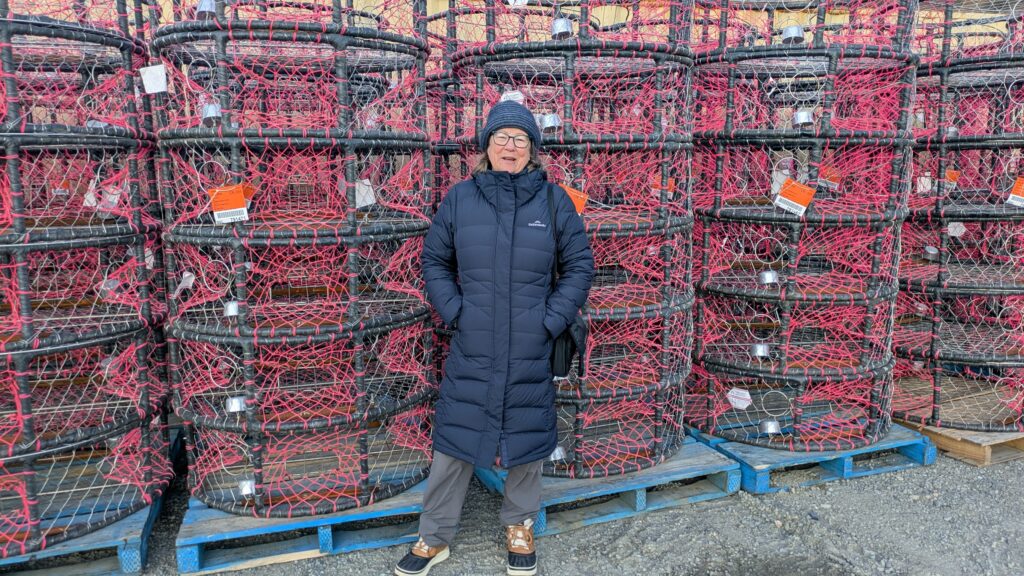
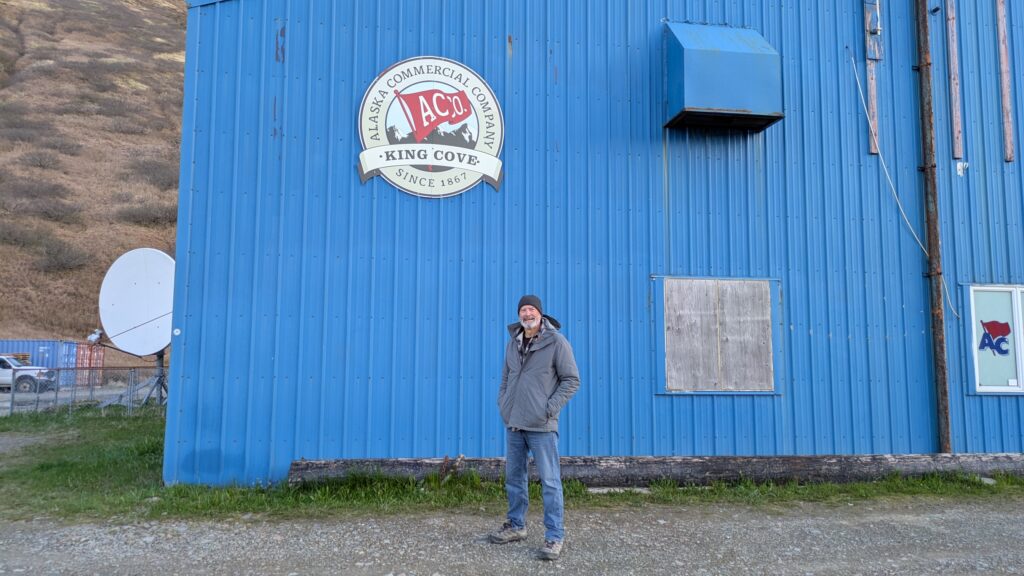
More photos of the scenes at King Cove.


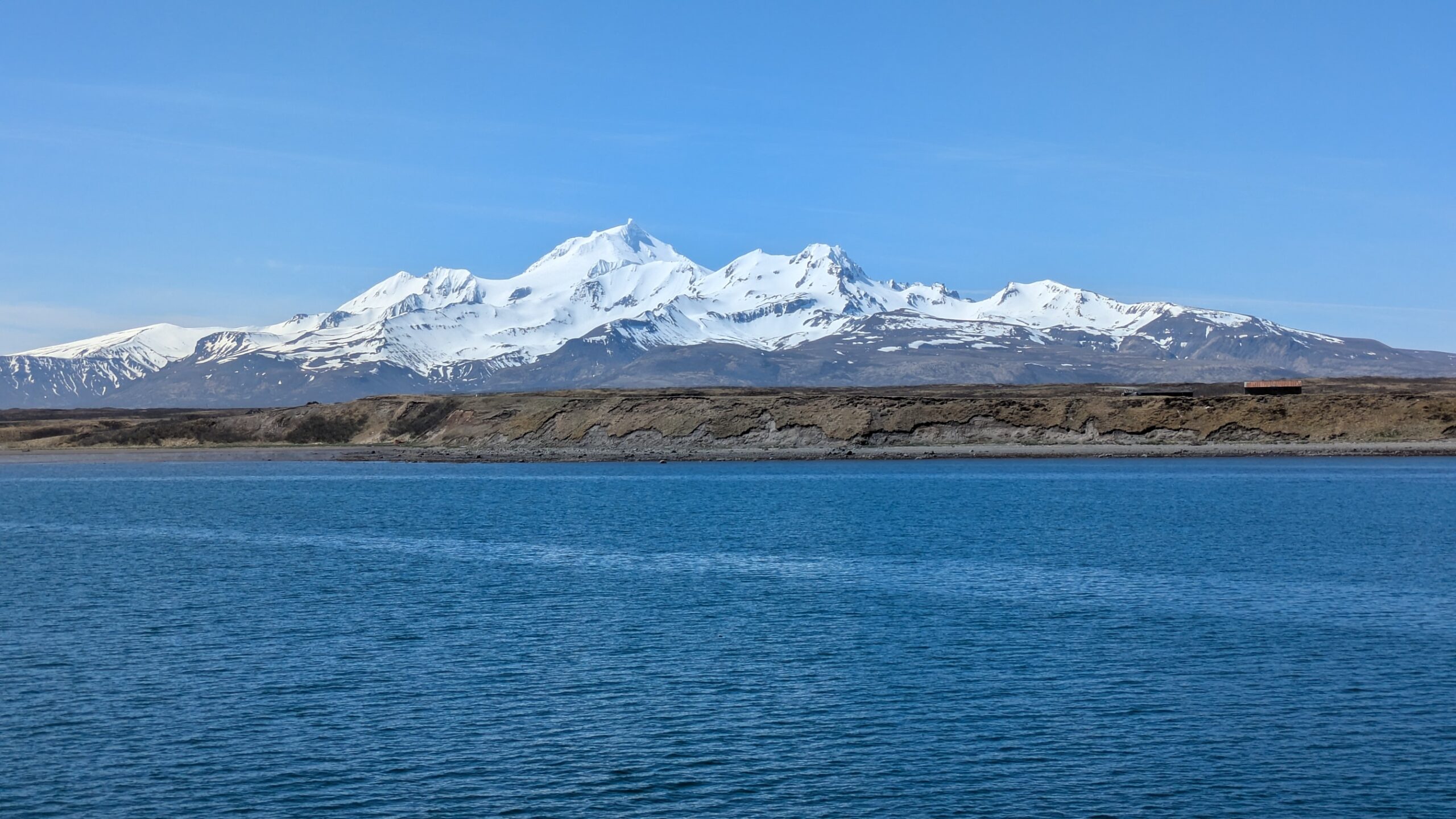
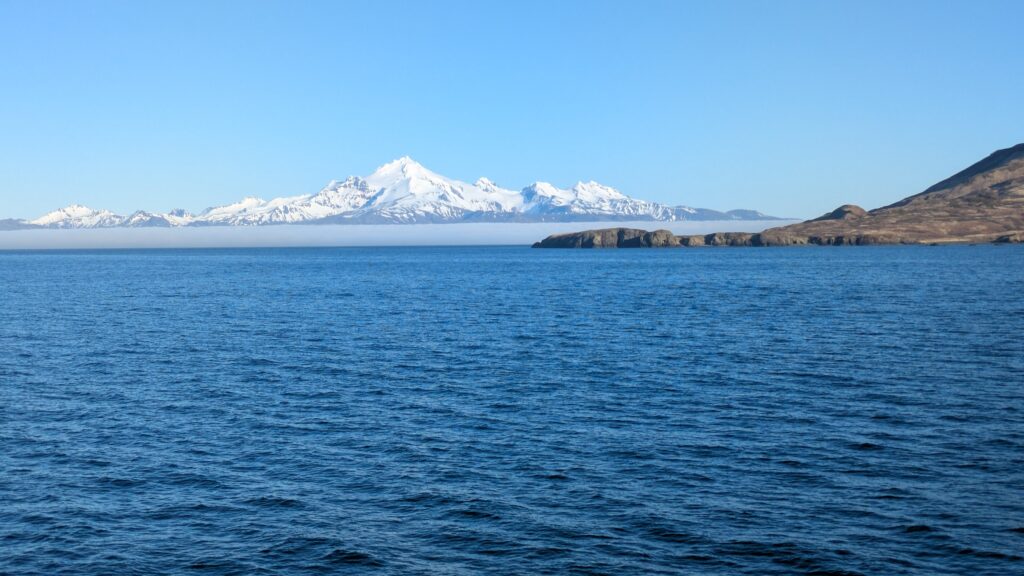
The short hop over to Cold Bay featured a couple of magnificent snowy mountains, including the tallest mountain in the Aleutians, Mt. Shishaldin. This perfectly symmetrical volcano on nearby Unimak Island is still very active and has a constant stream of steam and ash blowing from it.
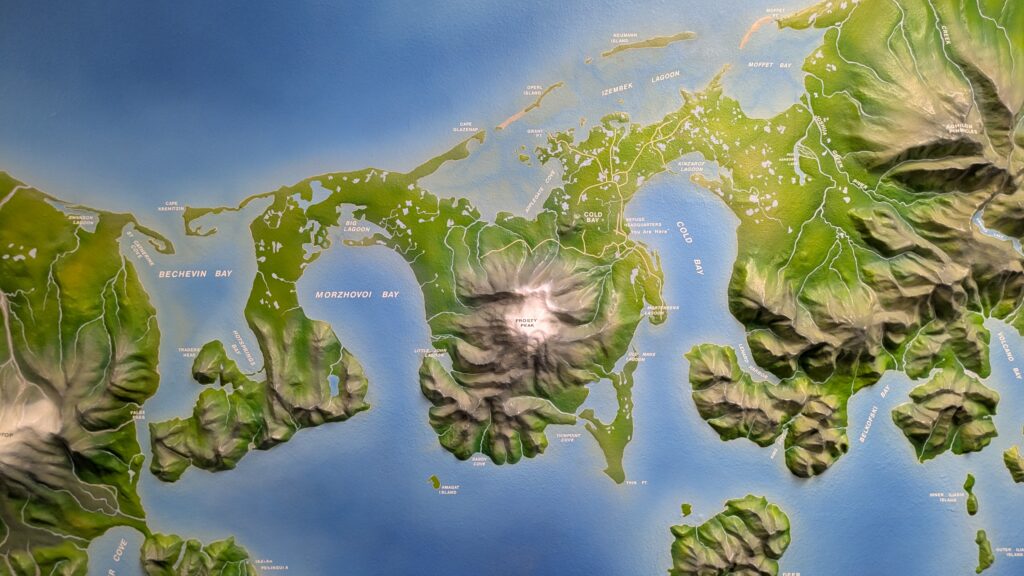
The fog set in and obscured our arrival to Cold Bay, which in addition to its 30 or 40 full time residents also hosts the headquarters for the huge Izembek National Wildlife Refuge.
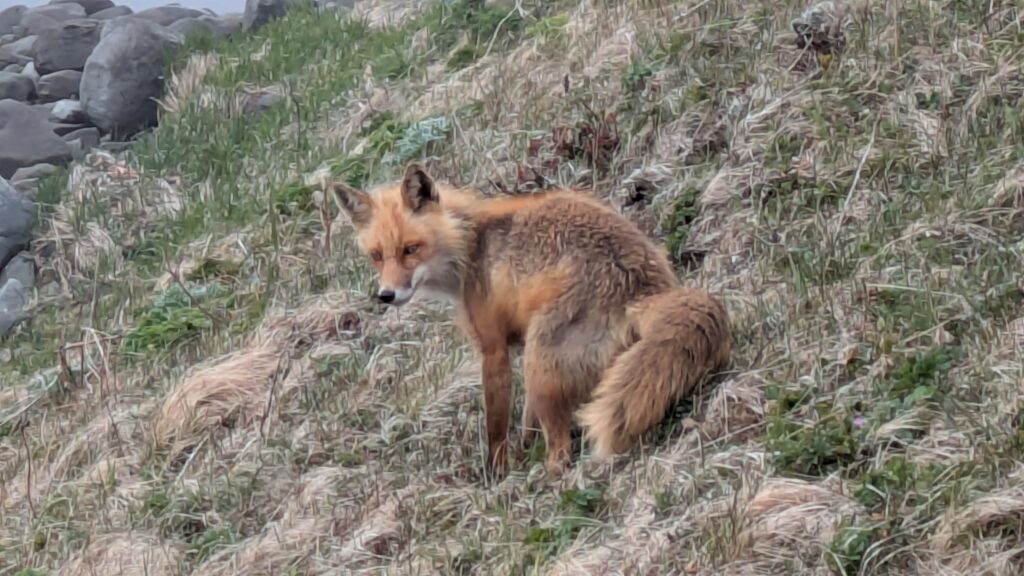
Julie and I had both won our seats for a tour of the Refuge in a lottery onboard the ship and were greeted by a few local vehicles and park staff who took us first to the park office and then out to Grant Point on the other side of the island where we learned more about the park, the valuable wetlands area bordering the Bering Sea and the flora and fauna that lived there. Despite the thick fog it was great fun, especially spotting a very friendly red fox living nearby.
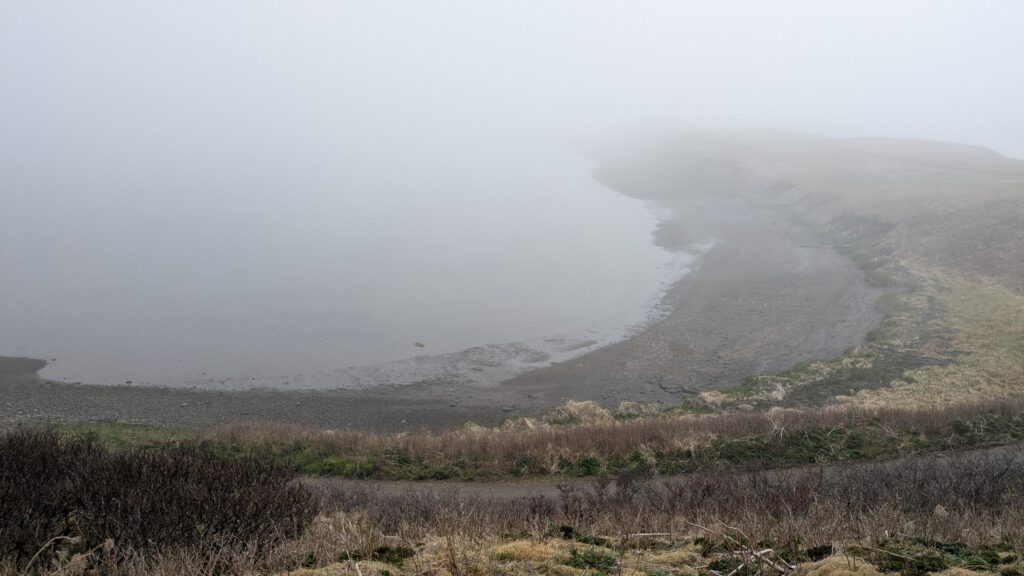
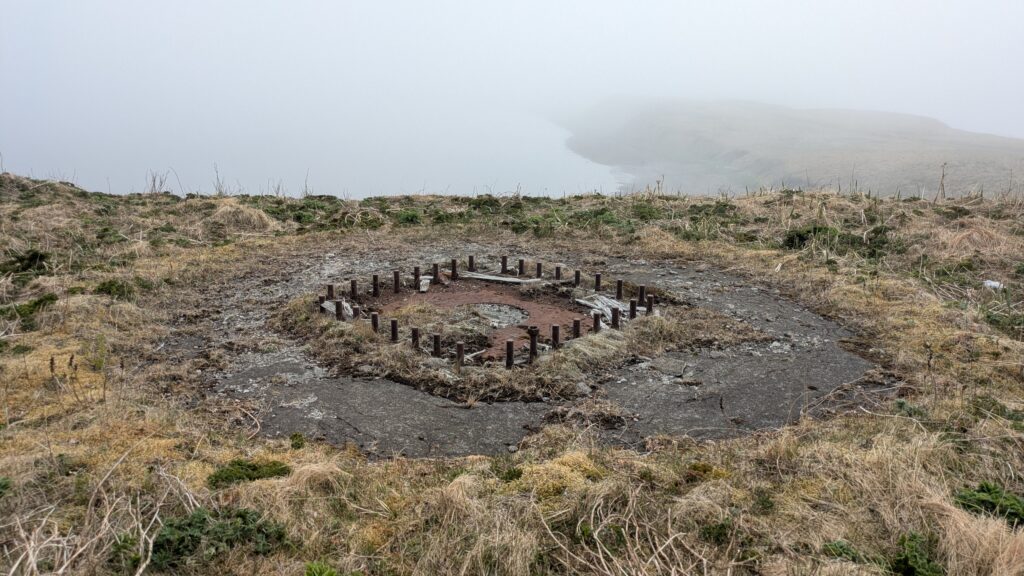
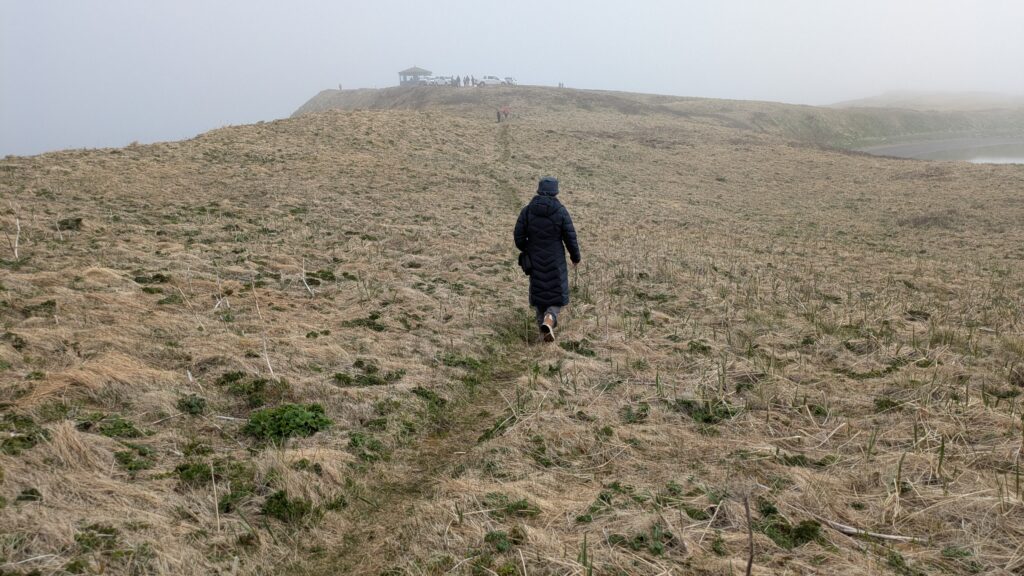
We saw more of the island as the fog was lifting on the way back to our ferry and set sail again, heading ever closer to the steaming volcano of Mt Shishaldin. Along the way Julie used her binoculars to spot two large grizzlies feeding on the shore nearby.
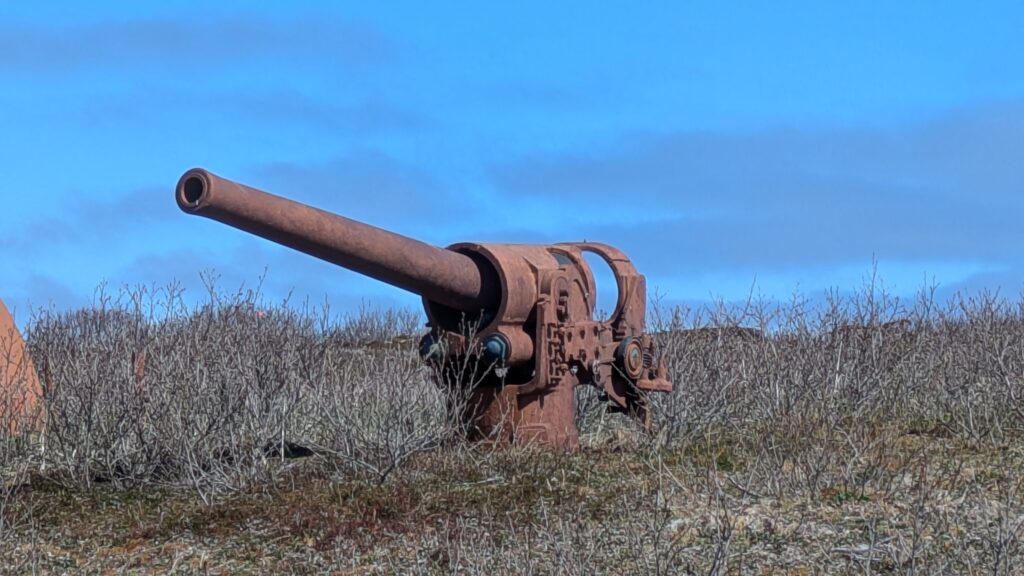
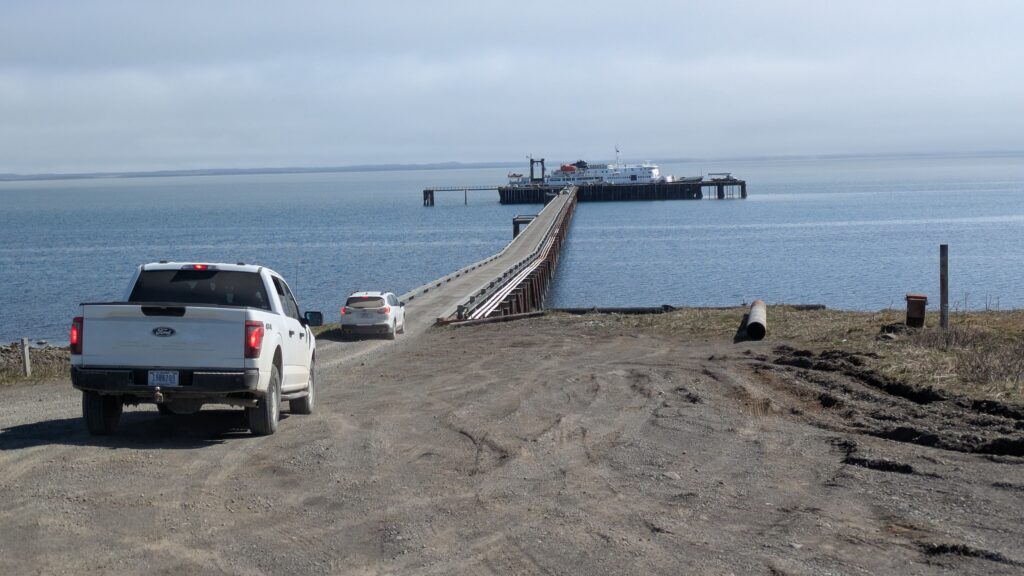
But wait, there’ s more. Our third stop for the day was at False Pass on Unimak Island itself, a town employing a couple hundred people at a fish processing plant when in season. We walked back along the shore to what can only be called the dead centre of town – centre because the only two roads crossed there and dead because other than two friendly labradors we couldn’t find any life at all. What a beautiful setting to live in but remote and obscure beyond words.
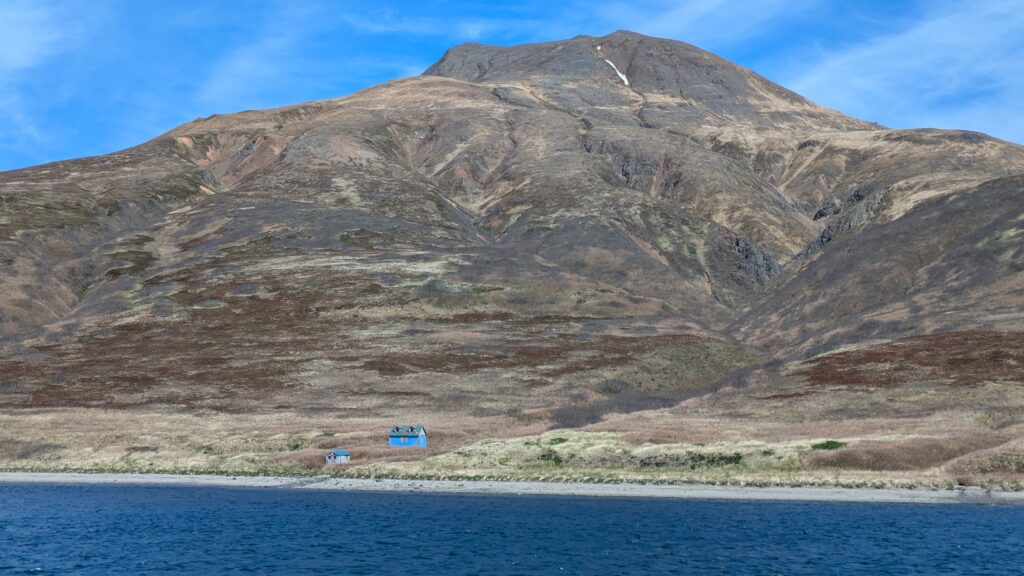
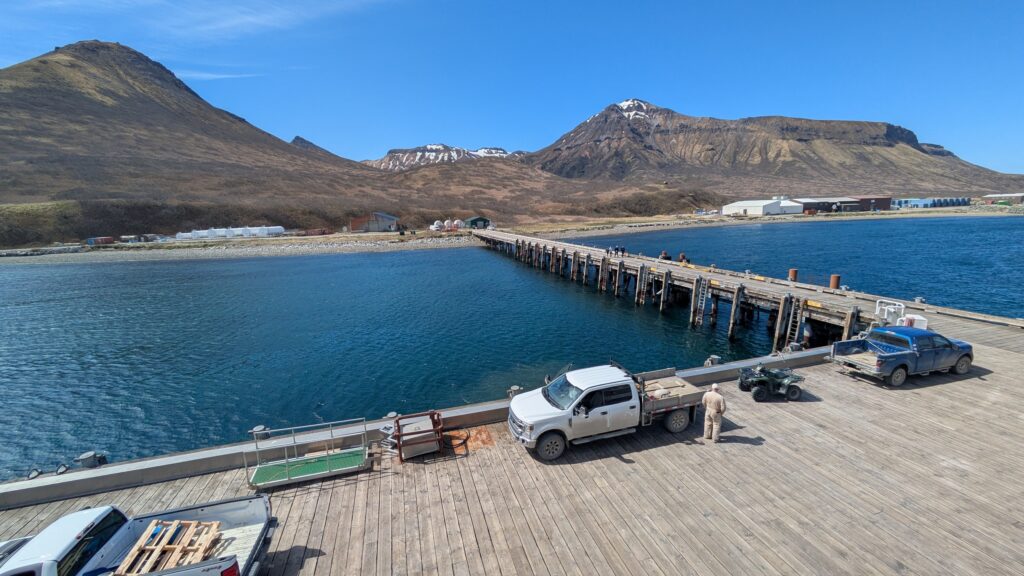
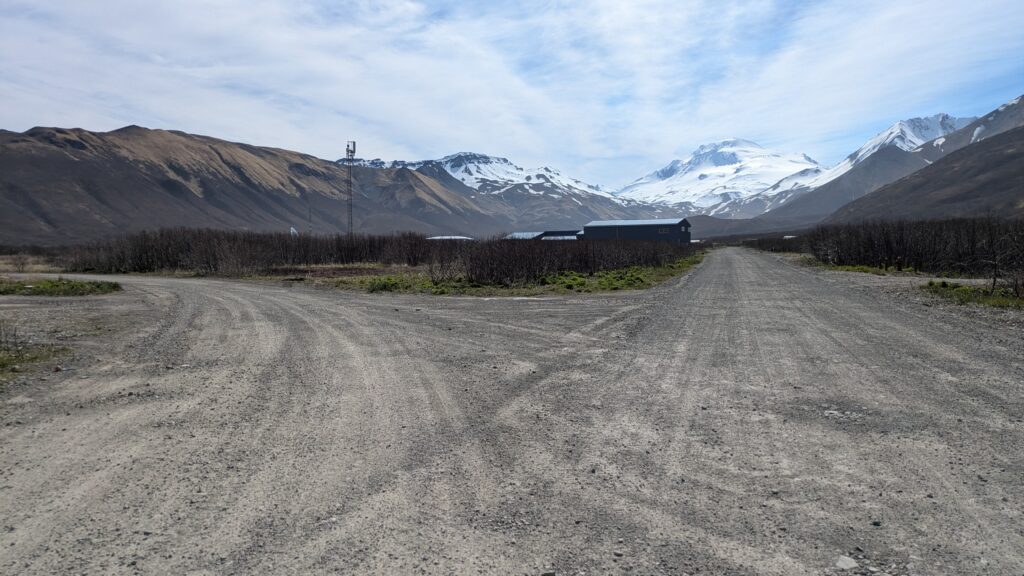
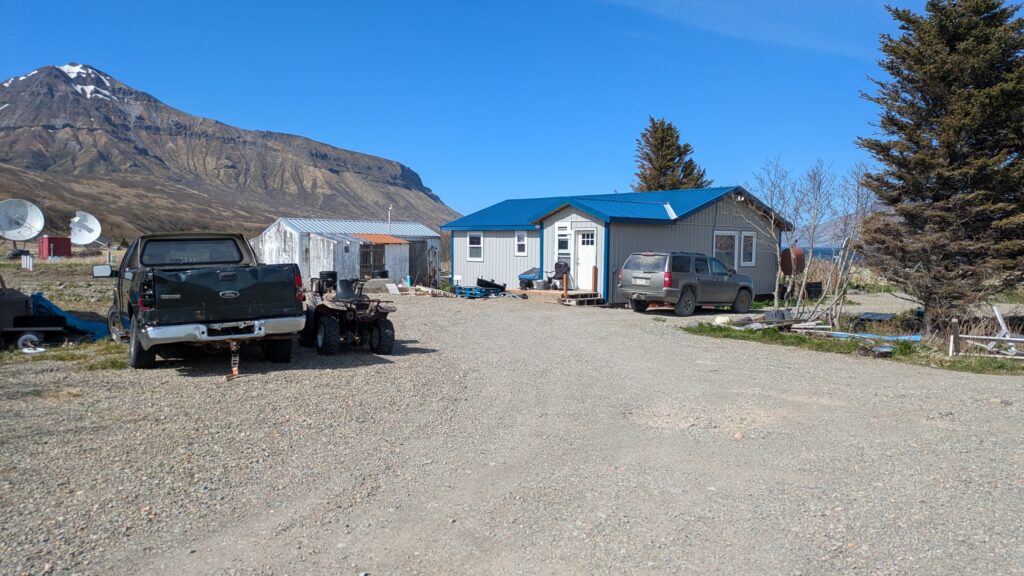
Visiting these remote communities has made us marvel at the size, range and diversity of the United States. It is easy to forget we are in the US and hard to reconcile these outlier communities on remote islands of the Aleutian chain and the lives people live here with what is happening back in the lower 48 and particularly in Washington DC. Like two different worlds.
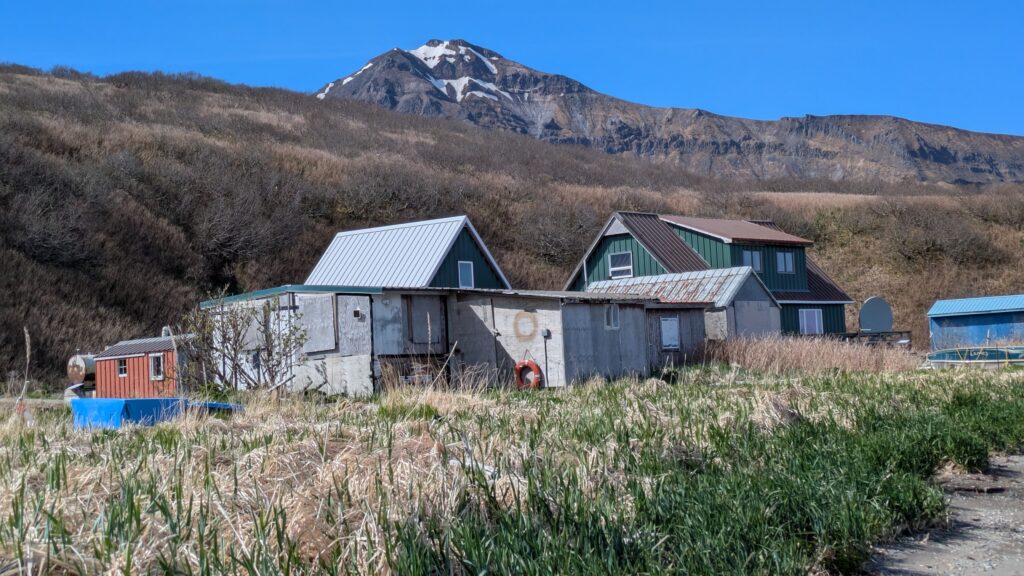
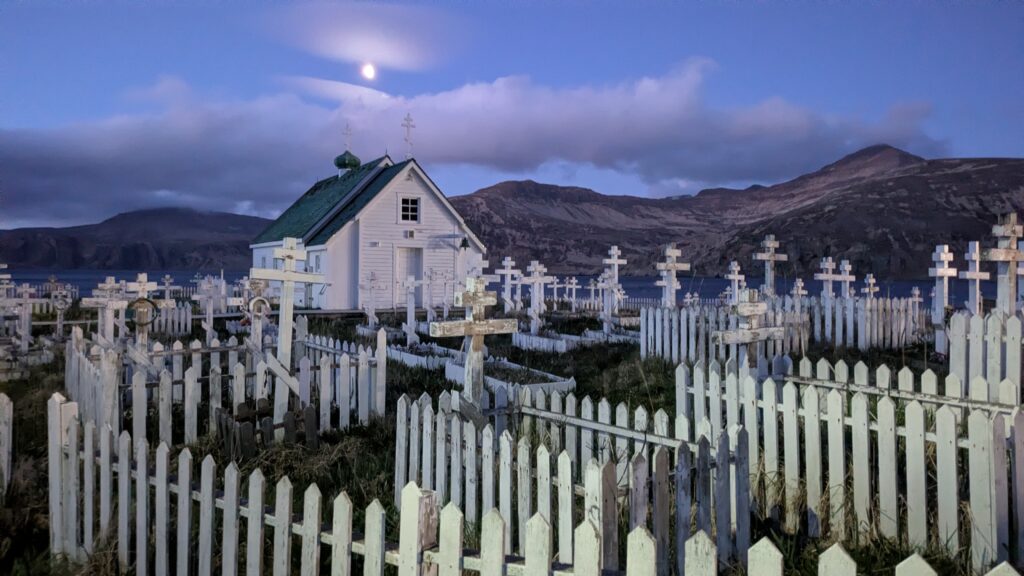
We woke the next morning at 4.30am as the Tustumena pulled into the small community of Akutan on the small island of the same name. We couldn’t see much of Akutan because it was dark, the first darkness we had experienced in over a month, but I disembarked with a few others and made our way quickly to a cute little Russian Orthodox church near the port. The Captain then blew his horn – an unmistakable message that he wanted to leave – and we raced back to jump on board befor they pulled the ropes in.
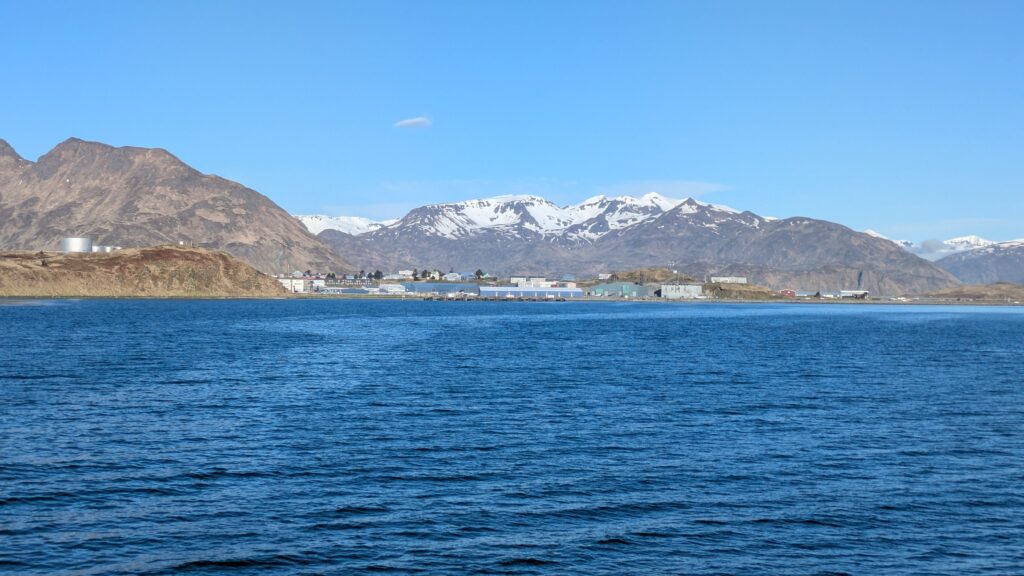
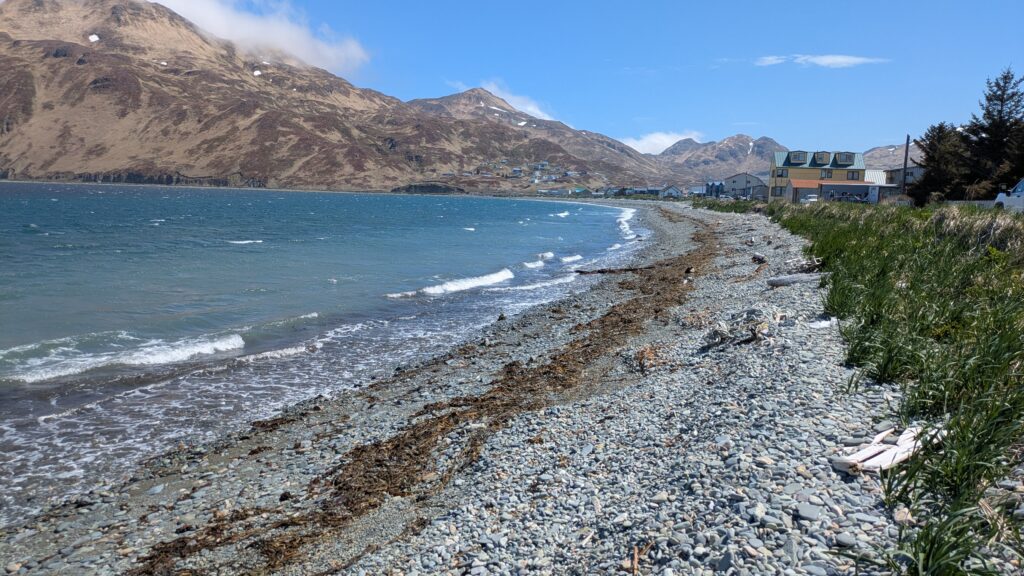
By 9am our final destination of Dutch Harbor came into view, nestled in a protected bay surrounded by steep mountains still sporting snow on their tops. We pulled into the port just outside the town of Unalaska and disembarked for the last time. We gave the Tustumena a small wave goodbye, knowing she only makes four trips a year to this distant port and we had been on her first one this year.
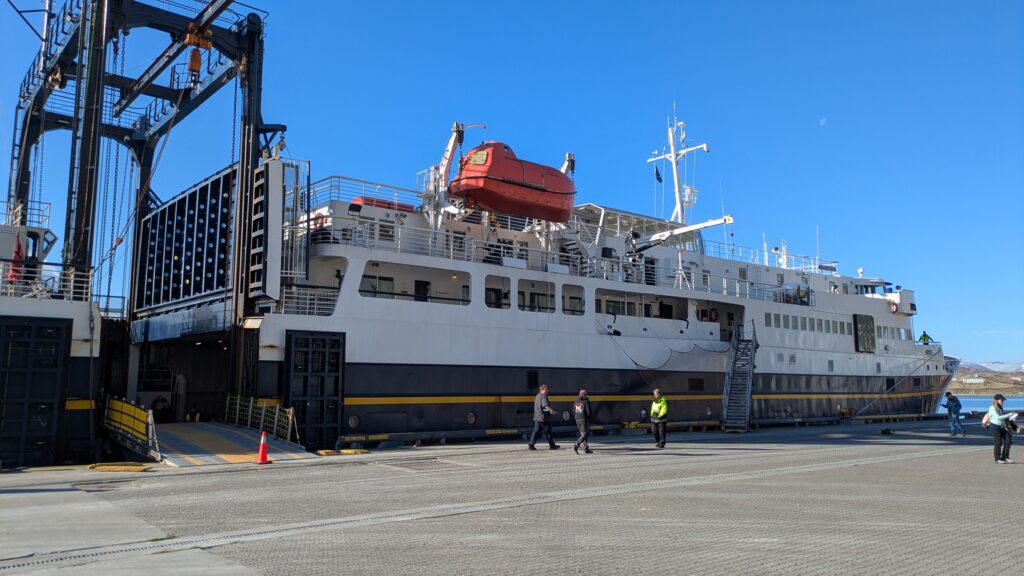
We caught a rust-bucket taxi into our hotel, the Grand Aleutian Hotel, which turns out to be the only hotel in town and owned by a large fishing and processing company. The Grand Aleutian, if it had ever been grand, was no more, sad around the edges with no smiles or helpfulness from the staff. But with a comfy bed, hot showers and no sway when you walk around we were in heaven.
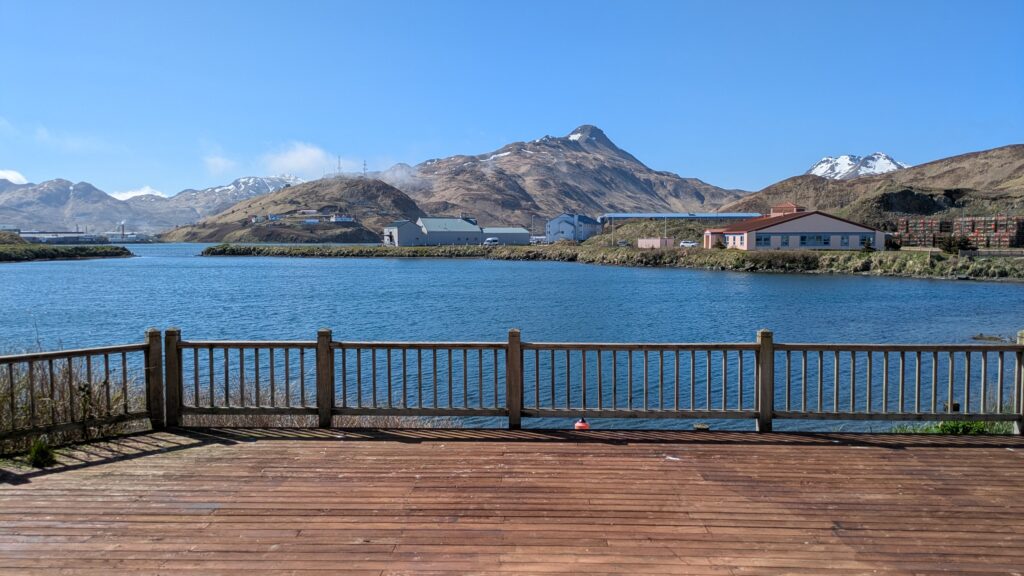
Unalaska has a permanent population of about 4,200 people, an absolute metropolis in these parts, but can swell to 10,000 when the fishing and fish processing season is in full swing. In fact, Unalaska is the largest commercial fishing port in the US by volume of catch and most of the fish is processed in the huge warehouse complexes before being shipped out.
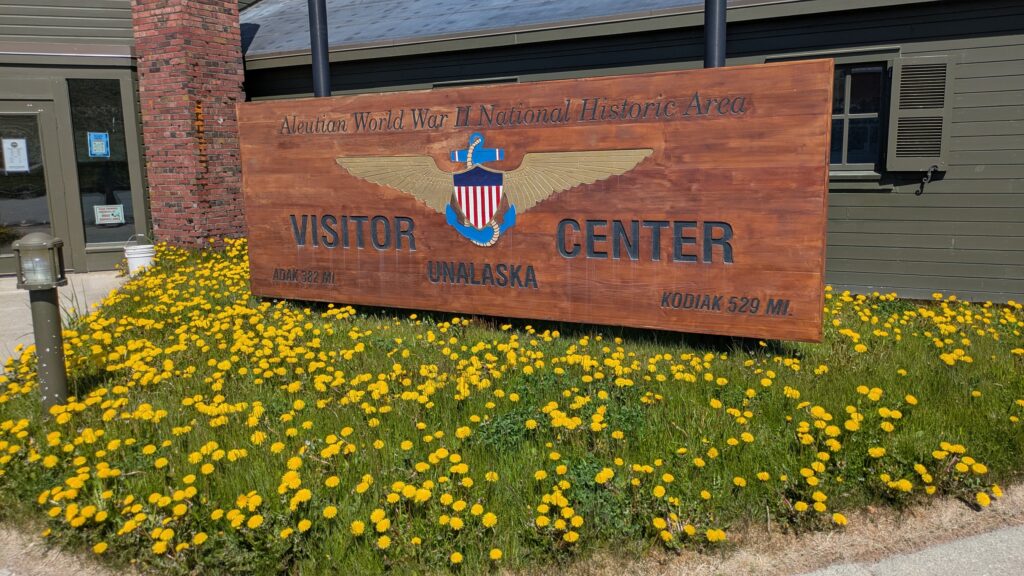
But here’s the fun fact that really caught my eye – Dutch Harbor was heavily bombed by the Japanese in 1942; in addition, two islands further out in the chain – Kiska and Attu – were invaded by the Japanese and held by them for over a year before the US rallied it’s troops and took them back. It’s the only example of the Japanese invading and holding US land during WW2.
We went to the small but excellent museum commemorating these extraordinary events, and in particular the hardships of the people involved and the difficulties of war in such remote, unknown and hostile terrain. We then went to a far more pleasant museum which documented the history and culture of the Aleutian Islands themselves, including the existence of woolly mammoths before the last ice age.
The old travel saying “It’s the journey, not the destination” could not be more true when talking about Unalaska. The journey to get there, four nights sleeping in a booth, experiencing all the small communities and stunning scenery along the way, was the real prize. In comparison, the town of Unalaska was a bit meh.
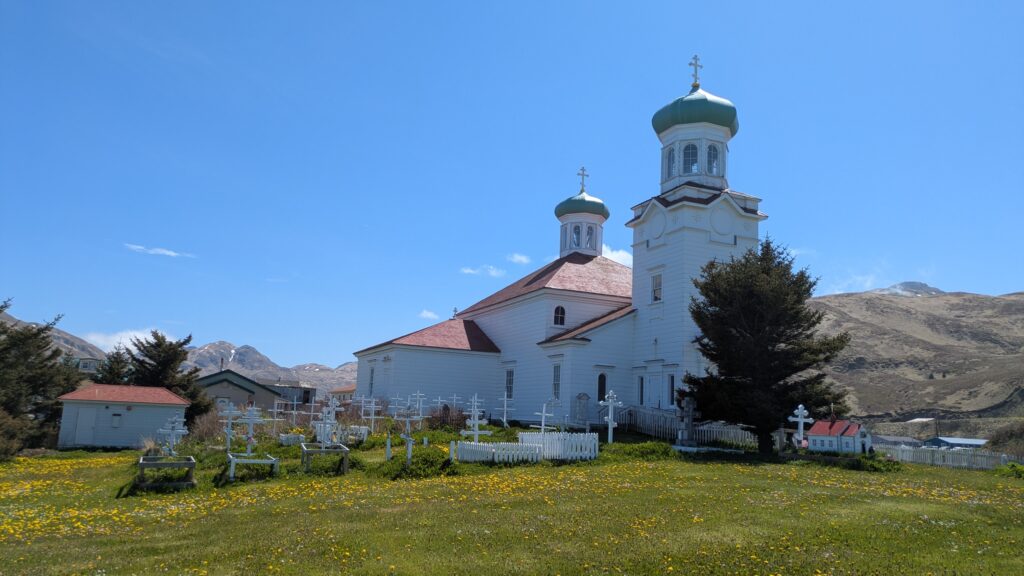
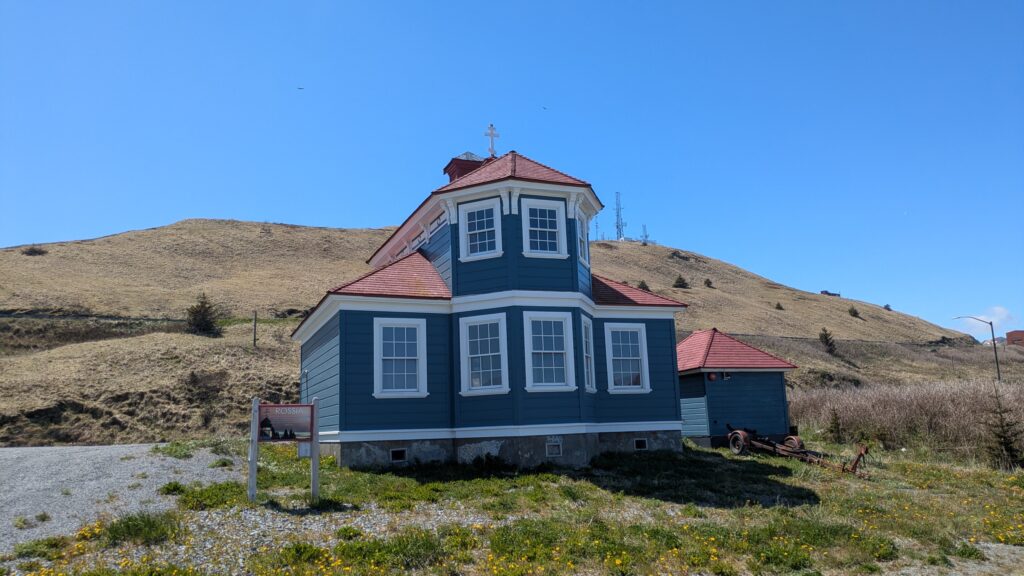
We took a taxi to the 100 year old Russian Orthodox Church, very cool, and wandered around the ‘downtown’ area trying to find any life or vibe or action. Sadly, none.
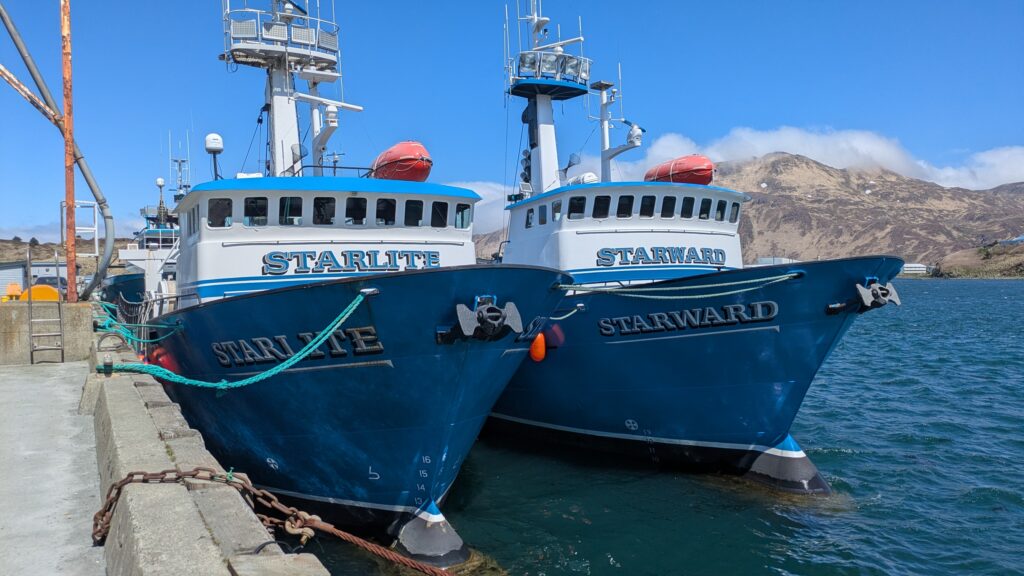
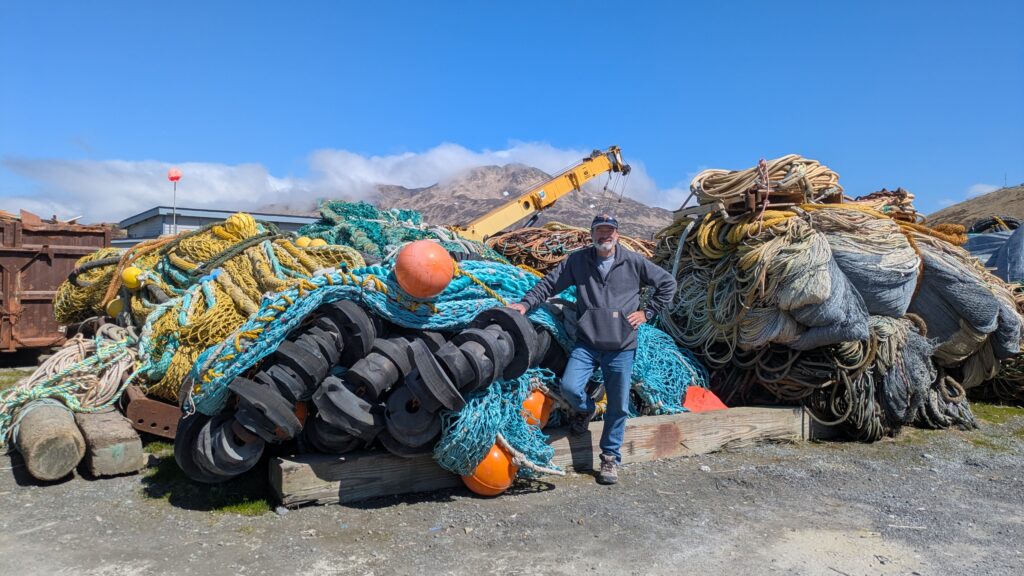
Our taxi driver had warned us the town was very quiet, especially since the Internet came to town which kept all the kids indoors, and she was right. But we enjoyed our walk back to the hotel, particularly walking through some of the fishing dock areas and marvelling at the fishing boats and equipment, and then celebrated our success at virtually the only bar and restaurant in town – the acclaimed Norwegian Rat Saloon.
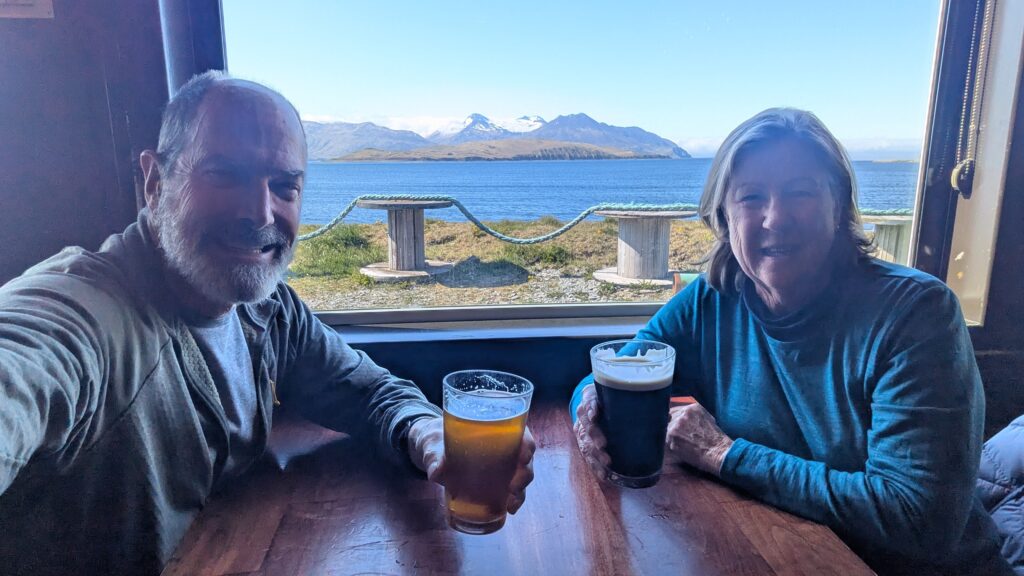
The Aleutian Islands had been a roaring success in every way, one of our great travel experiences of all time, but it was time to jump on a plane and get back to Tramp for more adventures by road.
I’m a bit behind on your blog, Bill, but loving how you take your readers along with you! The Aleutians sound fantastic, as it all does.
Thanks Jan, you’re a great supporter. The Aleutians were fantastic, a wonderful travel memory.
Absolutely fascinating journey you two. What an experience!!! Thank you for sharing your Aleutian Island journey. We got as far as Kodiak Island way back in 1999! So to see your pics & learn about all those places has been a real education. And what about the poor old Bishop!! Tragic right!! We think that hot shower in The GRAND Aleutian Hotel was MAGIC!!! Travel safely ✨✨✨✨✨
Hi Bernie (and Andrew), the Aleutians were amazing, a great experience all around, but we missed Tramp while we were there.
It’s very difficult to stay in the USA & go further west than Hawaii but you did it! Congrats.
Ha! I hadn’t thought about that but there you go – further west than you in Hawaii is saying something.