
The Pamir Mountains
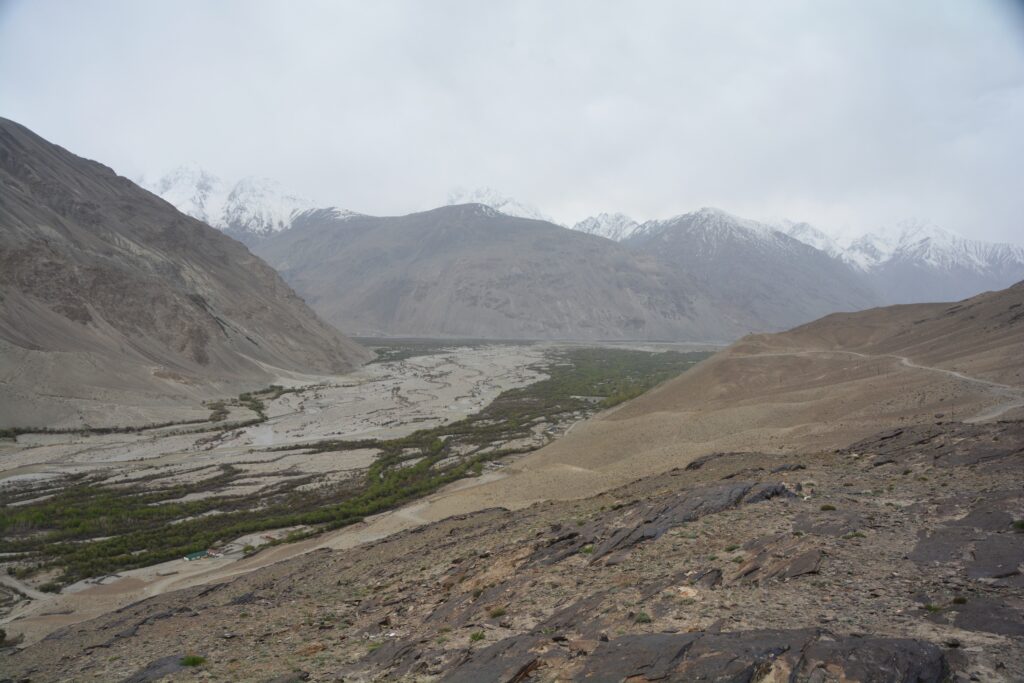
From a bluff above the Pyandzh River we gazed down on a scene absolutely lost in time. On the other bank of the river – which at this stage was more like a gentle stream – was an old mud brick hut surrounded by nine camels and a few horses, their heavy loads scattered across the ground near them. Two guys were down by the river while a woman dressed in traditional Afghan clothes fetched two pots and headed for the fire. We were witnessing an Afghan camel caravan returning to their village from a seasonal market after having traded for essential goods. Even Omar our guide was impressed – this was a rare scene and to see it so closely was very special.
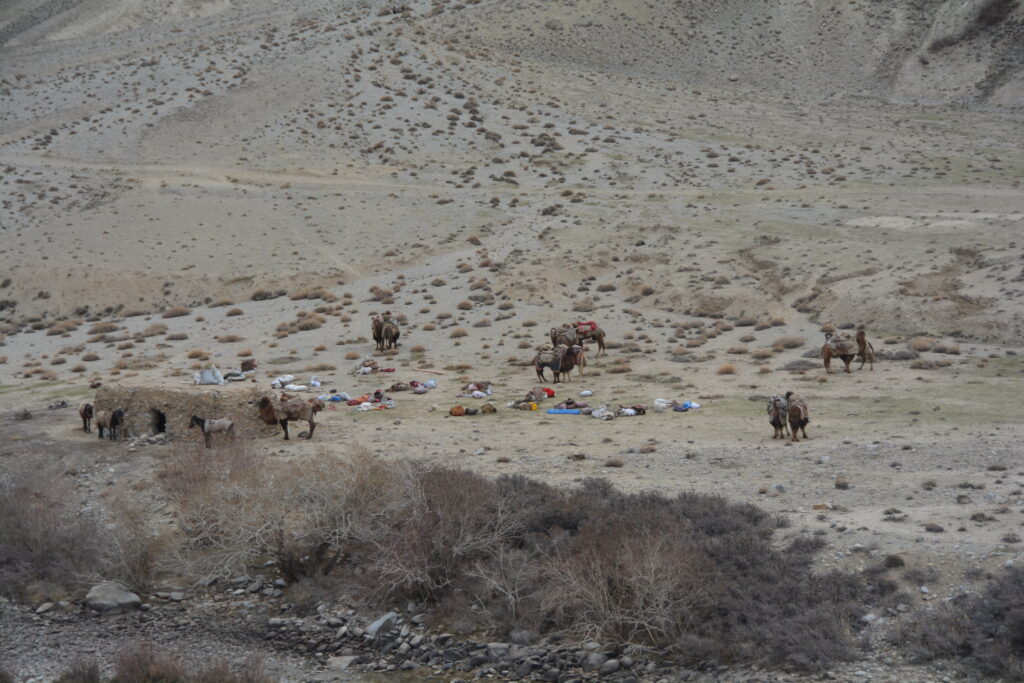
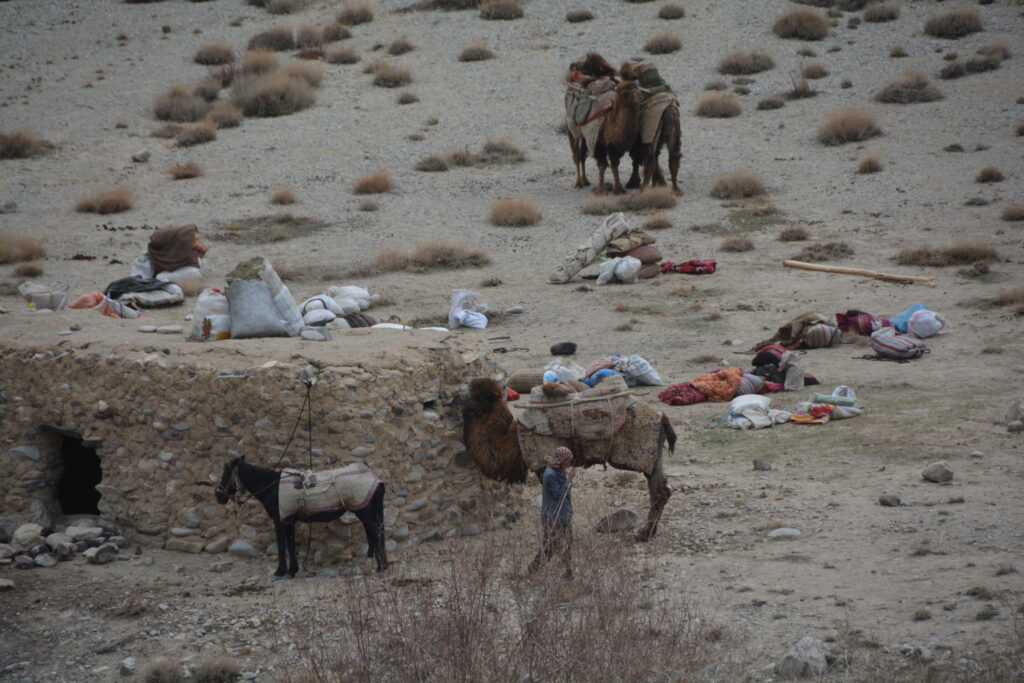
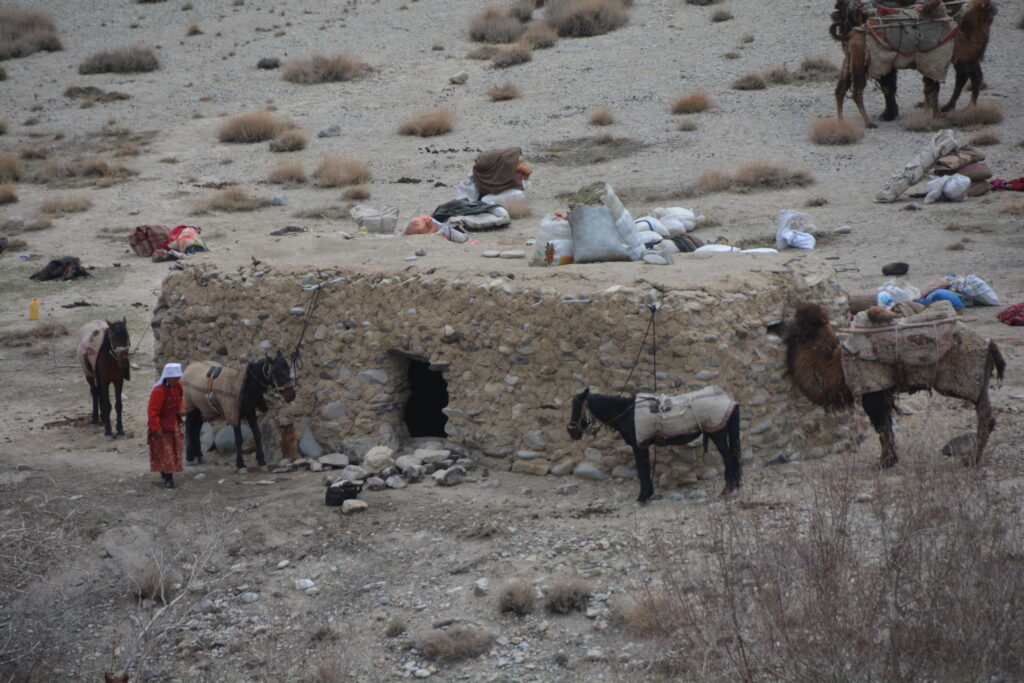
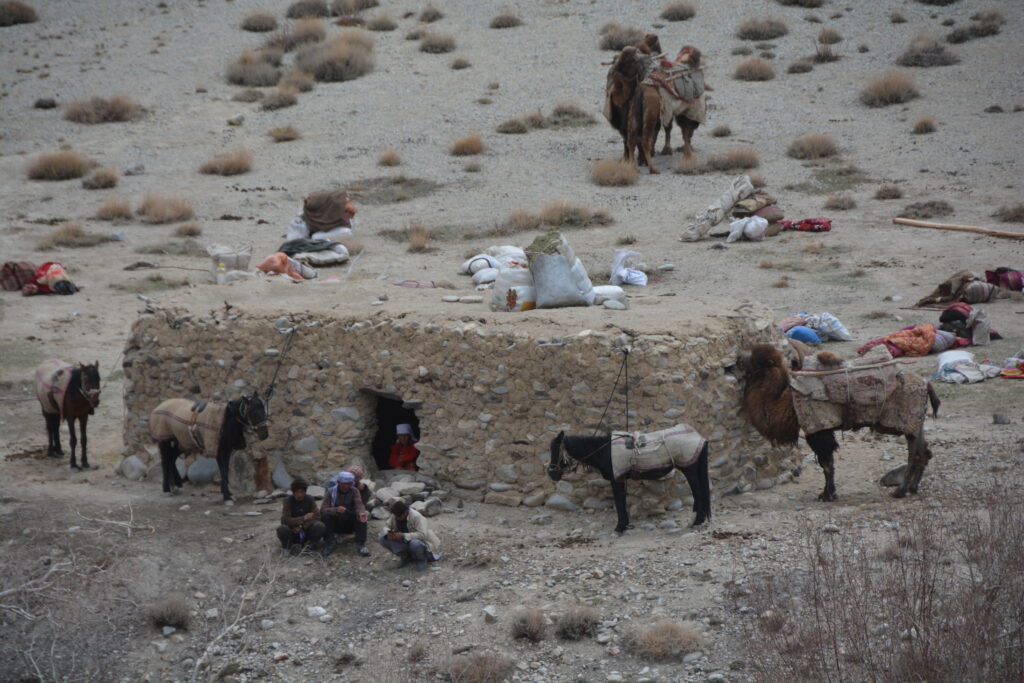
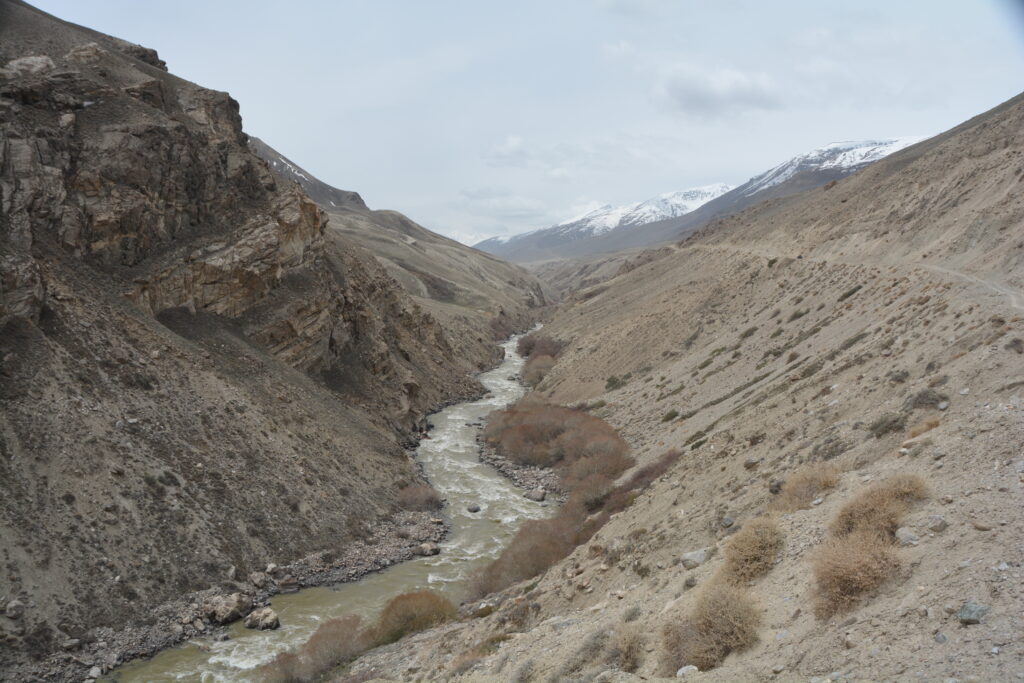
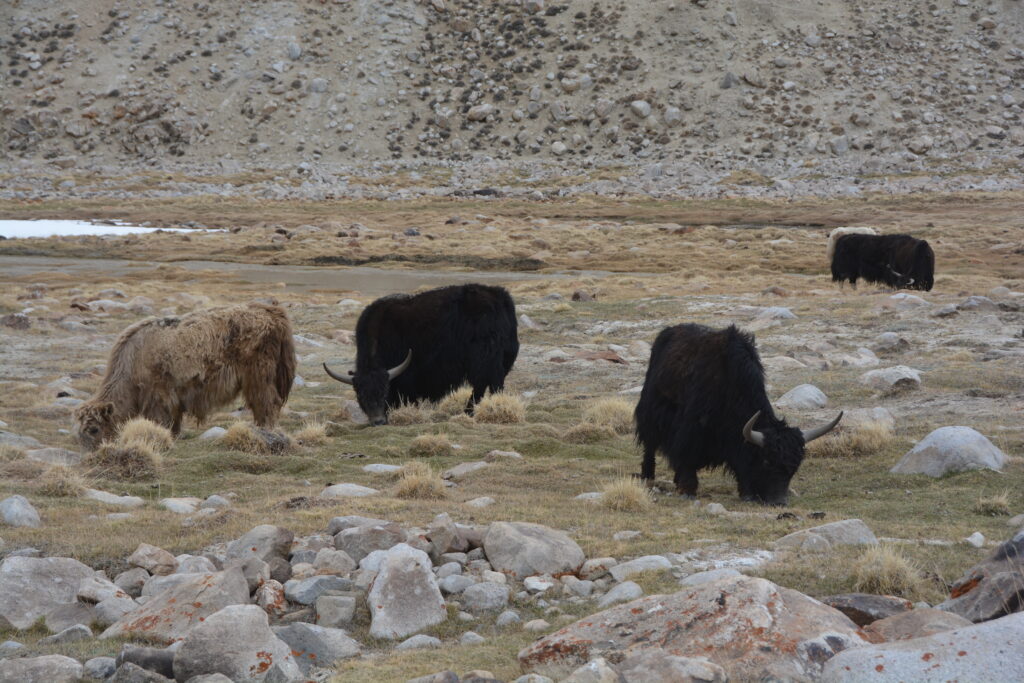
We had left the village of Langar at 2,750 metres (about 9,020 feet) that morning where we were only 50 kilometres from the Pakistan border as the crow flies and followed the river separating us and Afghanistan, slowly climbing further into the Pamir Mountains, all part of the magnificent Hindu Kush mountain range that runs west from the Himalayas through northern Pakistan, Afghanistan and into Tajikistan. We had already seen another camel caravan on the other side of the river as well as herds of yaks, the large long haired cow-like bovid that thrives at high altitude where other critters can’t.
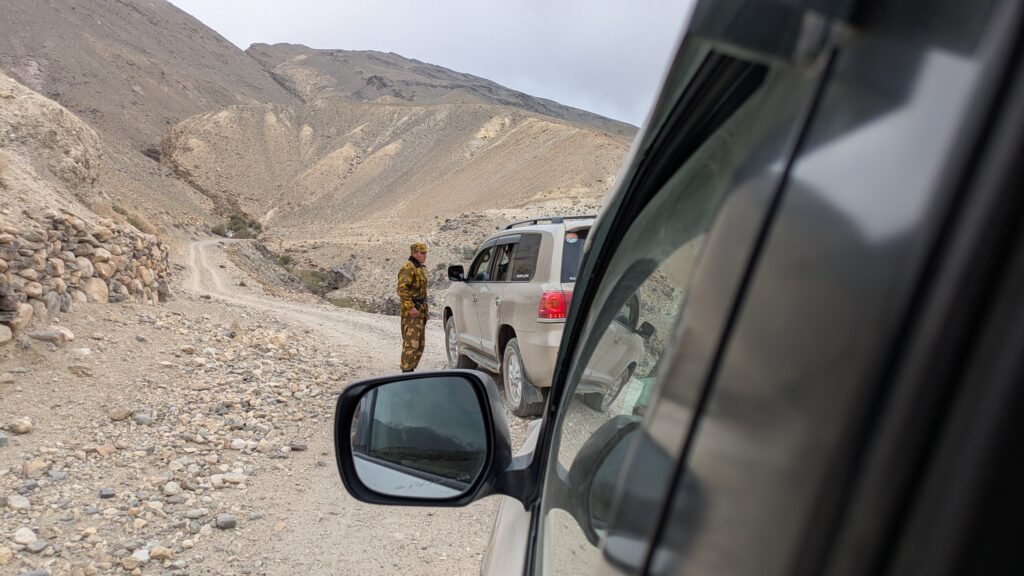
At one tricky crossing of a side stream that had washed out our road a French dude on a motorcycle with a sidecar turned up and chose to take a rough detour around the washout. Unfortunately he got stuck in the water and gravel so Daniel the driver and I hoofed it down to him and with a fair amount of pushing and shoving we managed to get him out. Life on the road.
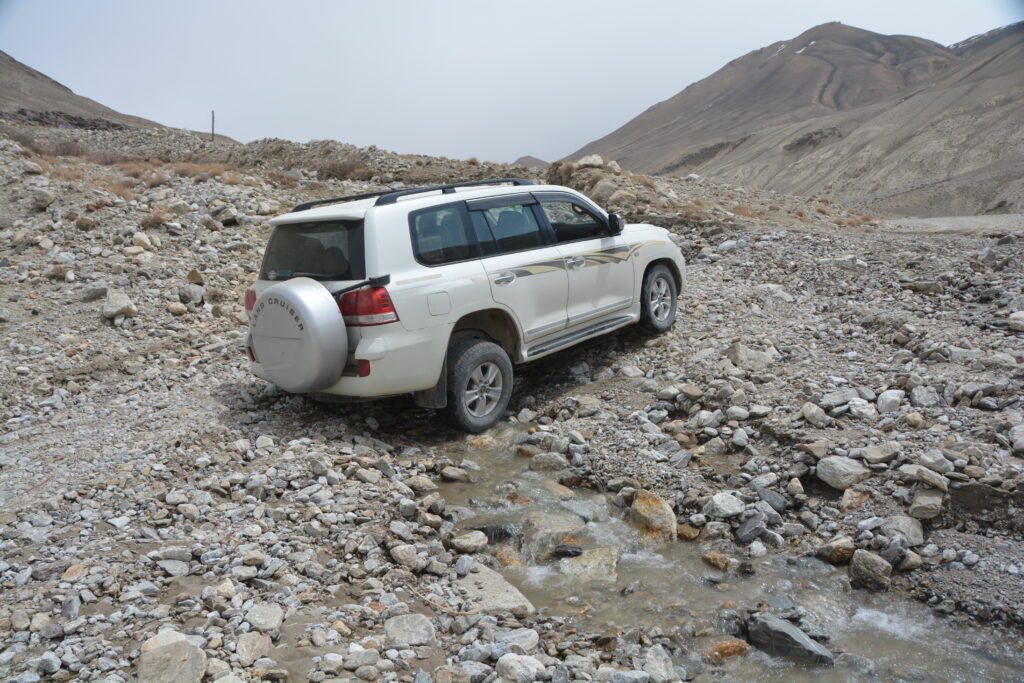
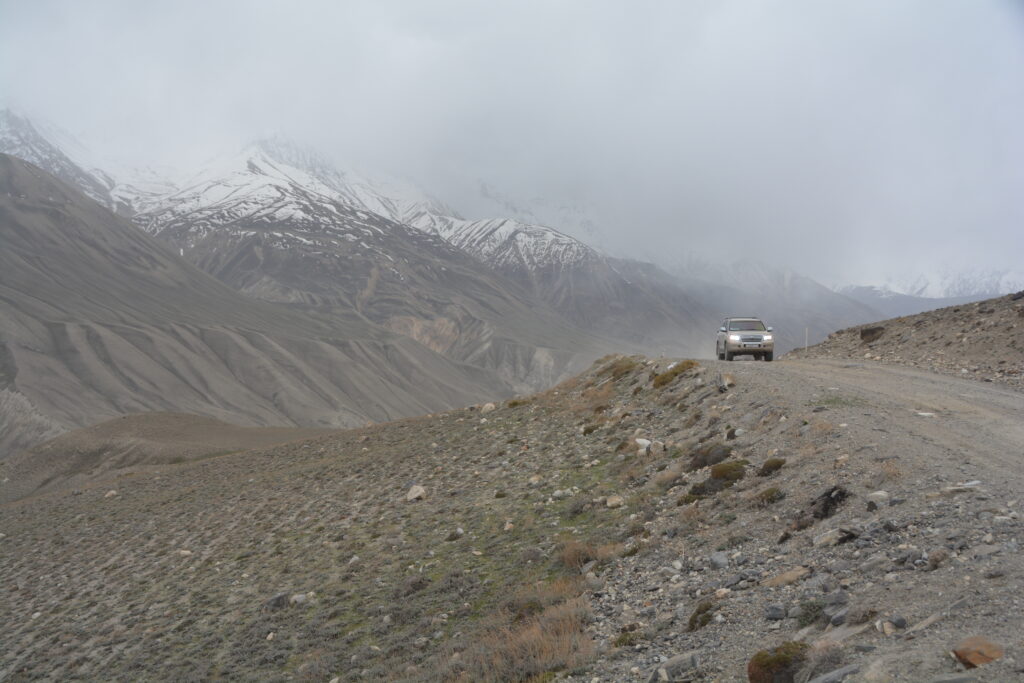
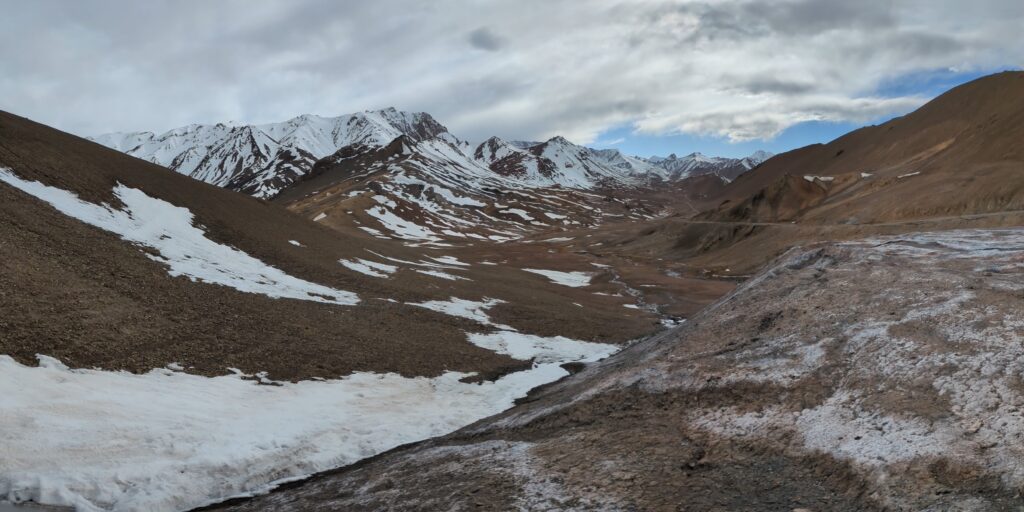
After a fab morning dining out on the river, the tall stark mountains, the wildlife and the Afghan caravans we said goodbye to Afghanistan, veered away from the river and started to do some serious climbing into the Pamir Mountains. The road reduced to a rough rocky dirt track and the patches of snow started to appear below us as well as above us as we gazed down the precipitous drop-off from the road.
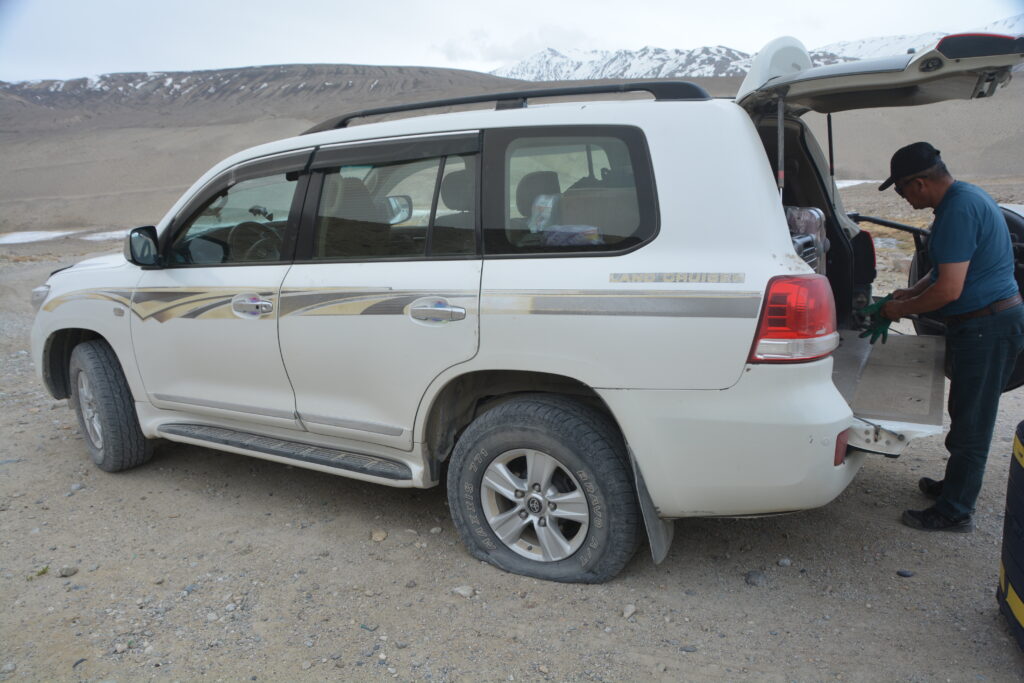
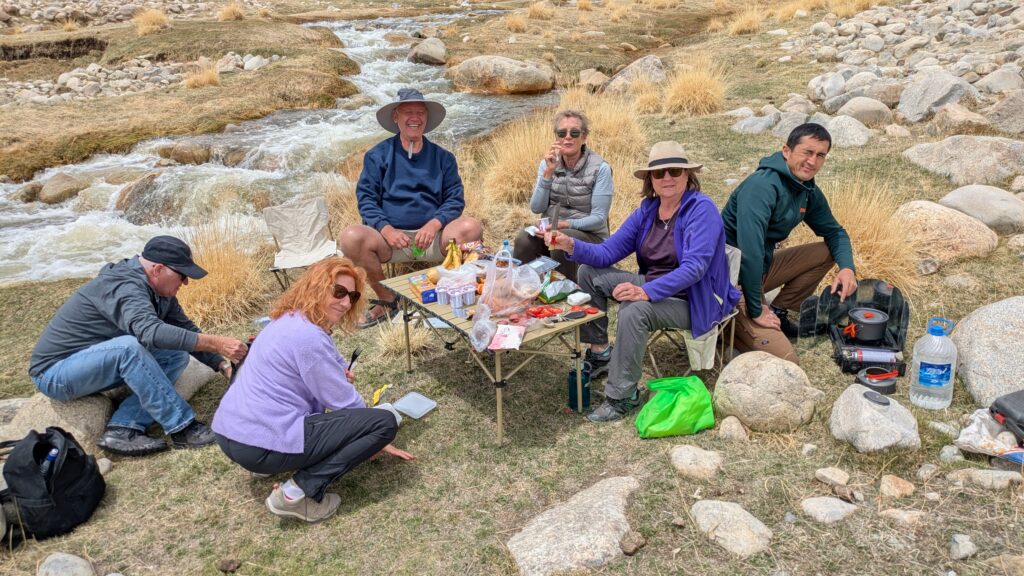
Daniel’s car suffered a puncture but luckily he chose a beaut spot by a babbling brook so while he changed the tyre Omar whipped out a little table and some chairs and we all gathered around for a super-fun and relaxing picnic lunch. Now this is travel as it should be.
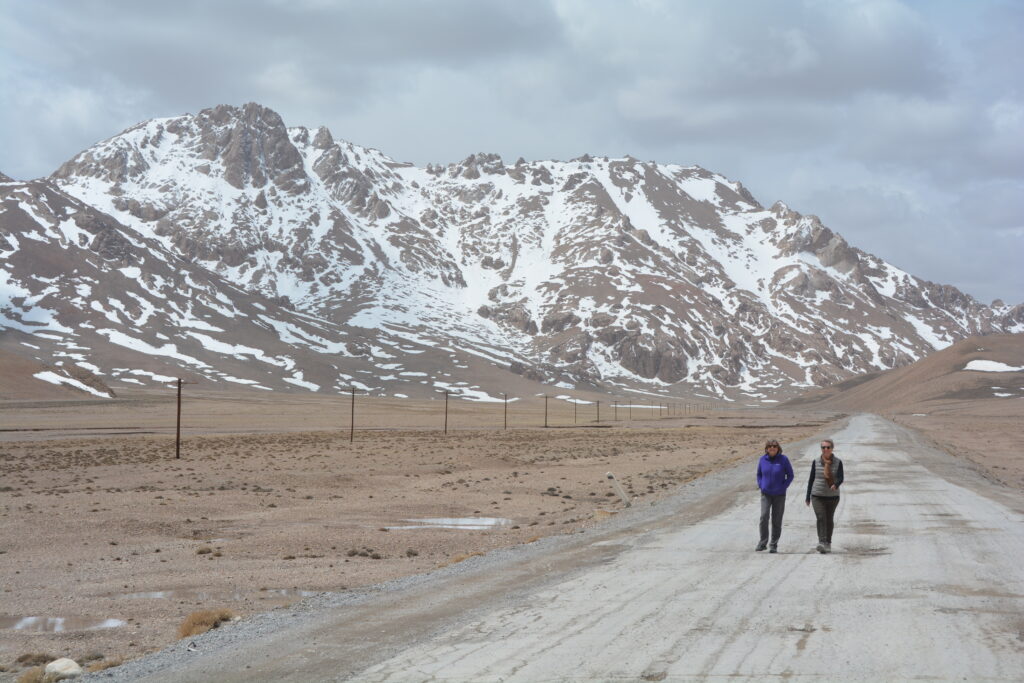
As we moved onwards the mountains continued as monochromatic dramatic brown jagged snow-capped monsters rising above. Can you ever get tired of this stuff? We passed two snow-covered lakes, their edges beginning to melt in the spring sunshine and white stretches of salt appearing near the water’s edge. We had finally topped out for the day at about 4,300 metres or 14,100 feet. A few snow flakes fell around us and the wind was biting cold.
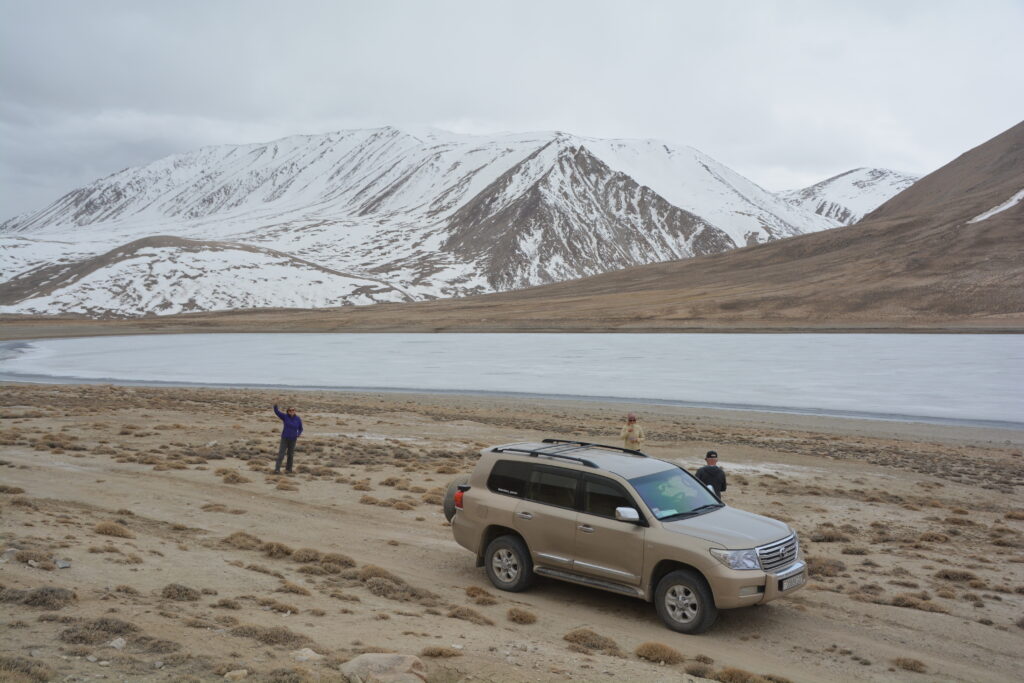
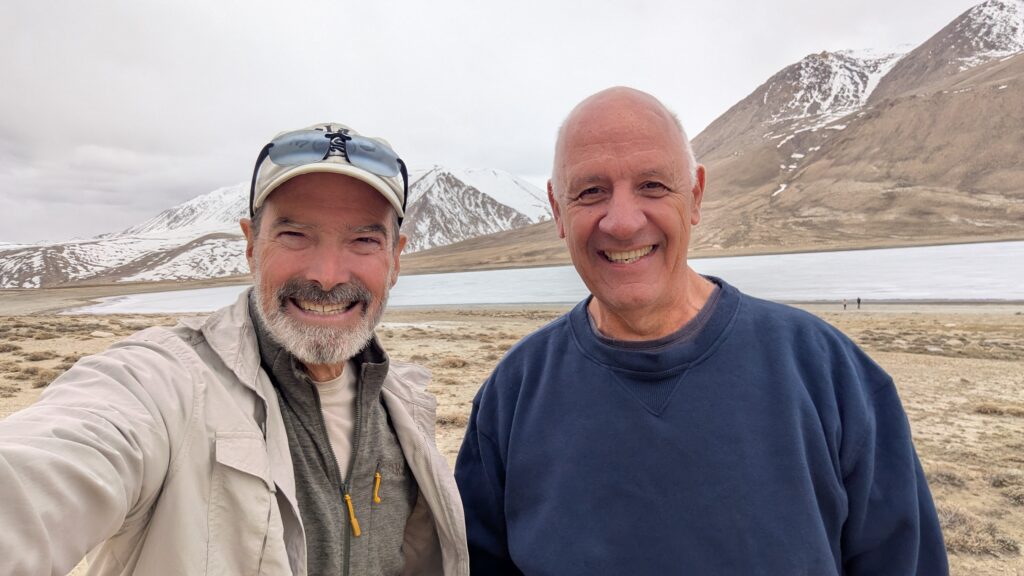
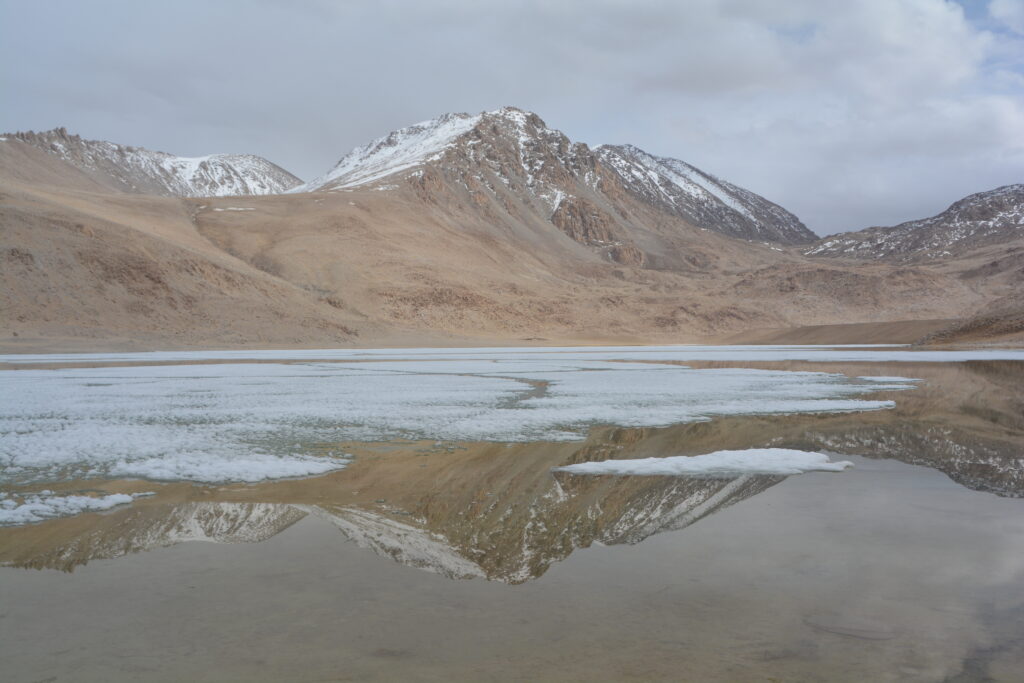
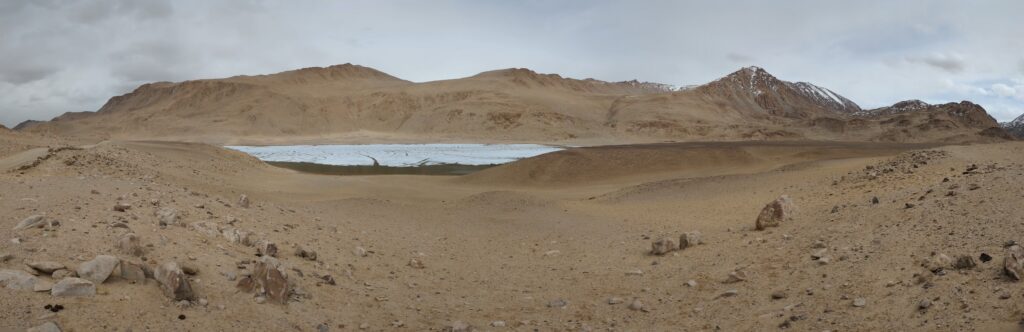
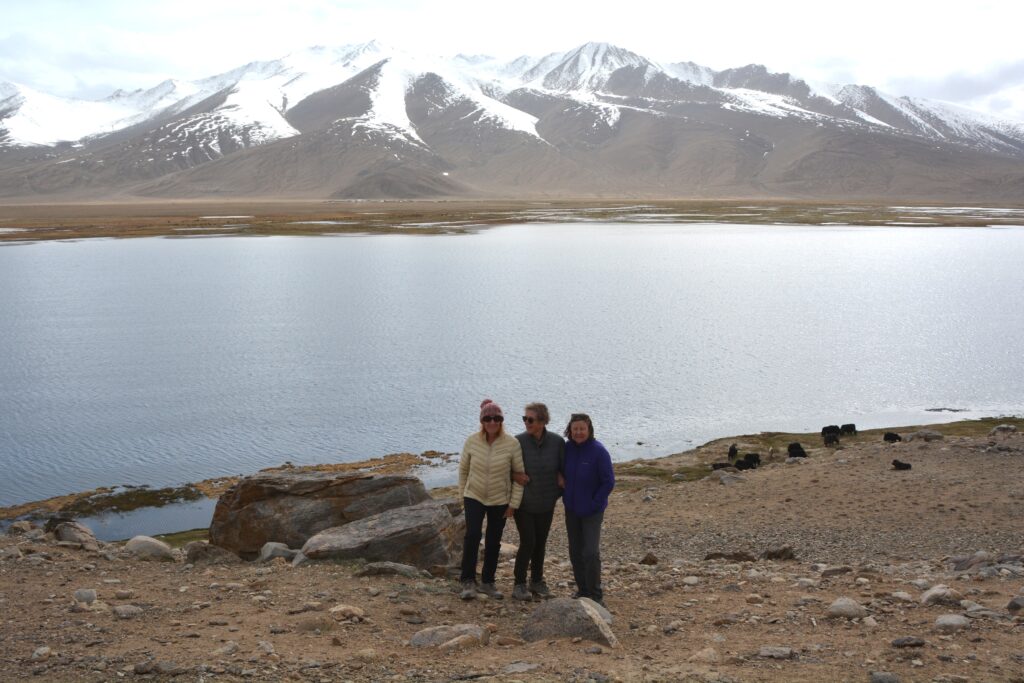
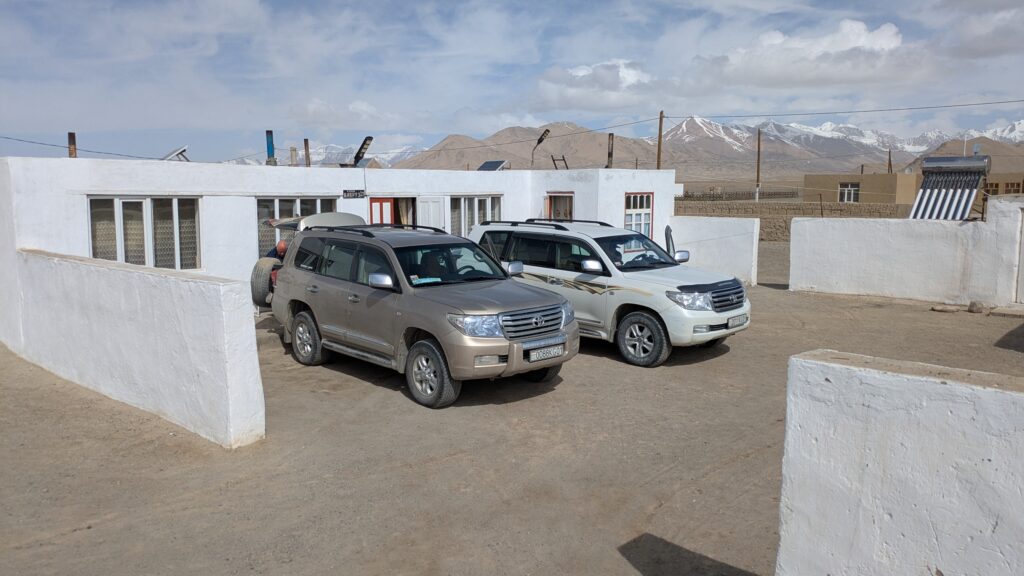
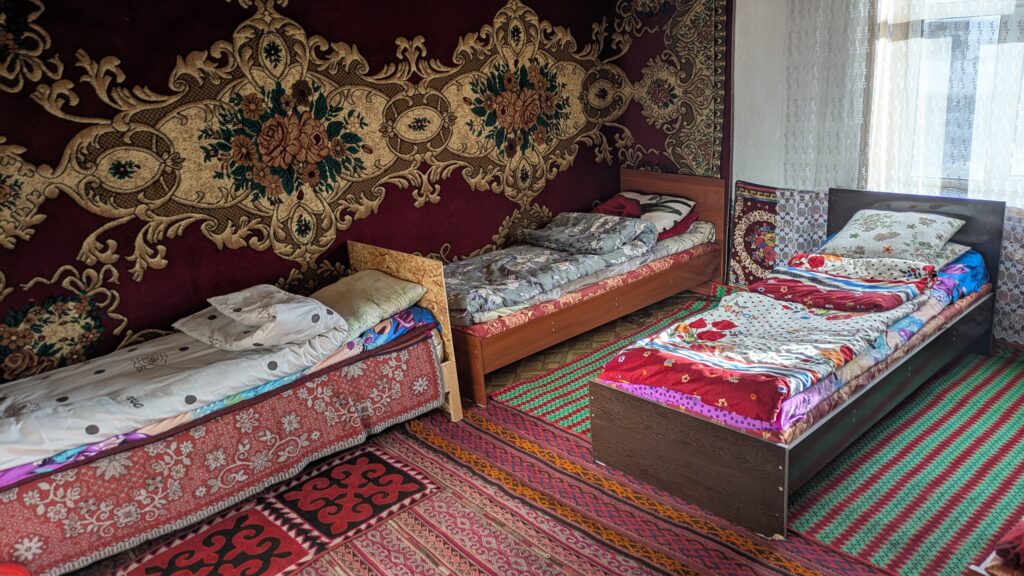
We followed a side track down to beautiful Yashikul Lake, a fresh water lake surrounded by more stunning mountains with a village on it’s shore which is said to be the coldest in Tajikistan – as low as -55°C in winter. We then reconnected with the poorly maintained bitumen road and headed for our stop for the night – the wind-blown and gritty village of Alichur. Pretty it wasn’t but home it was. We’re starting to get into this homestay gig – basic but comfortable, fire-heated warmth, friendly family hosts, good wholesome food, a great Tajik experience. And of course there’s always Dave’s Starlink.
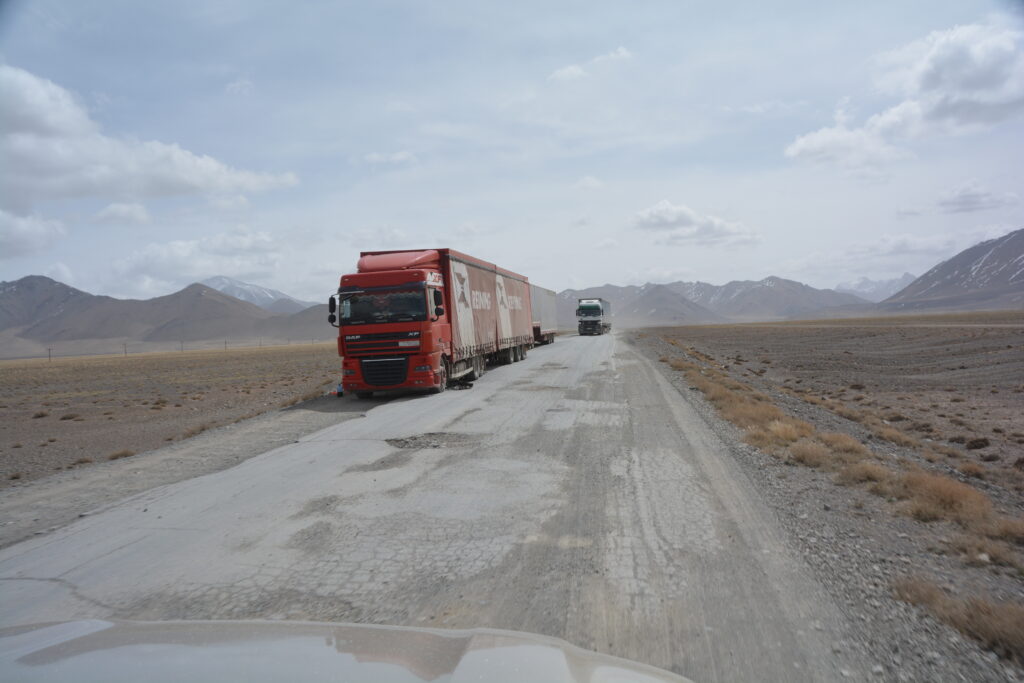
From Alichur we continued north through the same jagged desert mountains, eventually stopping at a snow leopard rehabilitation centre outside the remote town of Murghab. We approached the large cages of the leopards and the caretaker came out to tell us about these beautiful but rare animals. The centre currently has seven leopards, usually saved as orphans but now part of a breeding program.
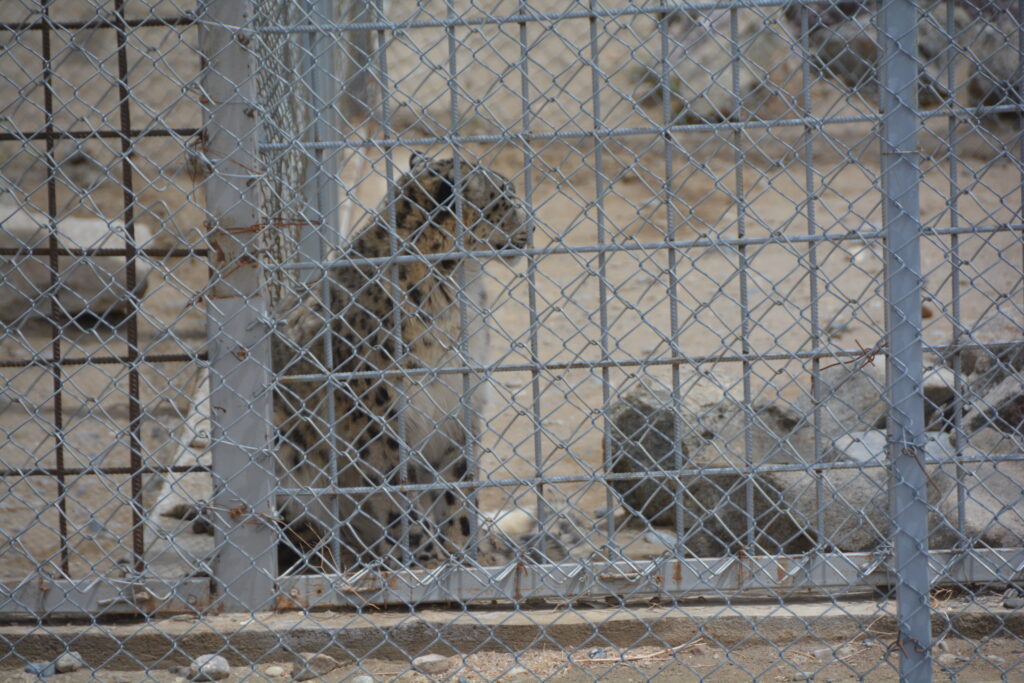
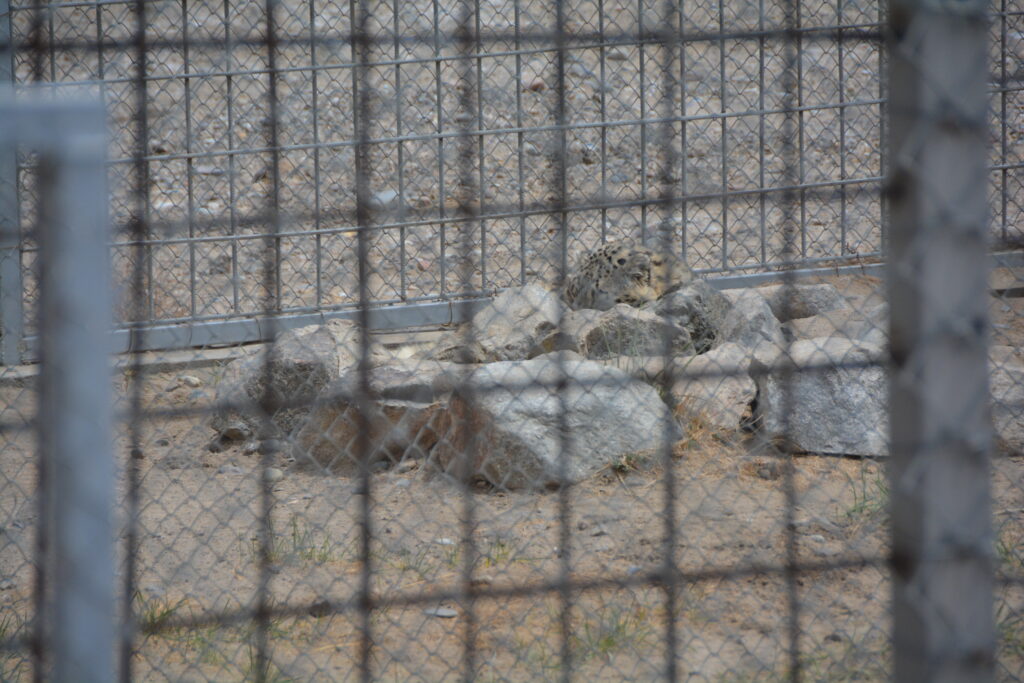
Through the double row of fences was a large pregnant female who was kind enough to sit up near our fence. She was an absolutely beautiful creature but unfortunately the photo is hampered by two layers of fencing. There was another young orphan in another cage but very difficult to photograph. We had no knowledge of visiting this centre and were blown away by having the chance to see these rare animals.
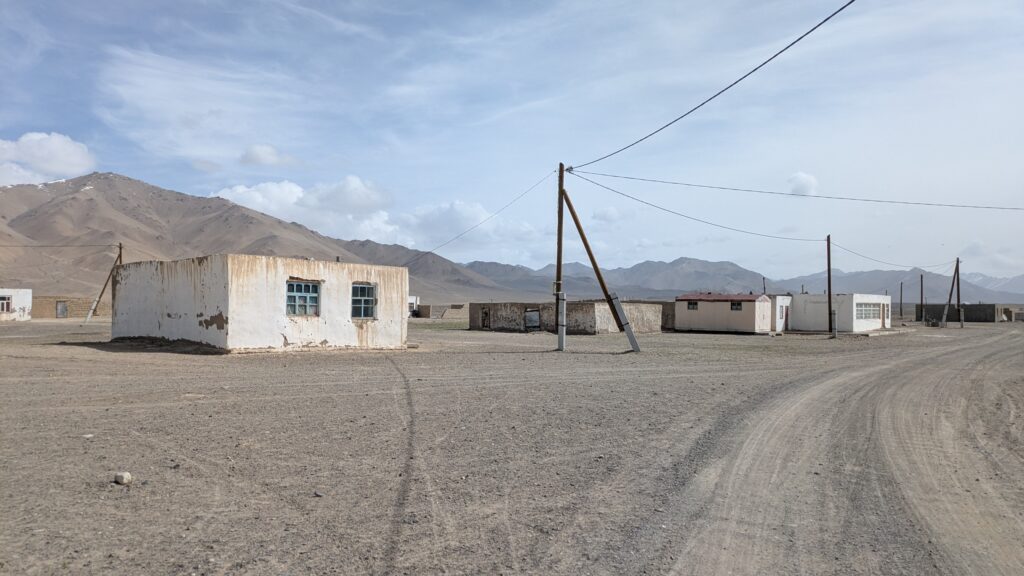
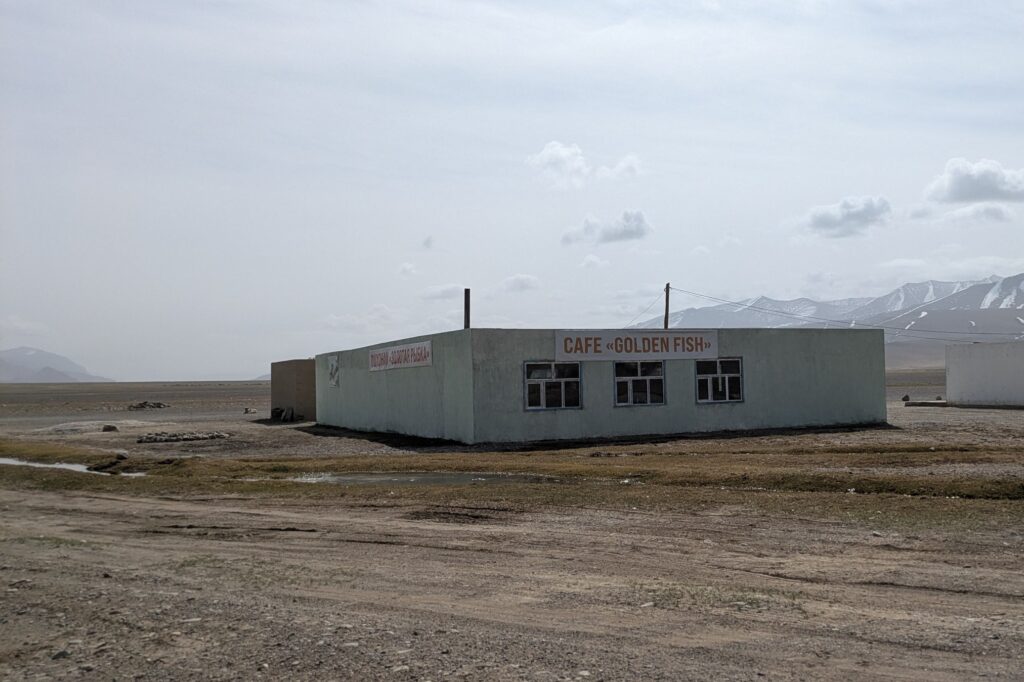
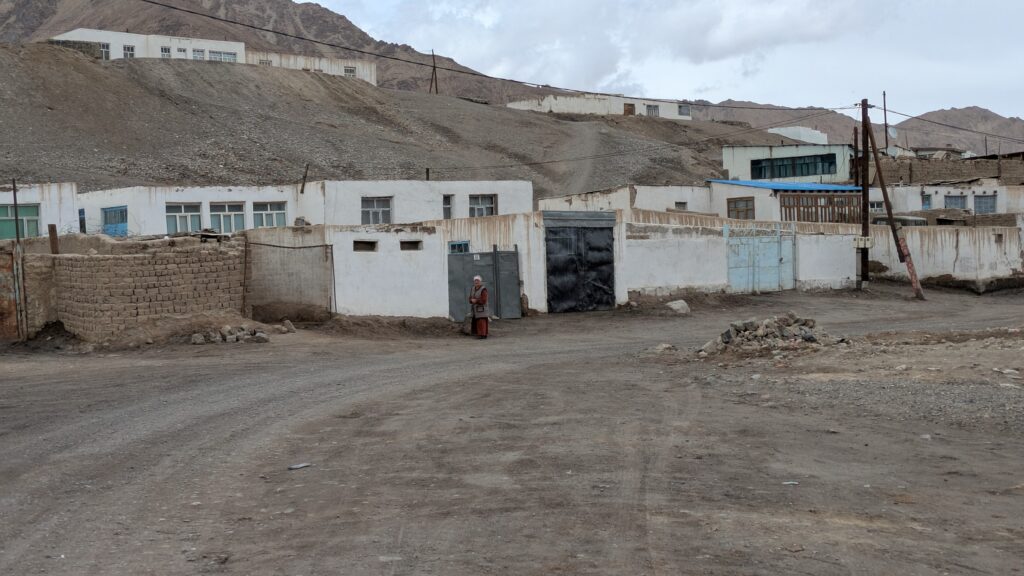
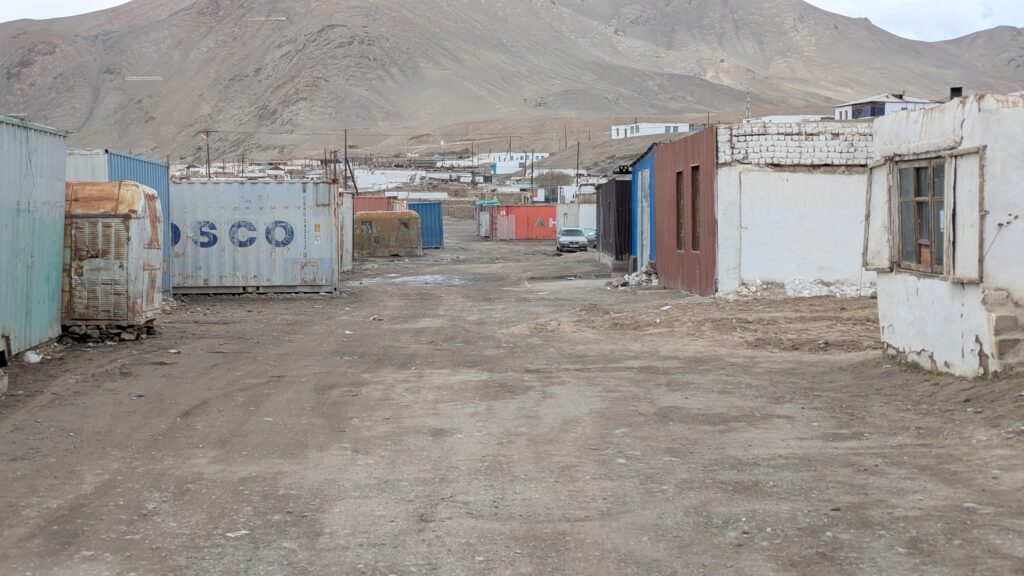
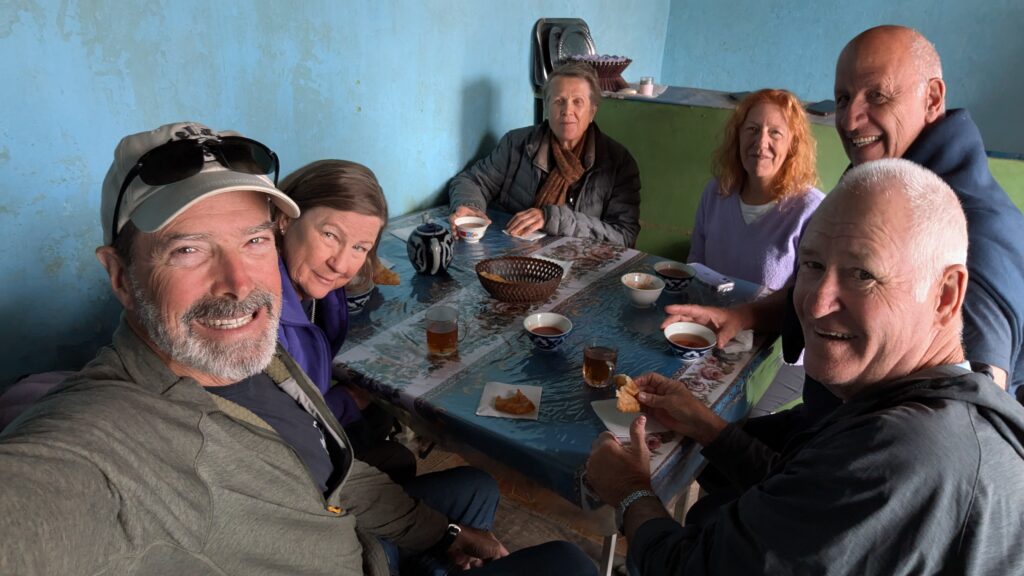
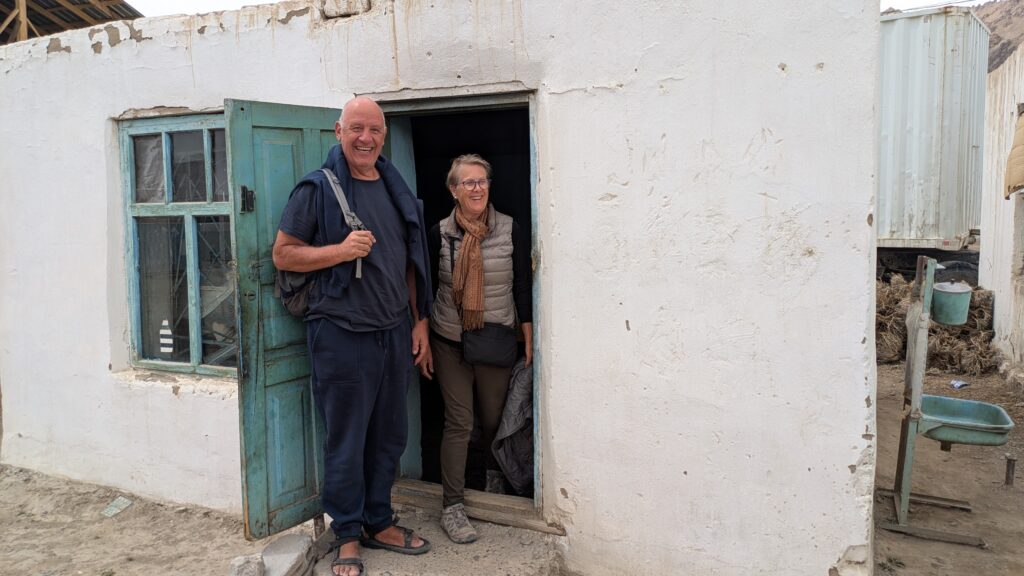
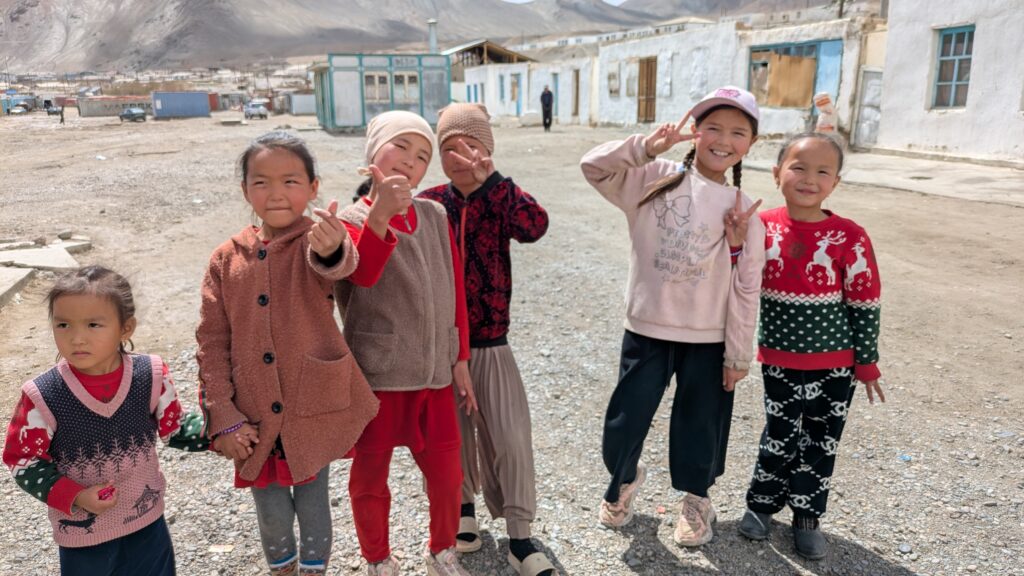
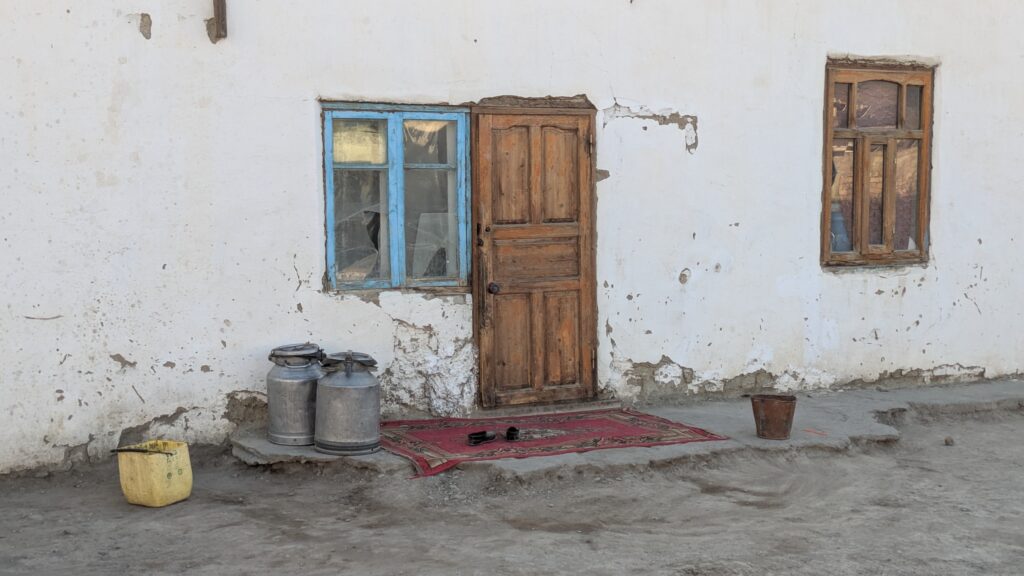
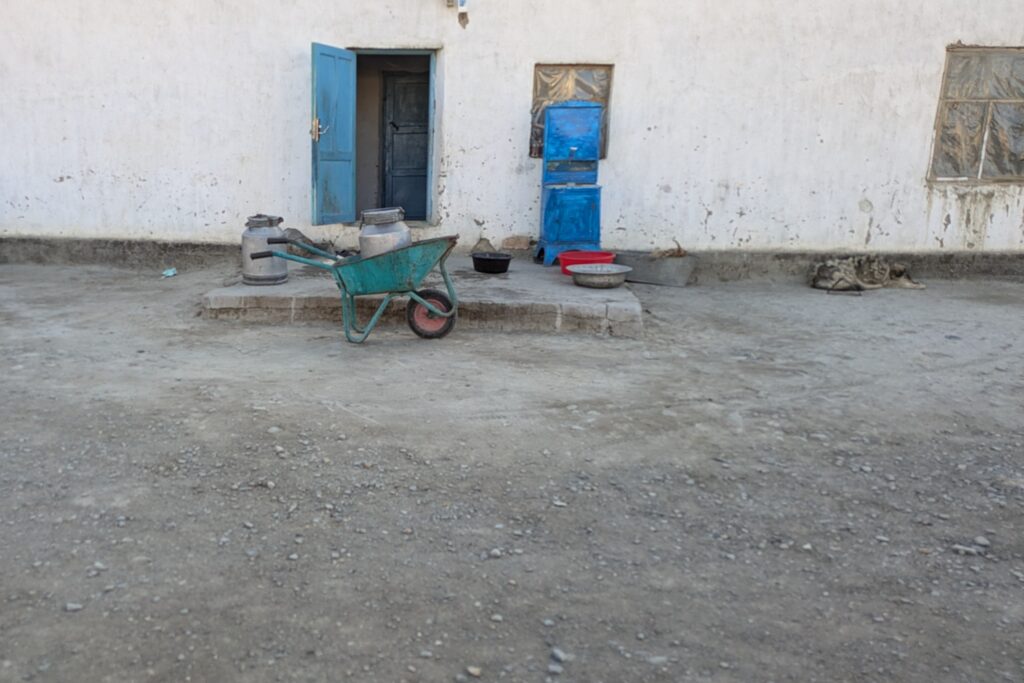
We pulled into the town of Mughab and while Omar and Daniel got the punctured tyre fixed we wandered around the ‘centre’ of town, a run down and desperate series of old containers and even older modest buildings. Eventually we found a small tea house and enjoyed a very local lunch and then found another tea house for a cup of tea. A very authentic and cool experience. One thing that has been confirmed at every village is that this country has many major economic challenges and the people here live an exceptionally difficult and basic life.
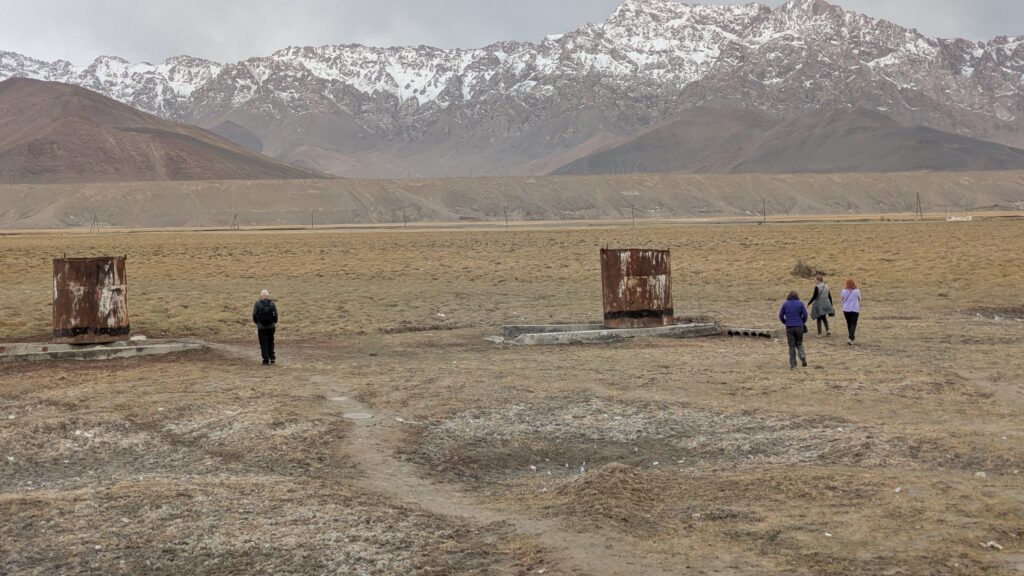
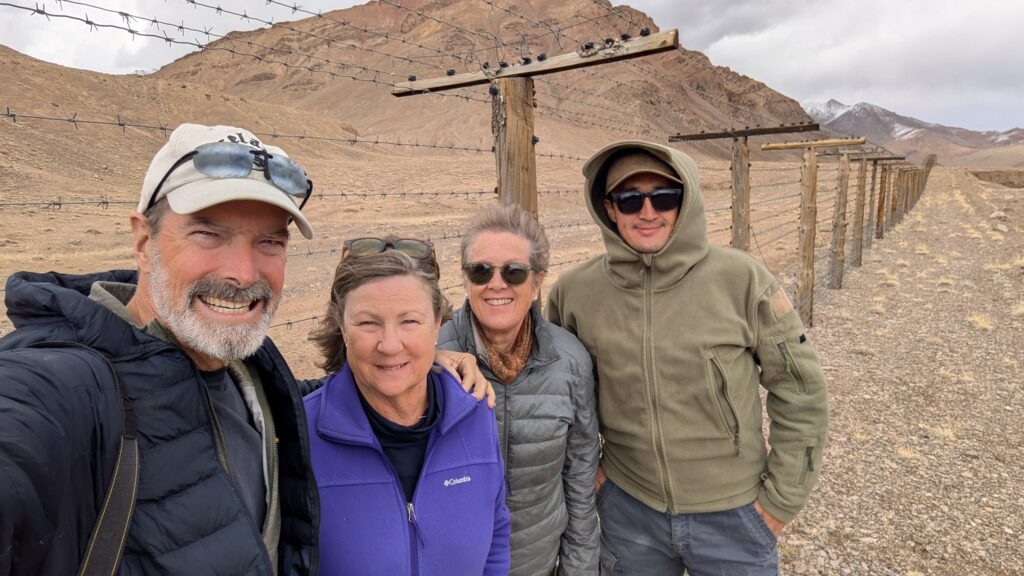
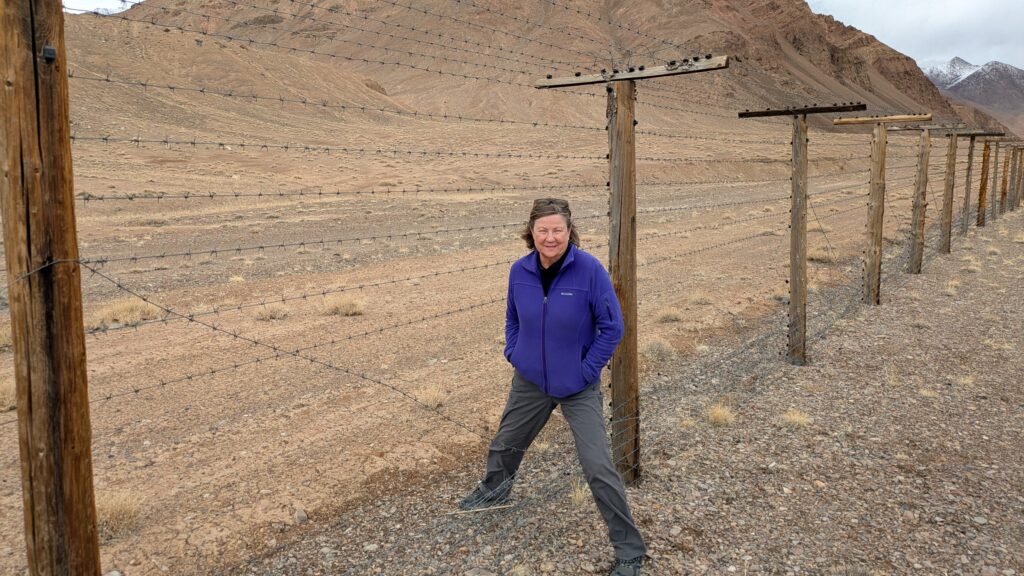
Driving further north we came upon a substantial fence that ran parallel to us and at the base of the mountains towering above us. Omar explained that the Soviets built this fence to separate their territory from China. While the actual border between Tajikistan and China is a little further east through the impenetrable mountains this fence line marks the division of these two countries.
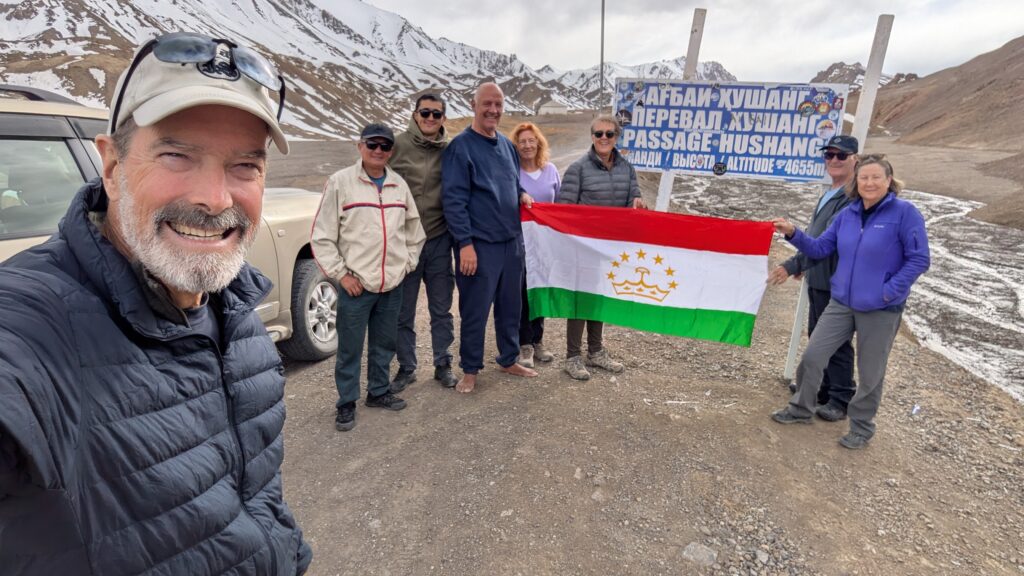
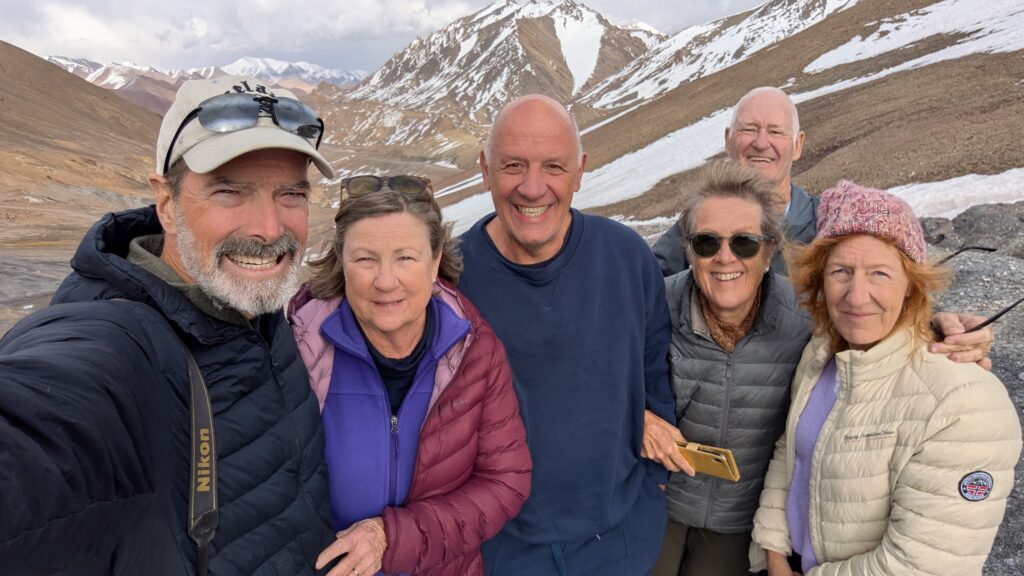
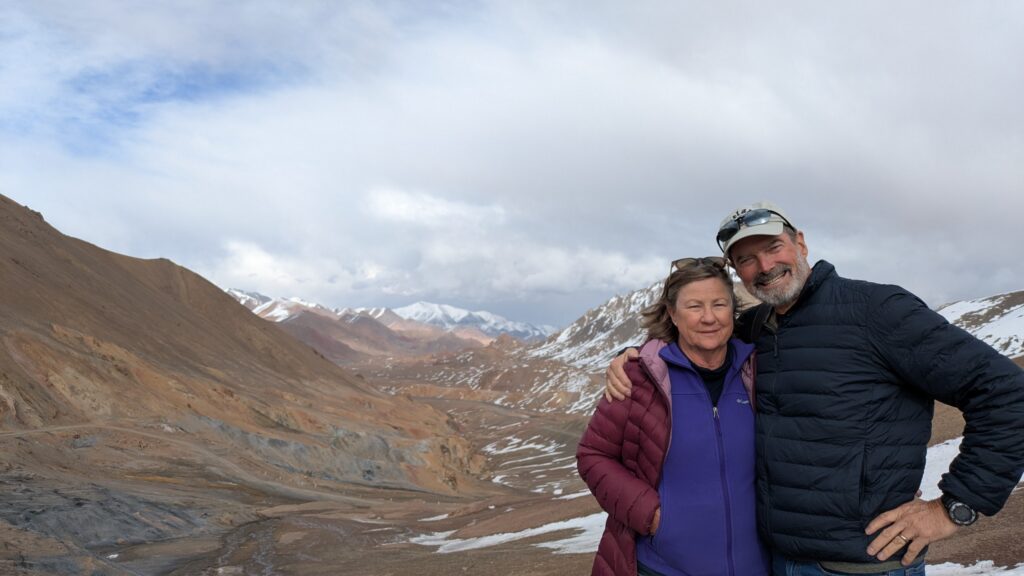
We kept slowly climbing up the mountain pass until we finally topped out at an astonishing 4,655 metres (15,272 feet), huffing and puffing due to the thin air when we climbed up a little ridge to take photos of the views below. And still mountains towered over us.
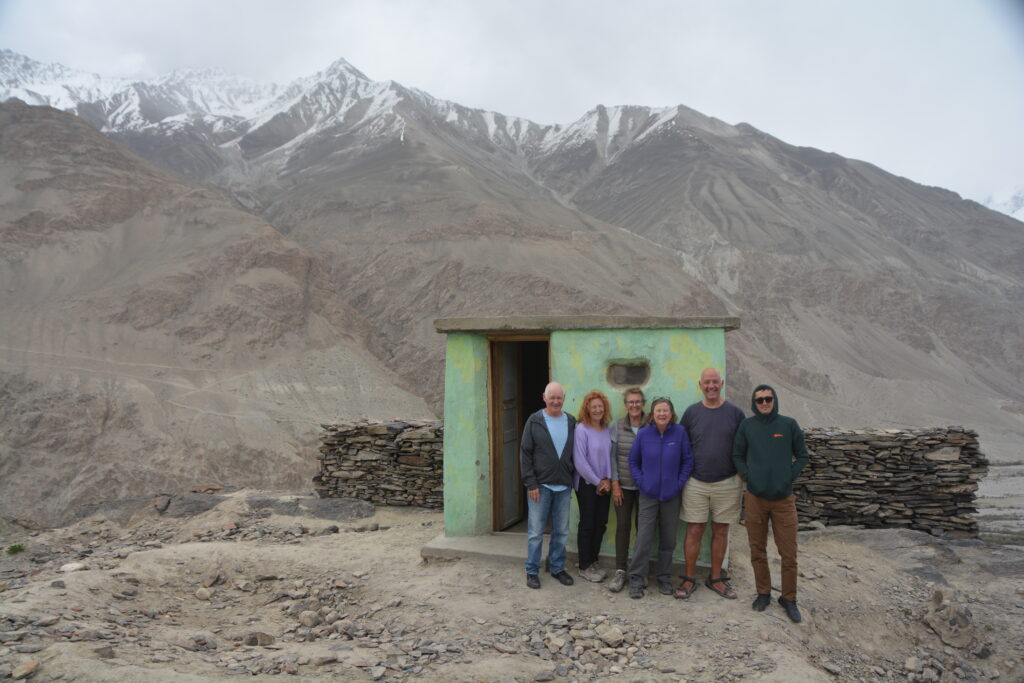
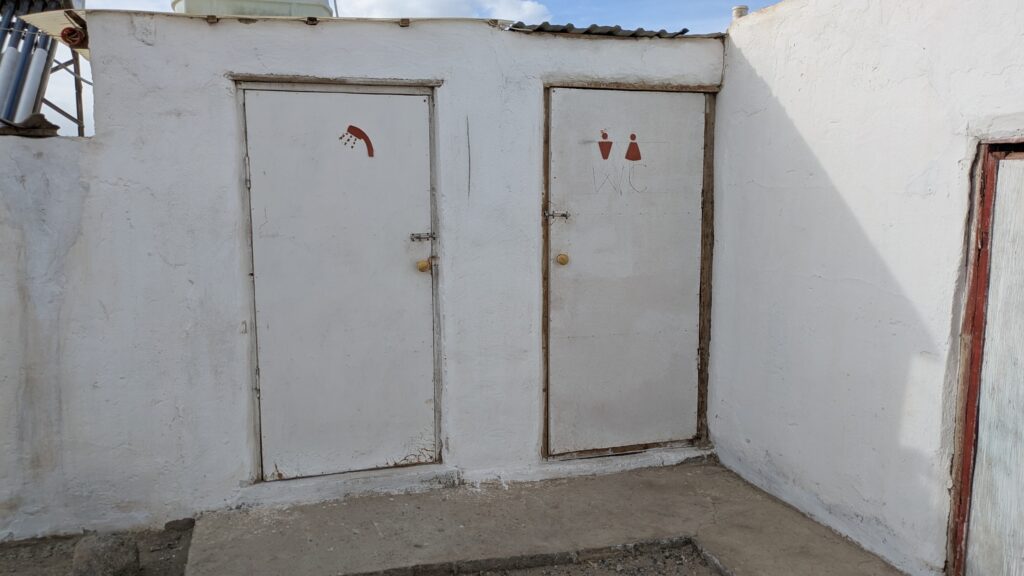
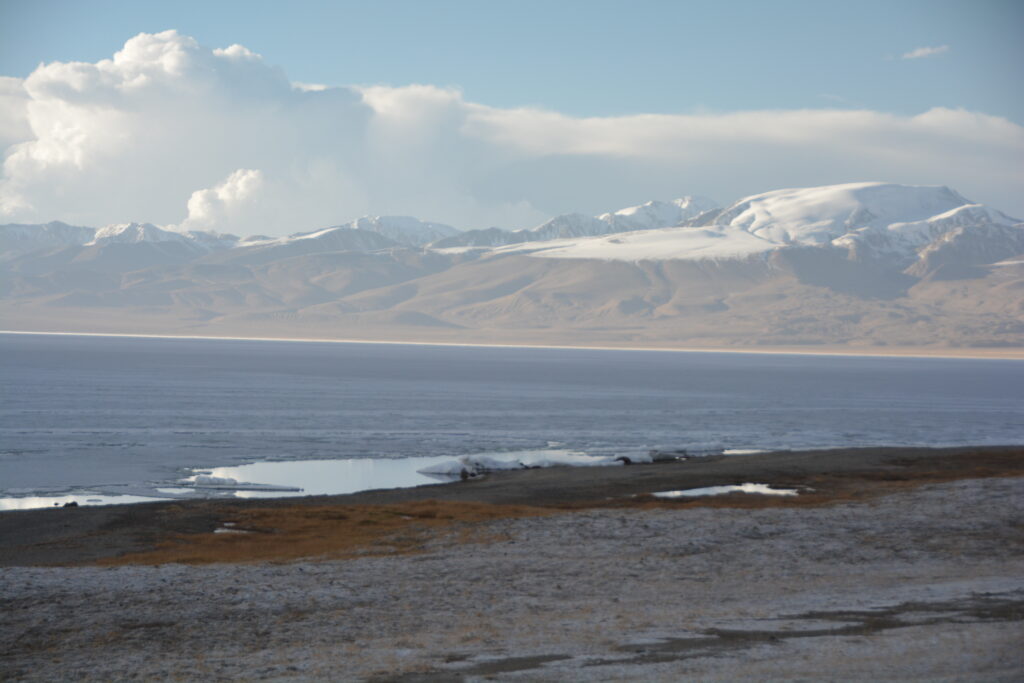
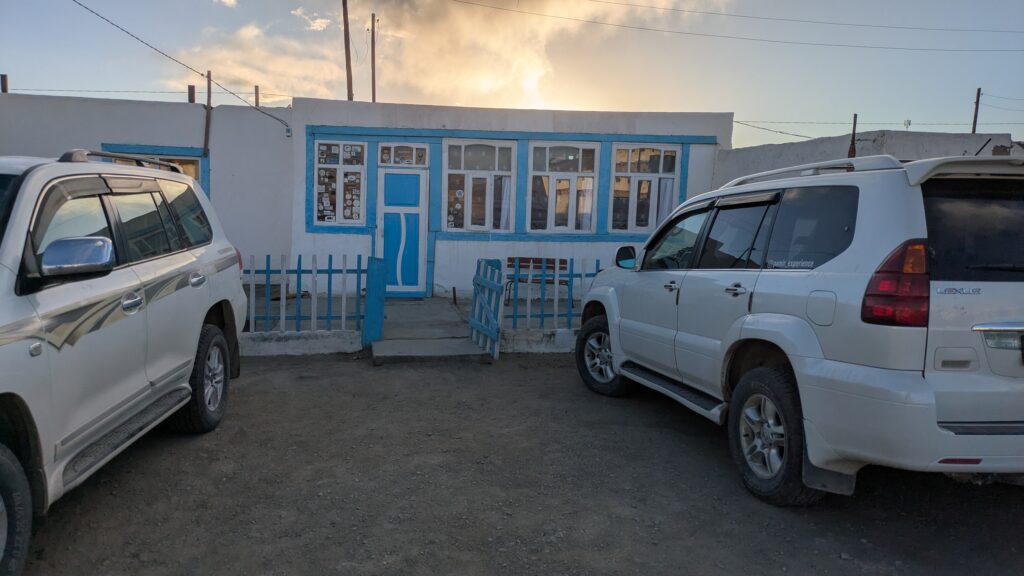
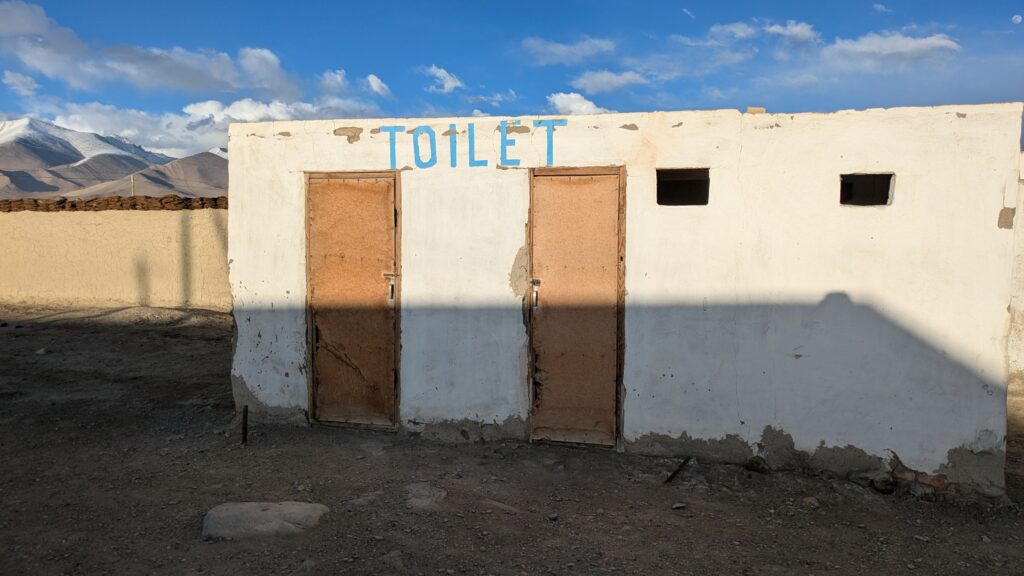
We descended the mountain on the northern side and made our way to Karakul Lake, formed by a meteor crash and Tajikistan’s largest body of water. Our homestay for the night was in the little town of Karakul sitting at 3,900 metres (12,800 feet), another cosy little place to spend the night where they fed us well, kept us warm, always smiled and in return we didn’t mind having to get completely dressed again to brave the 0°C chill and go outside for the toilet block.
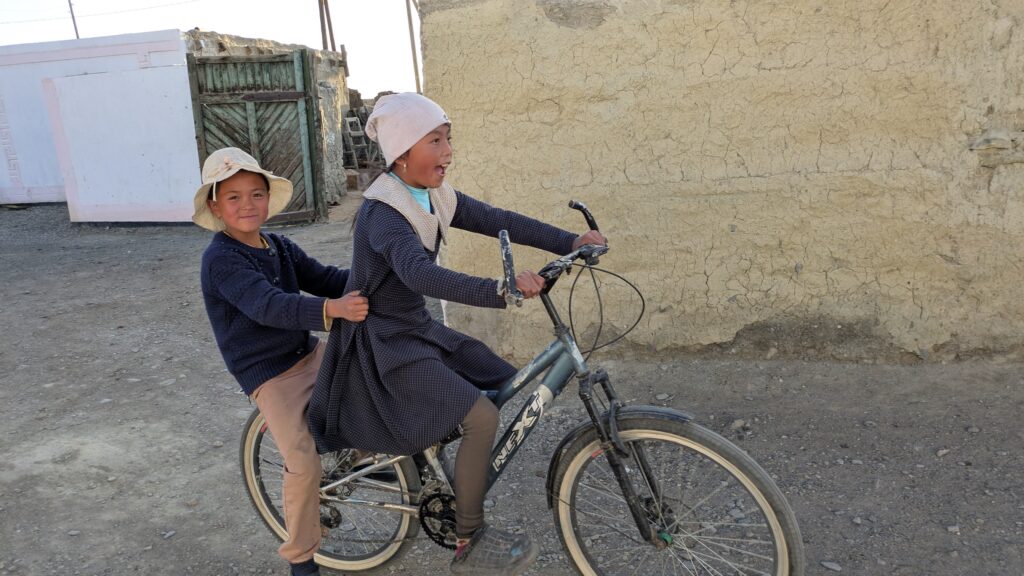
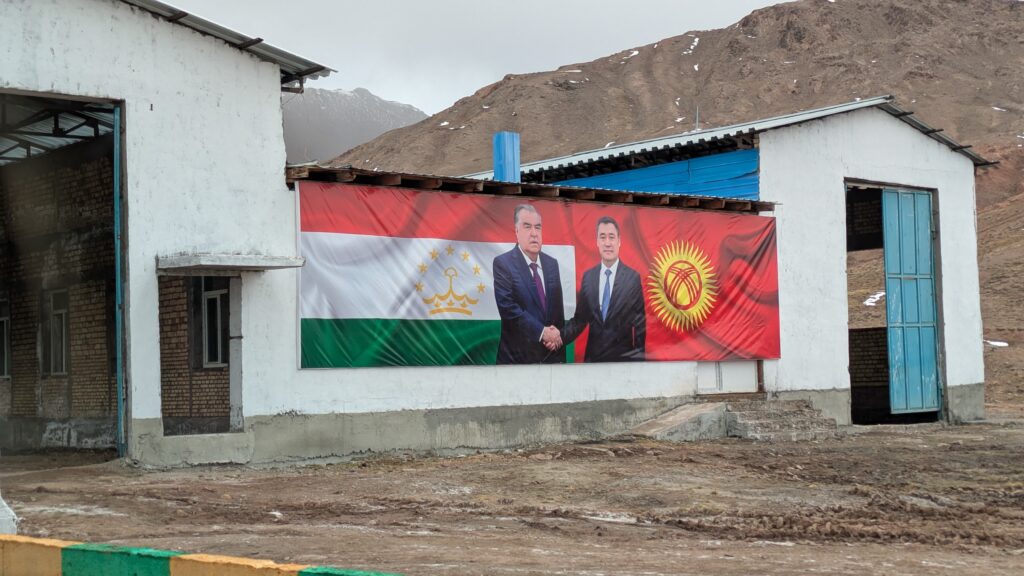
The next morning we headed for the border with Kyrgyzstan as the Pamir Highway officially finishes in the Kyrgyz town of Osh which is still two days away. Our time in Tajikistan is coming to a close but we will return to this fabulous country later in our trip to explore some of it’s western regions. For now we had to say goodbye to Omar and Daniel because as Tajiks they could not cross the border into Kyrgyzstan. But that’s another story.
Comments
The Pamir Mountains — No Comments
HTML tags allowed in your comment: <a href="" title=""> <abbr title=""> <acronym title=""> <b> <blockquote cite=""> <cite> <code> <del datetime=""> <em> <i> <q cite=""> <s> <strike> <strong>