Монгол орноо сайхан өнгөрүүлээрэй
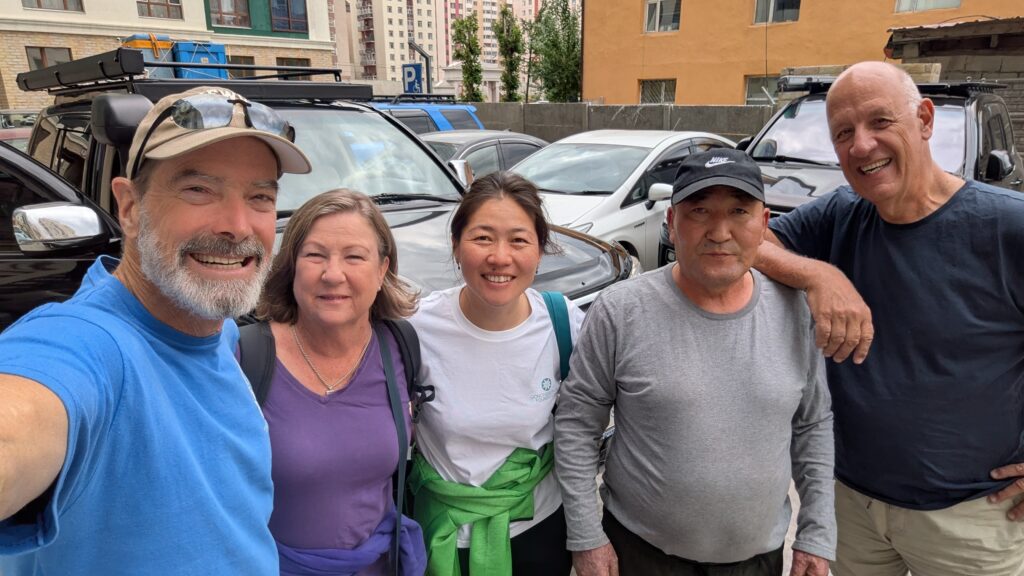
Exactly what I was going to say! We had just finished six fabulous weeks exploring the four countries of Central Asia – the Stans, as they’re called – but we weren’t done with this fascinating part of the world. Dave, Julie and I said goodbye to Warren, Nichole and Jan who were heading back to Sydney while the three of us jumped on a plane and flew to Ulaanbaatar, the capital of Mongolia. Монгол орноо сайхан өнгөрүүлээрэй, as they say, or Enjoy Mongolia! And so we shall.
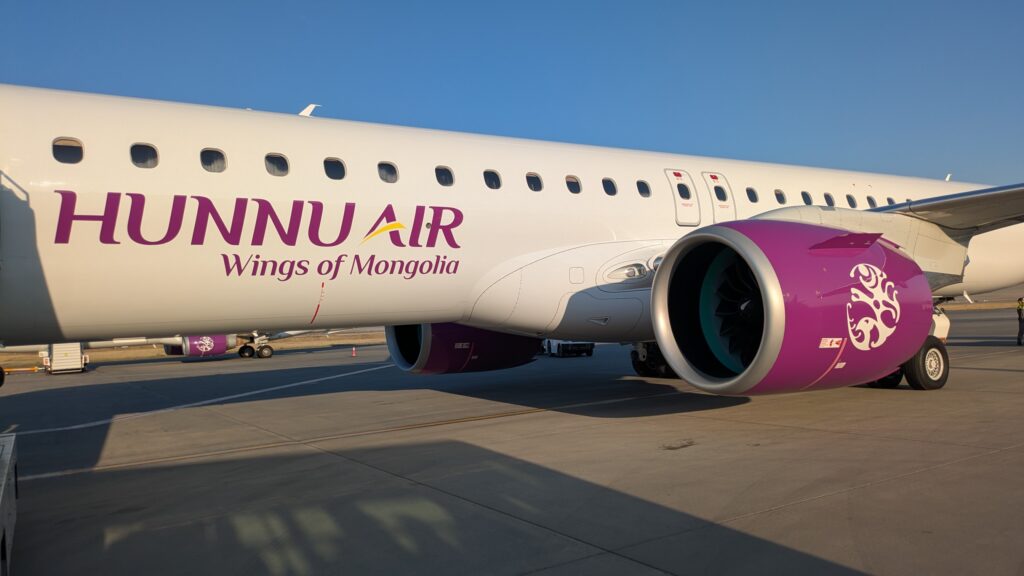
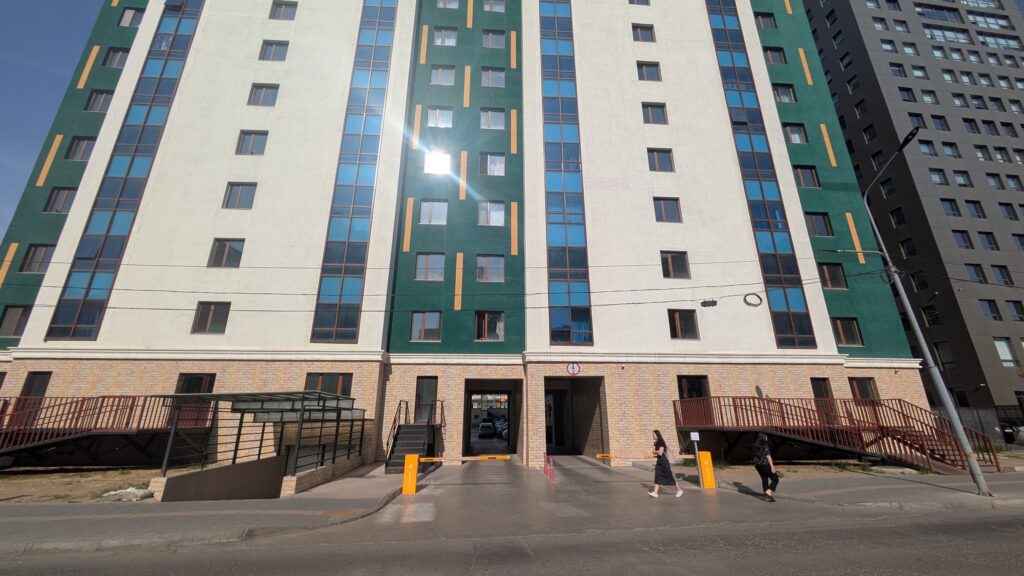
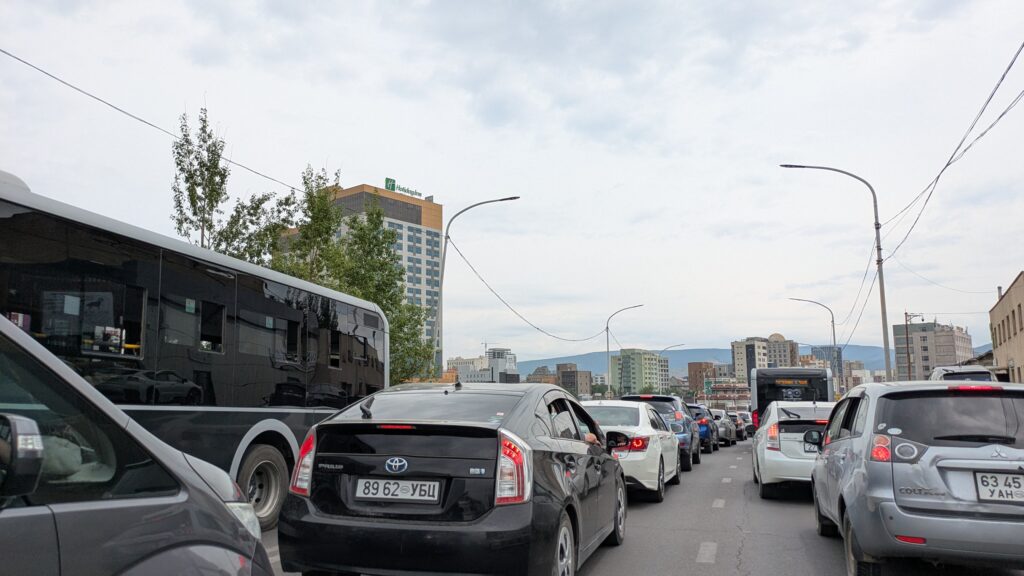
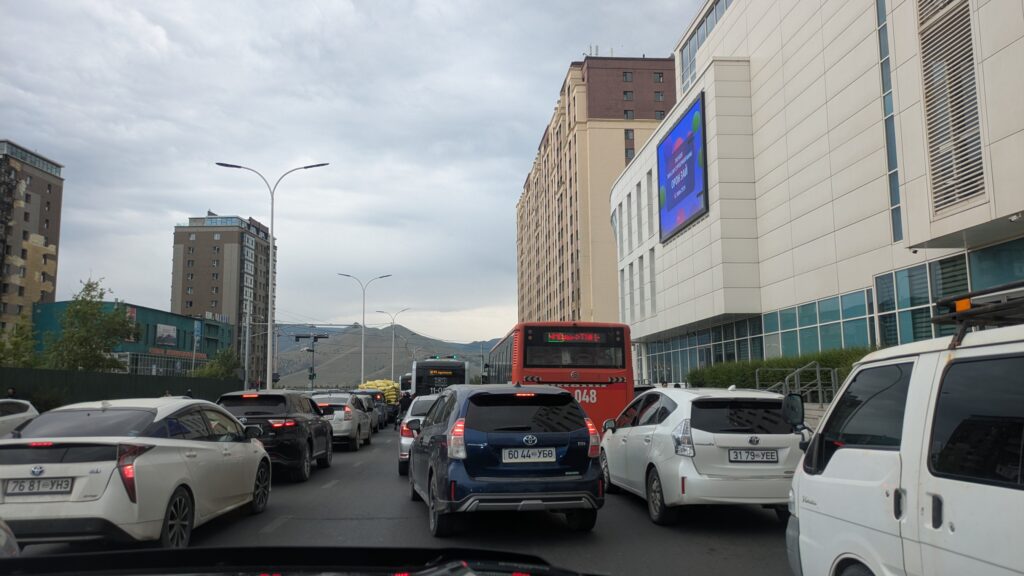
The smallish Embraer jet from previously unknown Hunnu Air (who knew there was a Hunnu?) flew us smoothly through three time zones until we landed in what appeared to be the middle of the Mongolia steppe and we were met by a woman from our ground operator for this leg of our journey, Mongol Nomads. The airport was miles from Ulaanbaatar and there was the strange rush hour traffic at 9pm but eventually we made our two bedroom apartment for the next two nights near the downtown area.
Mongolia holds a special place for Julie and I in our travel imagination. It would have been the final new country of our originally conceived Follow the Sun journey and after just visiting Kazakhstan, Tajikistan, Uzbekistan and Kyrgyzstan it is the last missing link of our around the world travel plans. Sure, we’re not here with Tramp but as a very strong second-best option we’re here with our good mate Dave and the three of us are chomping at the bit to see what Mongolia has to offer.
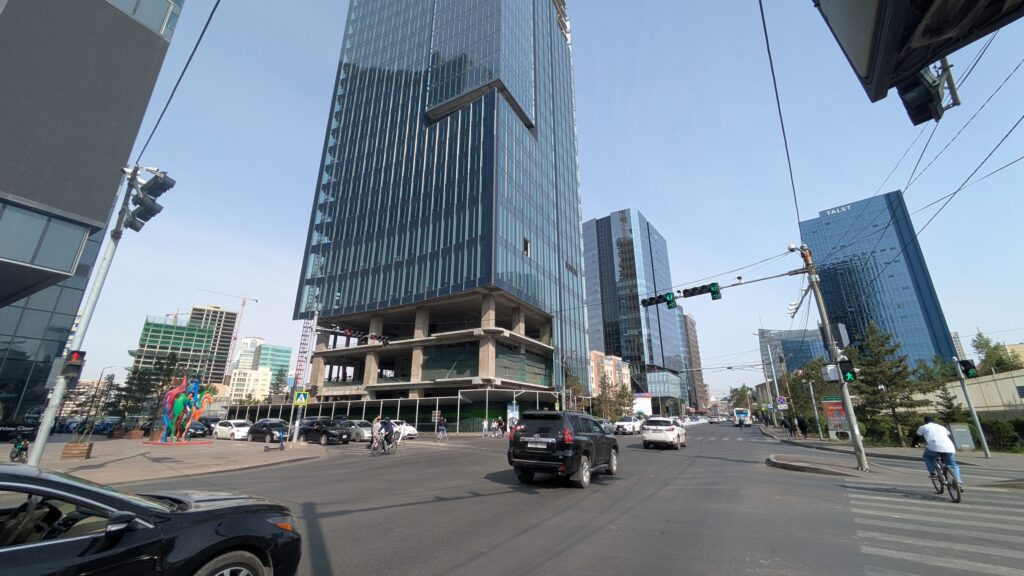
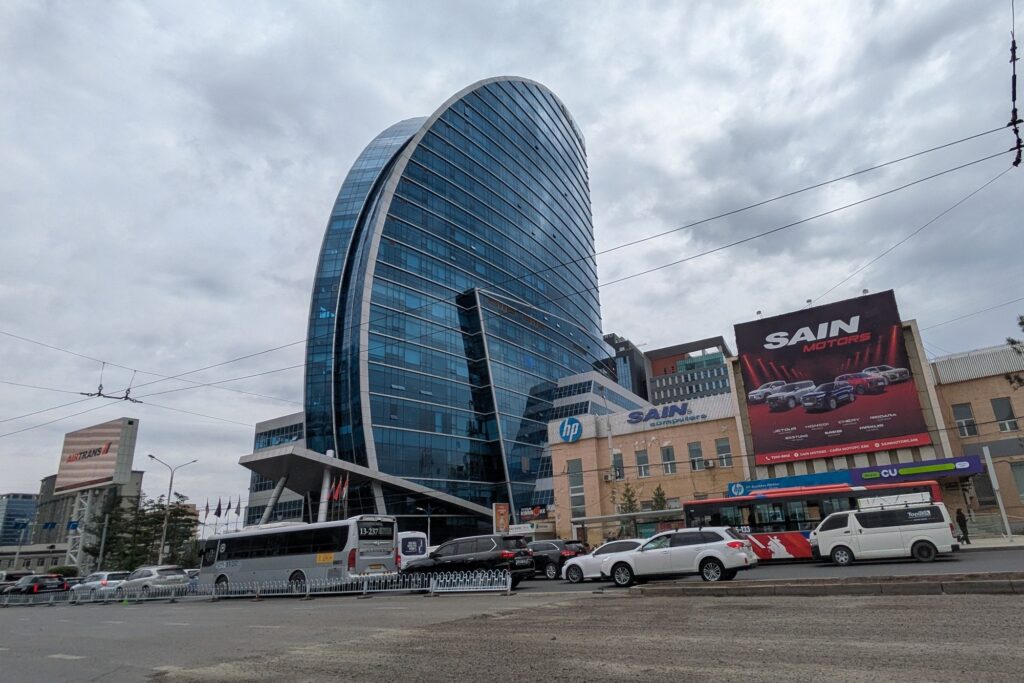
What we learned the next day was that there was a big difference between Ulaanbaatar and the rest of Mongolia. At least we hoped so. We had seen the bad traffic the night before and after struggling to find our driver the next morning and setting off on a whirlwind tour of this chaotic city we weren’t sure whether we were enjoying it or not. Sure, it was the first daylight glimpse of a new city and new country, and that was fantastic, but the traffic was absolutely diabolical and we quickly pined for the bush again.
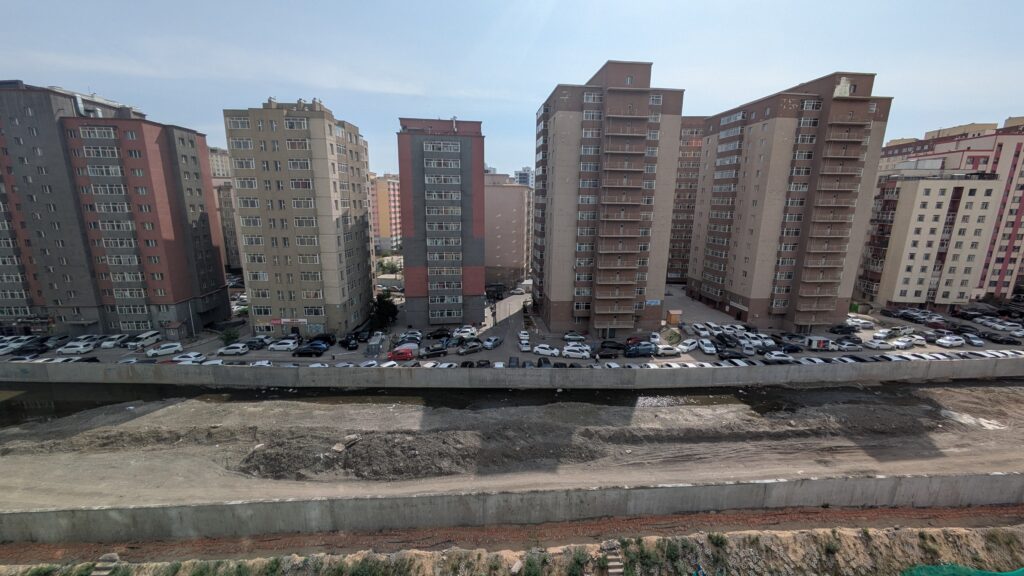
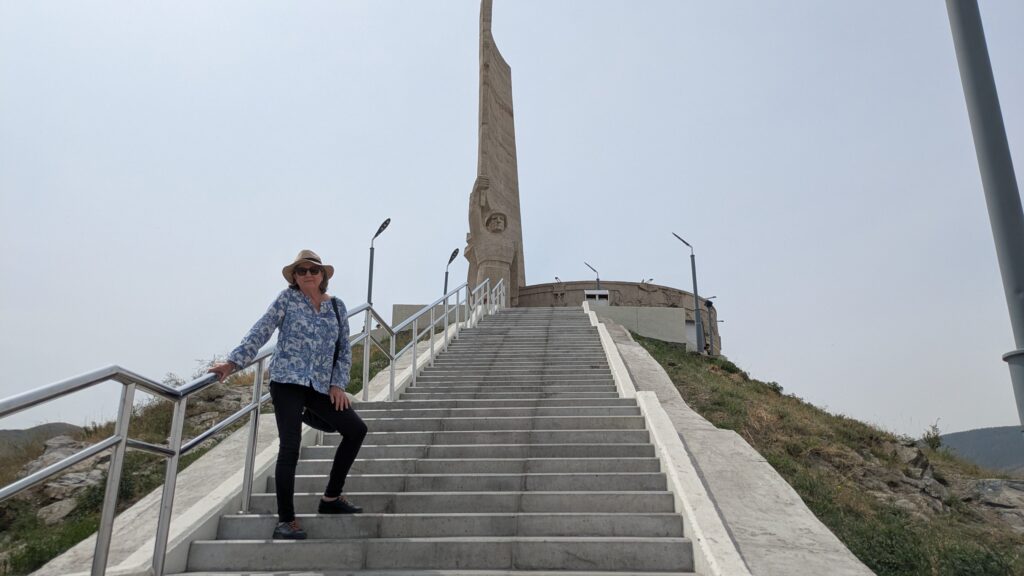
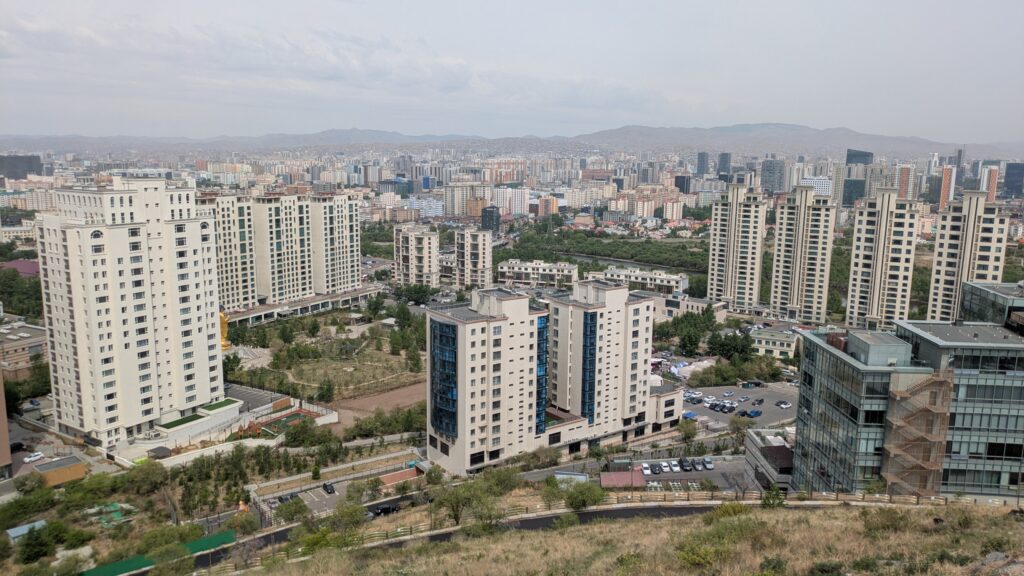
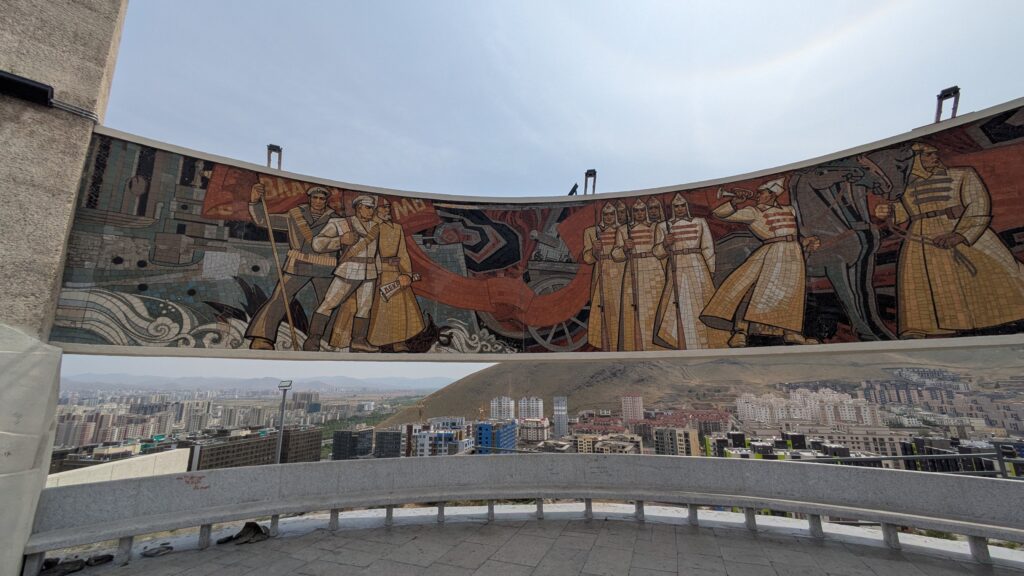
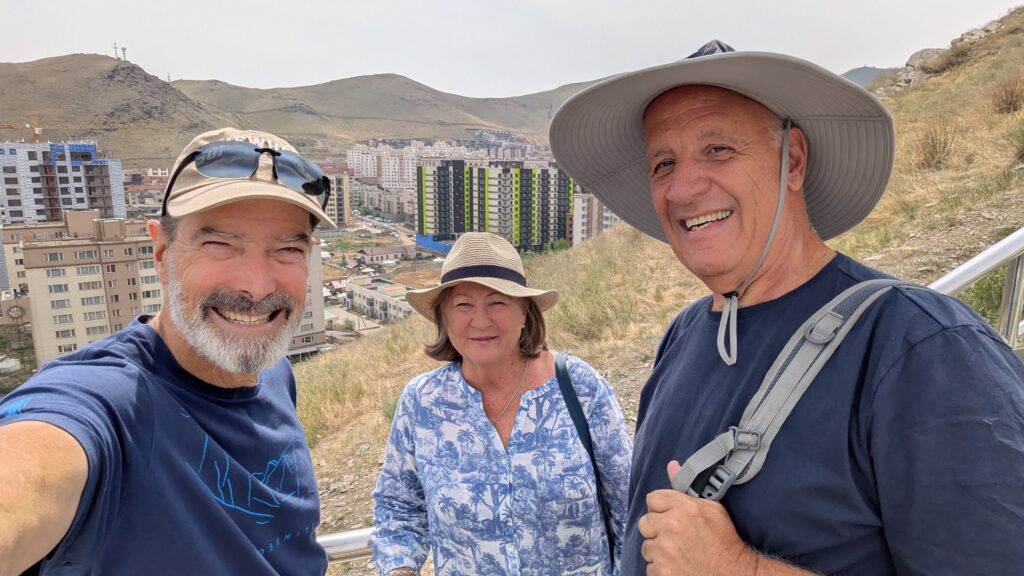
Our driver, who spoke no English but we think his name was something like Dashca (and immediately gained the nickname Dashcam), drove us up to a lookout called Zaisan Hill on the south side of the city for an overview of Ulaanbaatar. What we saw from this great vantage point confirmed what we saw from below, a sprawling city of 1.7 million people, half the country’s population, with a sea of high-rise apartment buildings, gridlock traffic, a plethora of construction cranes and a thin layer of smog. After the lovely cities of Central Asia like Dushanbe, Tashkent, Bishkek and Almaty this was culture shock.
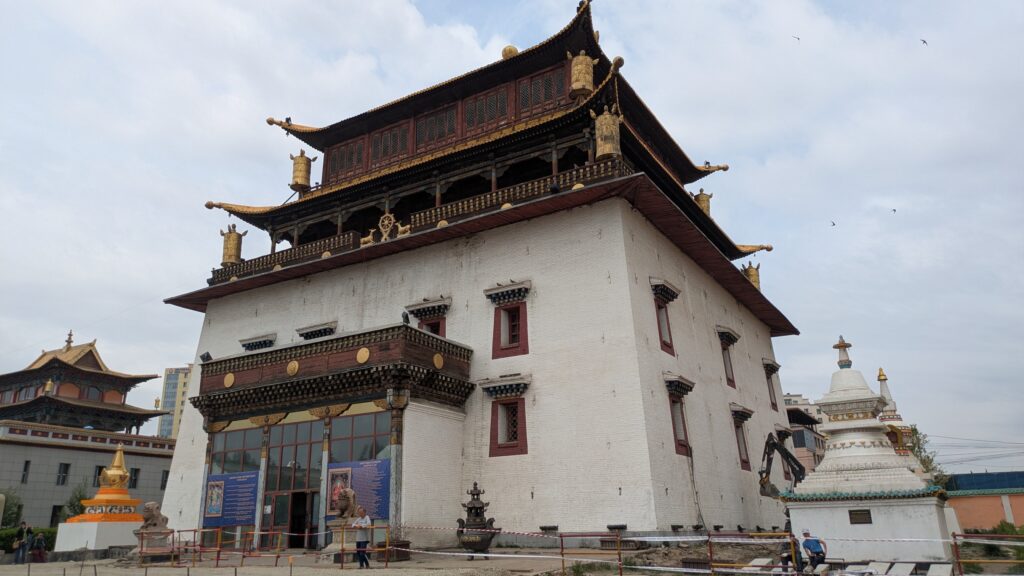
Not deterred by the traffic that would definitely deter anyone else, Dashca weaved his way through the traffic for an hour and dropped us off at the spectacular Gandantegchinlen Monastery. Okay, unpronounceable, I agree, and surrounded by unsightly construction but it’s beauty stood out nevertheless. Built in 1809, closed by the Soviets and for a long time the only working monastery in Mongolia, today it is the centre for Buddhism in Mongolia. And it was a cracker.
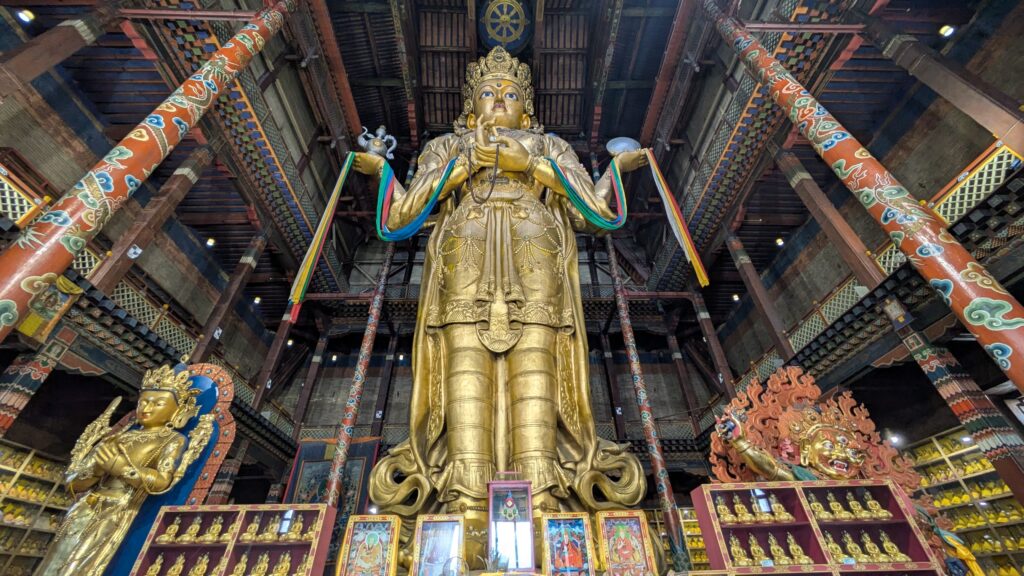
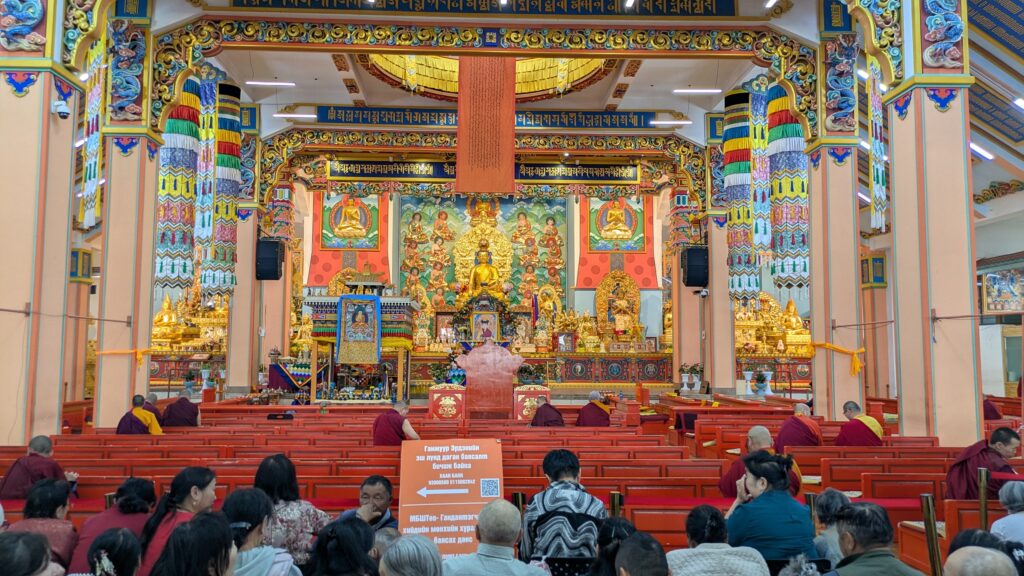
The three of us went inside and gawked at the handsome 26 metre high statue of an important deity in Buddhism. Over 60% of Mongolians identify as Buddhist and it was great to be back in the land of the Buddha, something close to Julie and I after years living in southeast Asia, after a few weeks of mosques and madrassas. As they say, a change is as good as a holiday.
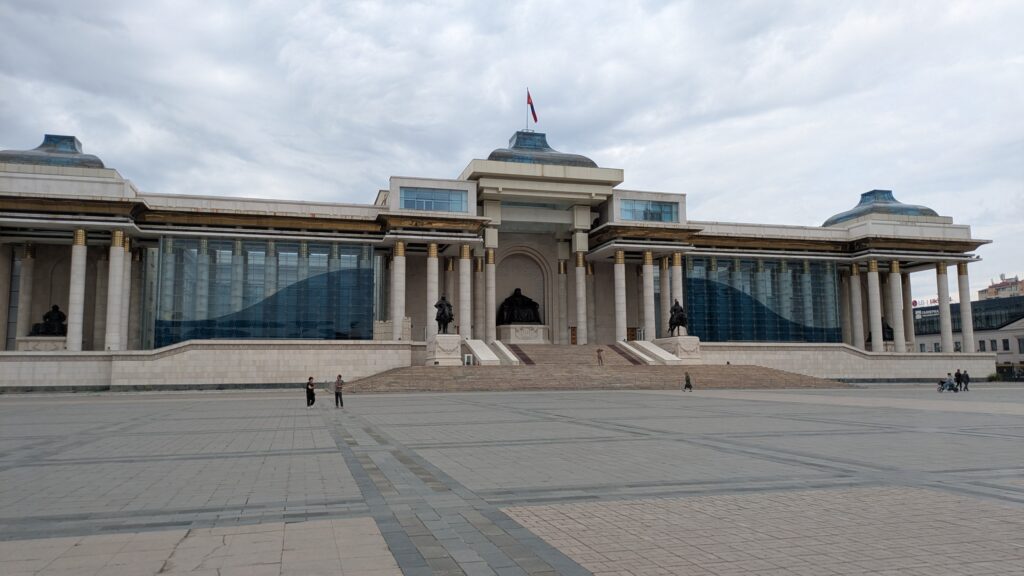
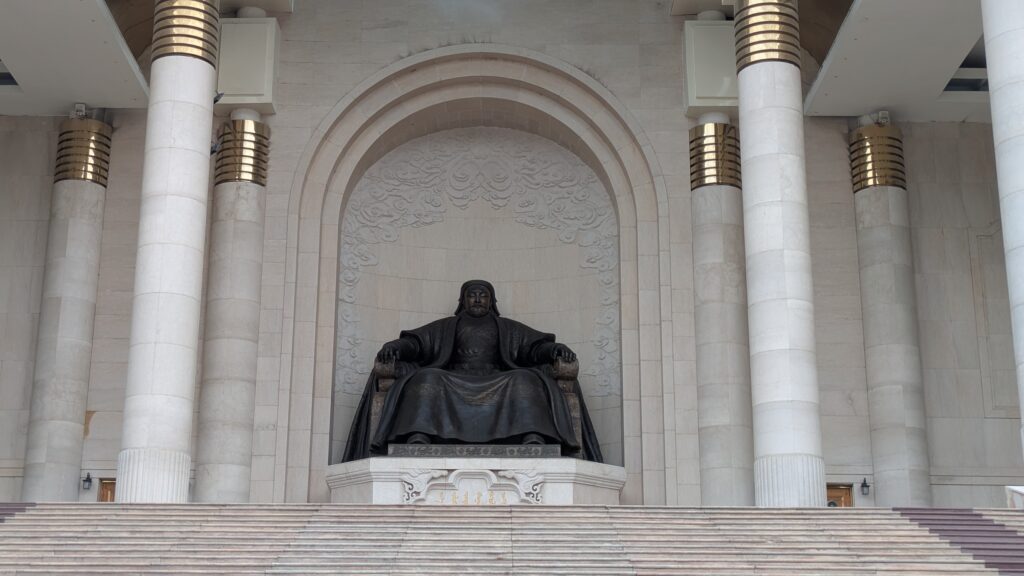
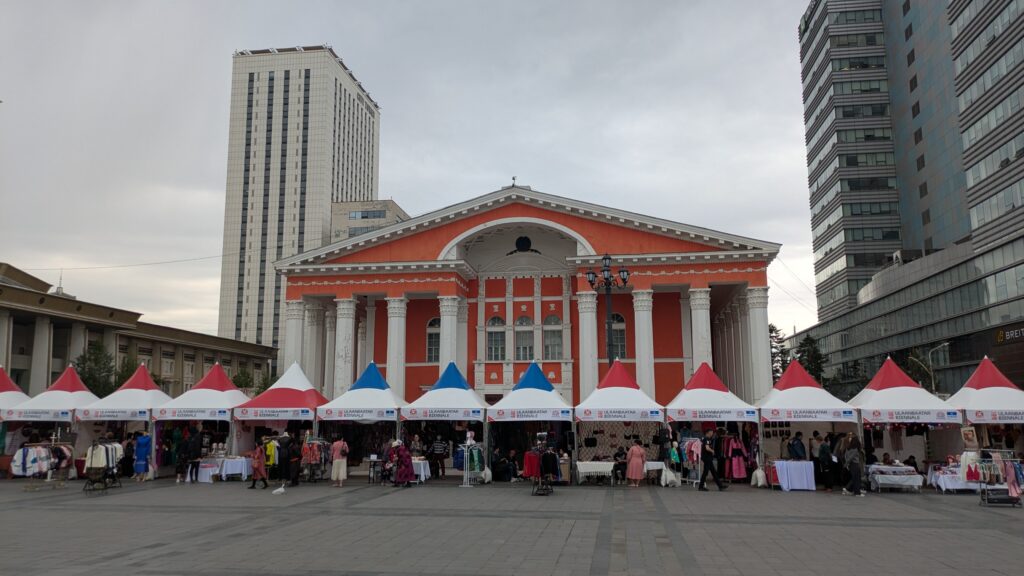
Having lapped up what turned out to be the highlight of the day, we headed for the main square of Ulaanbaatar, called Sukhbaatar Square. From this open central point we stood in front of the massive Mongolian parliament building and by spinning around we could see a number of prominent and important administrative, cultural or historical buildings that represent the best of Mongolia. Despite the drizzle we rated this place.
Sightseeing behind us, our big task for the day was to buy our food for the next 18 days. Our plan was something like this: our driver Dashca would load us, our bags and our camping gear and food in a big Landcruiser for an 18 day trip around the key highlights of Mongolia.
The trip was a mixture of wild camping nights, staying in local family gers (yurts), a couple of tourist camps and one guest house. In most cases we would be cooking for ourselves with the limited camping gear they gave us. One big factor – we had no fridge or esky in the car so that meant we could not carry or use any meat, dairy products, beer, ice or anything else that needed refrigeration.
Nevertheless, we were super-excited about this adventure but we had to provision ourselves in Ulaanbaatar because the vast Gobi desert and emptiness of Mongolia would not help us cater for what we needed.
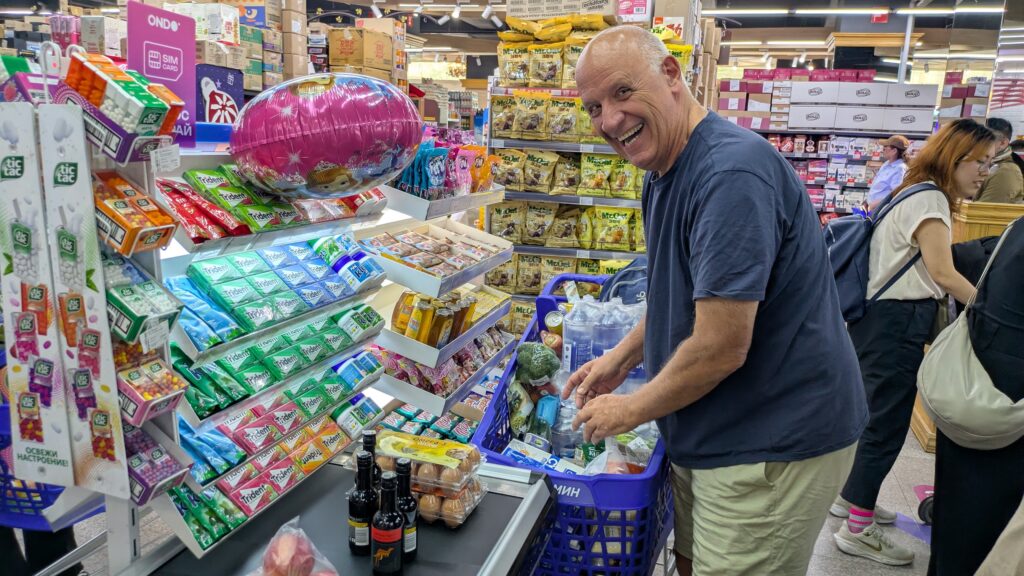
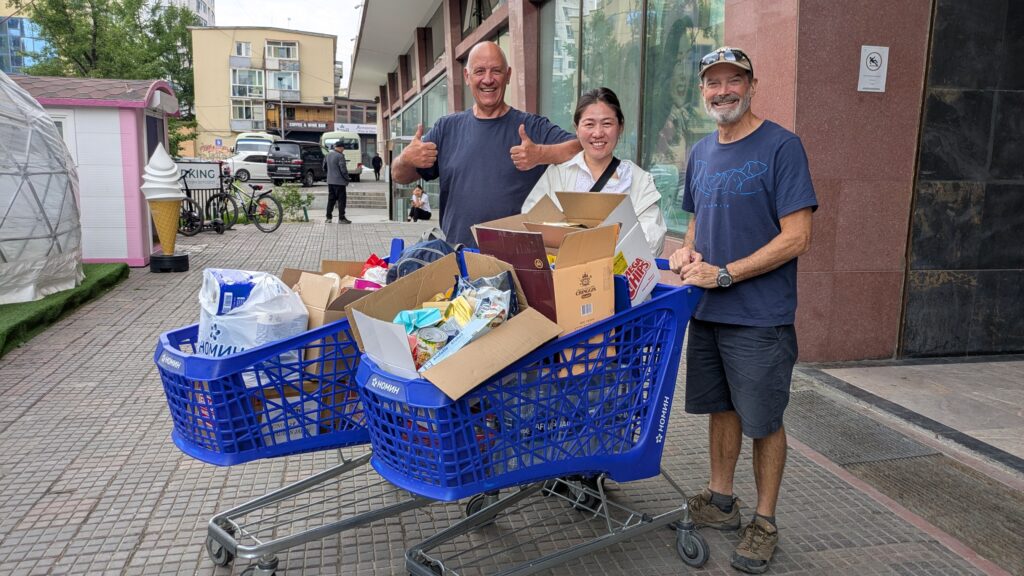
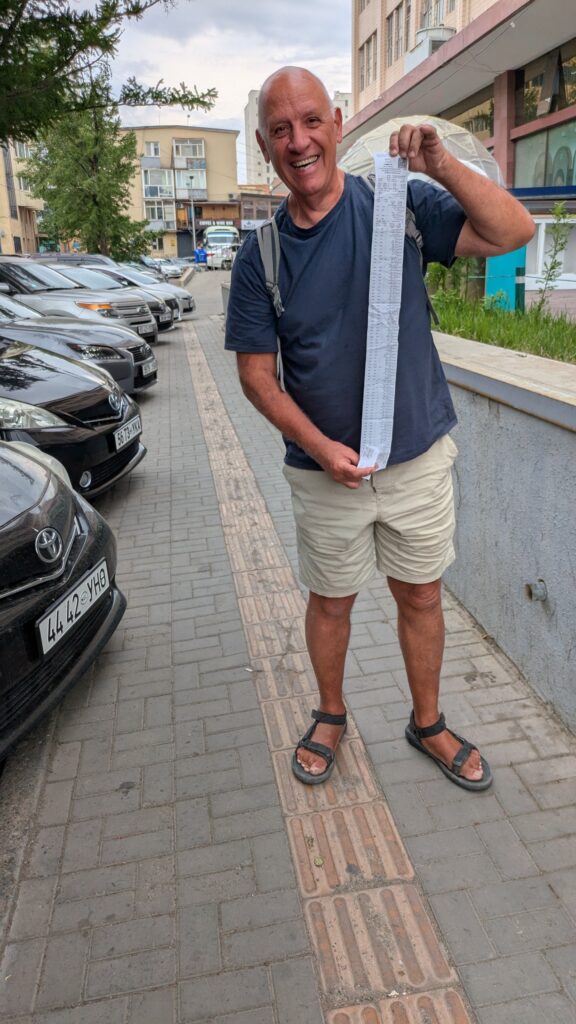
By visiting the State Department Store, a throwback to the old Soviet days, and two other supermarkets, and led by the ever-resourceful chef extraordinaire Julie, we bought what we hoped will be enough to feed us for almost three weeks. And when your grocery bill tops out at 1.2 million Mongolian Tugriks you know you’ve been shopping (Secret tip, you need 2,332 Tugriks to buy one Australian dollar so this shopping trip cost us about A$515 or US$335).
That evening Dave, Julie and I had pizza, burgers, draft beer and drinkable red wine at a local place to reward ourselves in advance for the culinary hardships we would be facing over the next couple of weeks. And the next morning Dashca showed up with our Land Cruiser for our big trip. We were very pumped as we drove out of Ulaanbaatar and headed eastward for one of Mongolia’s proudest monuments.
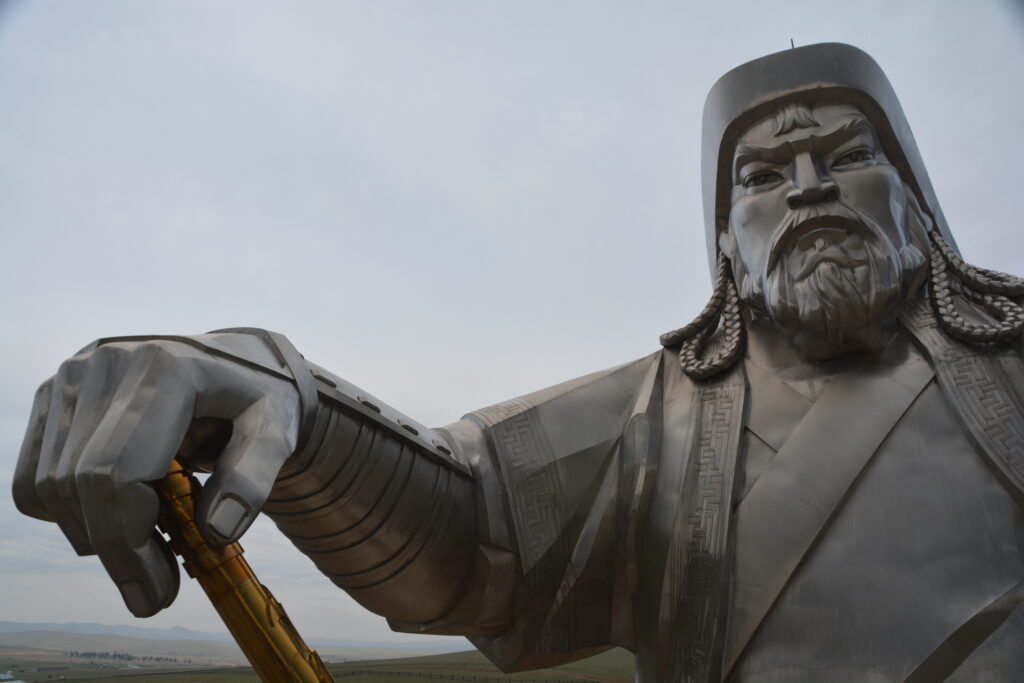
Mongolia’s national hero, and one of the most impactful characters in the history of this region, is Genghis Khan, or Chinggis Khan as he’s known locally. Genghis Khan lived in the late 12th and early 13th centuries, surviving a difficult upbringing, killing his brother to secure his growing power, ever-increasing the size of his army and the number of victories as he swept all of Central Asia and China, down into India, across what is now eastern Europe and into Europe itself. Millions died to his armies but no individual in the history of mankind has controlled such a vast empire. And he was from an area just east of Ulaanbaatar.
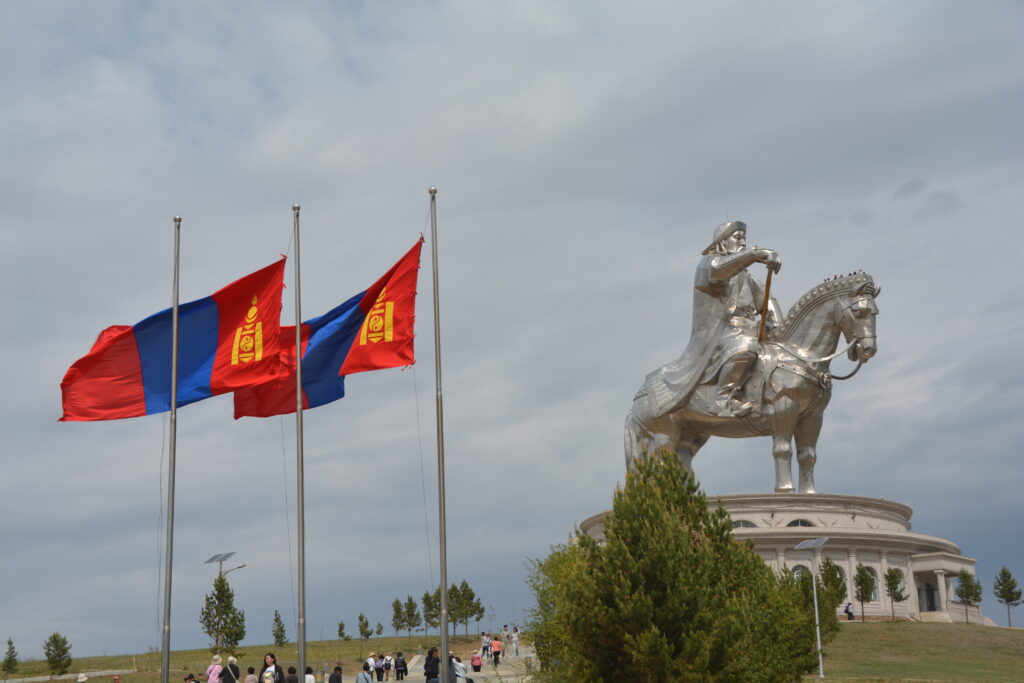
The proud Mongols have built a statue that defies belief – their hero is sitting on a horse at the top of a hill, made of shining stainless steel, at over 40 metres high the tallest equestrian statue in the world, looking eastward over his land of birth. And when we looked up and saw people standing up on his horse’s head of course – or of horse – we had to go do it also.
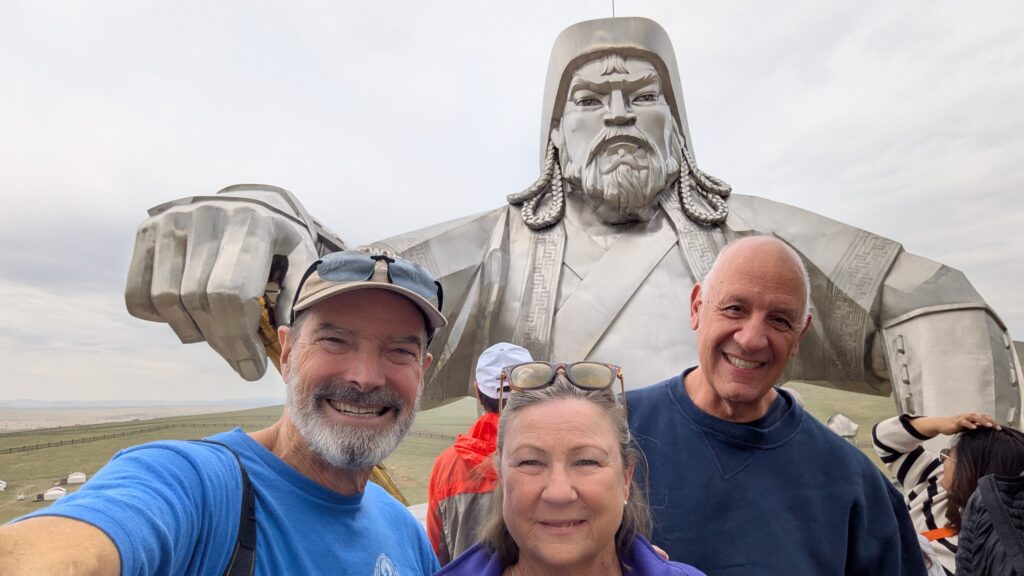
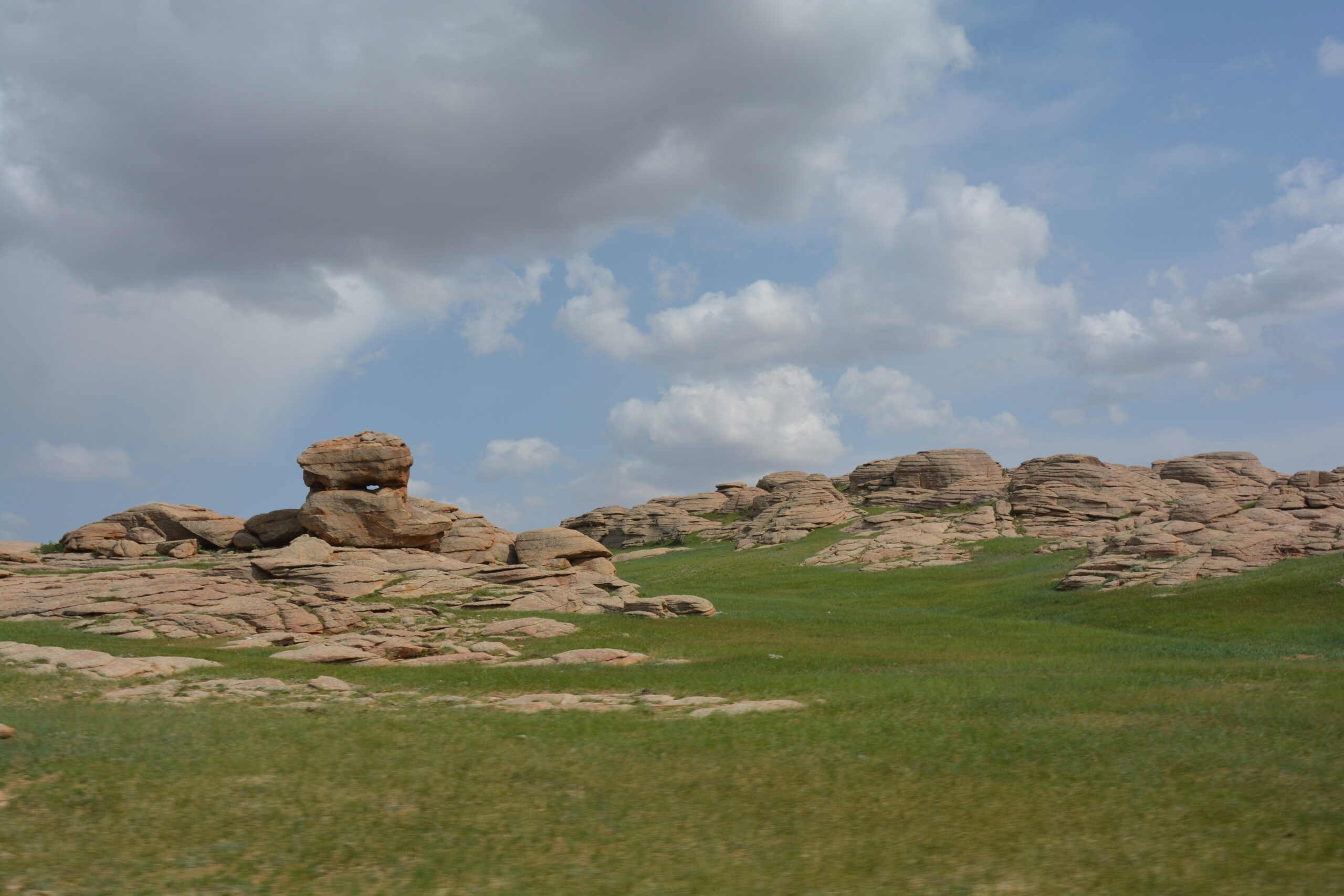
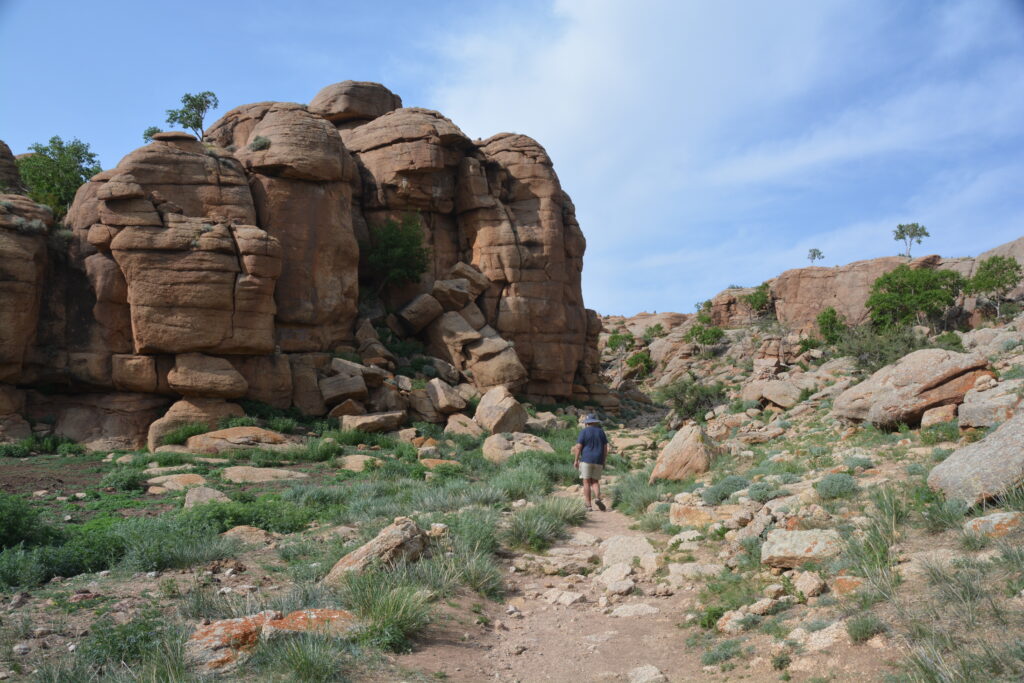
Having paid appropriate homage to the big guy we headed south across the green Mongolian steppe and left civilisation behind us. In due course Dashca veered off the paved road and followed a series of dirt tracks until we came to a curious rocky mountain range rising from the grassy fields.
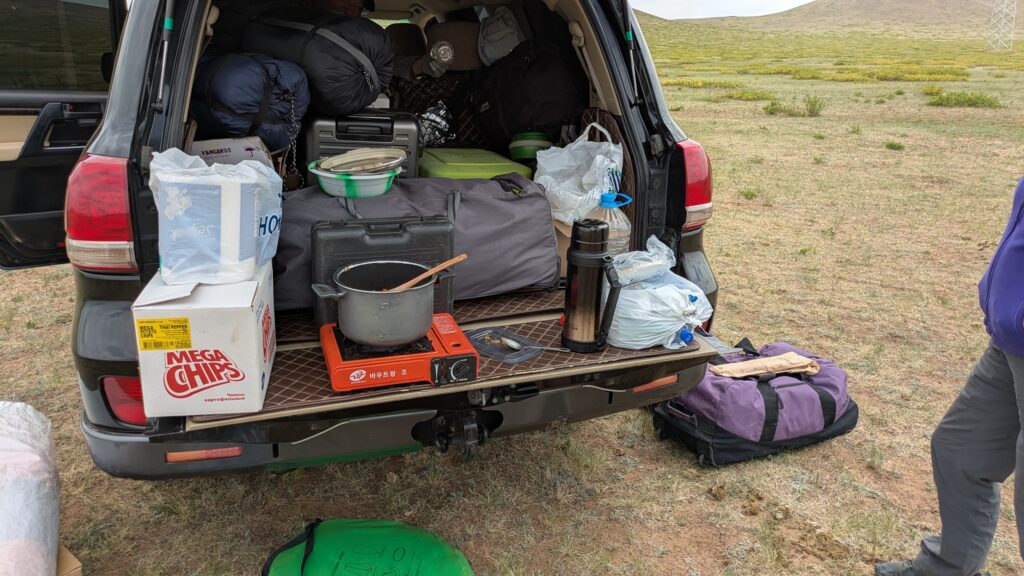
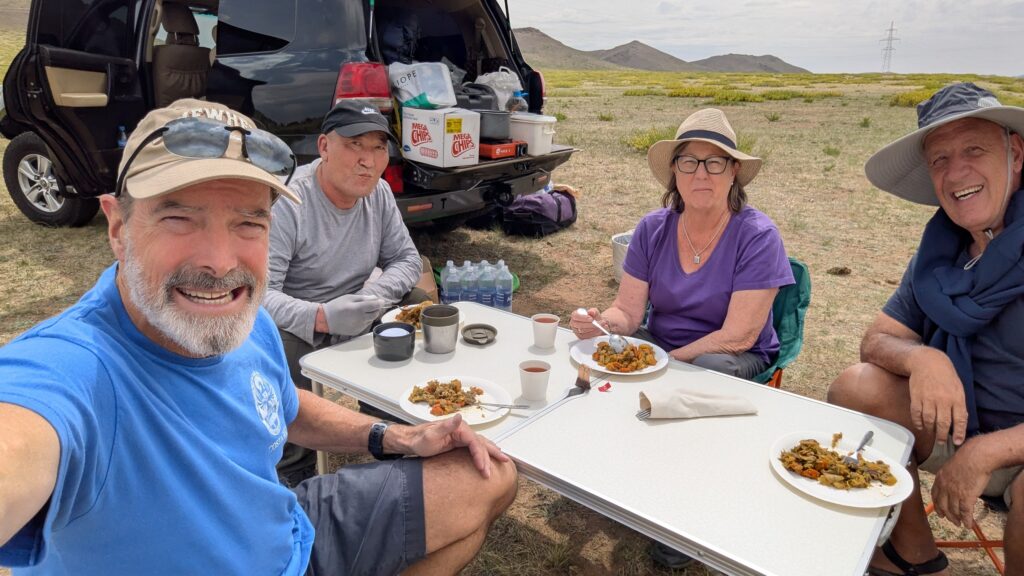
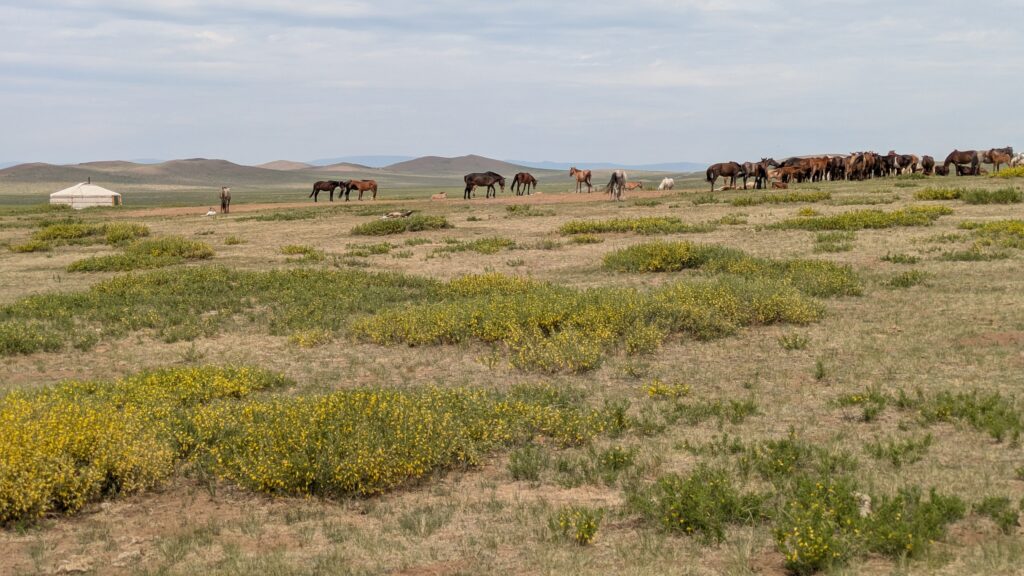
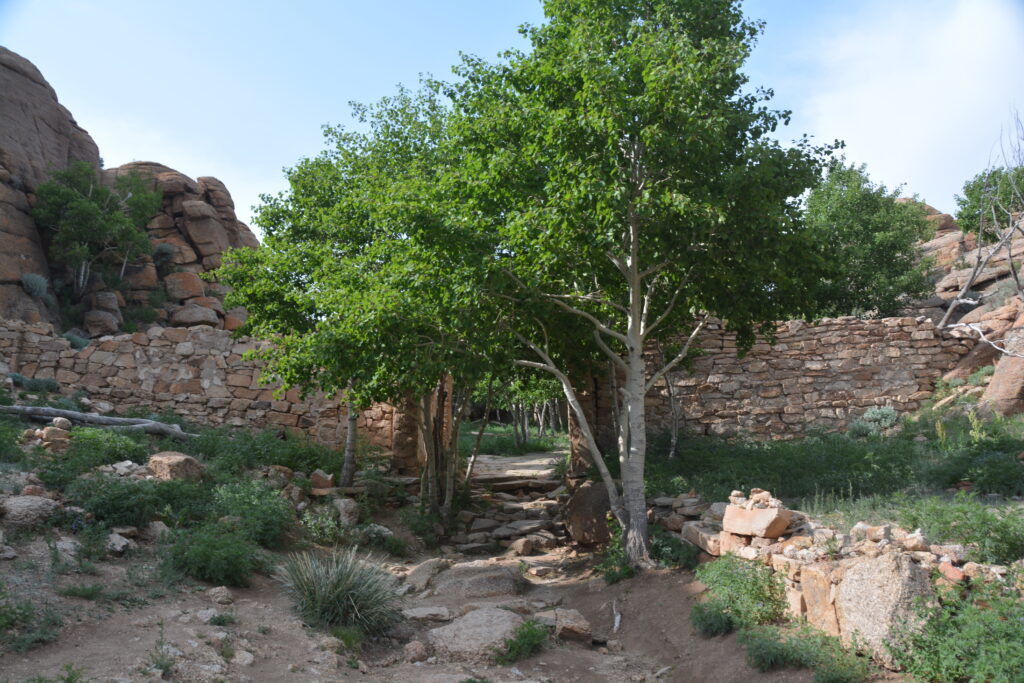
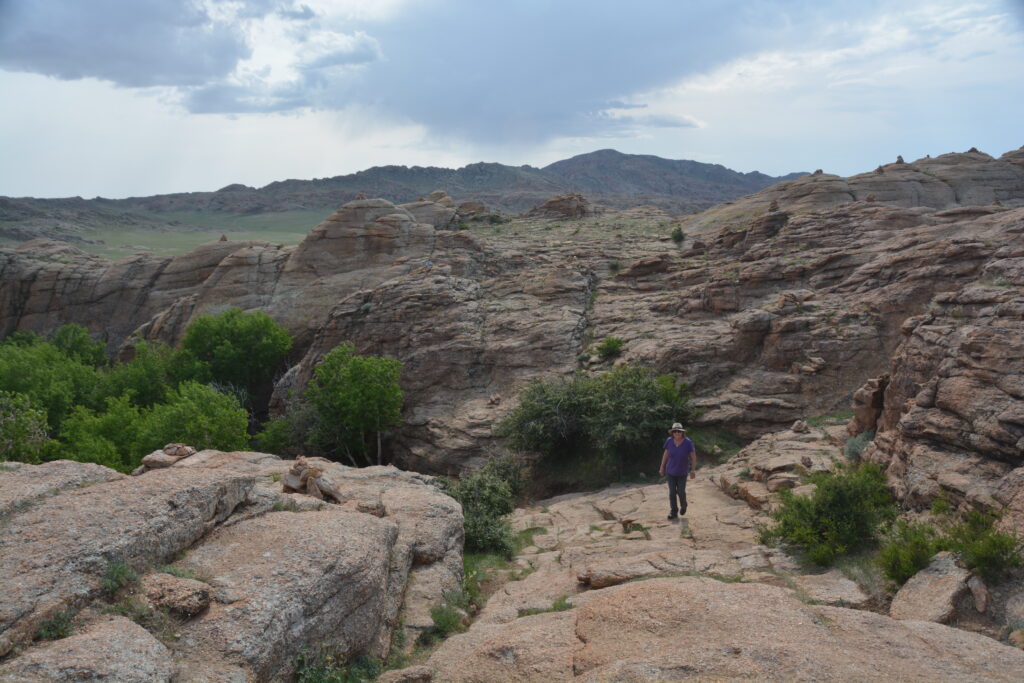
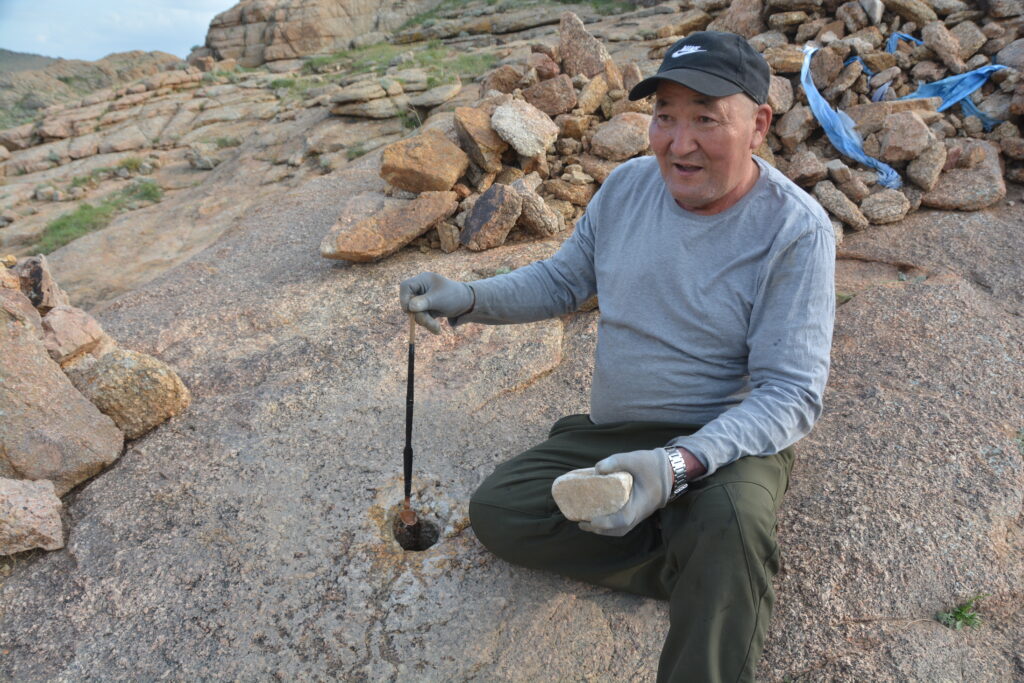
This area is called Baga Gazryn Chuluu and the rocky area is steeped in Buddhist and shamanist myths and beliefs. We walked amongst these rocks with their cairns piled on every available spot, and enjoyed the expansive views all around. It was very cool to finally be out in the remotest corners of Mongolia and we were loving it.
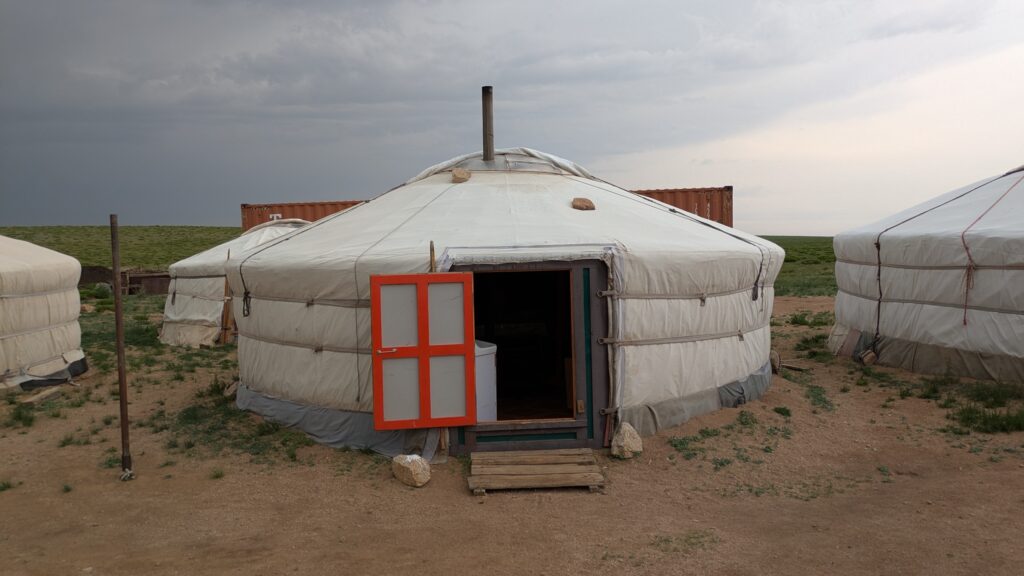
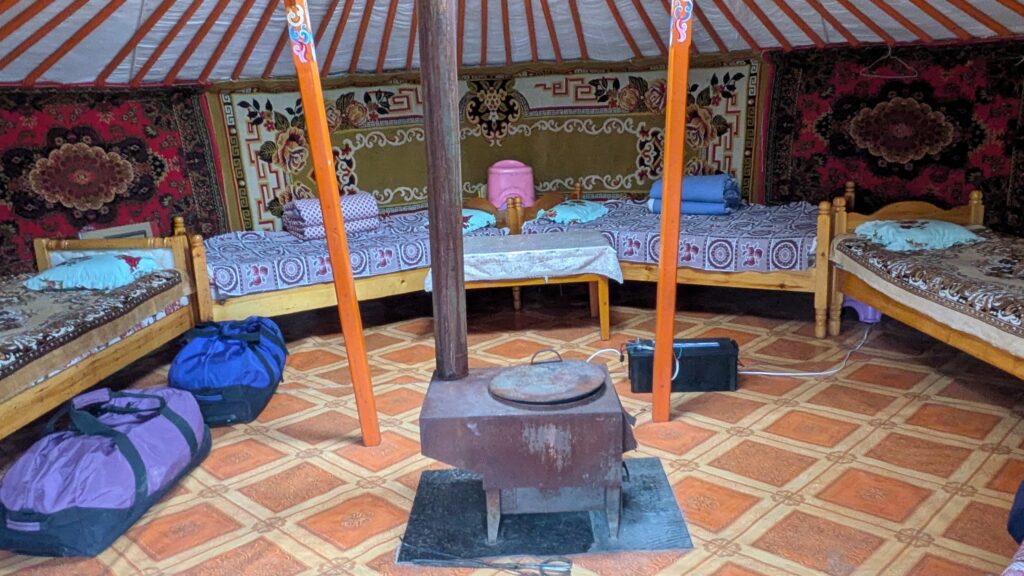
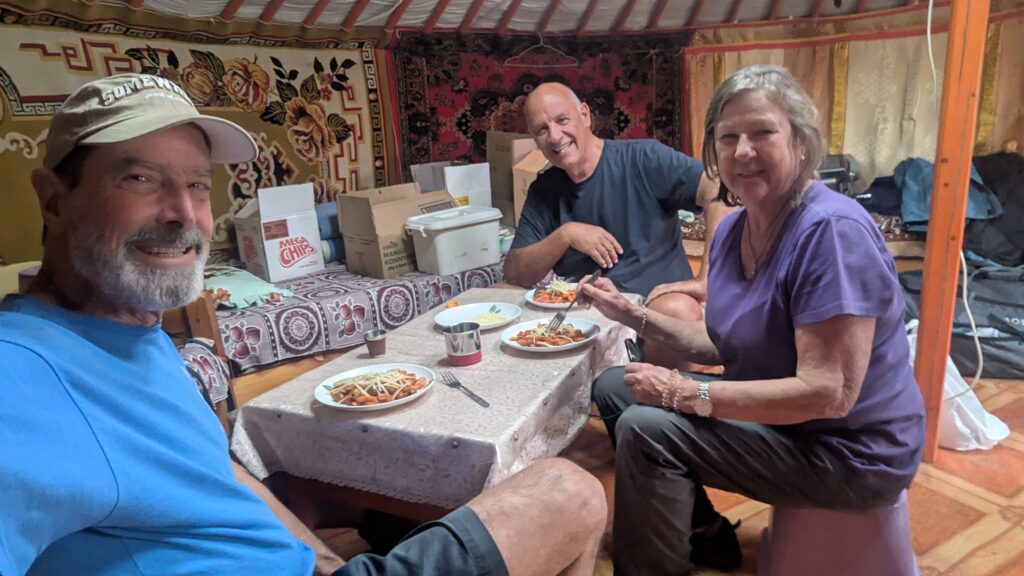
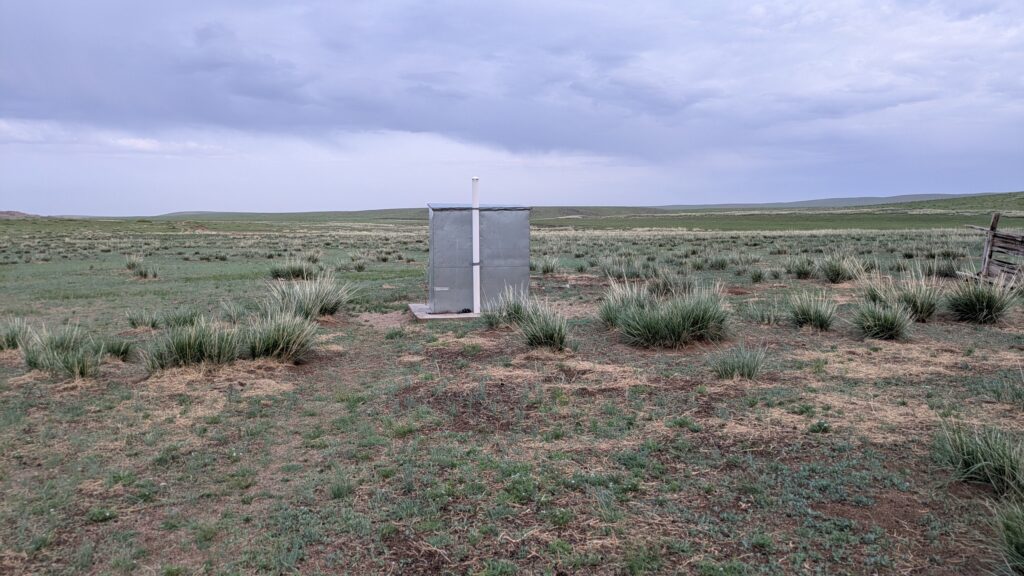
We finished nearby at a family ger, which is really just a yurt with a new Mongolian name, and Julie cooked up a splendid meal inside our ger while thunder and lightning and rain struck outside. Our first day on the road in Mongolia had been an absolute ripper.
I am very envious. I have been fascinated with Mongolia since reading the Conn Iggulden Genghis Khan series. I am really enjoying your travels.
Oh Marg, that is wonderful to hear. Mongolia is absolutely the full travel deal, packed with wonderful experiences. Thanks for staying in touch. Bill