Lake Eyre
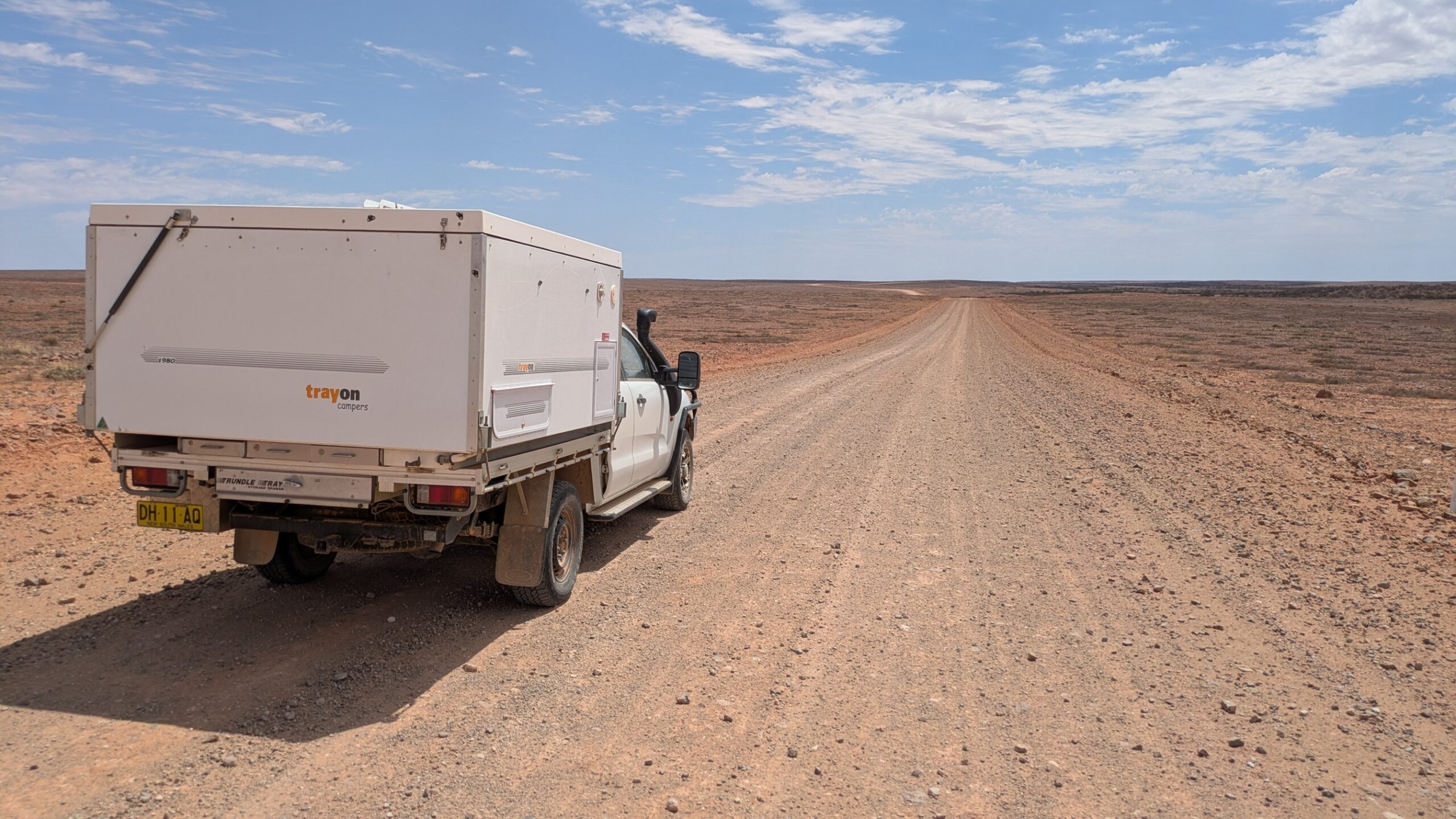
Australia is a wonderous place for many reasons but some of it’s natural features go to the next level. Think Great Barrier Reef, Uluru, Kakadu, and the Simpson Desert as starters. I would add to that list Lake Eyre, an extraordinary natural phenomenon that deserves everyone’s attention. And we had it in our sights.
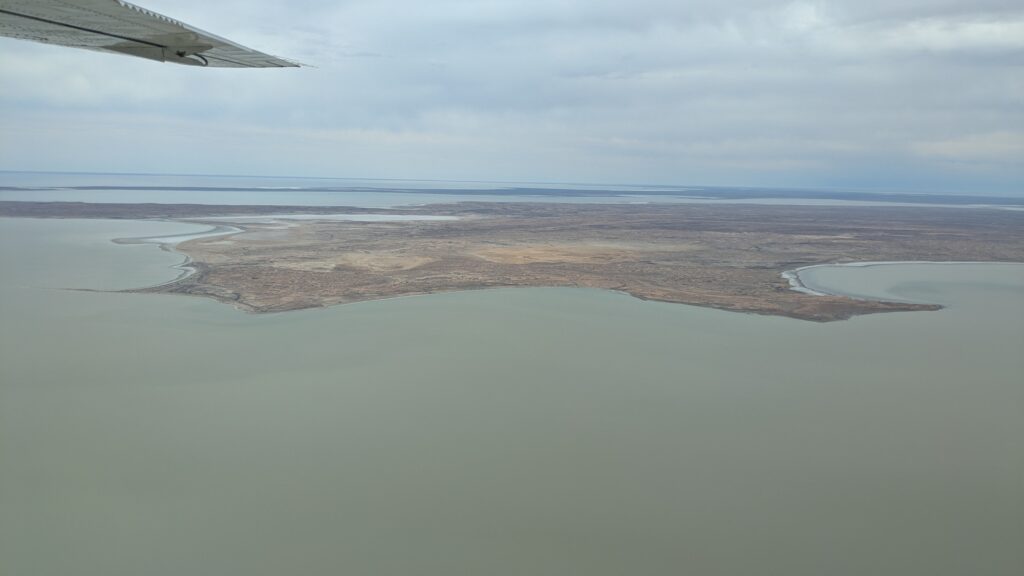
Lake Eyre is what is called an endorheic lake which is basically a collection of water in a ‘sink’ which has no natural outlet. And Lake Eyre is the mother of all endorheic lakes. Covering an astonishing 9,000 square kilometres, water reaches it’s sink when particularly good rainy seasons occur further north and the water flows southward.
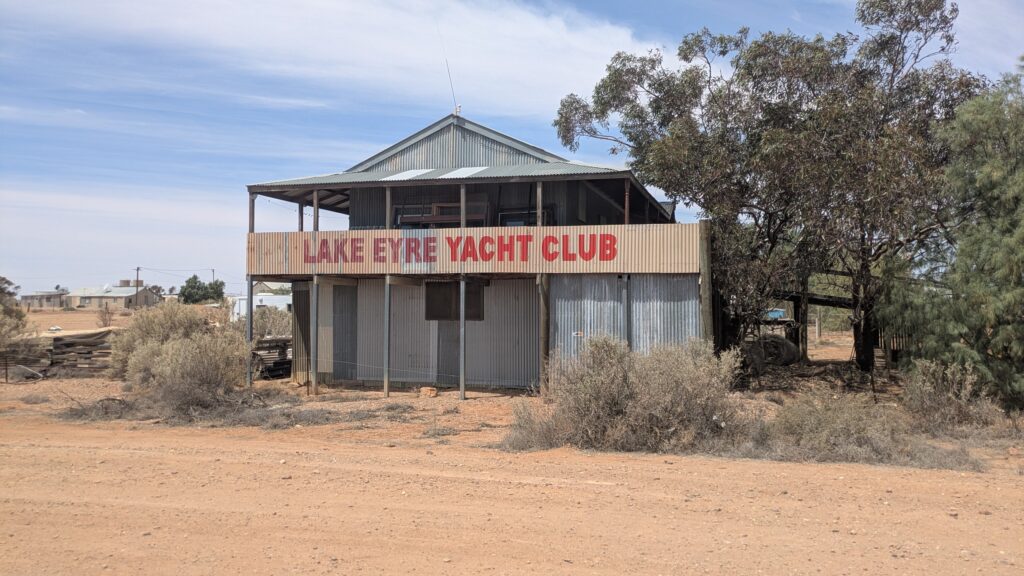
Many years no water accumulates or perhaps just a small amount, making the water very saline. Lake Eyre also features the lowest point in Australia at 15 metres below sea level. Only four times since 1860 has Lake Eyre filled completely, making the members of the Lake Eyre Yacht Club fairly idle. This year it has quite a bit of water and we were determined to see it…which isn’t easy.
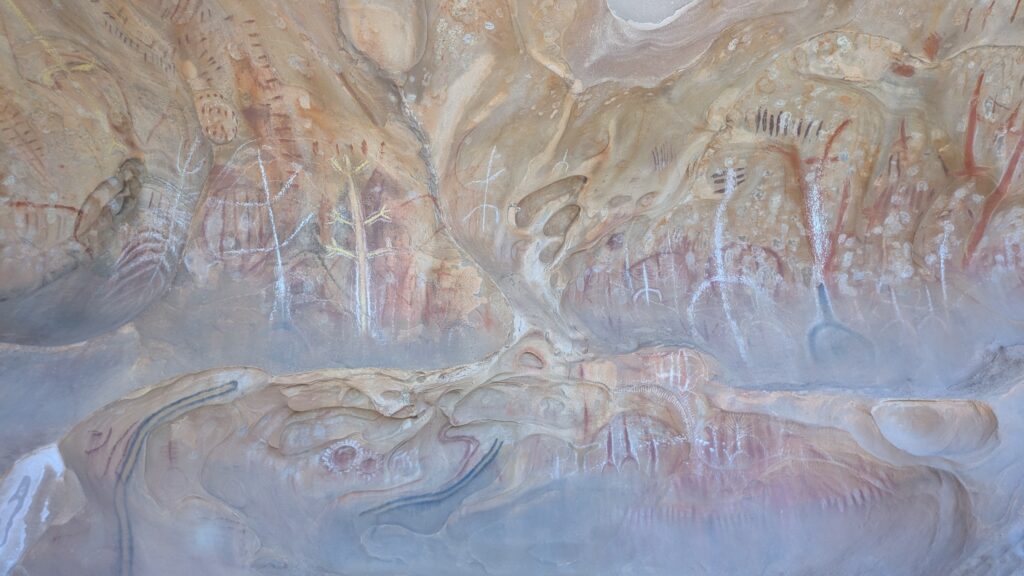
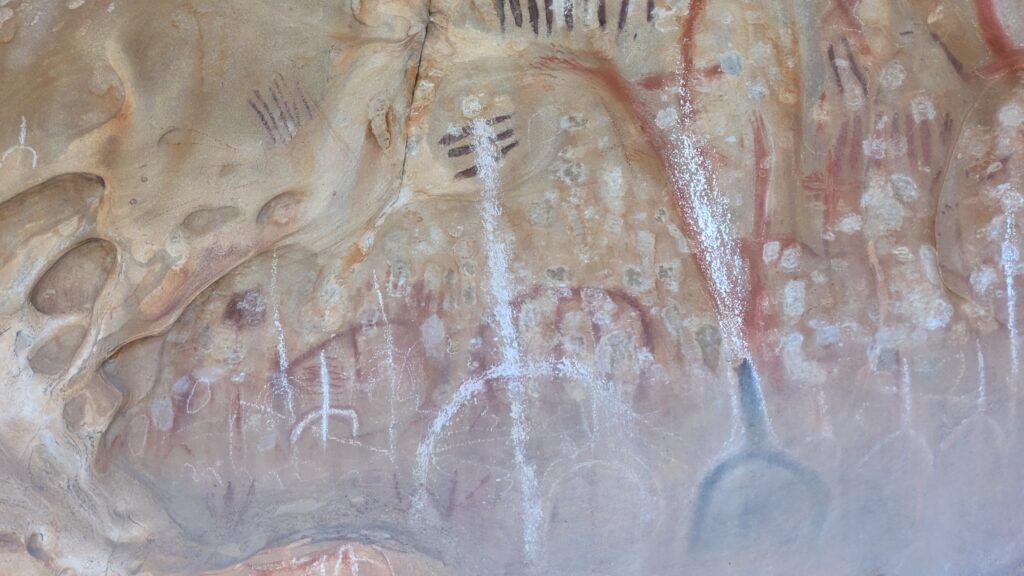
Before we left the Flinders Ranges we had to visit the Arkaroo Rock which features rock art from the Adnyamathanha people dating back over 6,000 years. We huffed and puffed a bit in the morning heat up the three kilometre trail to see the wonderful drawings from these original local artists, each telling their story or a part of their beliefs. We always dine out on rock art and we definitely rated this place.
We circumnavigated the southern edges of the Flinders Ranges National Park through beautiful open territory with the jagged mountains of the Wilpena Pound on our right and the Heysen range on our left. Eventually we popped out on the bitumen and headed north towards Lake Eyre.
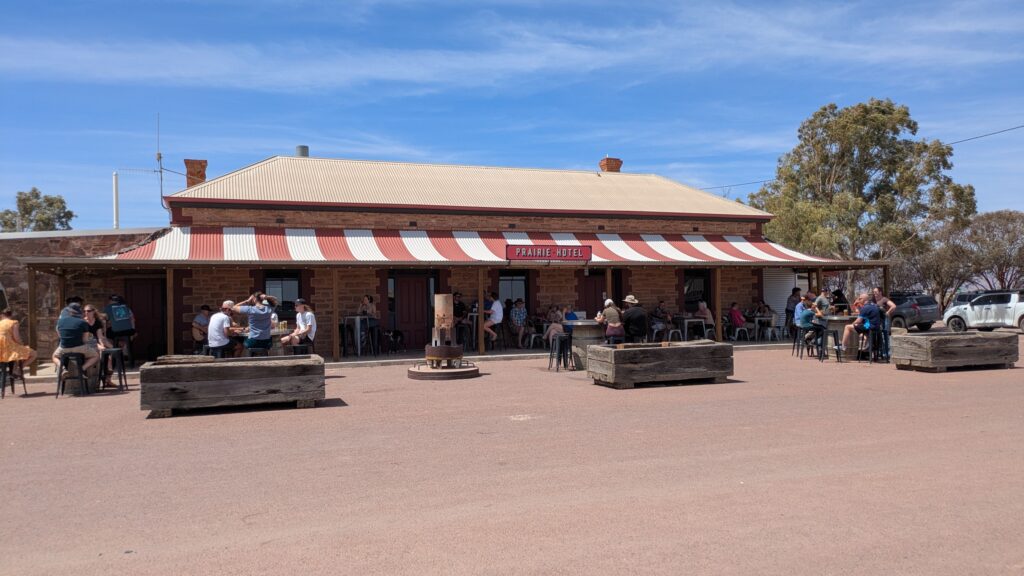
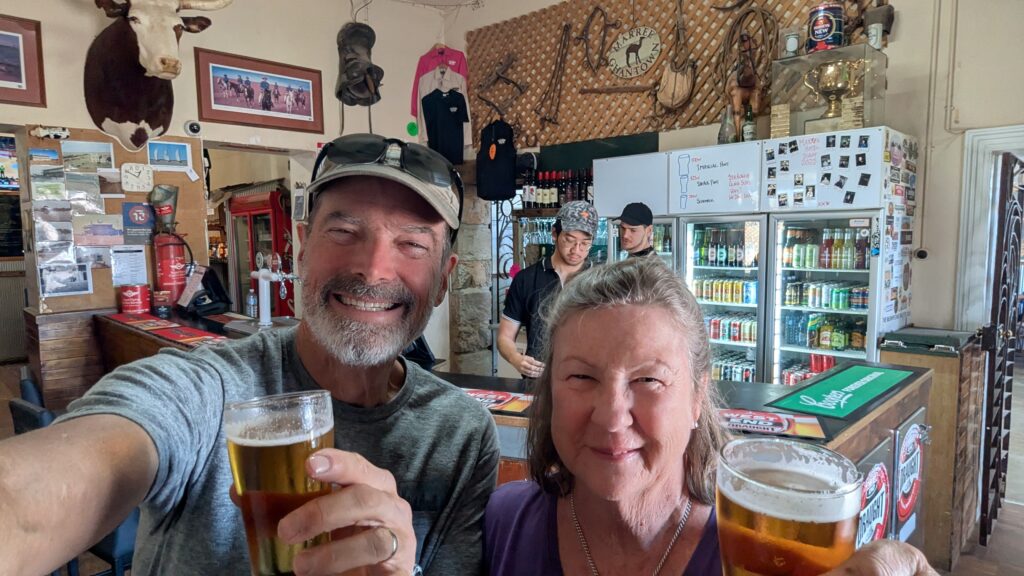
Well, not so fast. We stopped in the small settlement of Parachilna, once a significant stop on the train line connecting Adelaide with all ports north. The harsh conditions and remote location in the late 1800’s would have taken a toll on all but the hardiest people out here and in the 34°C heat it was wearing on us too so we popped into the historic Prairie Hotel for a rehydrating beer.
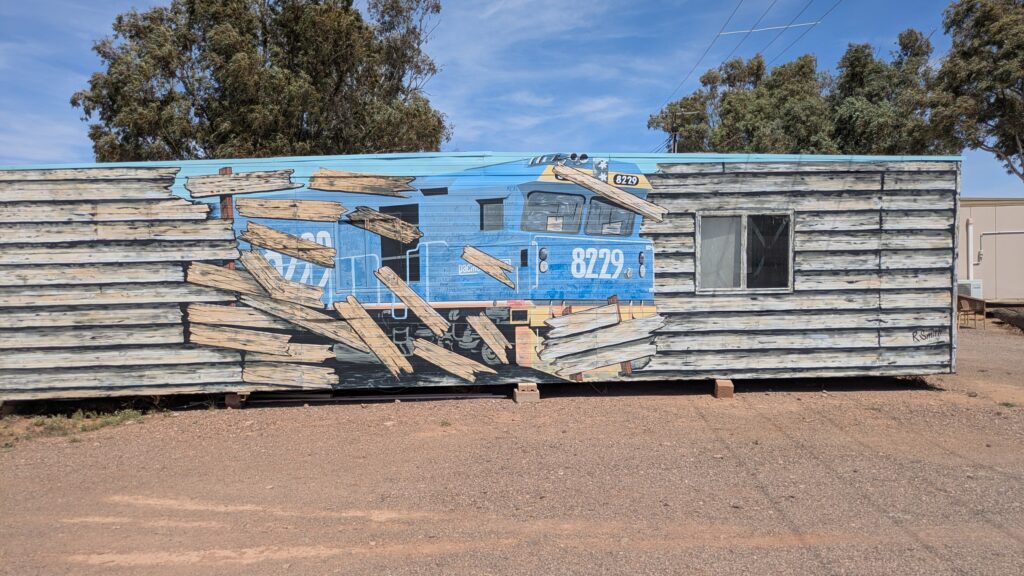
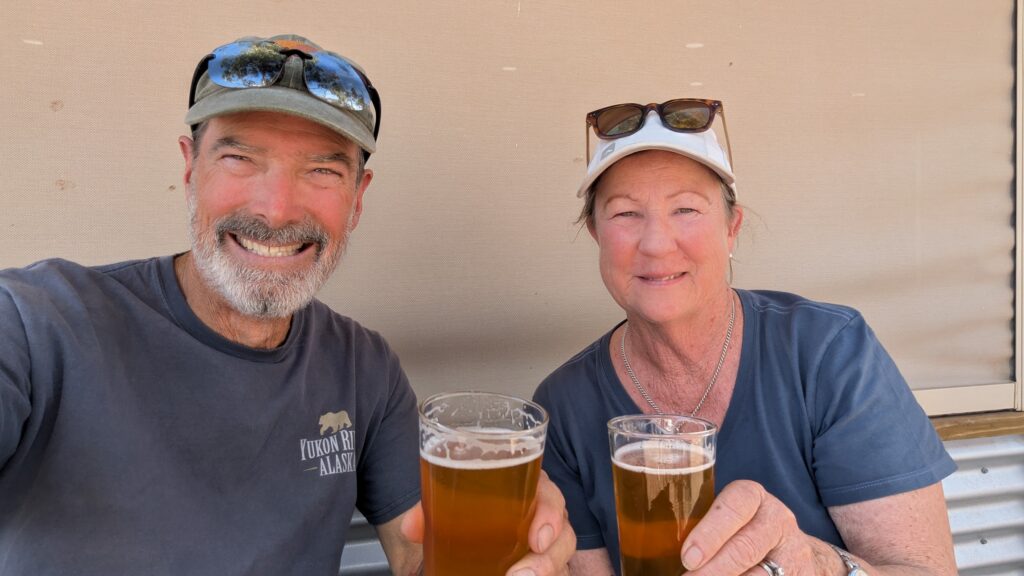
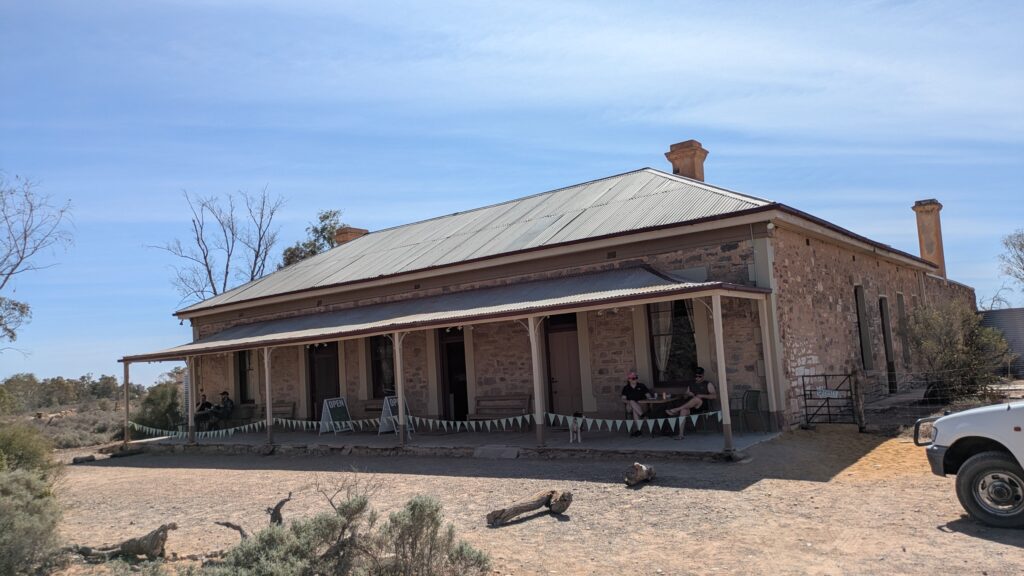
Further north we stopped at the historic town of Beltana, once again, an important rail link back in the day, now being restored (sort of) and recorded through message boards in front of many of the old buildings or ruins. We had a yummy Lamington at the Queen Victoria Hotel, built in 1879 thank you very much, before following a rough dirt track northward as it followed the long-gone original train line. This was South Australian outback desert at it’s finest and to celebrate we found another dry creek bed, named Sundown Creek, to camp for the night.
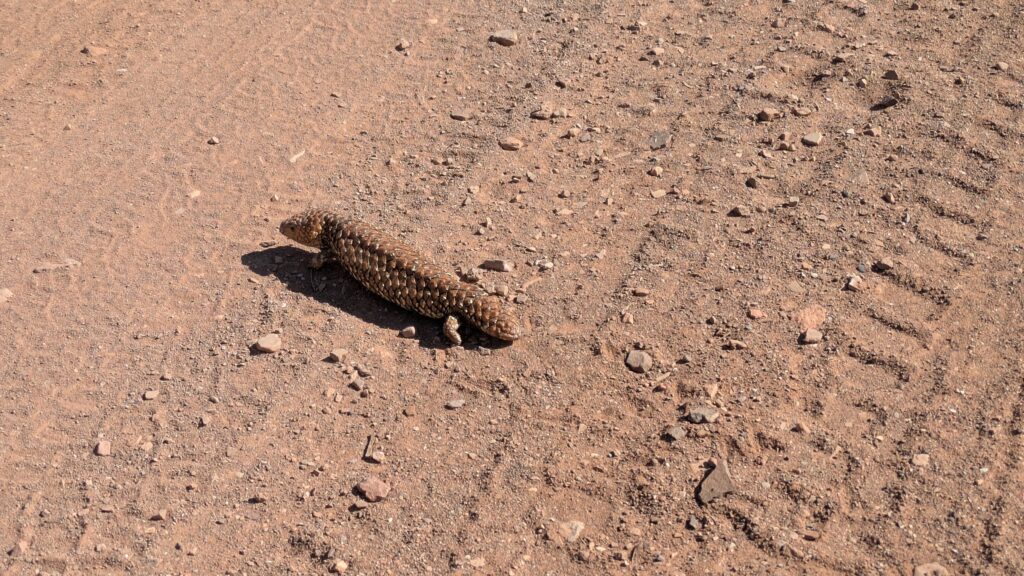
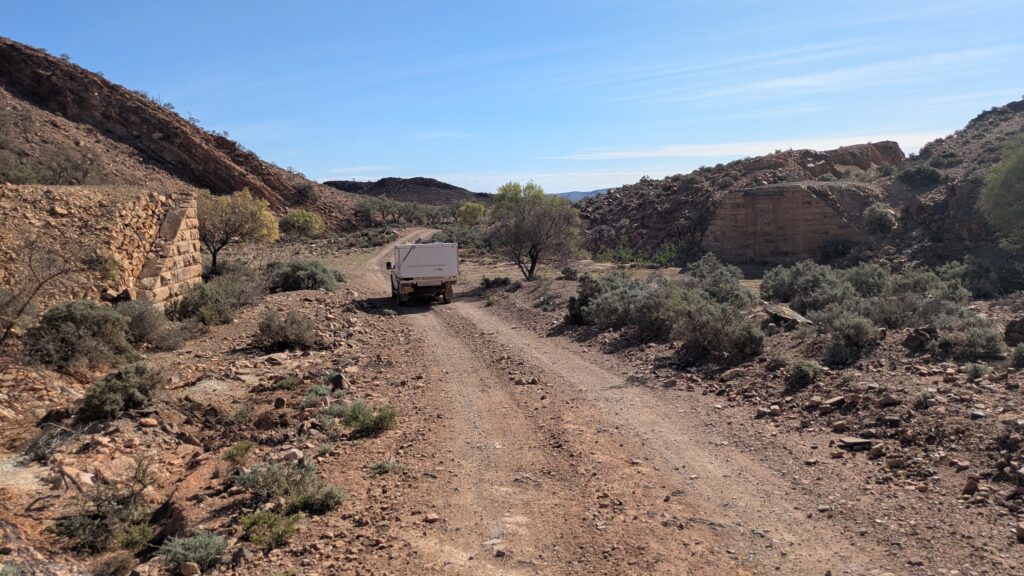
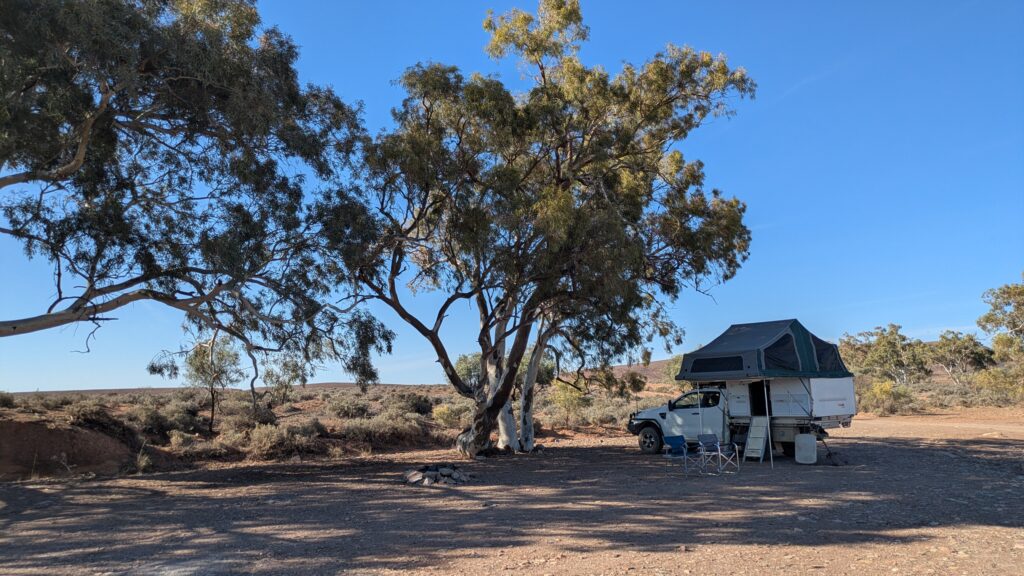
All this desert fun is great but occasionally we need supplies so we drove north to Leigh Creek (official population – 91) to fill up with fuel, have showers at the local caravan park and fill Wanda’s water tank. A little further up the road we stopped at Copley (population – 83) for a great meat pie, finishing the list of things we need to fill up.
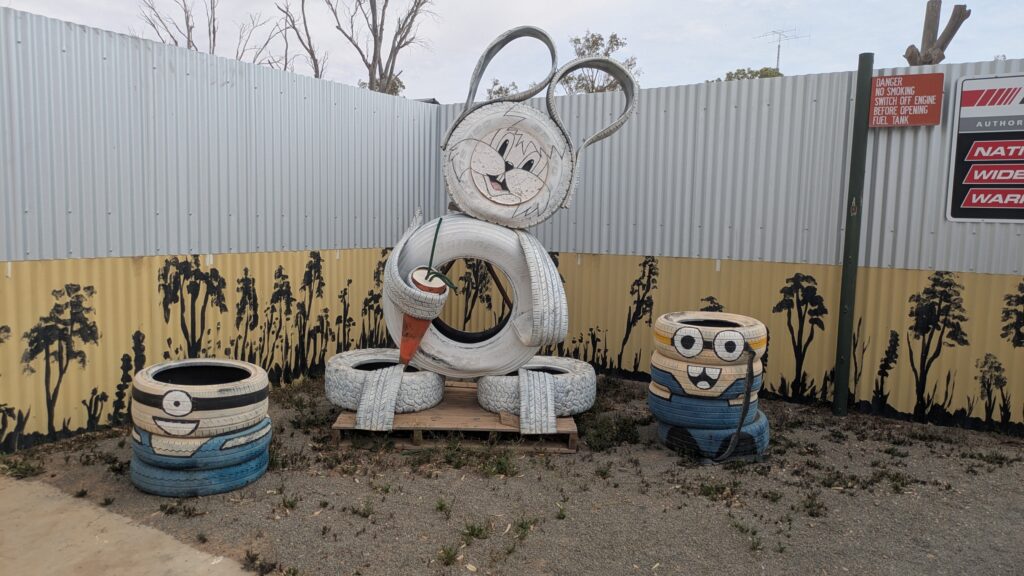
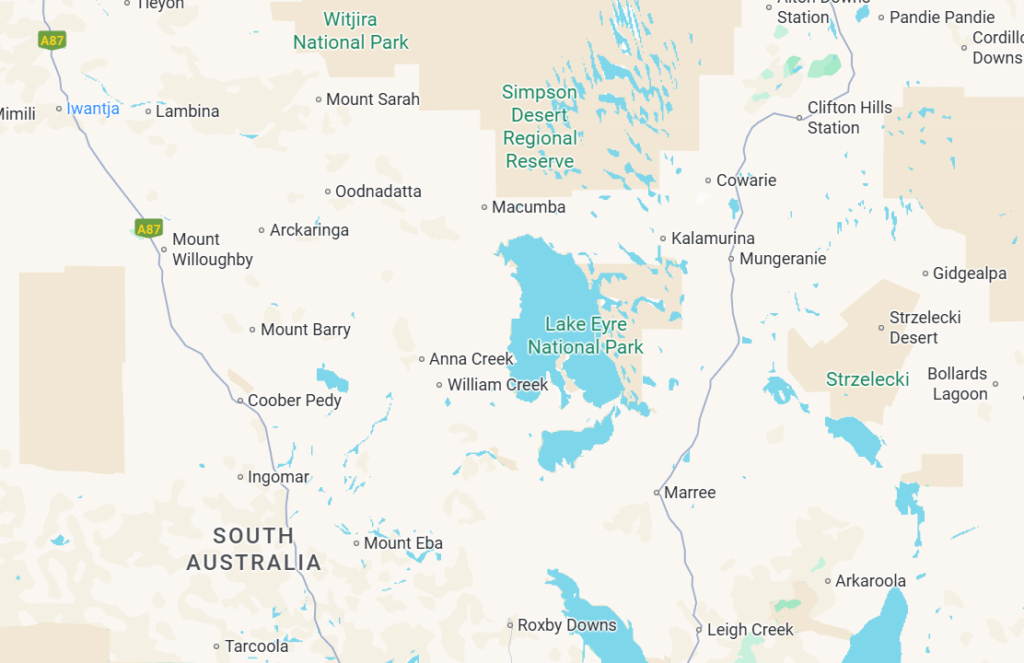
But the desert beckoned and we reached the old rail town of Maree (population – 65) where the paved road ends and the dirt tracks begin. If you thought Maree is remote, which it is, keep going north on either the famous Birdsville Track to Queensland or the legendary Oodnadatta Track to the Northern Territory. We’ve done the Birdsville a few years ago so we turned northwest and hit the Oodnadatta.
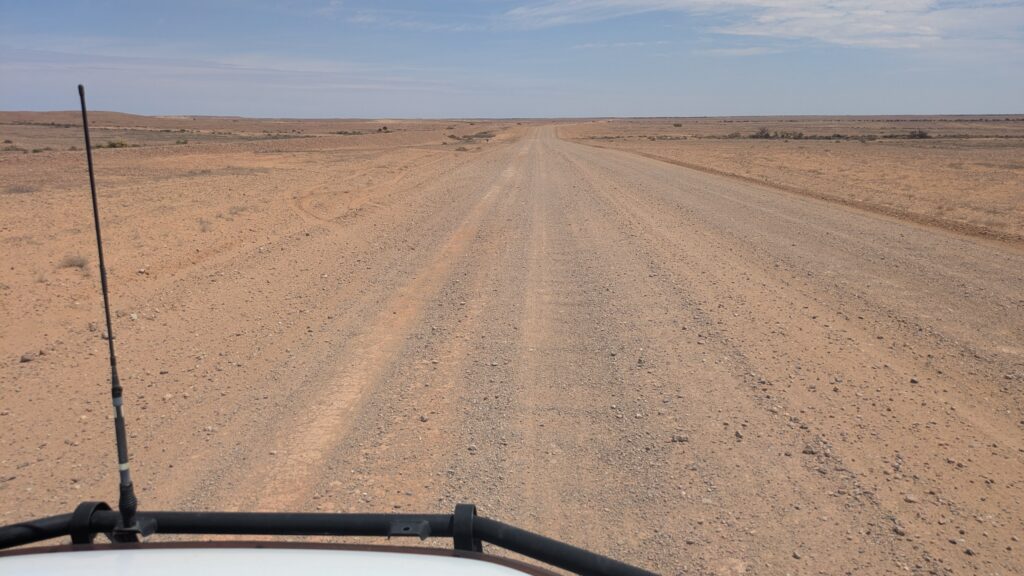
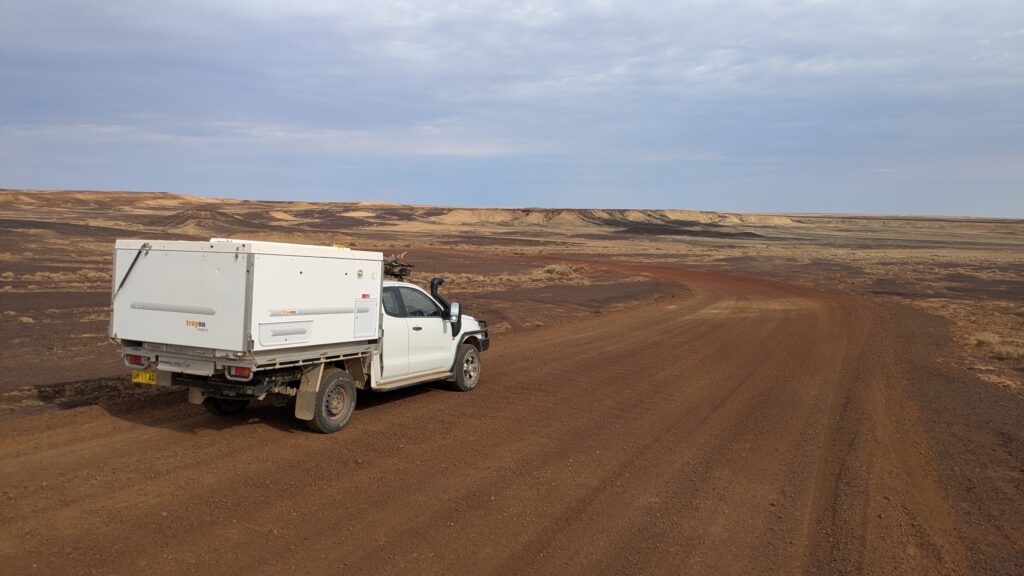
These outback tracks, which vary in quality from year to year depending on the weather and how often they get graded, link various regions and states in a land where very few people travel and even less actually live. The land is harsh beyond words and travellers must have a very reliable vehicle and be fully self-sufficient for the many days it takes to cover these long distances.
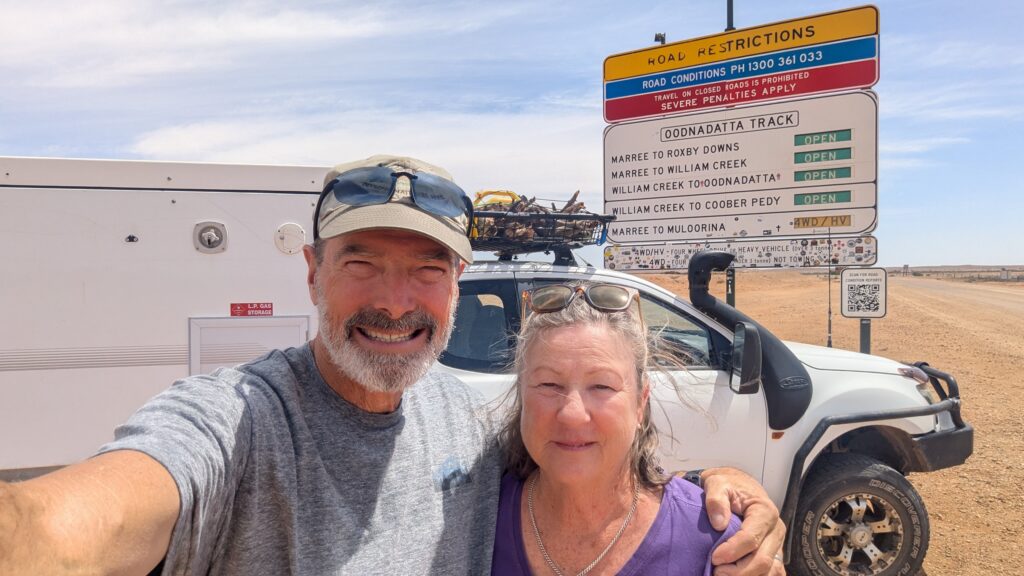
Of course we had Wanda who was in top form and itching to tackle a new track, even the Oodnadatta which featured long sections of bone-jarring corrugations and sharp gibber rocks that will shred unsuspecting tyres.
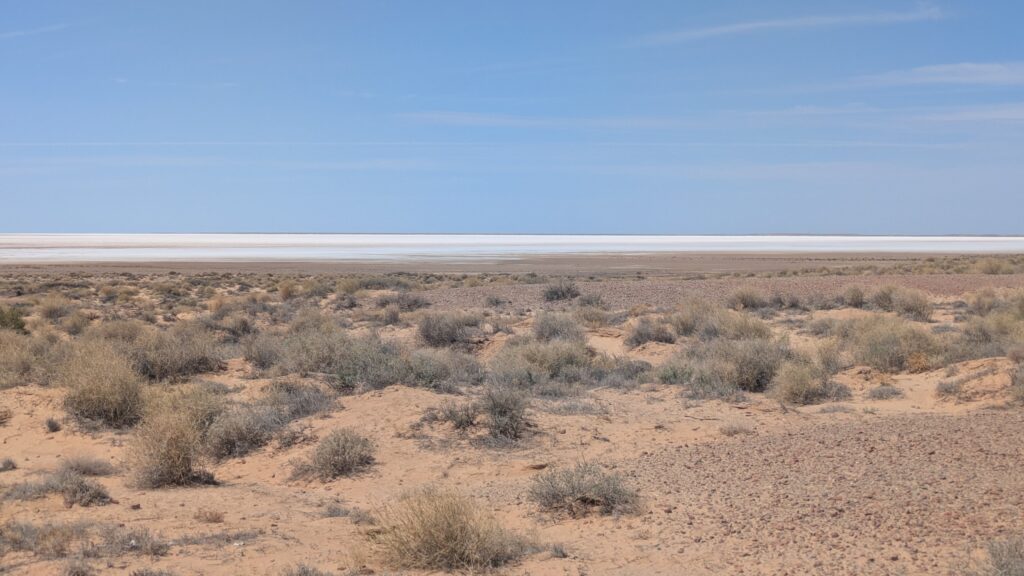
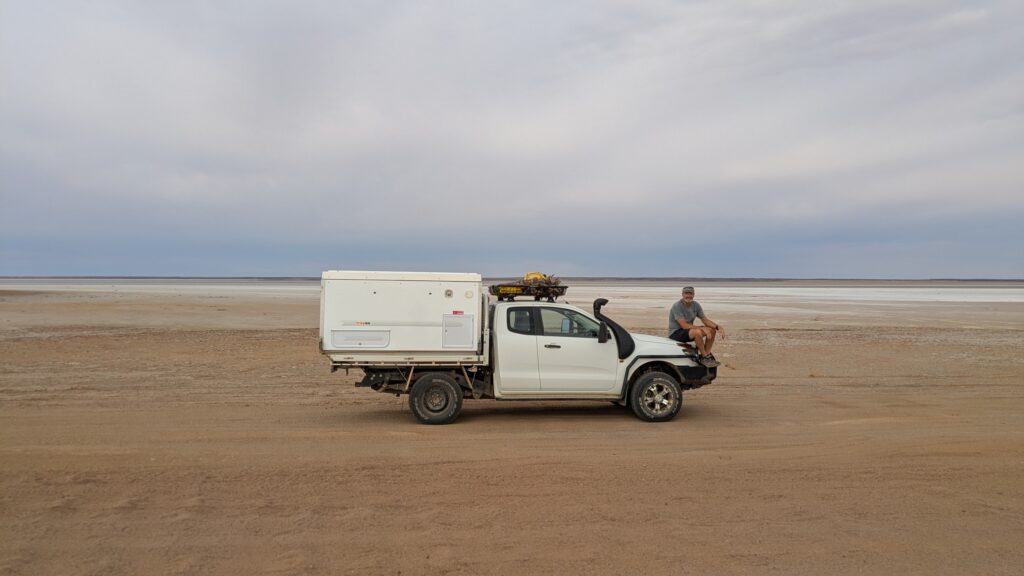
If Lake Eyre was full there are actually two lakes, North and South, with a large gulf that connects them. The Oodnadatta Track actually passes the southern shore of the south lake and we pulled into a viewing area to take our first look at this natural wonder. We couldn’t detect any water in the lake this far south, just a vast expanse of blinding white salt that ran out to the horizon. With these hot desert winds it was no surprise to read the evaporation rate at the lake is 30 times higher than the rainfall rate.
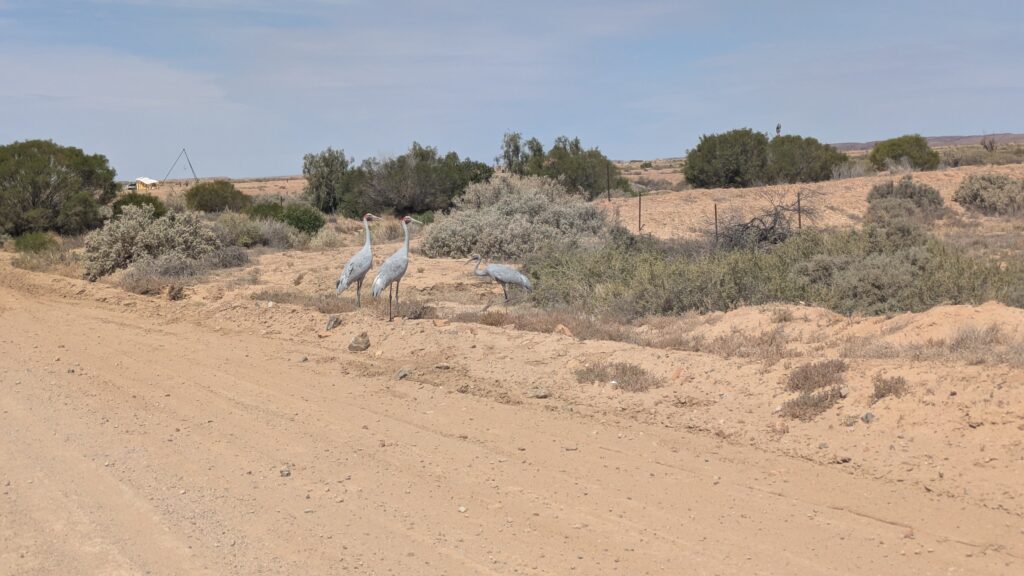
Further north we trucked, desperately searching for the least-corrugated path while praying nothing would break, until we came to the Wabna Kadarbu Conservation Park which preserves a number of mound springs that dot this desert.
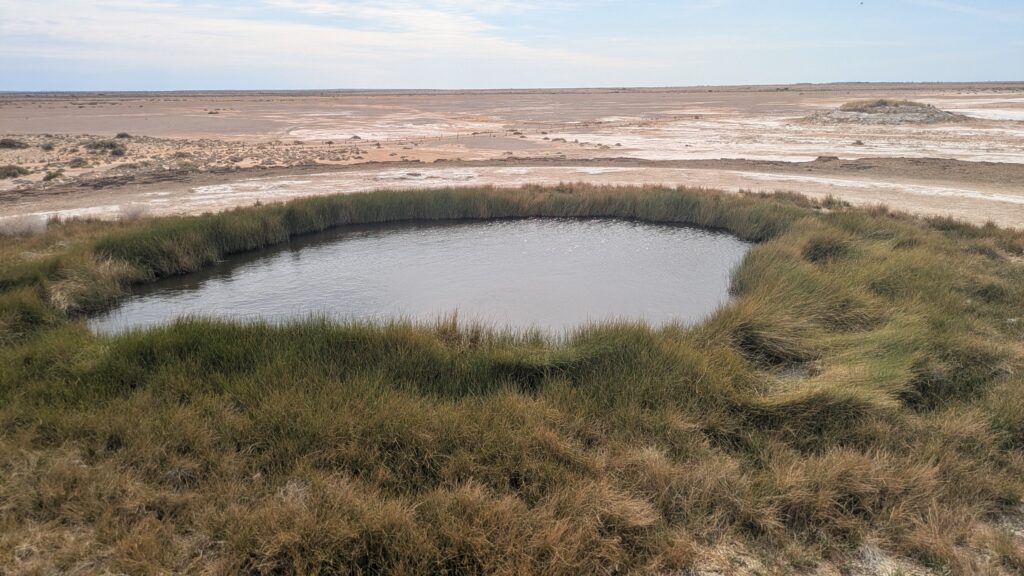
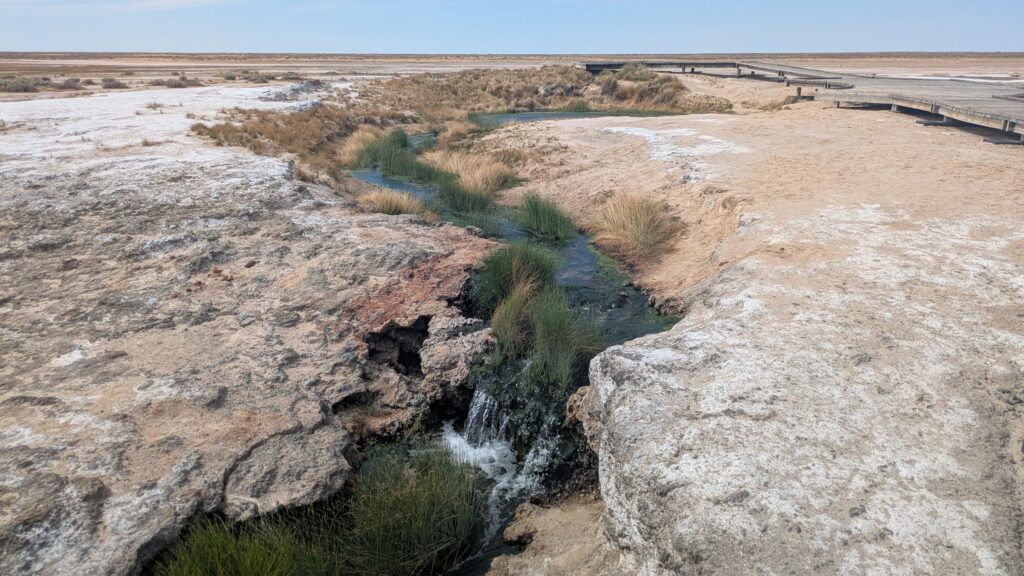
It all sounds crazy but Lake Eyre sits on top of the largest and deepest artesian basin in the world and occasionally there are spots in the desert – mound springs – where the water rises to the surface. Aboriginal people were able to live and travel through these inhospitable lands because they knew where these mound springs were. European explorers and pastoralists relied on them also but now the best of the springs are preserved by government rather than let them get destroyed by livestock or humans.
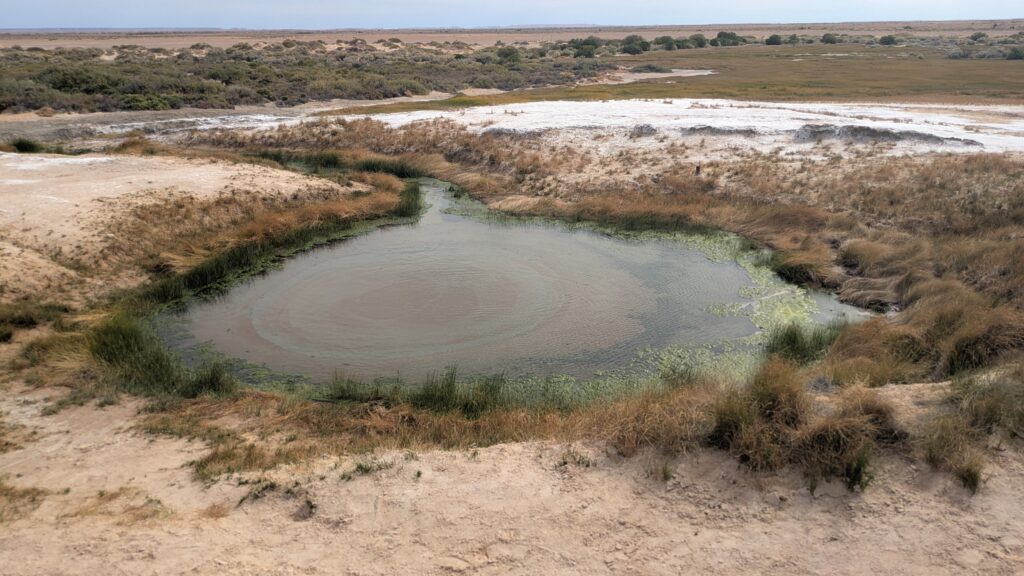
We followed a different set of washboards to a couple of these mound springs and let me tell you they were extraordinary. The cool water that came bubbling out of these springs in the middle of one of the harshest places on earth was sweet to the taste after having been underground for two million years. Fossil water, they call it. Unfathomably unbelievable, we call it.
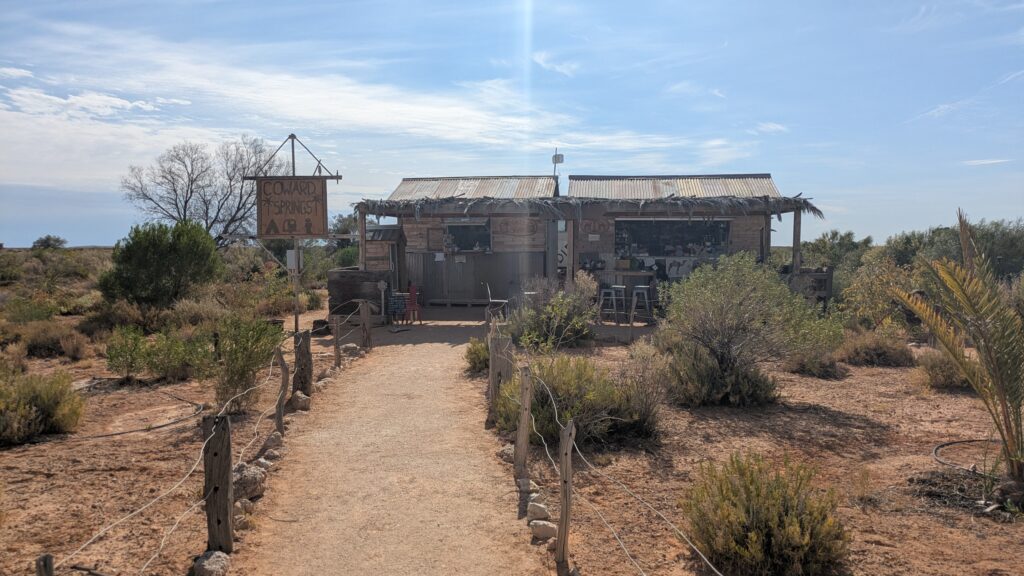
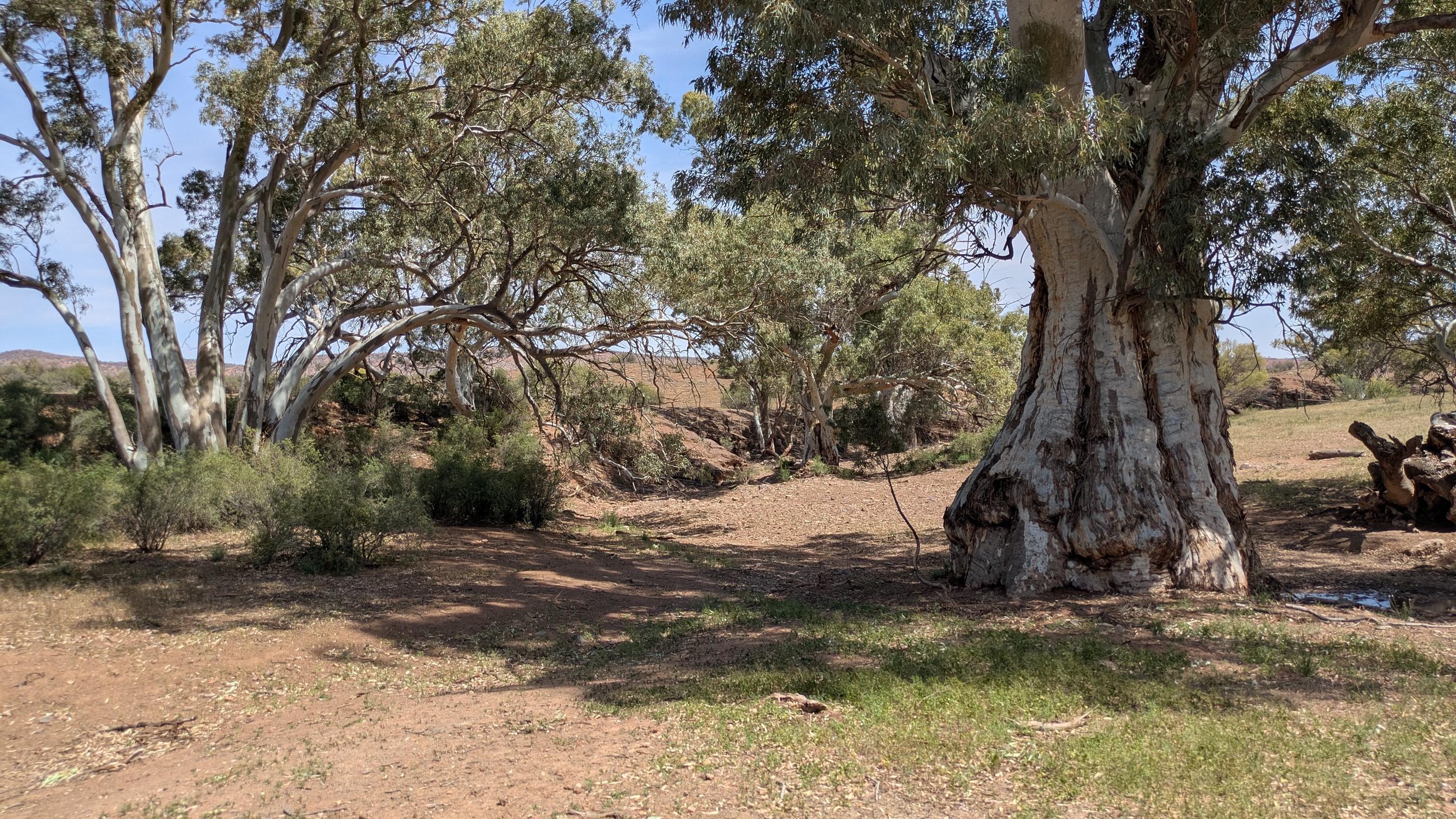
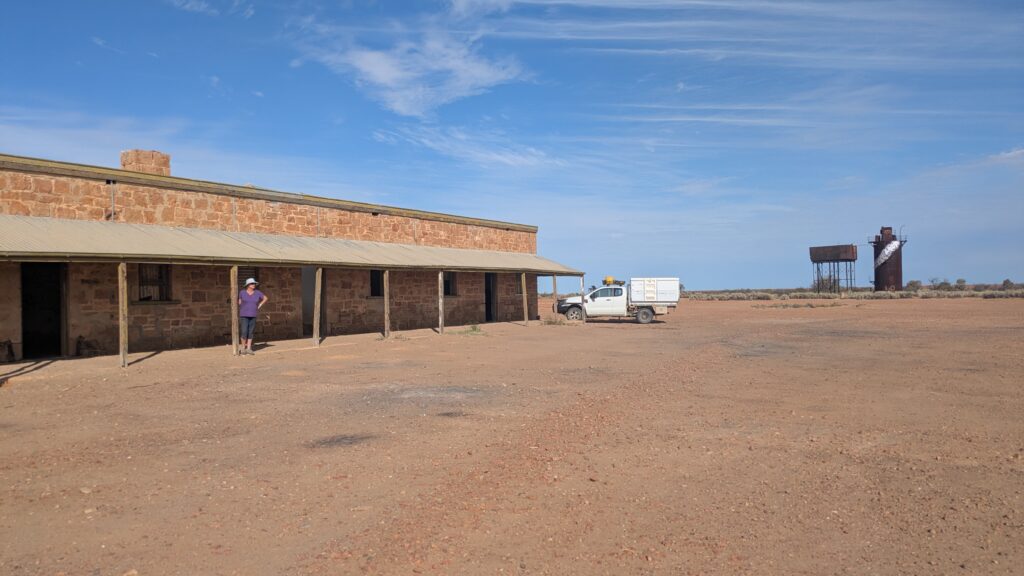
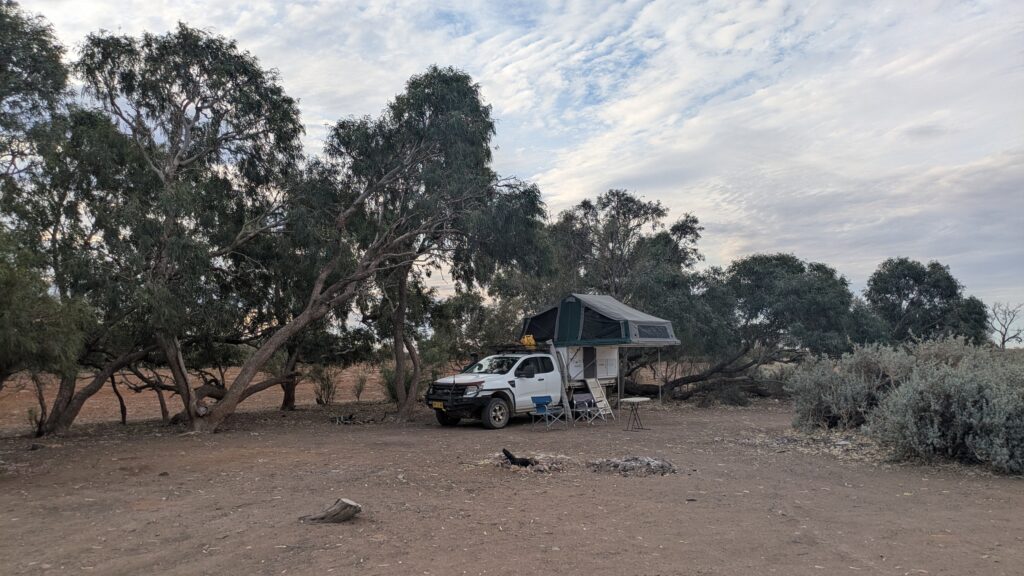
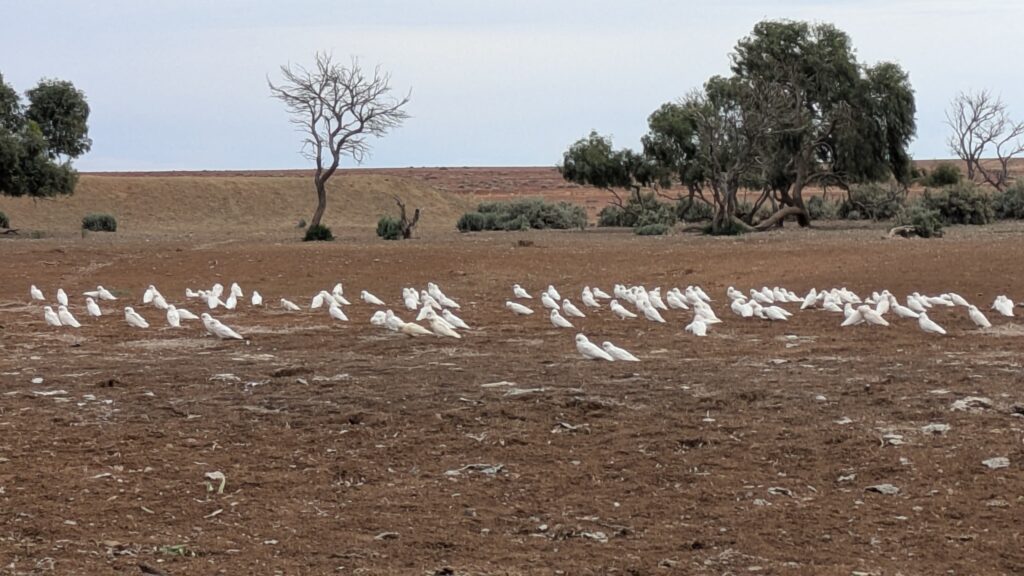
We camped that night at a place called Beresford Bore, which is really another spring captured for use by the railway that passed through here until the line was closed in 1980. The old train station, water tank, bore and – amazingly – healthy full-sized trees full of squawking corellas made a perfect spot to pitch Wanda for the night. Never mind the strong desert wind and zillion annoying flies that don’t take no for an answer.
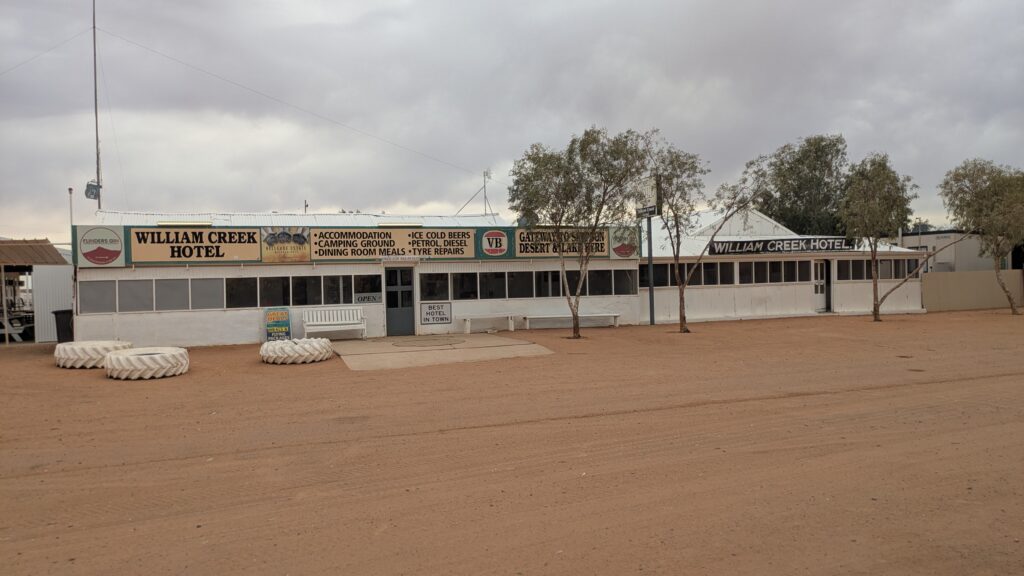
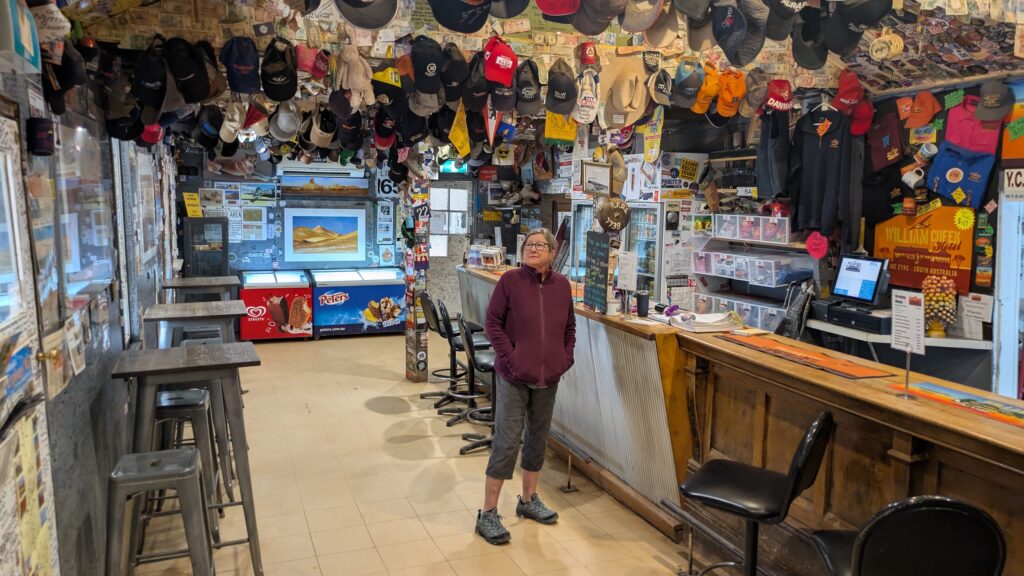
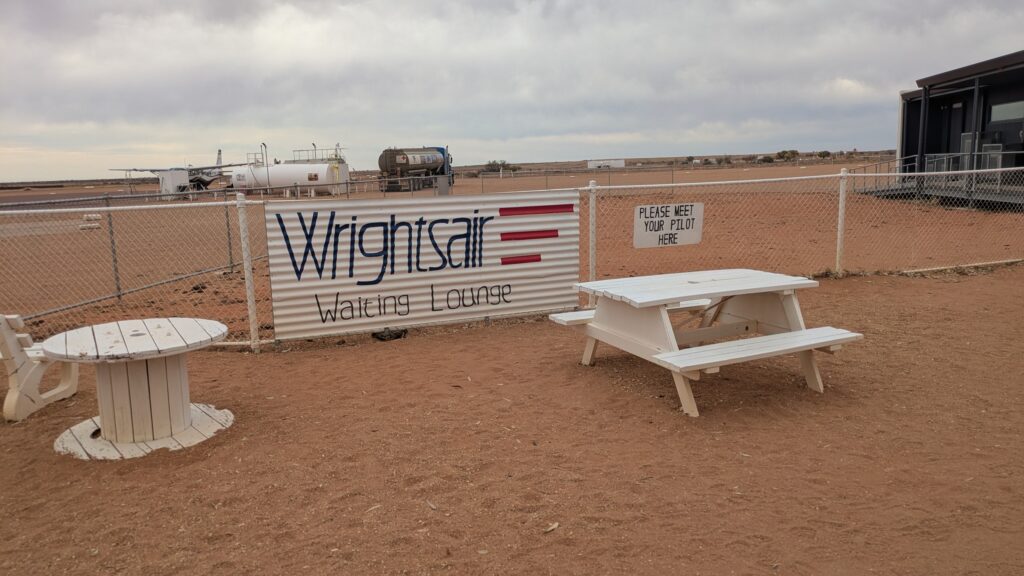
With a thousand, or perhaps two thousand, corellas bidding us farewell as only they know how we pushed north to William Creek. This remote outback town has a permanent population of six and when we first arrived it was hard to tell where they were all hiding. But in peak season it can swell to 40 people as travellers going up or down the Oodnadatta Track stop here for one important thing – to take scenic flights over Lake Eyre.
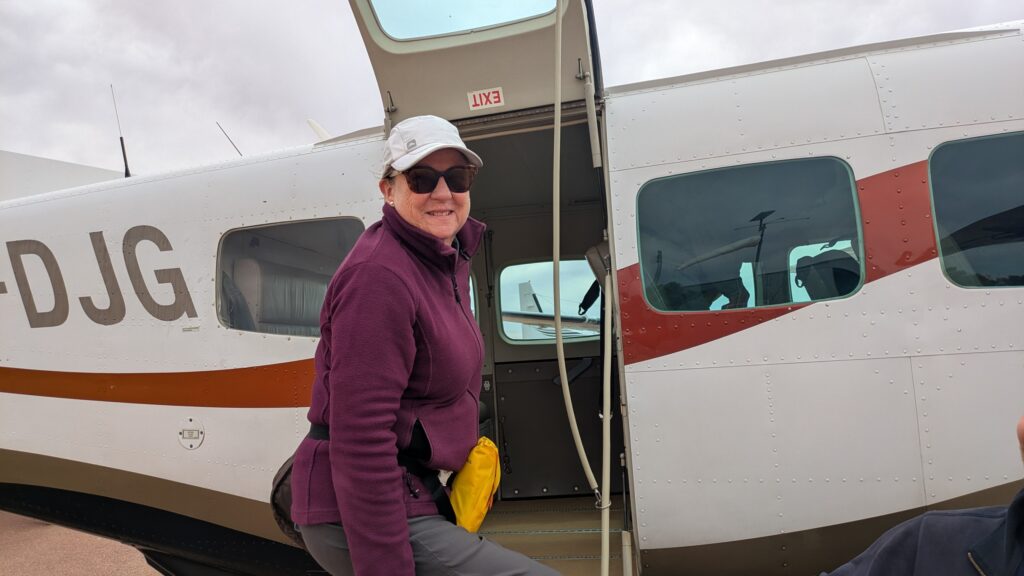
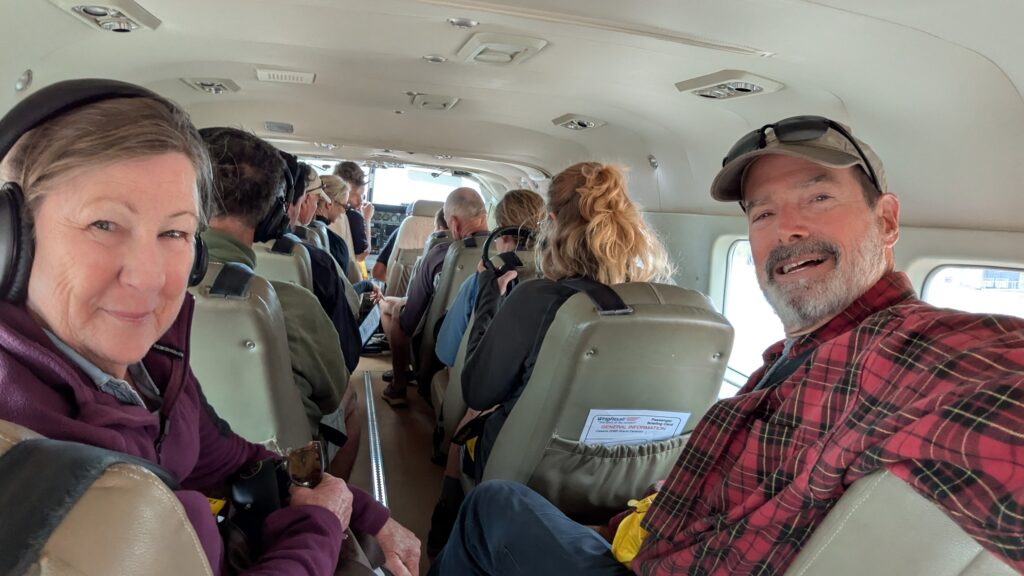
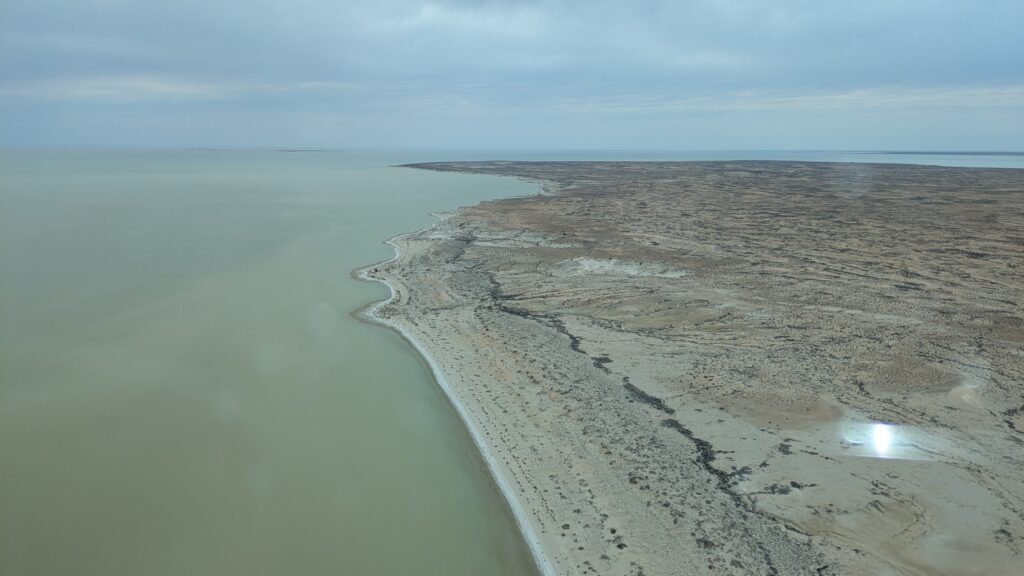
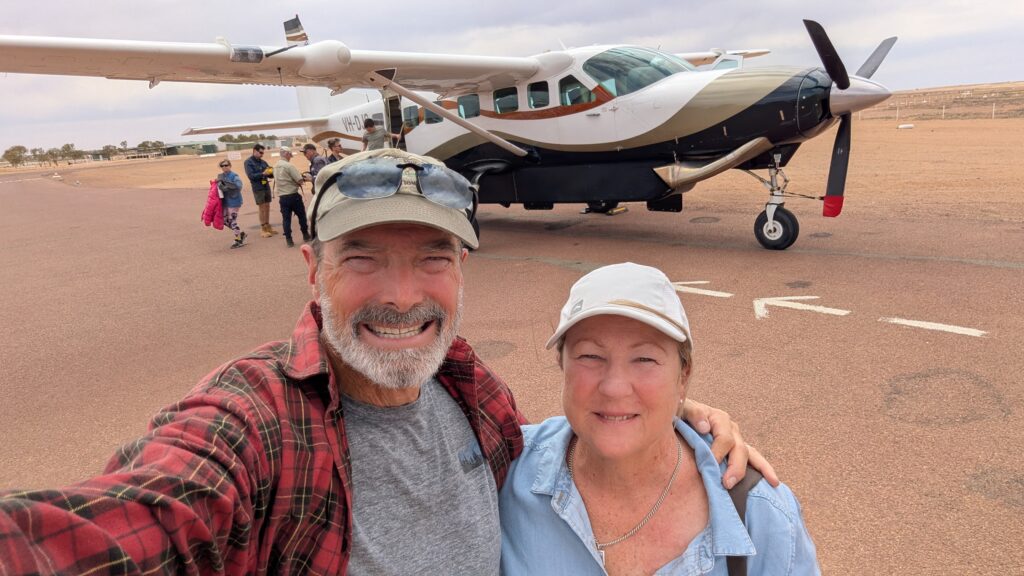
We were booked on the 1100 flight which lasted about an hour and flew out over the lake, around and over a number of islands, sand bars and special points before returning. Our pilot was practically non-stop in his description and facts and figures of this wonderous land.
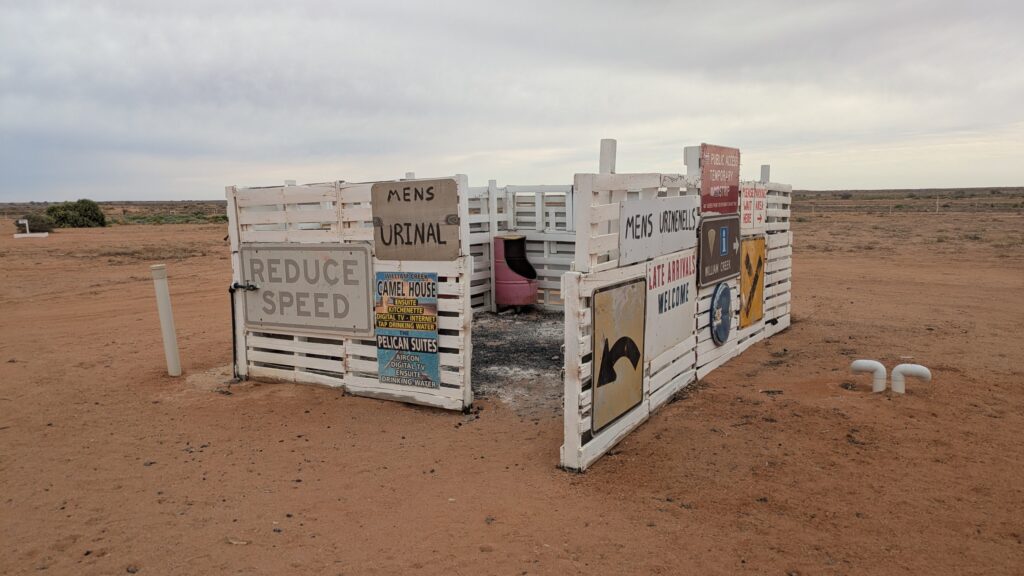
The land around William Creek is called Anna Creek Station, the largest cattle station in the world at over 15,700 square kilometres, roughly the same size as Wales and almost seven times bigger than the largest ranch in the US. They run between 15,000 and 20,000 cattle on this barren land, made possible by the artesian springs that bring life-giving water to the surface.
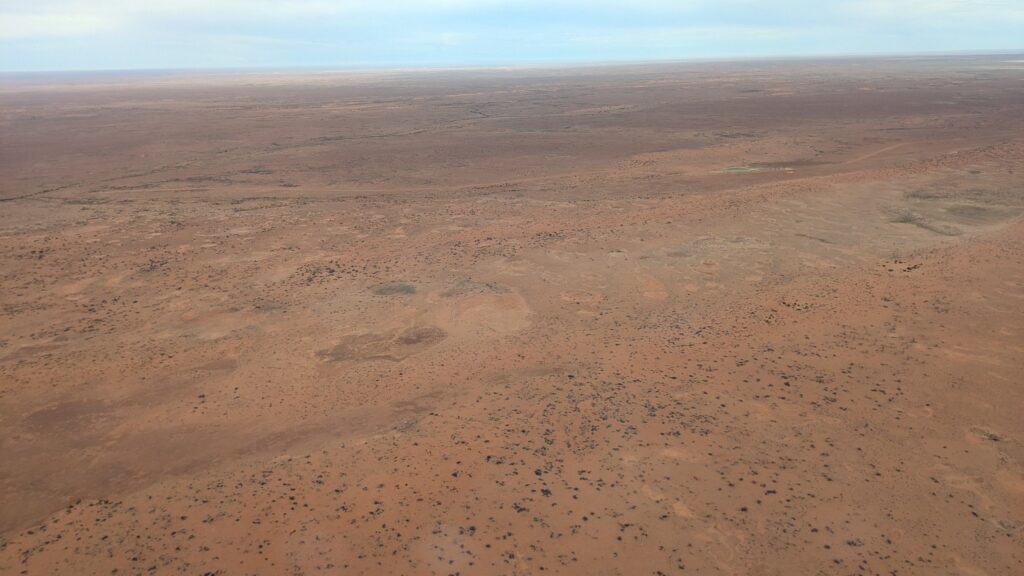
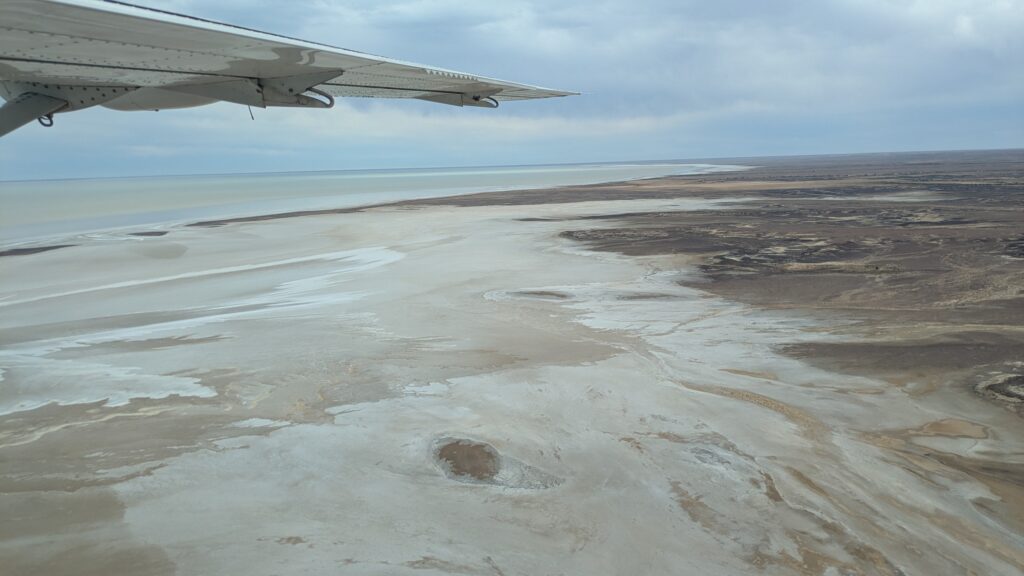
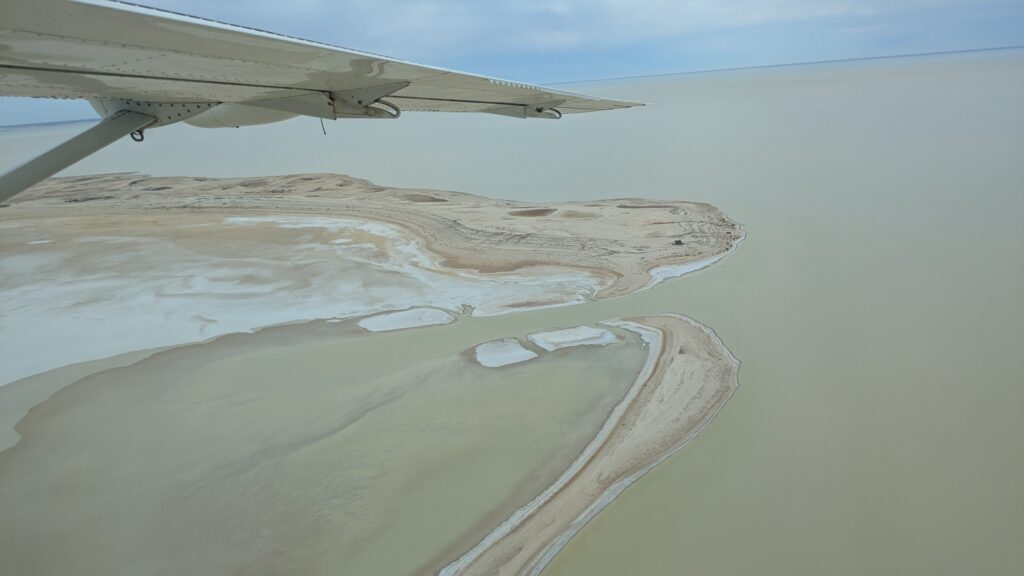
But the star of the show was Lake Eyre, about 2.5 metres (8 feet) at it’s deepest point right now (but can get up to 6.5 metres deep when it is full), with higher salinity than any ocean and surrounded by a gooey mud and white salty ring that adds to the scene. The way this lake is so unreliable and unpredictable as it depends on the rivers from the north to fill it but still brings untold life to this harsh land is fabulous. It was a very special moment for Julie and I to see it this way.

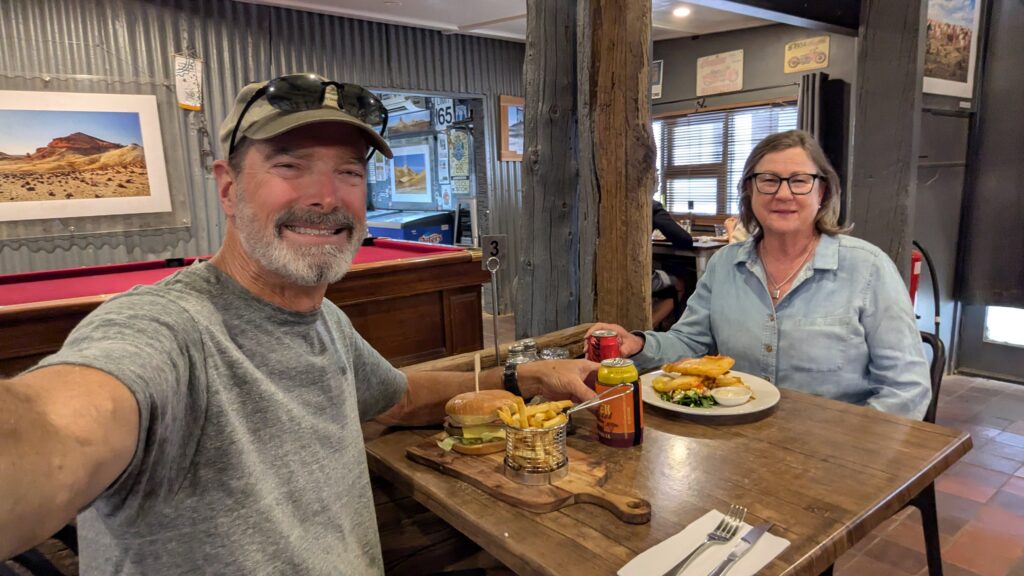
Returning to mother earth we headed straight for the bar and ordered bush burgers and beer to celebrate before jumping back into Wanda to complete our Lake Eyre experience.
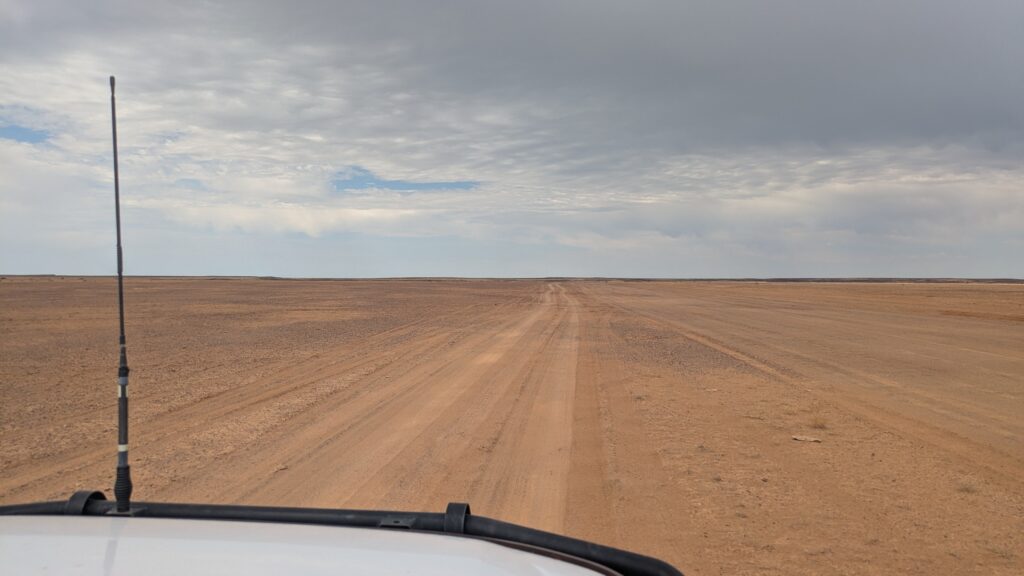
We followed a rough-as-guts track 66 kilometres (41 miles) featuring absolutely diabolical corrugation, Wanda an absolute champion, until we reached the shores of Lake Eyre itself and a small area set aside for campers. We set up camp and then walked down to the gooey crusty edge of the lake, marvelling at the colours, the textures, the birdlife, the overall splendour of the scene. It was a pinch-yourself moment.
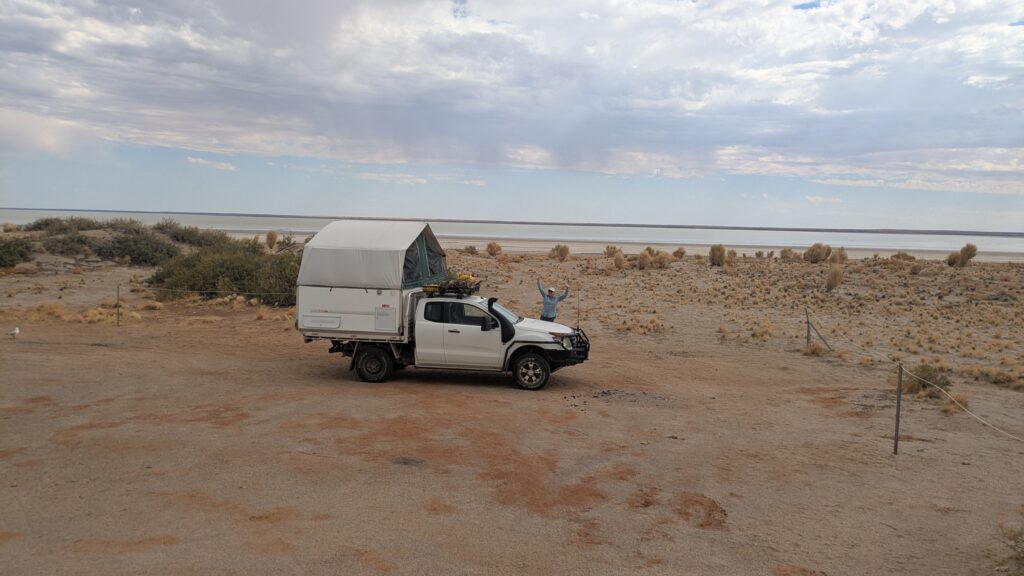
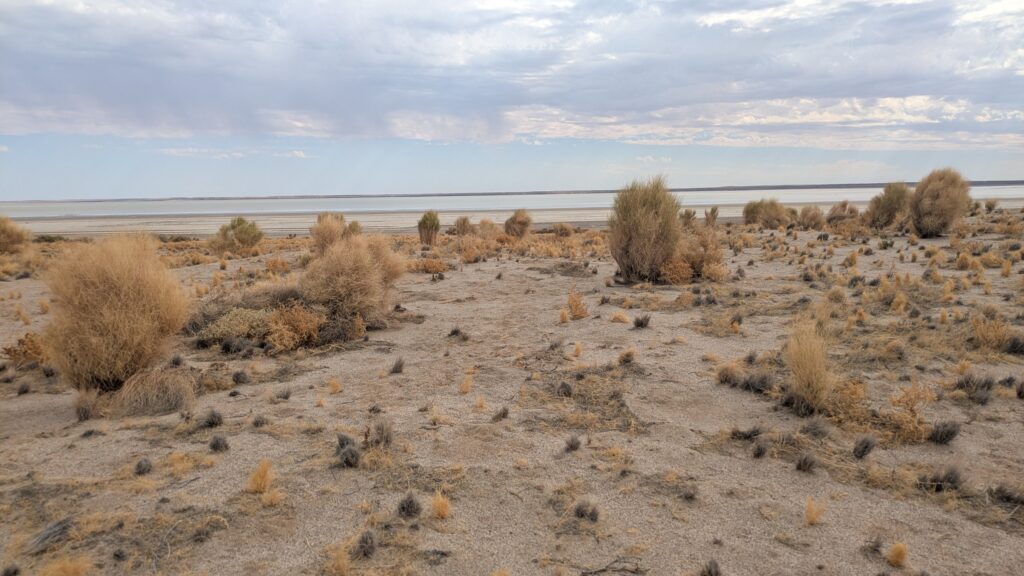
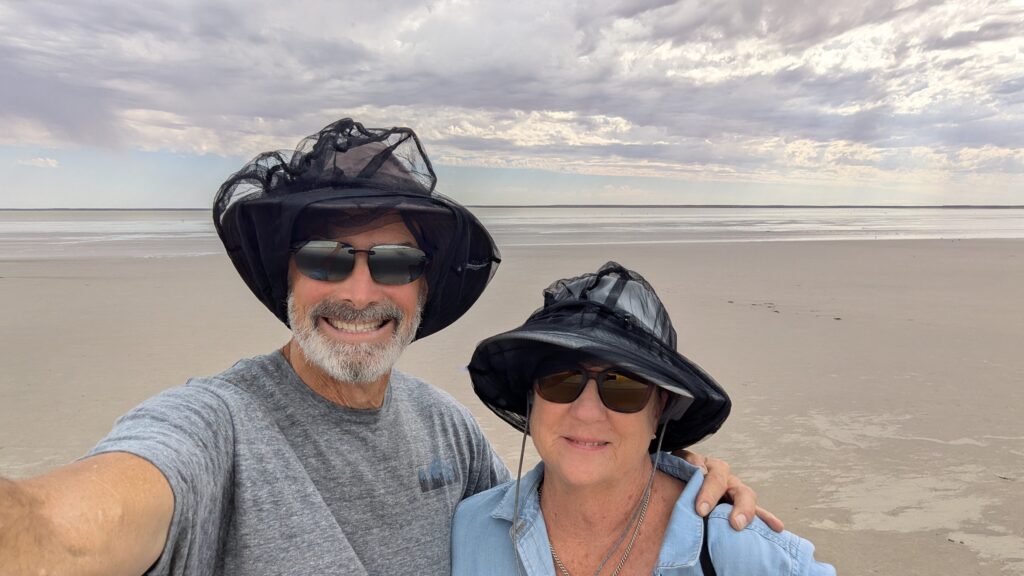
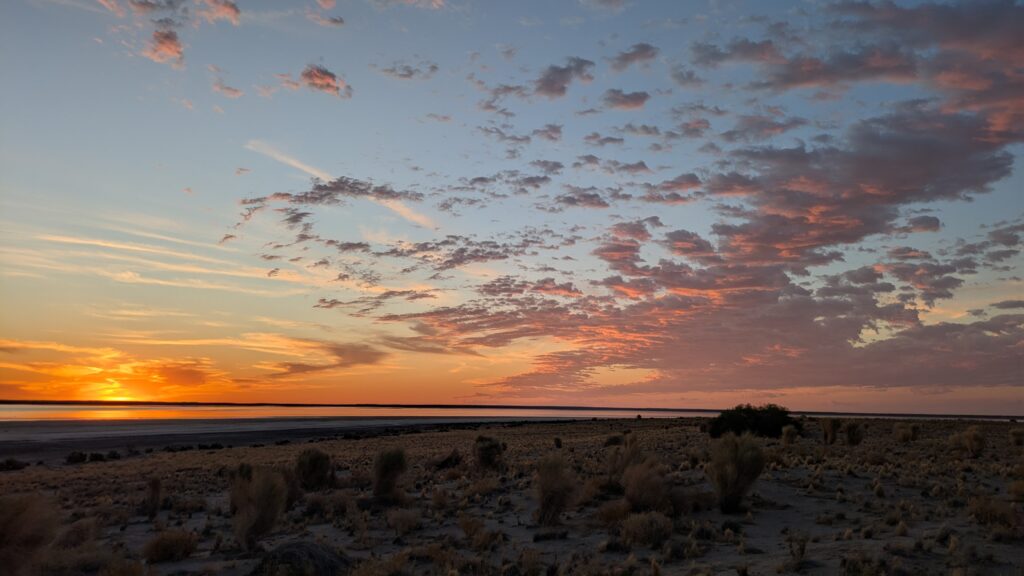
The next morning we reluctantly left Lake Eyre and headed elsewhere, this leg of our journey complete. We had seen Lake Eyre from the road, from the air and from our feet, a travel memory we will always cherish.
Comments
Lake Eyre — No Comments
HTML tags allowed in your comment: <a href="" title=""> <abbr title=""> <acronym title=""> <b> <blockquote cite=""> <cite> <code> <del datetime=""> <em> <i> <q cite=""> <s> <strike> <strong>