The Oodnadatta Track
The Oodnadatta Track, using one of the coolest Aboriginal words I’ve ever heard (and meaning the ‘blossom of the mulga’) is 615 kilometres (382 miles) long but we had another 400 kilometres (240 miles) of the outback track to explore and it was an irresistible magnet on our flexible travel plans. And of course the challenge of the journey is all part of the fun.
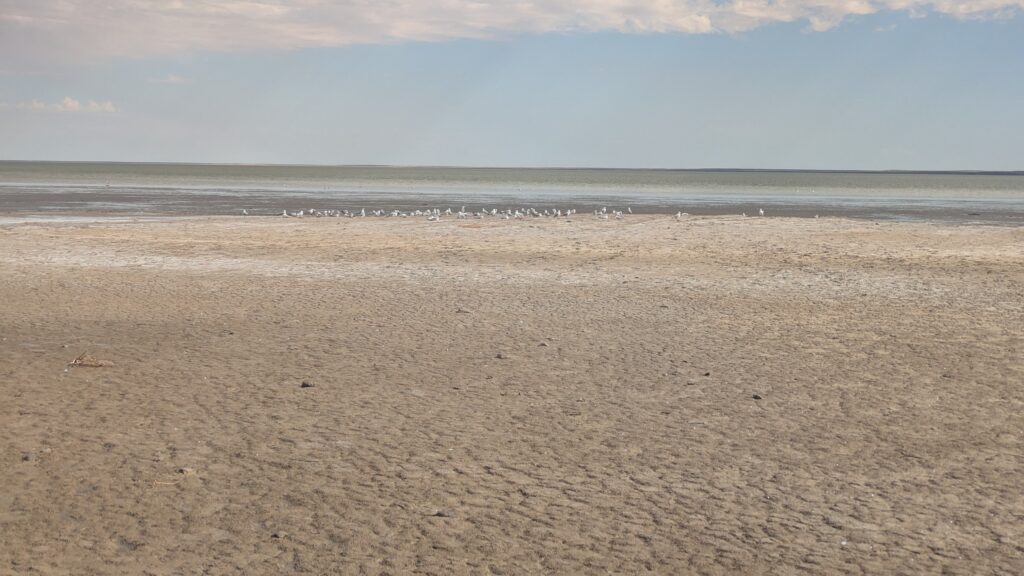
The morning started on the shores of Lake Eyre at Halligan Bay where we enjoyed a sunrise over the lake and eventually dragged ourselves away from this beautiful scene. The road back to the Oodnadatta Track was as terrible as it was the day before and by the time we had travelled the 75 kilometres to William Creek Wanda had picked up a new rattle. I crawled around but couldn’t find anything so after adding the minimum fuel required (at $2.99 per litre there’s no need to be greedy) we headed north again.
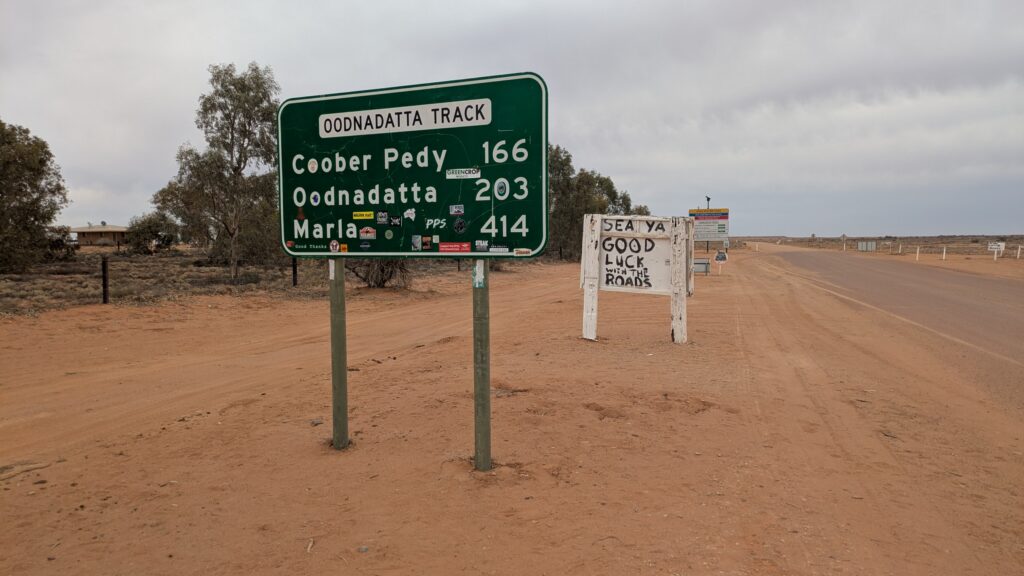
Originally we were planning to head south from William Creek to Cooper Pedy but we changed our plans while sitting on the side of the road to continue northward on the legendary Oodnadatta Track, subjecting ourselves to another couple of days on rough corrugation and beautiful outback desert.
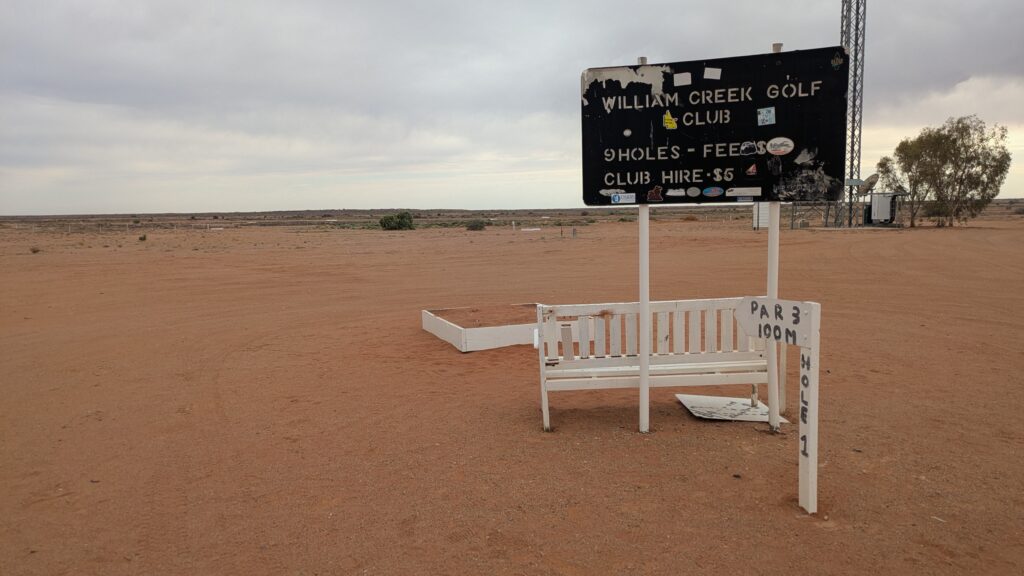
The Oodnadatta Track stretches those 600 plus kilometres from Maree in the south to Marla in the north, all part of the original support line for the Ghan Railway which ran from Adelaide to Alice Springs along this same line. We had started the track in Maree and were now fully committed to the full monty, destination Marla.
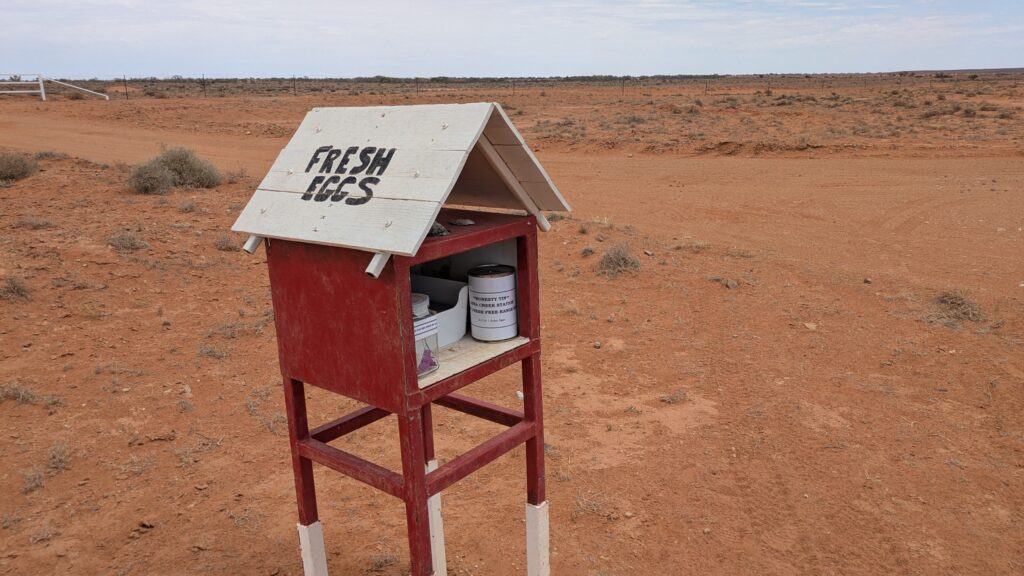
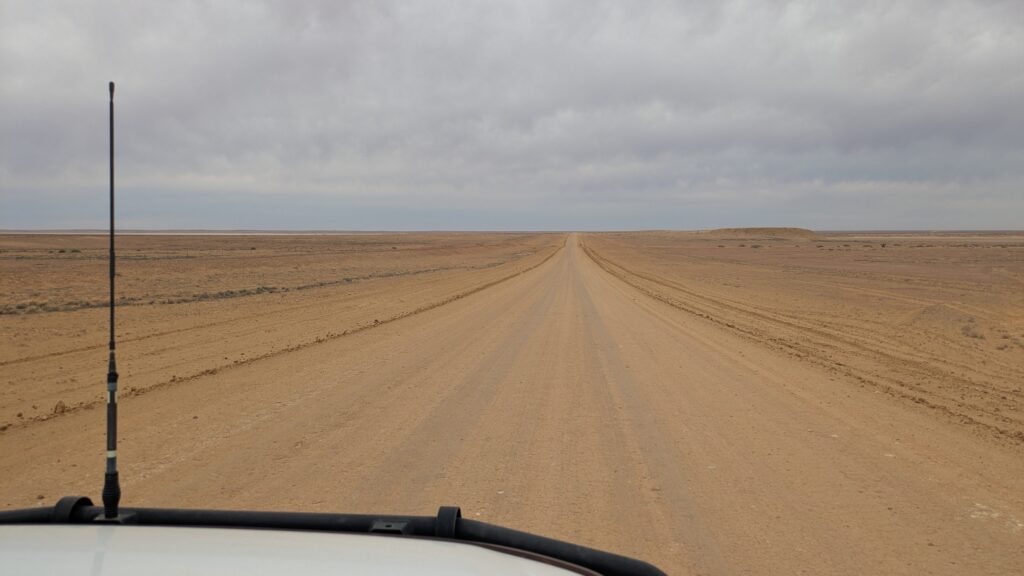
If we thought the first third of the track was in bad condition, the next third was even worse with long stretches of washboards that rattled every filling and rivet Wanda and us had. The key to success, if you can call it that, is to find the right speed to sort of travel across the top of each corrugation rather than slow down and feel every single up and down along the way (Funny fact: Julie’s app measuring her steps counted each bad corrugation bump as a step).
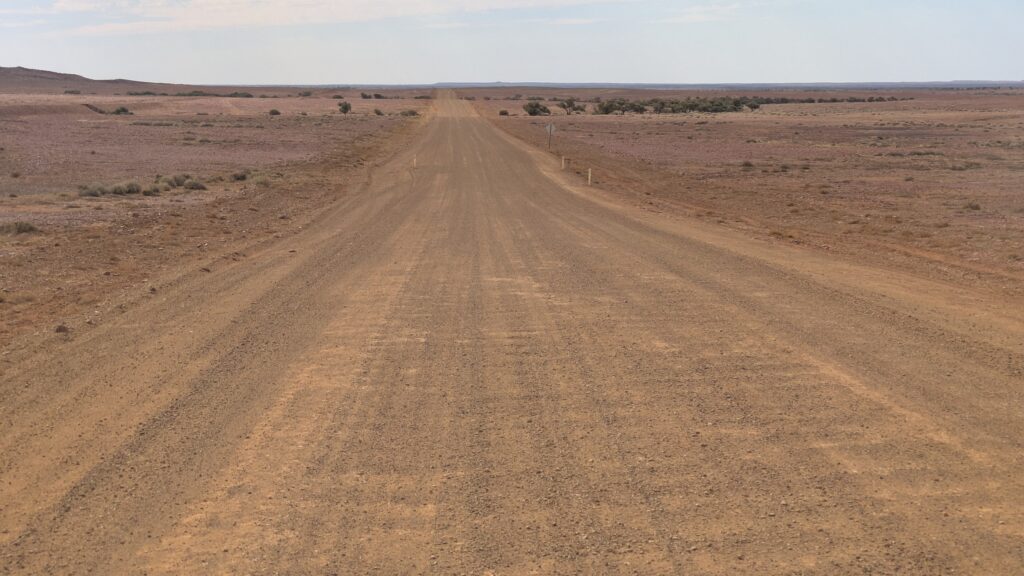
The scenery was spectacular if you’re into dry barren deserts, which we are, occasionally punctuated by dry creek crossings. In fact, we only saw four signs on the Oodnadatta Track – Dip if it was a small one, Floodway if it was a big one, Crest if it was a high one and Grid if it was a fence one. That’s it.
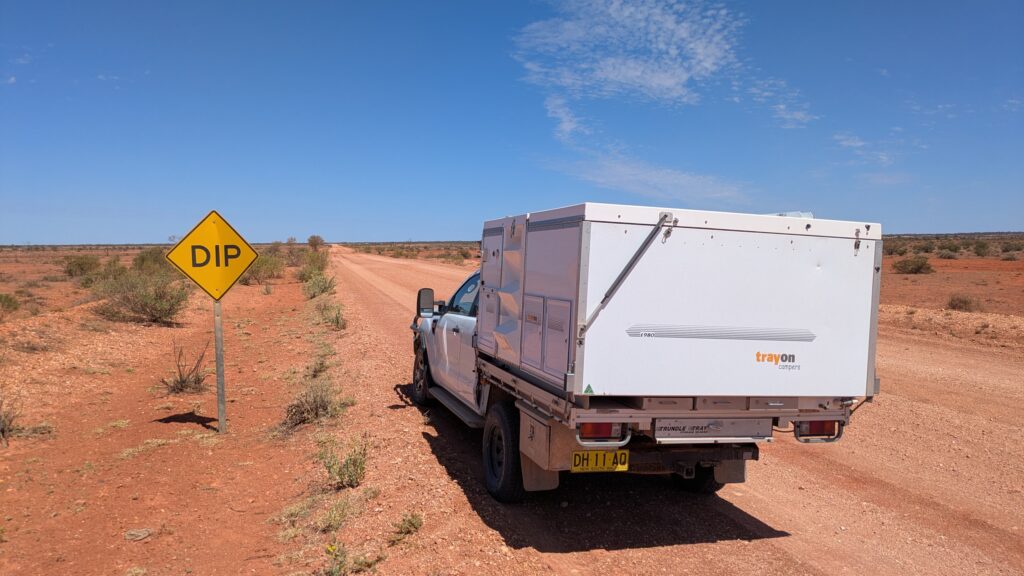
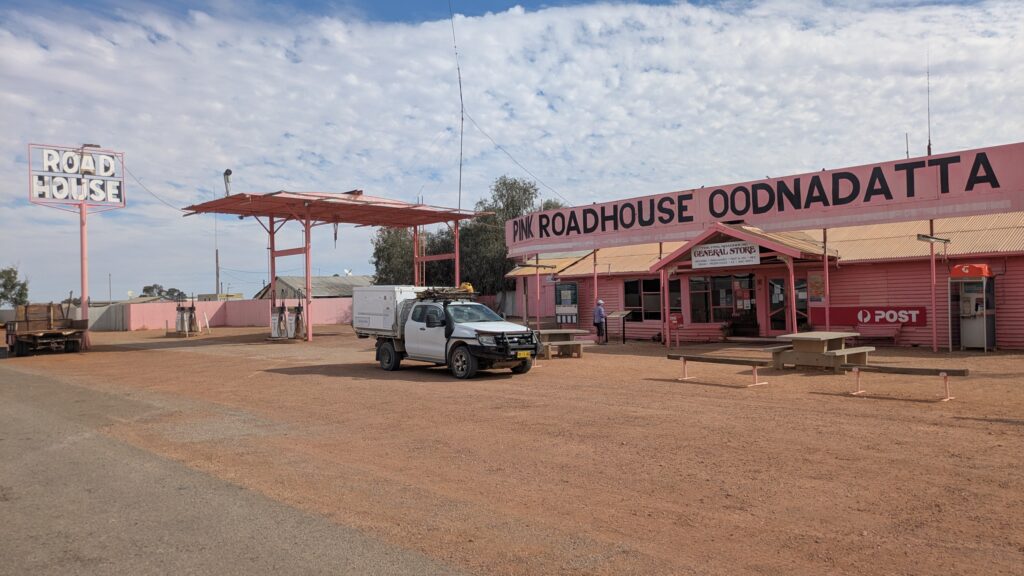
Wanda rattled a bit more than before but she reliably got us all the way to the small community of Oodnadatta, a former rail stopping site, now mostly an Aboriginal community and the gateway to the Simpson Desert. We had been here in 2016 at the beginning of our six vehicle Simpson Desert Expedition but on this day we pulled into the Pink Roadhouse, a famous landmark in the desert, for fuel and an ice cream. We later found a quiet place next to a dry creek bed to spend the night, Wanda and our bodies happy to have a break from all the rattling (and Julie exhausted from all her steps).
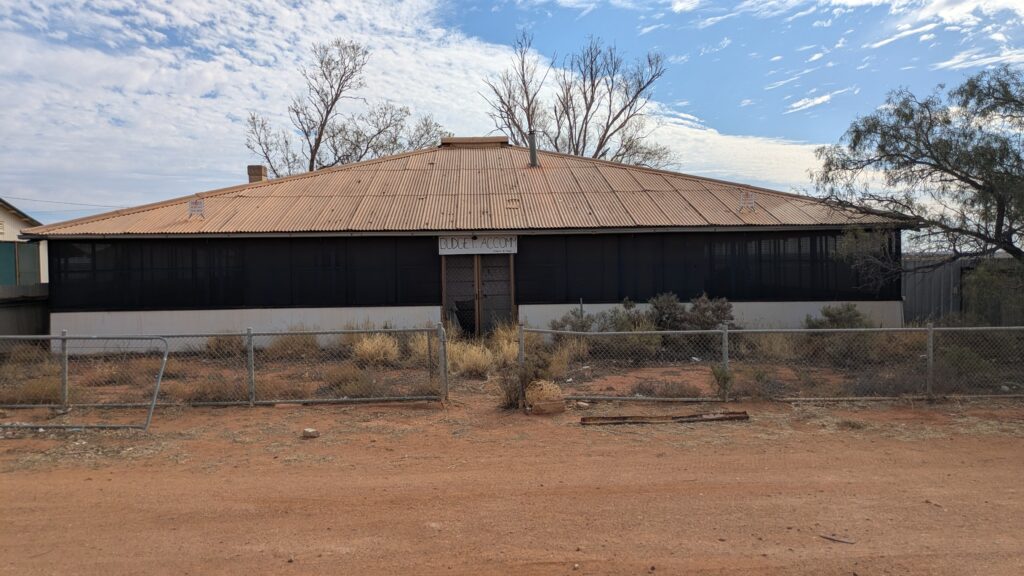

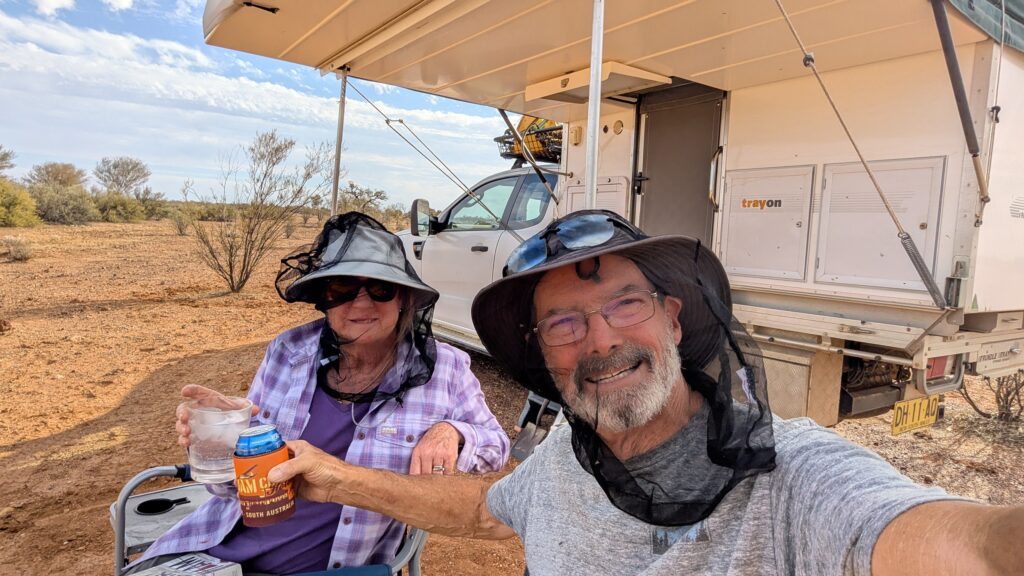
The Oodnadatta Track just keeps giving, day after day, and we rejoined the road heading north after a night of beautiful stormy weather and headed towards the roadside stop of Marla where the track finally meets up with the paved Stuart Highway which connects Adelaide to Alice Springs. This northern third of the track is probably the least heralded – it does not feature the old Ghan Railway, the old telegraph line, any mound springs or salt lakes or anything to draw the travellers. It is just 200 kilometres of rough track over endless flat desert.
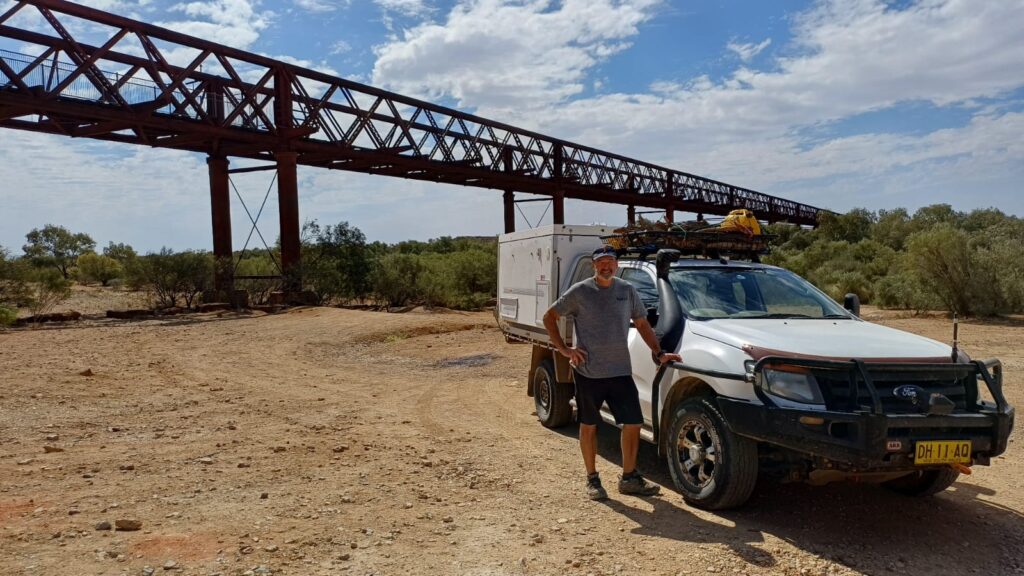
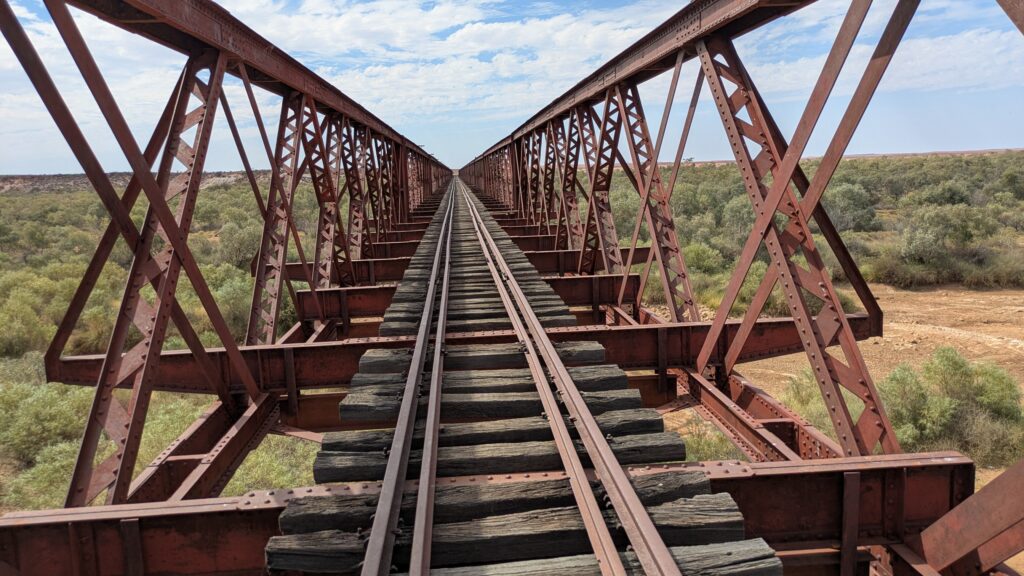
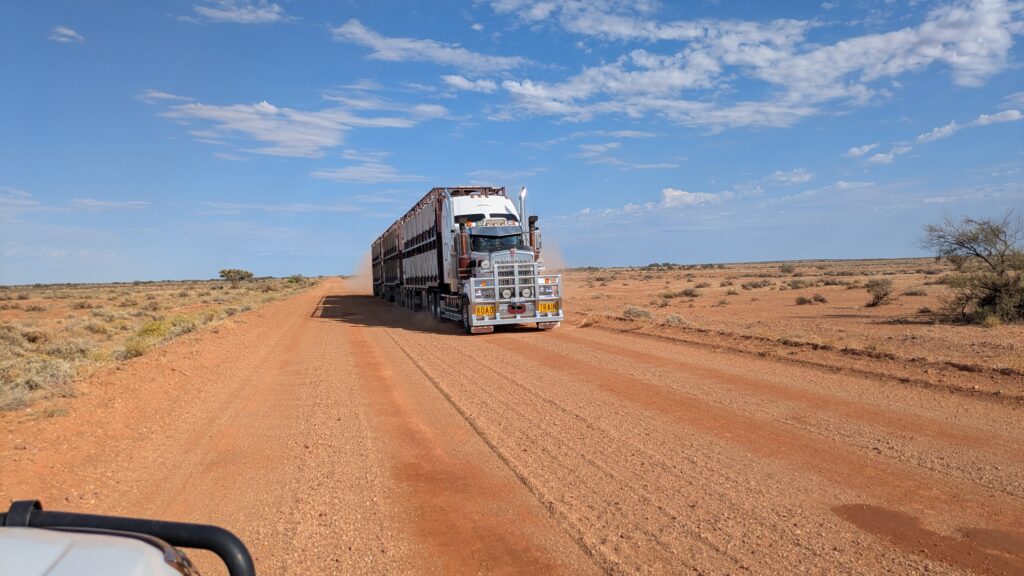
What the does offer is a drive through the heart of what is called the Painted Desert and we could see why with the variety of colours in the soil and rocks. From white limestone-type stones to yellow to grey to orange to red to dark maroon this colours were great fun, even if the driver had to keep his eyes on the road most of the time.
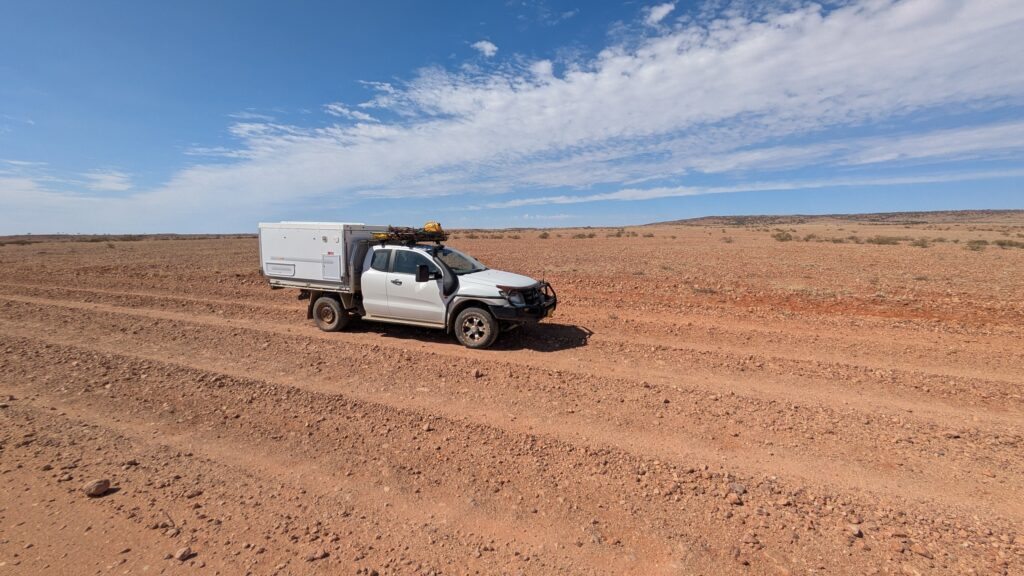
When we finally reached the roadhouse at Marla we patted ourselves on the back – we had just driven the entire 615 kilometre Oodnadatta Track, no mean feat, and we had loved every moment.
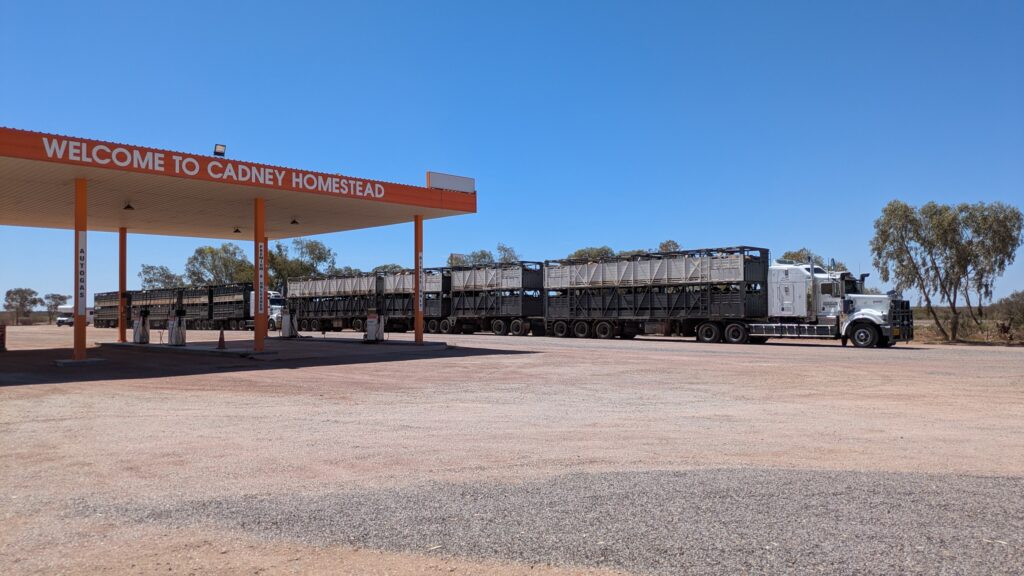
Marla also marks the northernmost point on our exploration of South Australia so we pointed Wanda south on the Stuart Highway, a beautiful paved road across the desert with just about the same amount of traffic as the Oodnadatta Track (in other words, bugger all). It was a further 235 kilometres (146 miles) to the acclaimed town of Cooper Pedy (population 1,500), famous as the opal mining capital of Australia. Cooper Pedy accounts for an astonishing 70% of the opals mined in the world and has sort of a rough frontier town feel to it. But it’s all about the opal mining around here, including old mines turned into underground businesses (underground homes and underground camping!) and the entire district is covered in piles of old tailings from failed opal mining efforts.
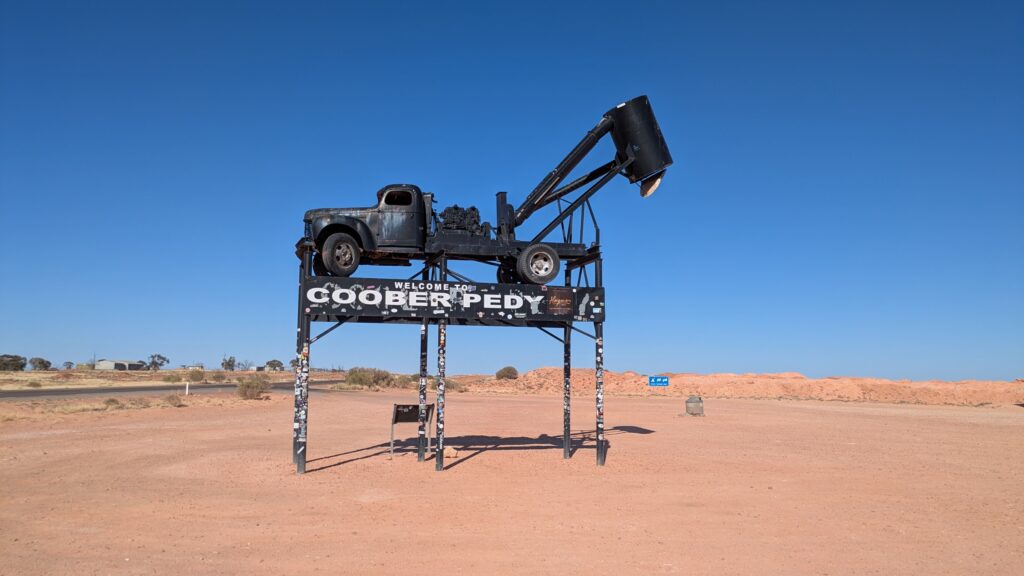
Thankfully Julie confirmed she’s good for opals so we refilled our tank, our bar and our larder before heading out on a dirt track amongst the old tailings and enjoyed a beautiful warm camp under countless stars.
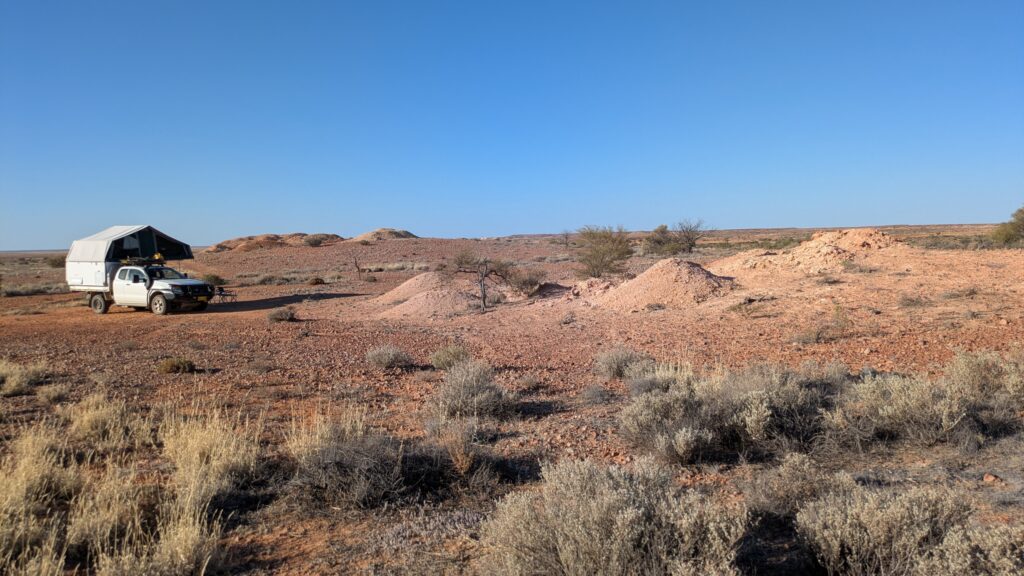
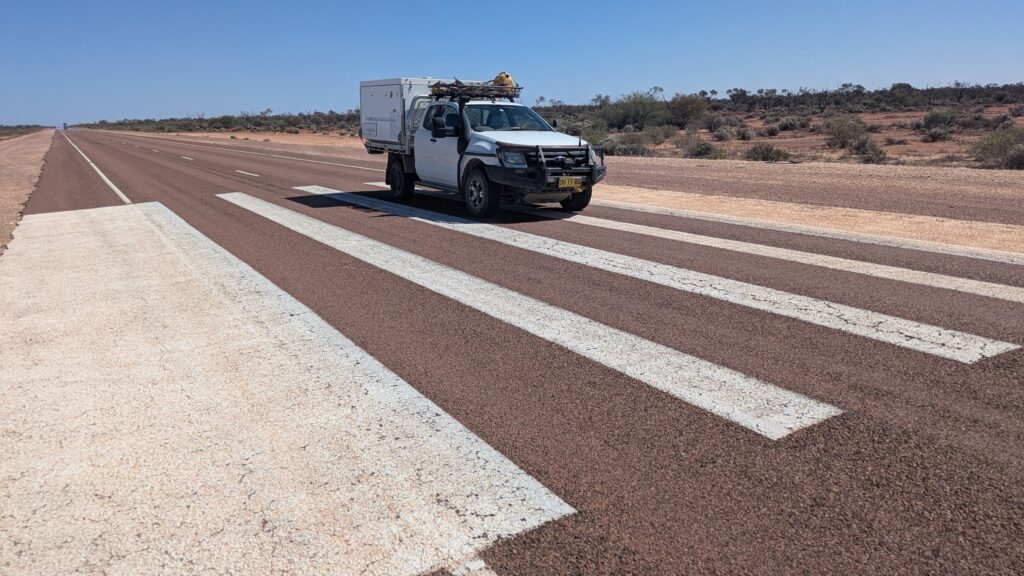
Our mission for the next couple of days was to head south and eventually follow a dirt track through the myriad of dry salt lakes that scatter the desert north of the Gawler ranges. To get there we had another mind-numbing two hundred kilometre (120 miles) drive on the paved Stuart Highway before veering off and following a dirt track to the forgotten railway town of Kingoonya.
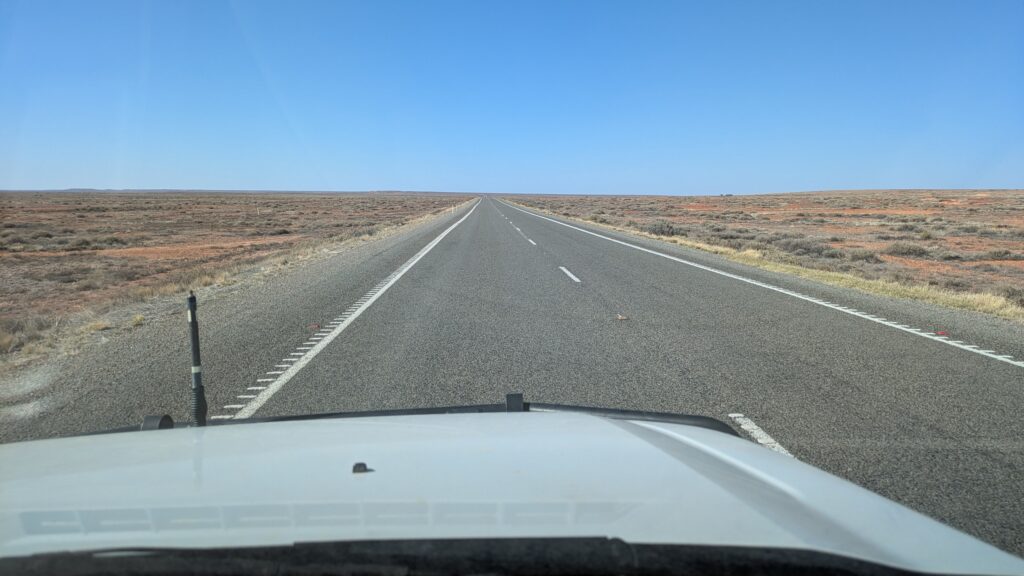
Kingoonya actually sits on the new rail line that travels from Adelaide to Alice Springs but these days it’s a forlorn place with a few rundown houses, a small caravan park and an old pub built in the 1930’s. Of course Julie and I are drawn to old pubs so we pulled in and had pies and a beverage before having showers in the caravan park and topping up our fuel.
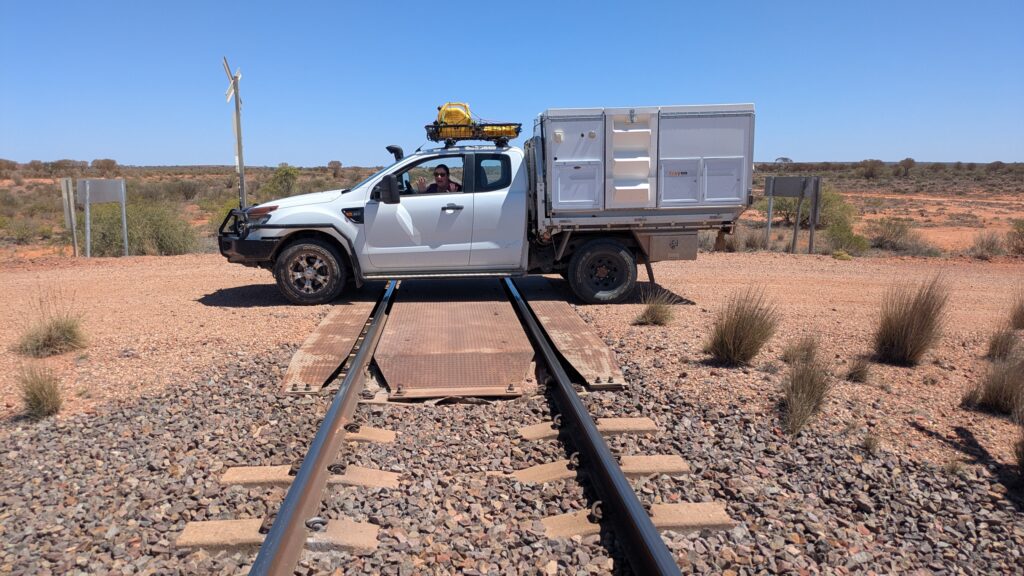
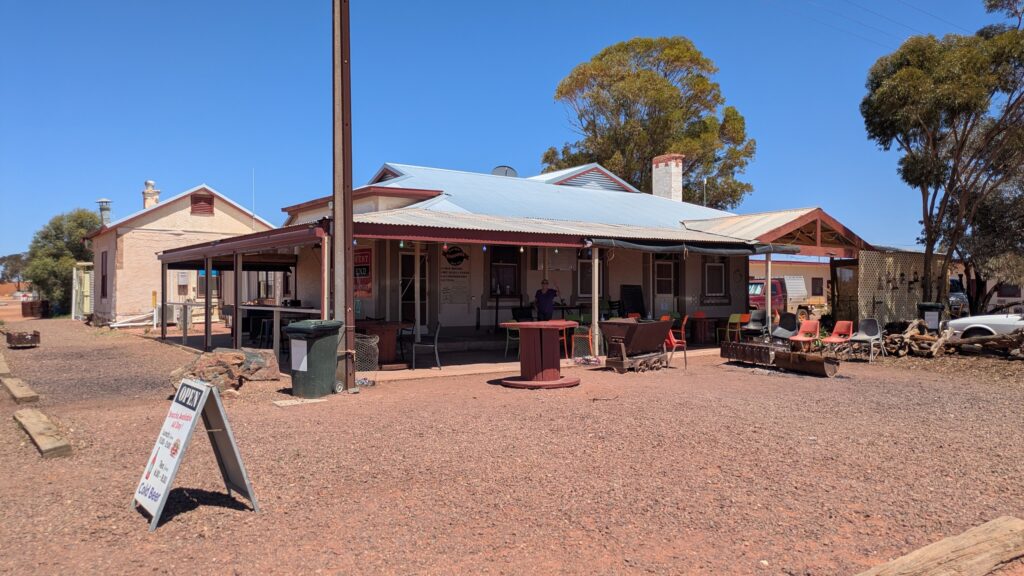
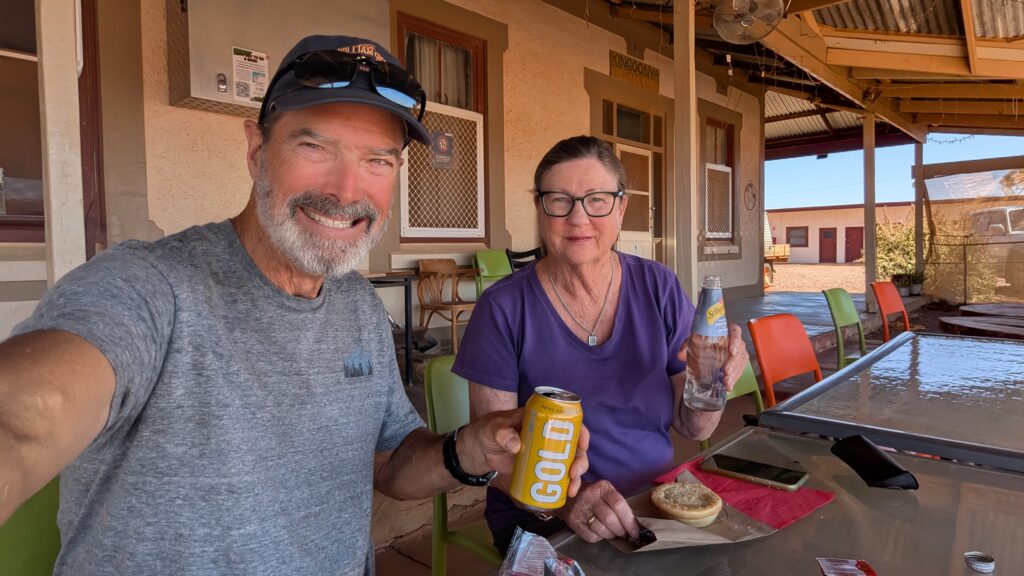
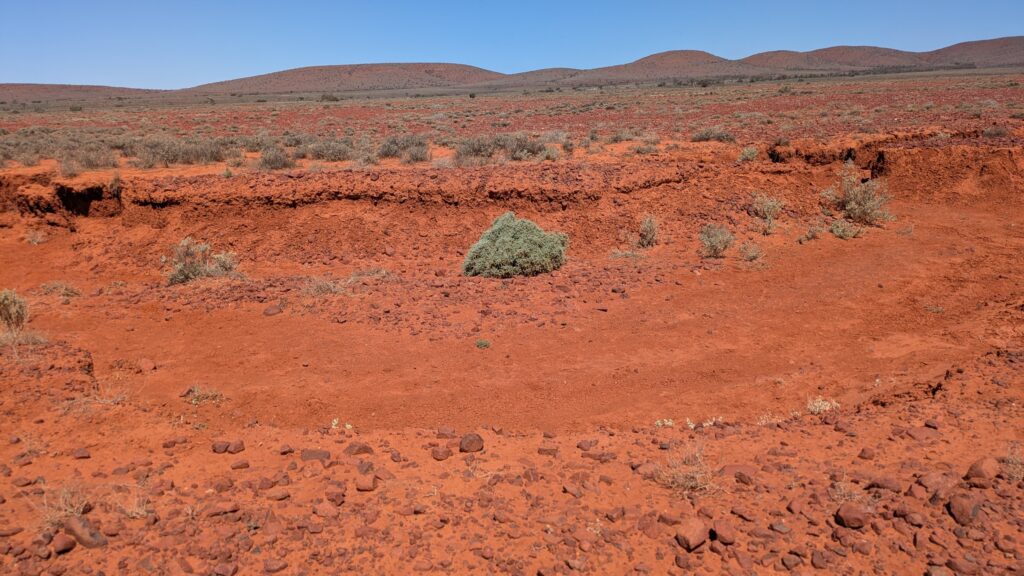
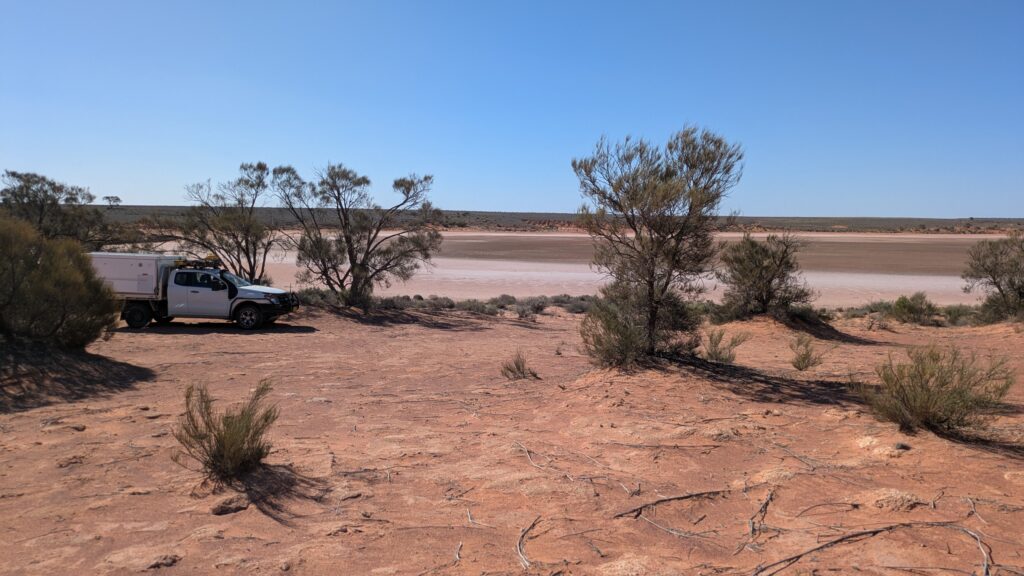
From tiny Kingoonya there is a dirt track heading due south that spends the next three hundred kilometres weaving its way through uncountable dry salt lakes until it pops out – at least for us – near Gawler Ranges National Park. This was a beautiful desert drive with the brilliant orange and red soils supporting very little life.
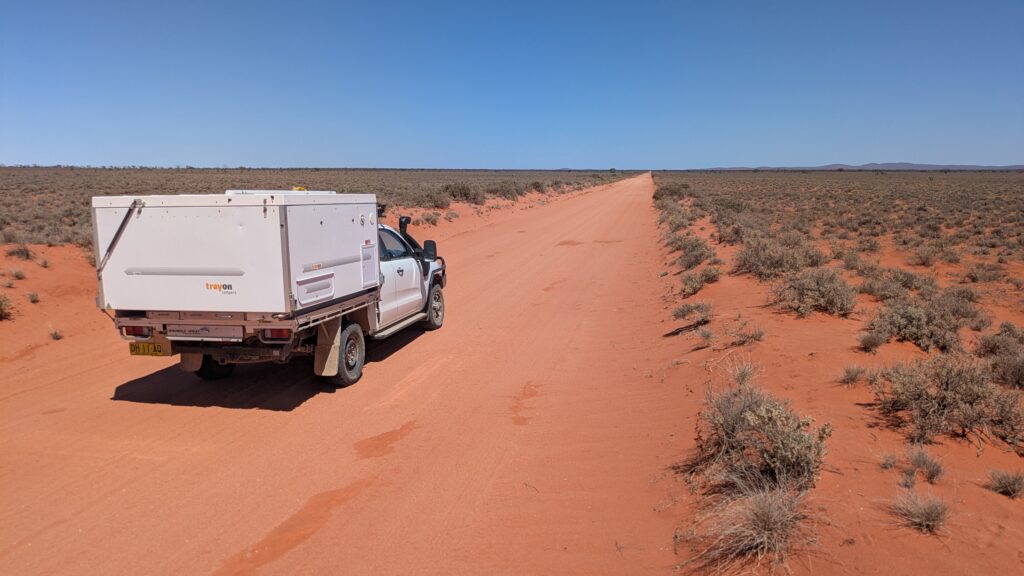
But the road was in terrible condition, the washboards sometimes almost violently shaking Wanda, slow down and it’s worse, speed up and it’s too dangerous. We saw only two cars all afternoon, one of them broken down, as if to remind us that this was a harsh inhospitable land not intended for humans. As they say, a nice place to visit but you wouldn’t want to live there.
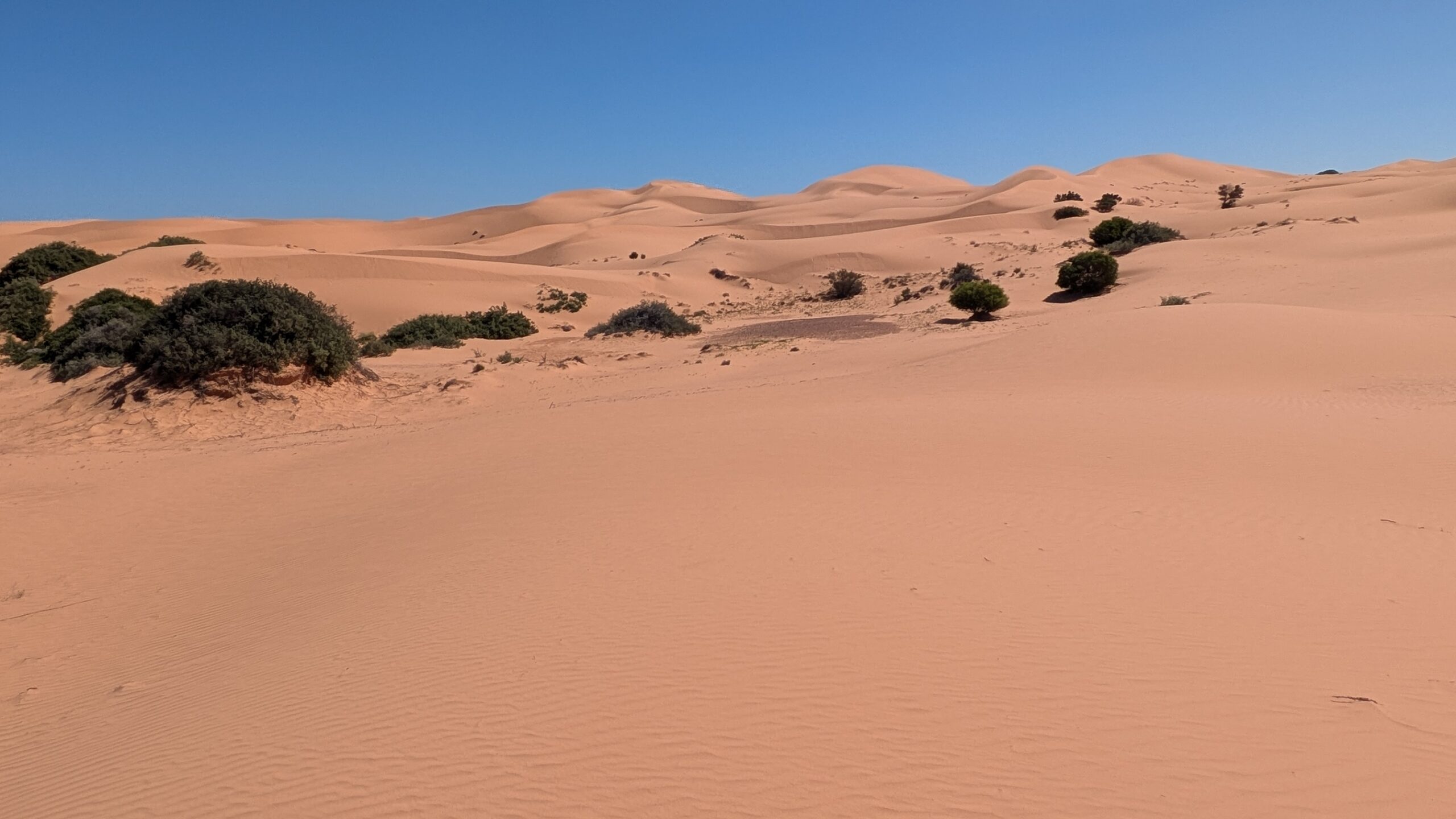
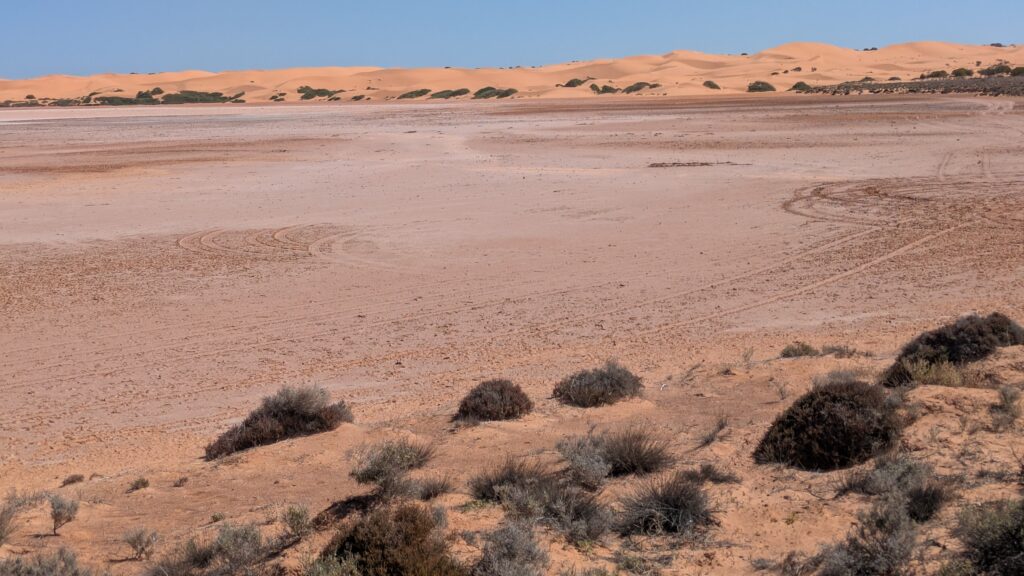
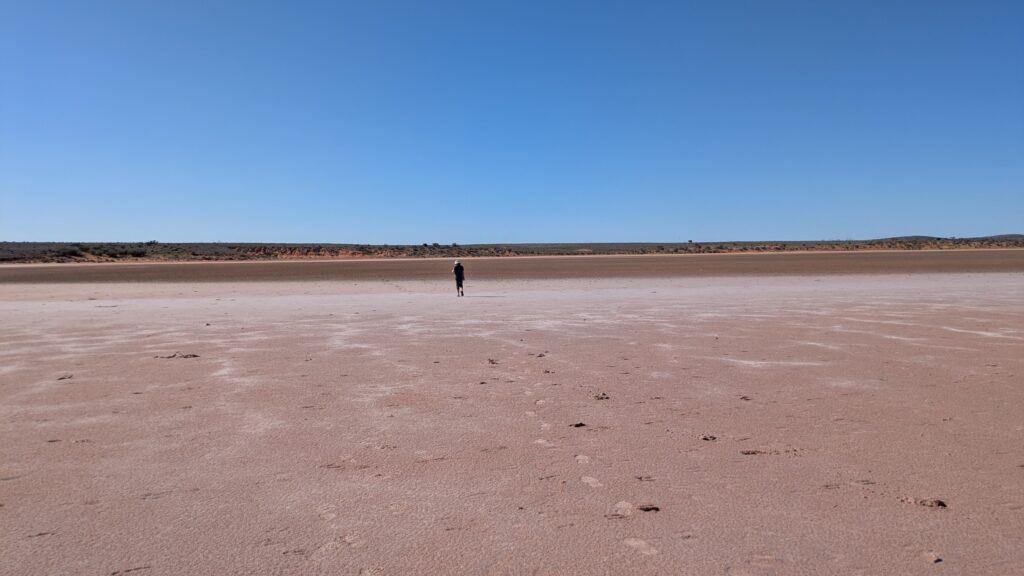
At one stage we came across a dry lake with a huge range of sand dunes behind it, just massive, something like we’d seen in Namibia, Mongolia or the Sahara. We carefully drove along the edge of the lake to the base of the dunes and climbed up a short way – what an unexpected and totally unbelievable surprise.
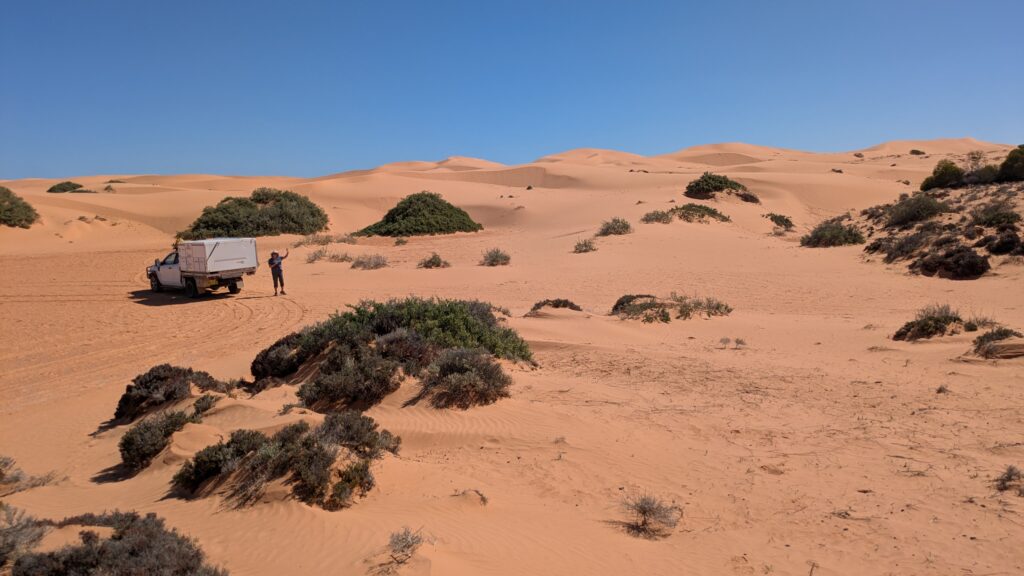
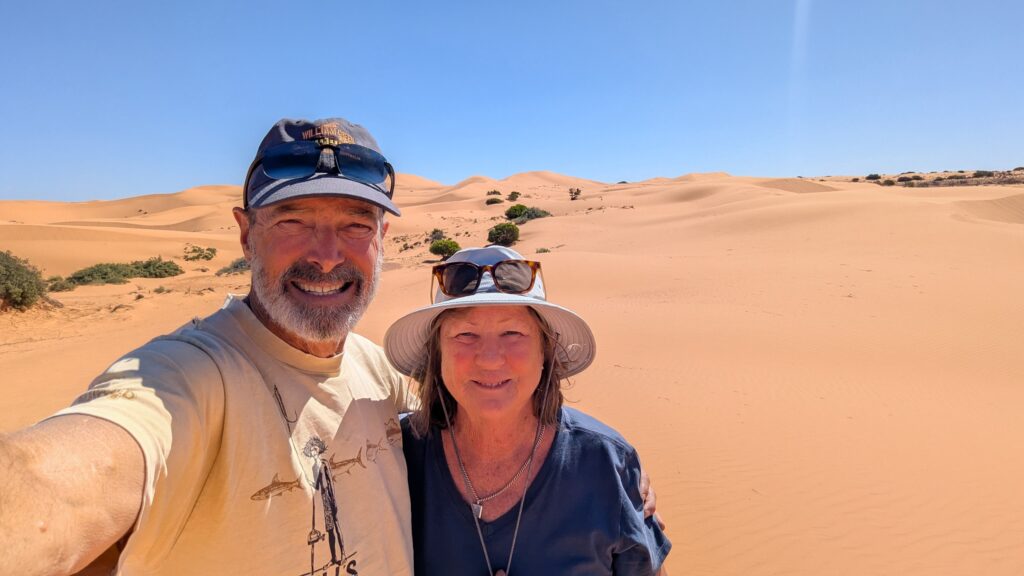
We called stumps for the day next to another dry lake, trying to find a little shelter from the strong desert winds, unfortunately no respite from the relentless flies. It had been another wonderful day exploring the South Australian desert, I only hope Wanda forgives us for putting her through so much pain.
Comments
The Oodnadatta Track — No Comments
HTML tags allowed in your comment: <a href="" title=""> <abbr title=""> <acronym title=""> <b> <blockquote cite=""> <cite> <code> <del datetime=""> <em> <i> <q cite=""> <s> <strike> <strong>