The Gawler Ranges
If you live somewhere in Australia outside South Australia you’ve probably heard of the Flinders Ranges or the Gammon Ranges. But have you heard of the Gawler Ranges? Well, we had vaguely heard of it, sort of, but it had never been on our flightpath until now. We were traversing the vast open spaces north of the Gawler Ranges and zeroing in on them.
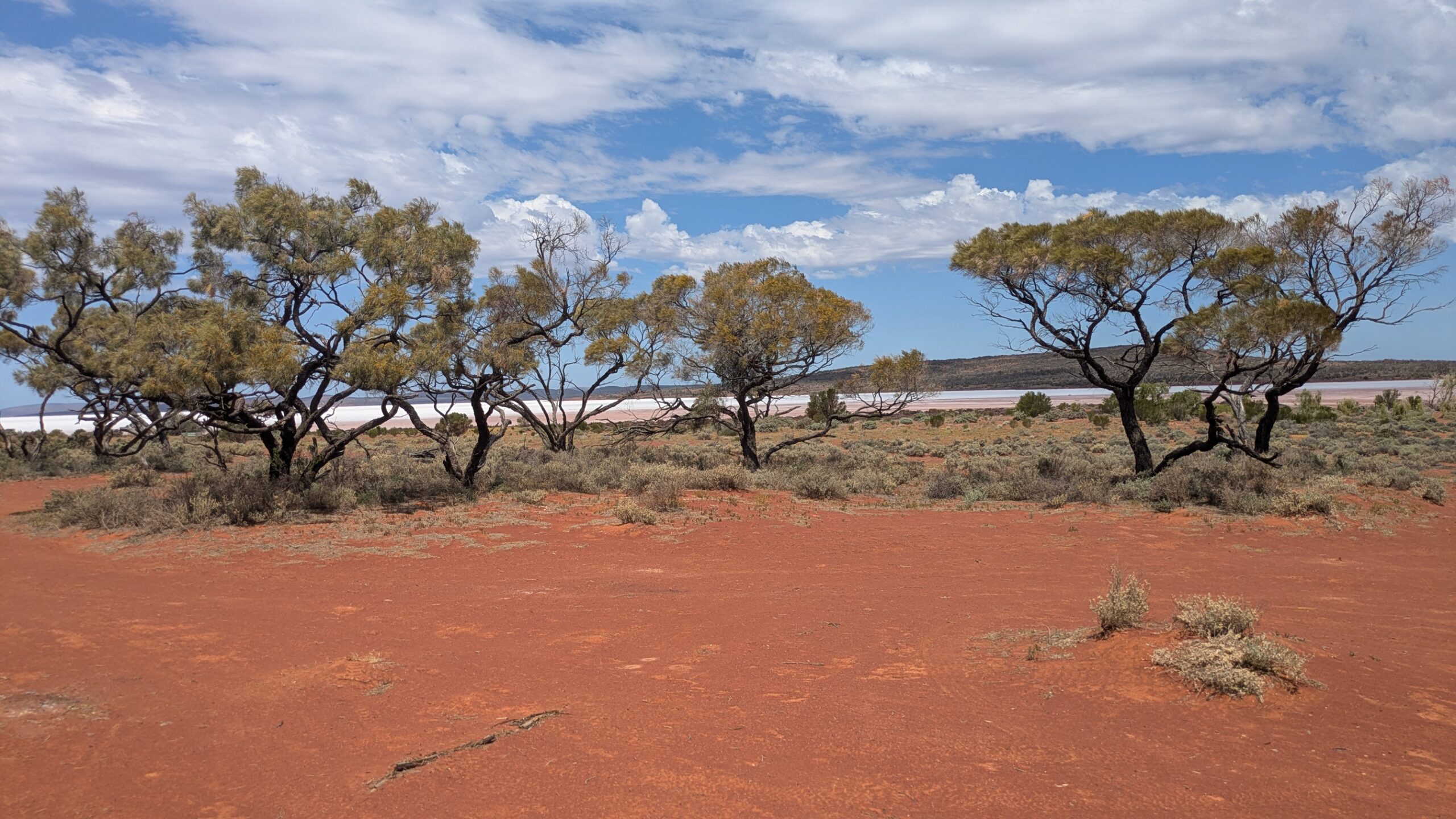
The Gawler Ranges sits just north of the huge Eyre Peninsula, not really on the way to anywhere but protected in part by the Gawler Ranges National Park. We wanted to explore this area but first we had to travel through more barren desert land north of the ranges, specifically the large basin surrounded by Lake Harris, Lake Everard and Lake Gairdner, all dry salt lakes formed over many millennia and now an absolute wonder of Australia, even if hardly anyone goes there.
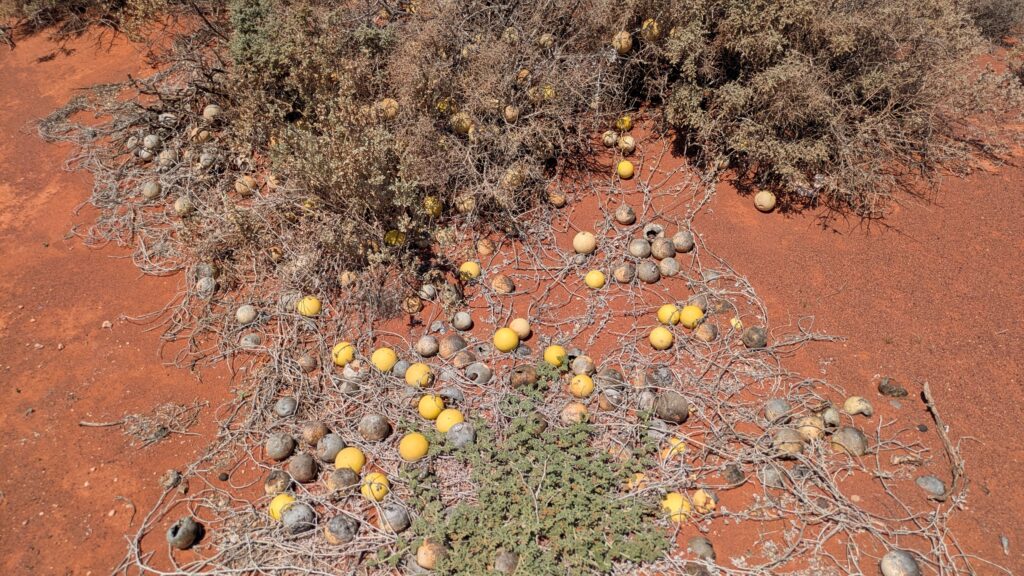
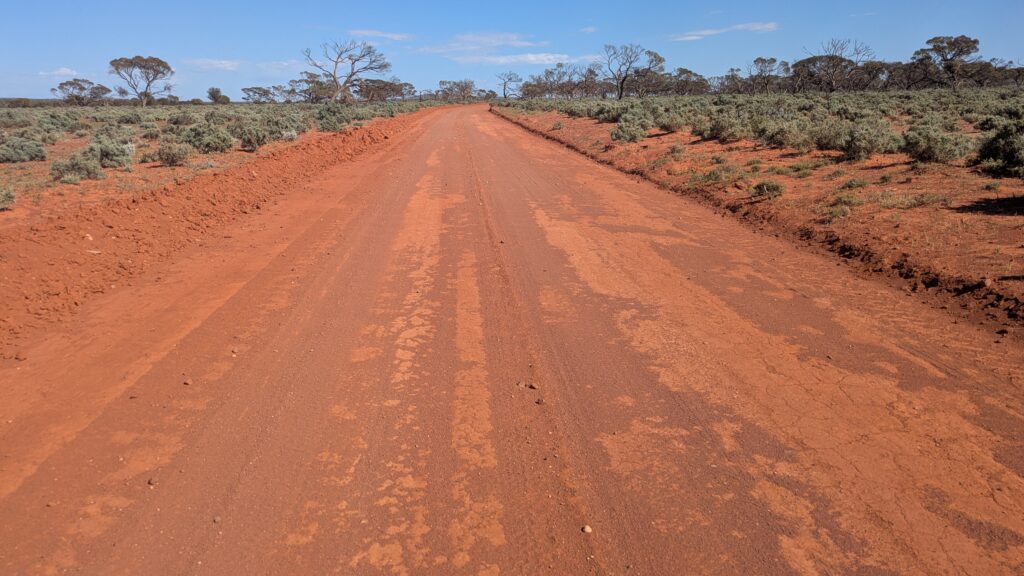
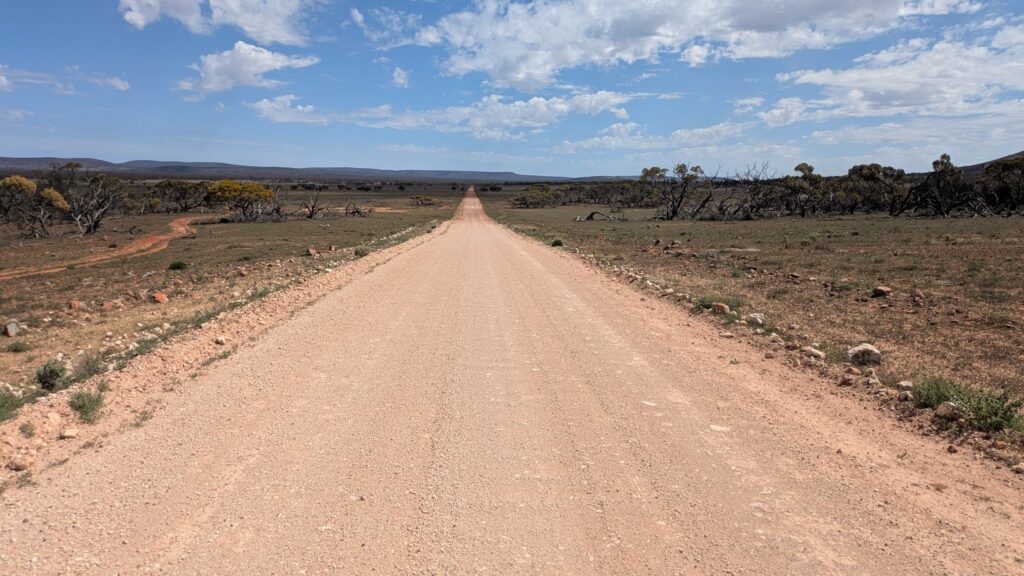
We left our campsite next to one of the hundreds of small dry salt lakes that speckle this region and headed south on what turned out to be a much better road than we had endured the day before. The desert was deceptively beautiful with its variety of scrub and occasional run of mulga and mallee trees. And under it all was the vivid orange-red soil that is so striking we had to stop the car a couple of times just to check to see if it was true.
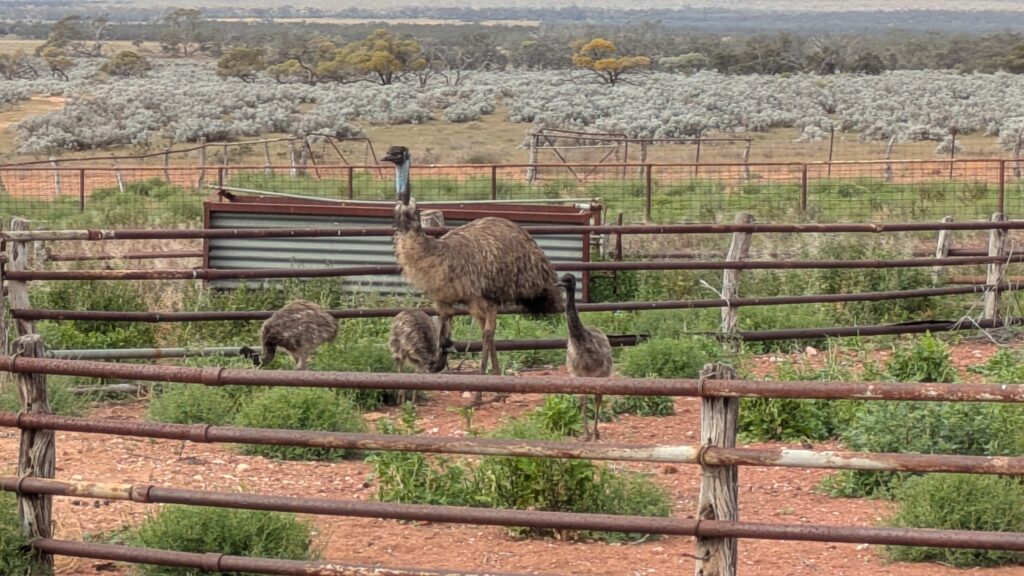
And wildlife started to reappear, something we hadn’t seen too much of further north. There were kangaroos and emus sometimes milling about, keeping us company. At one stage a kangaroo decided to leave his shaded position under a large salt bush and jump out in front of us but my lightning-fast reflexes saved both of us.
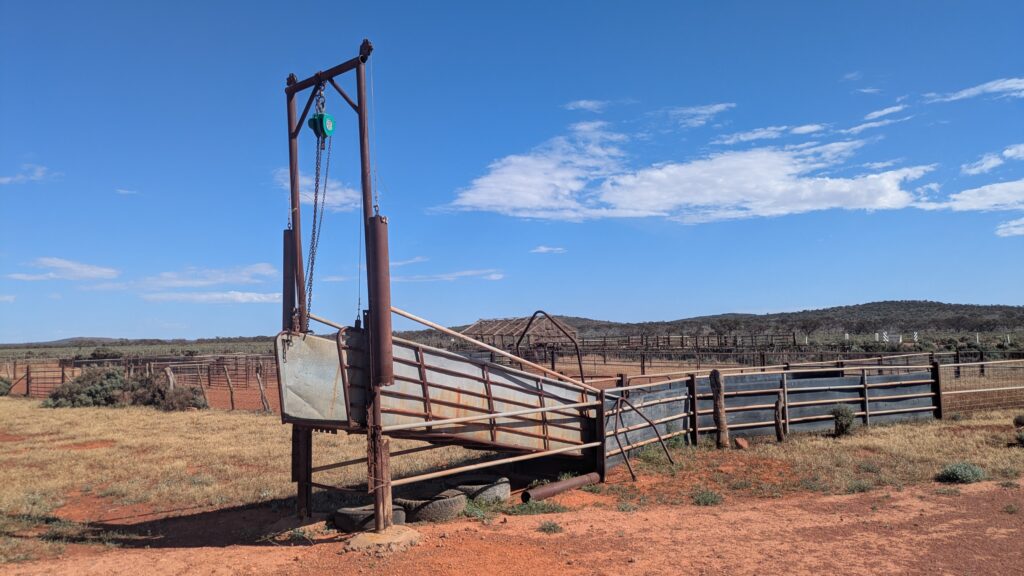
Not much further along thee emus safely crossed our track and as we watched them run off a fourth emu, a straggler, appeared from nowhere and ran right into the front right side of Wanda. Kamikaze emu, I tell you. Luckily it was only a glancing blow and both the emu and Wanda seemed to have no damage. He trotted off and now had a good story to tell his mates.
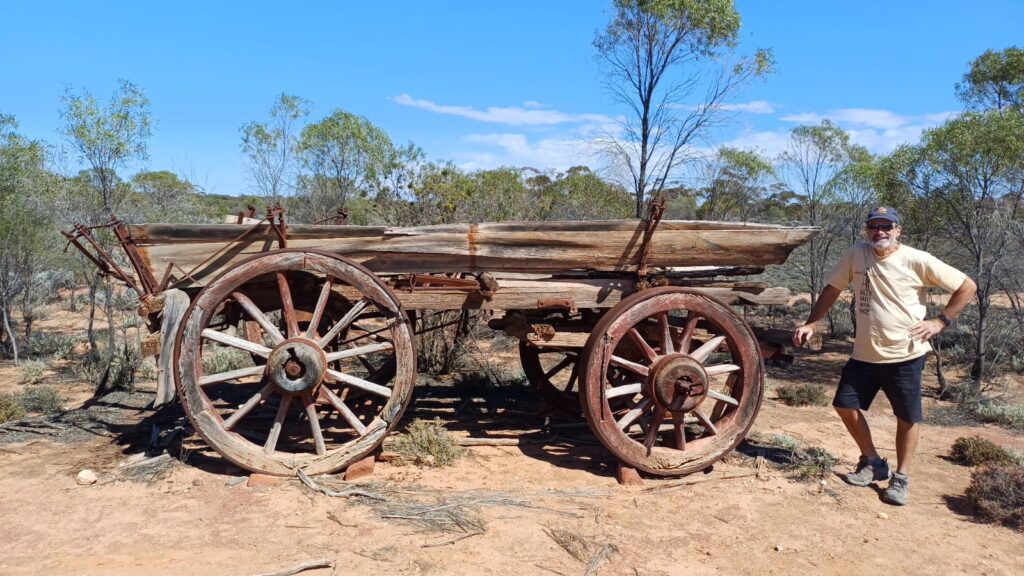
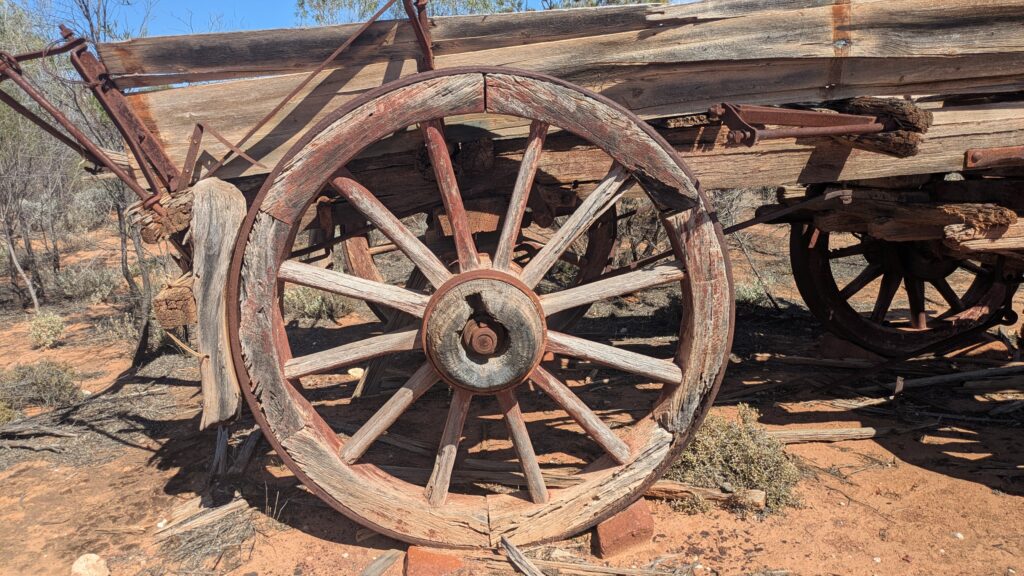
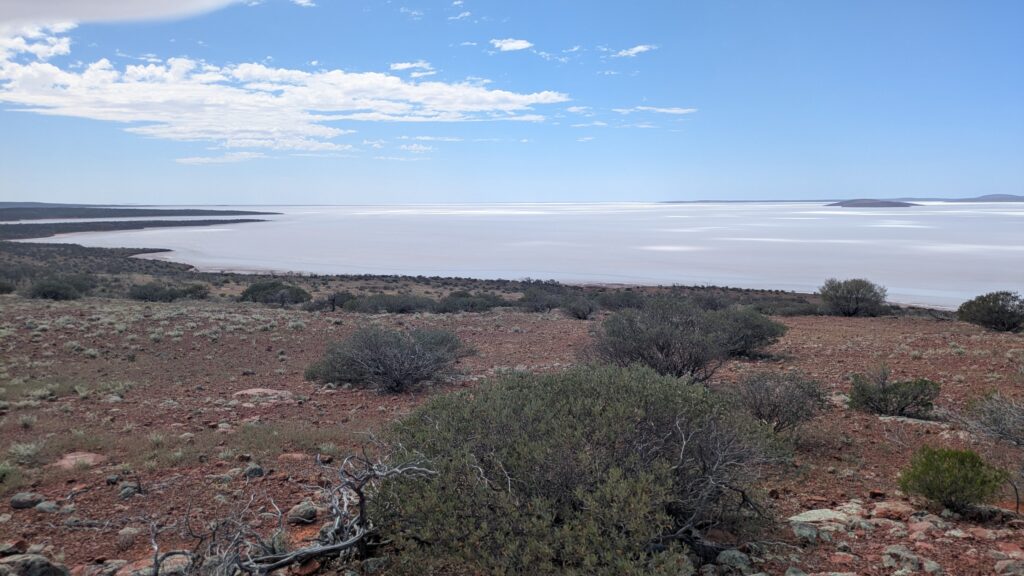
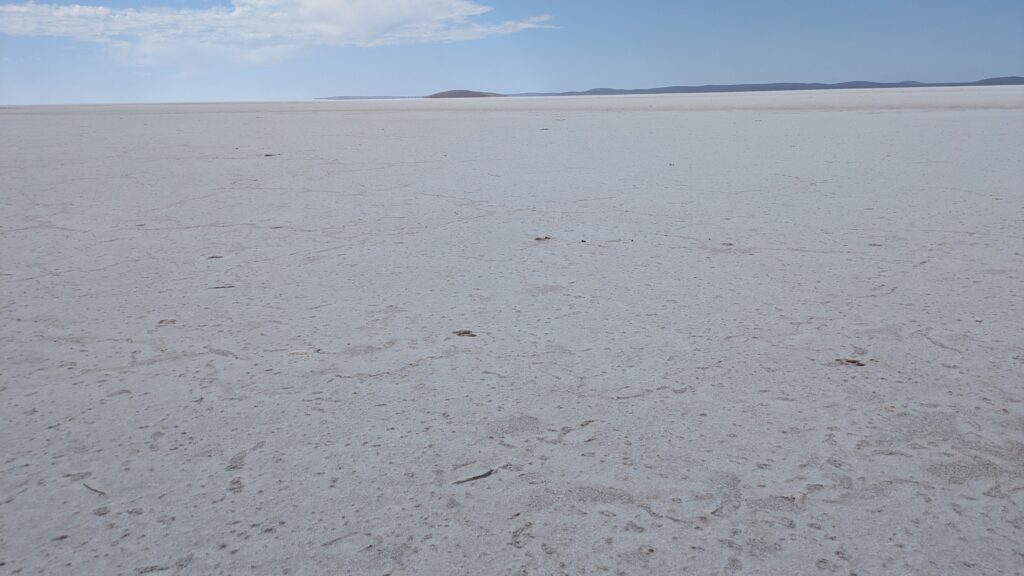
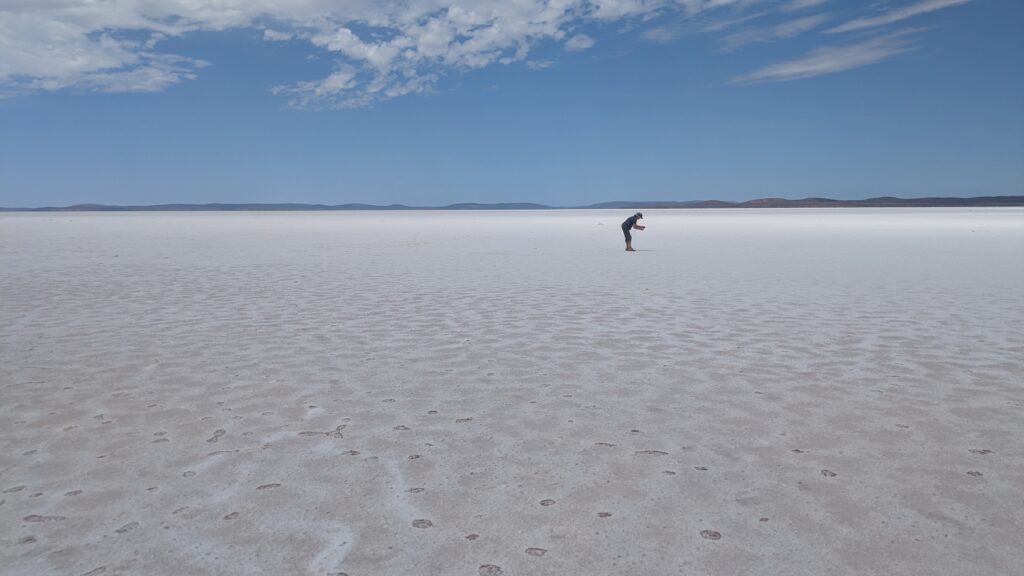
We found a small dirt track that weaved its way through the trees until it came to a campground at the edge of the huge Lake Gairdner. The fourth largest salt lake in Australia but not fed by any significant rivers anymore, Lake Gairdner runs 160 kilometres long and from where we stood stretched beyond our horizon. Blinding white from salt up to 1.5 metre (5 feet) deep it was an extraordinary scene.
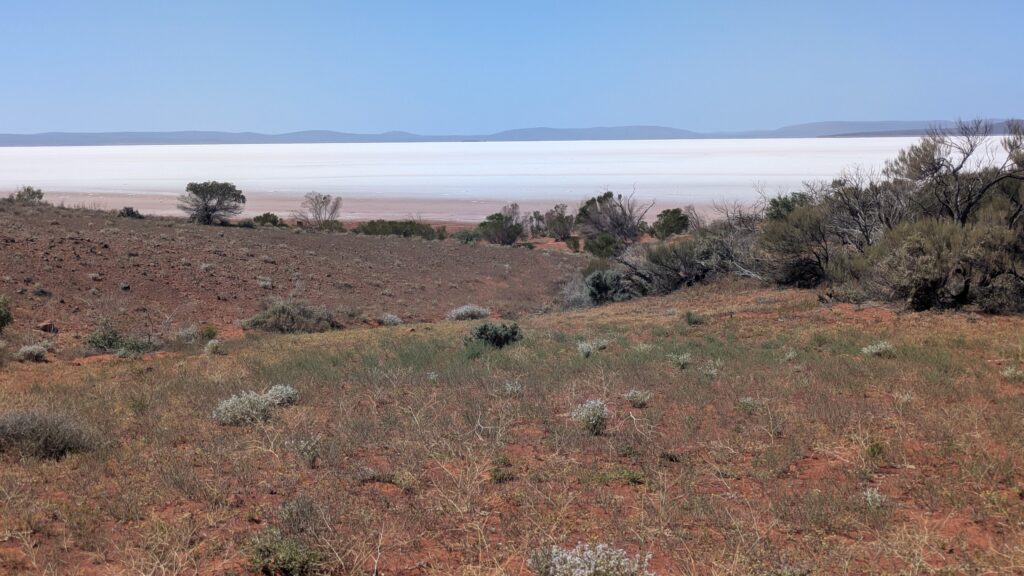
We followed a track up the hill to get a broader view of the lake and then walked down onto the salt bed for an up-close perspective. It doesn’t matter how you see it, it’s awesome. And to think a week ago we’d never heard of this region or this lake and now we see it in all its glory. Australia is amazing!!
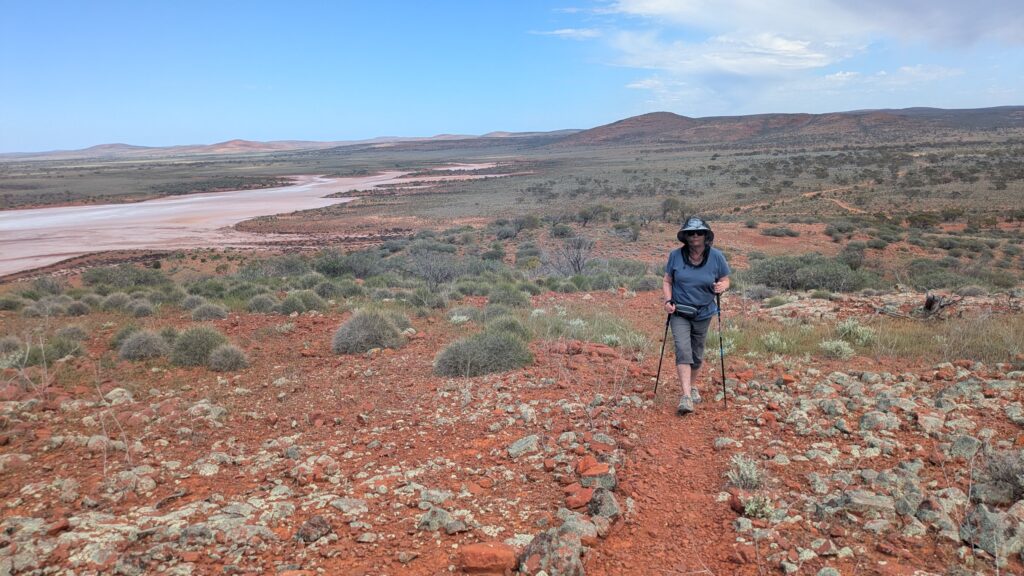
We followed a series of tracks further south, a bit wary every time we saw kangaroos or emus, until we entered the northern boundary of Gawler Ranges National Park. This was beautiful land, curiously not featuring high or rugged mountains like the Flinders or Gammons, just beautiful old red hills, rich valleys and a variety of trees.
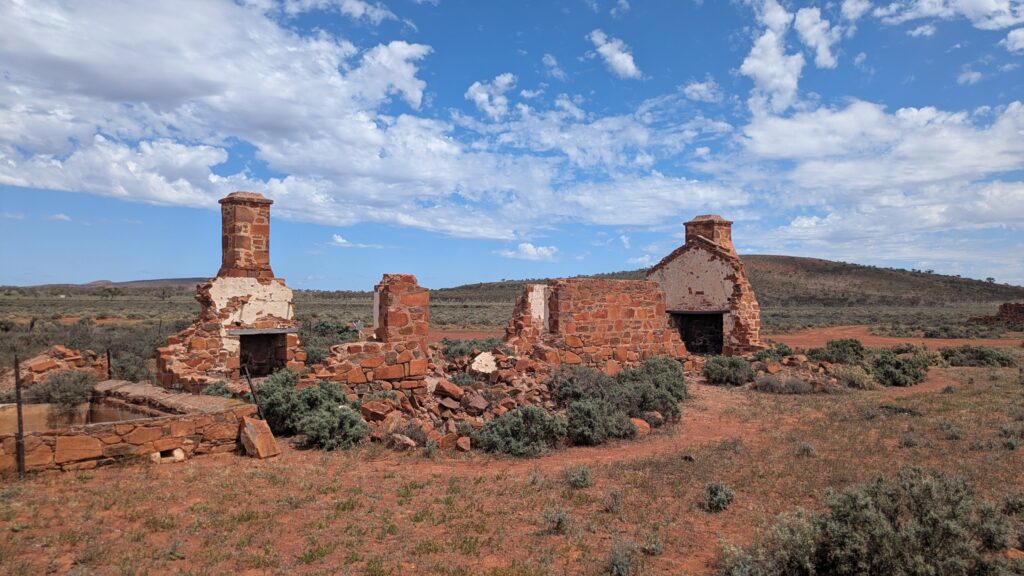
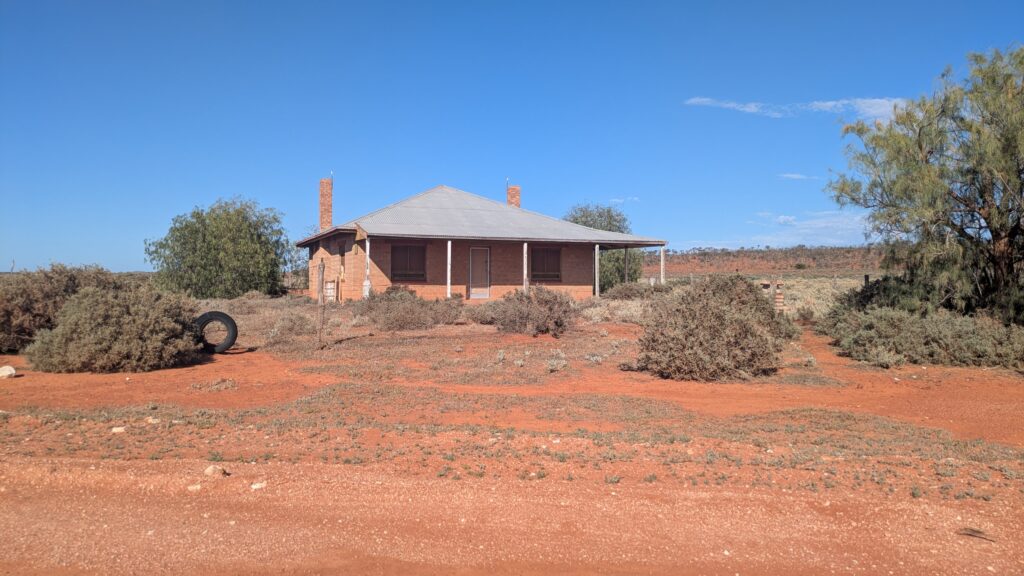
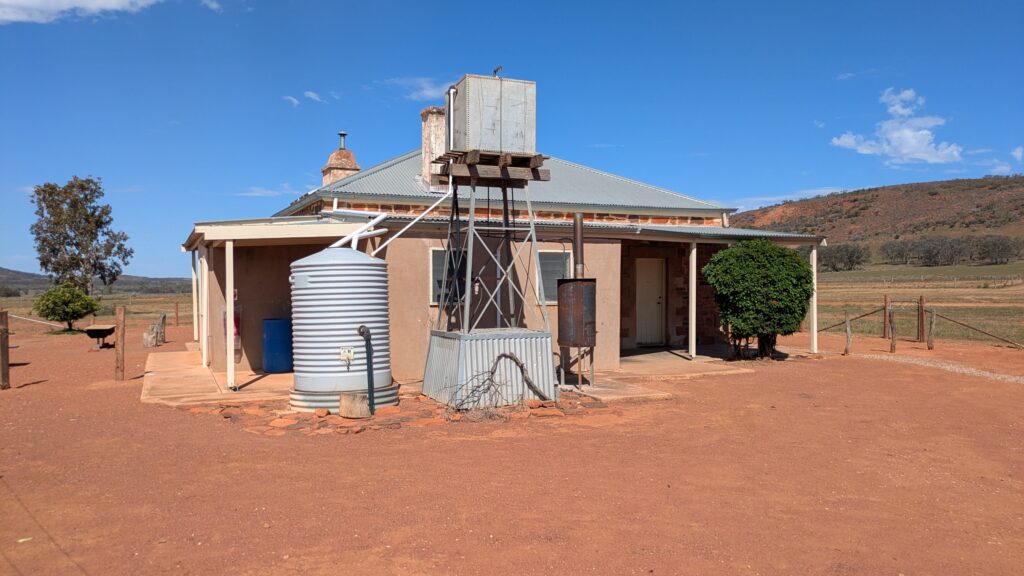
We stopped at Pondanna Outstation, a remote station high in the hills that at one stage grew hay for neighbouring stations, and even up to 1920 still had supplies delivered every fortnight via camel. Today the station is well preserved and provides a glimpse into the incredibly harsh life these people must have led.
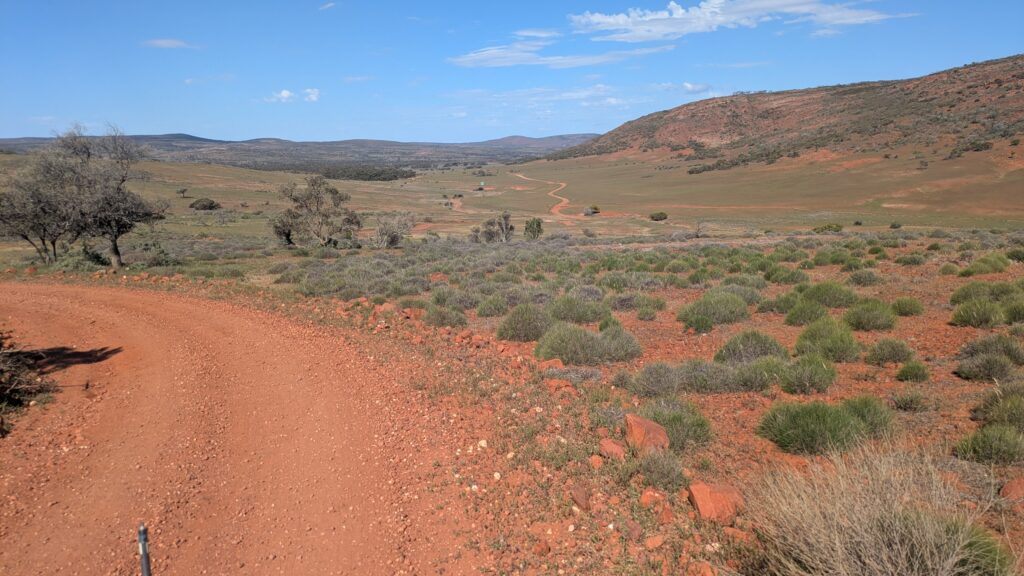
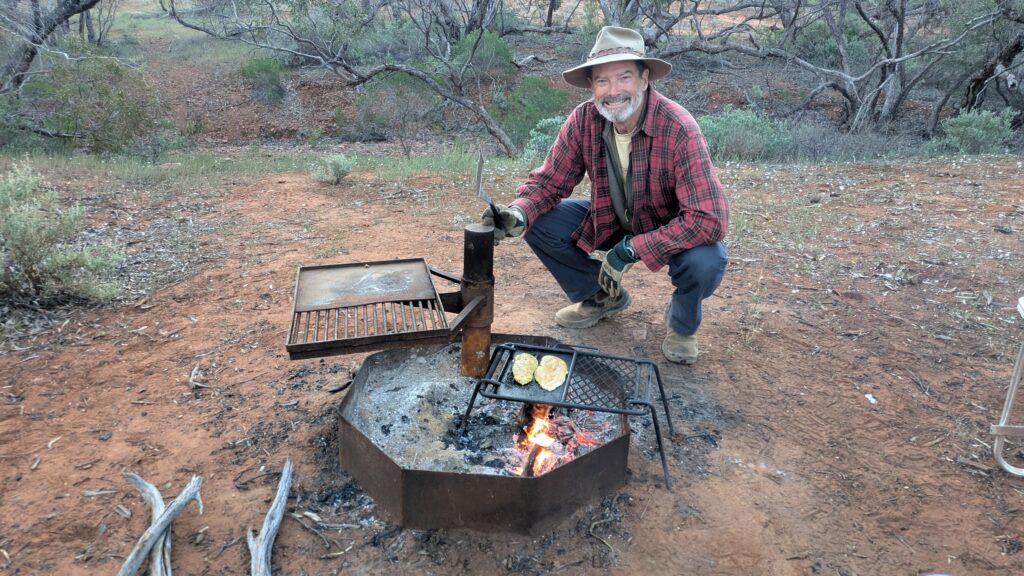
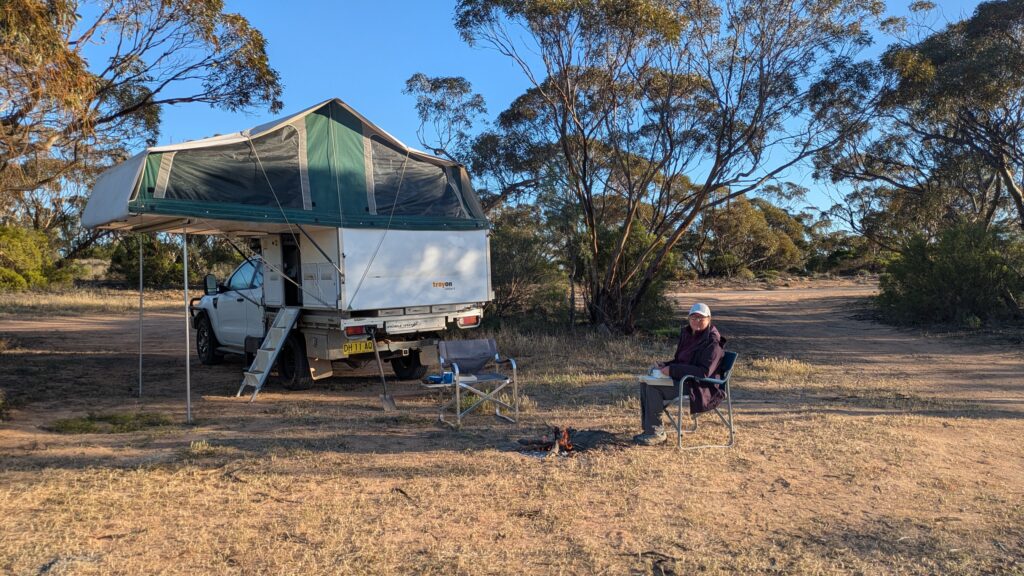
We camped for the night in the Chiullme Campground on the banks of a very dry creek bed, after a wonderful day of exploration and discovery. And over the 200 kilometres we drove today we didn’t see a single other moving car until we reached our camp. It’s that sort of place.
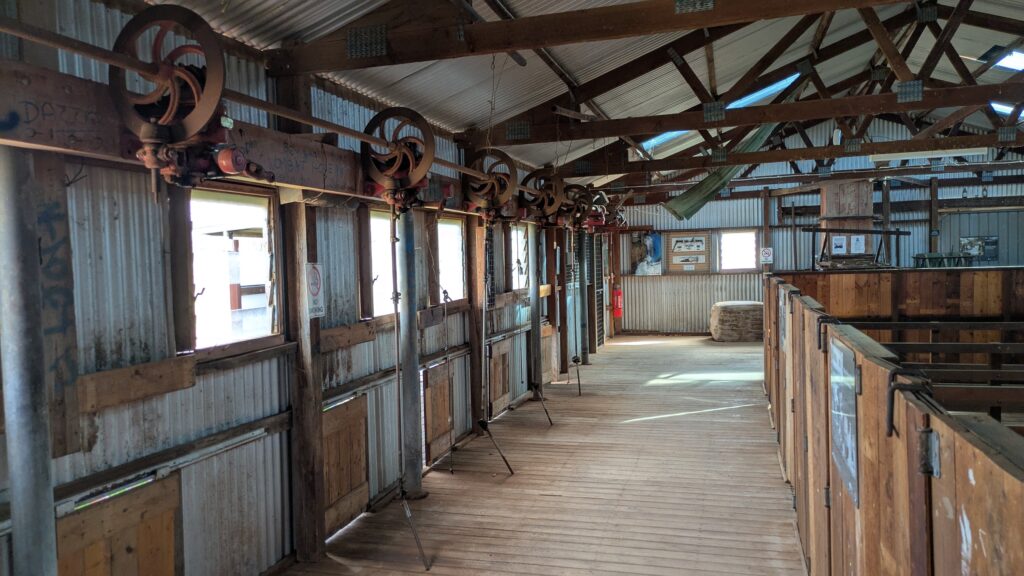
The Gawler Ranges were actually formed from a volcanic eruption 1.6 billion years ago (a long time ago) and have since smoothed and mellowed to a very beautiful range of rolling hills, open paddocks and mainly mallee gums. We visited the old woolshed, first established here in the 1880’s, last in use in 2000 and still in great nick, and tried to imagine how hard life was like for these hardy pioneers. In the 1880’s the adjoining stations of the Gawler Ranges supported 450,000 sheep and produced 6,000 bales of wool each year. The mind boggles.
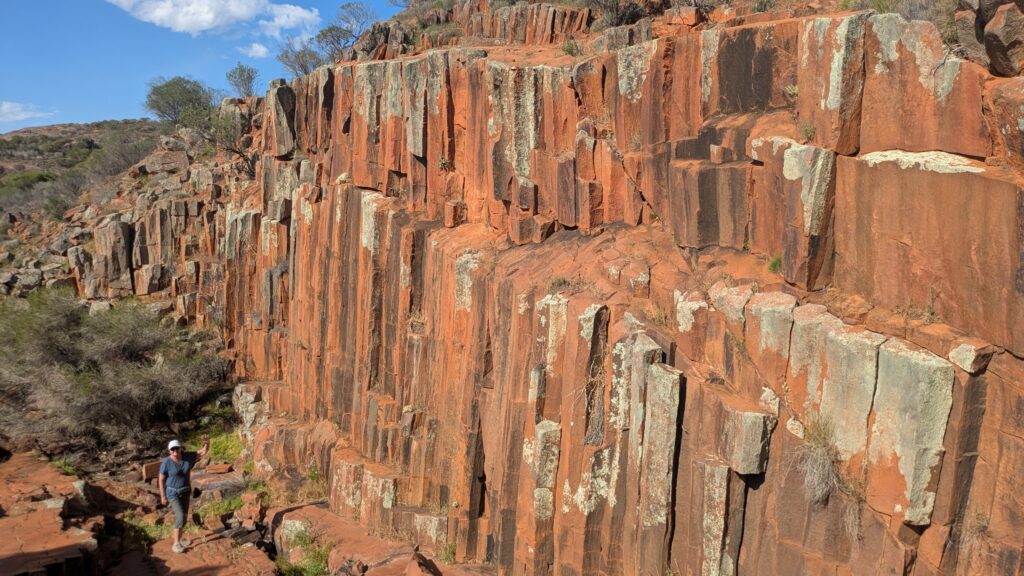
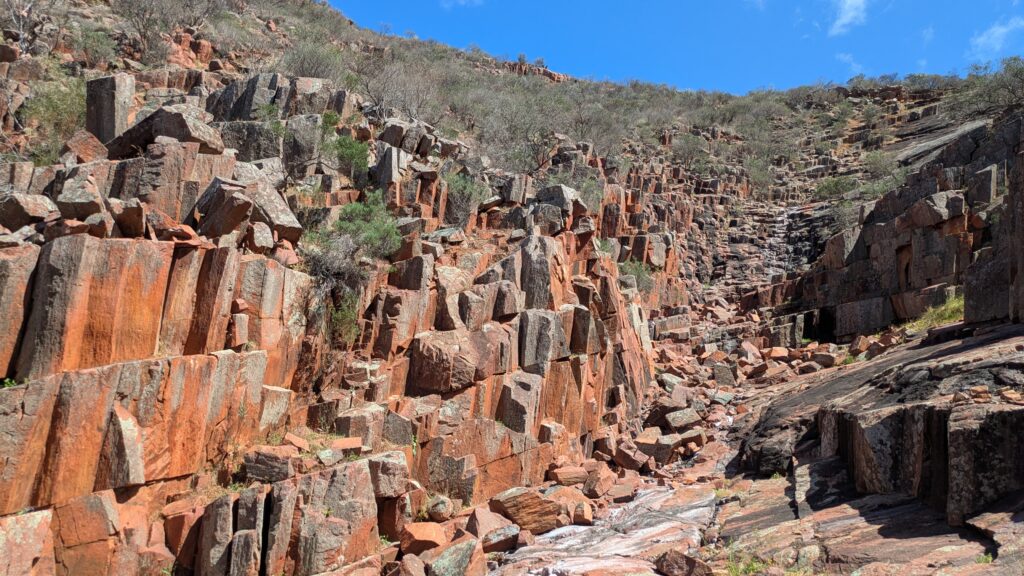
We followed the scenic drive across the southern end of the park to the geological feature called Organ Pipes with their hexagonal-shaped pillars exposed where a creek has cut through them. We’ve seen this phenomenon in other places and it’s always very cool.
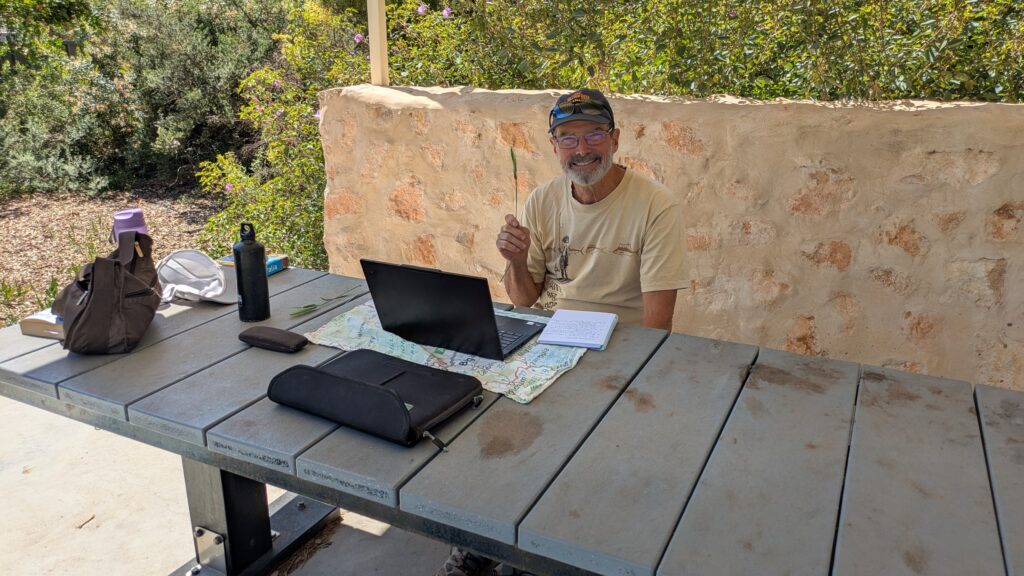
We were on a bit of a mission that afternoon and headed out of the park and back to civilisation where I had an important conference call to join before we climbed onto the Eyre Highway. The Eyre runs across the central stretches of South Australia as a vital transport link across a thinly populated stretch of the state. We camped that night off the highway in a grove of trees, sadly away from the red dirt, the vast open spaces and the emus. Unfortunately the endless supply of flies and the endless supply of wind followed us to camp.
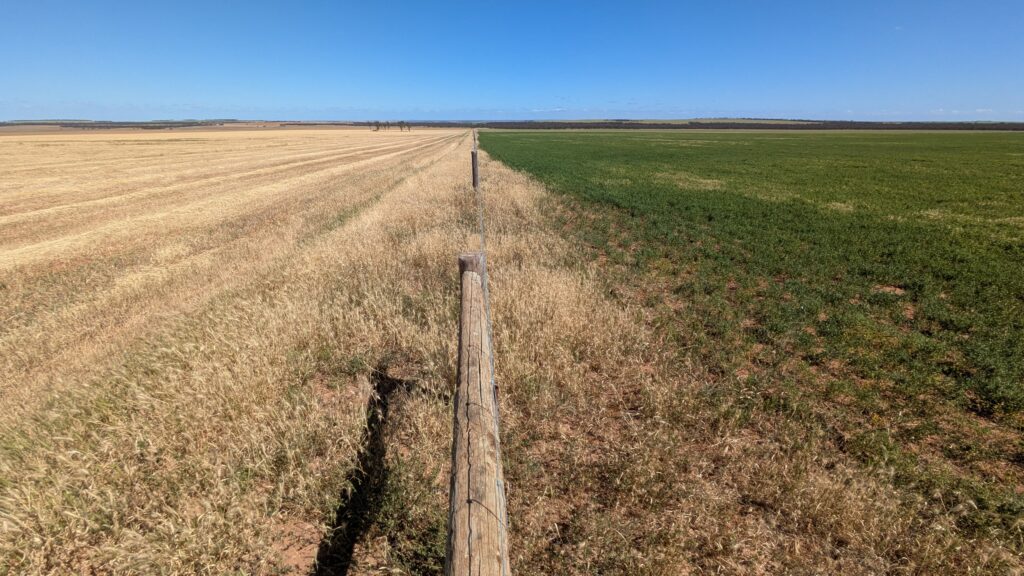
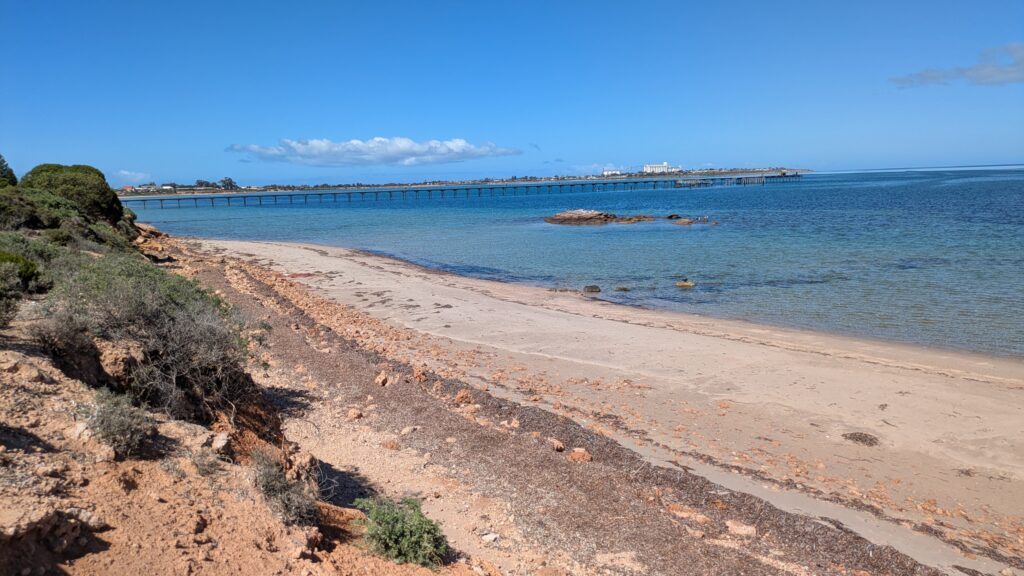
The next morning we drove into civilisation, of sorts, when we made it to Ceduna which is an attractive seasonal seaside town on the Great Australian Bight. Our exploration of outback South Australia was over and the next chapter of our journey was more focused on beaches and even hopefully some warm sunshine.
Comments
The Gawler Ranges — No Comments
HTML tags allowed in your comment: <a href="" title=""> <abbr title=""> <acronym title=""> <b> <blockquote cite=""> <cite> <code> <del datetime=""> <em> <i> <q cite=""> <s> <strike> <strong>