The Eyre Peninsula
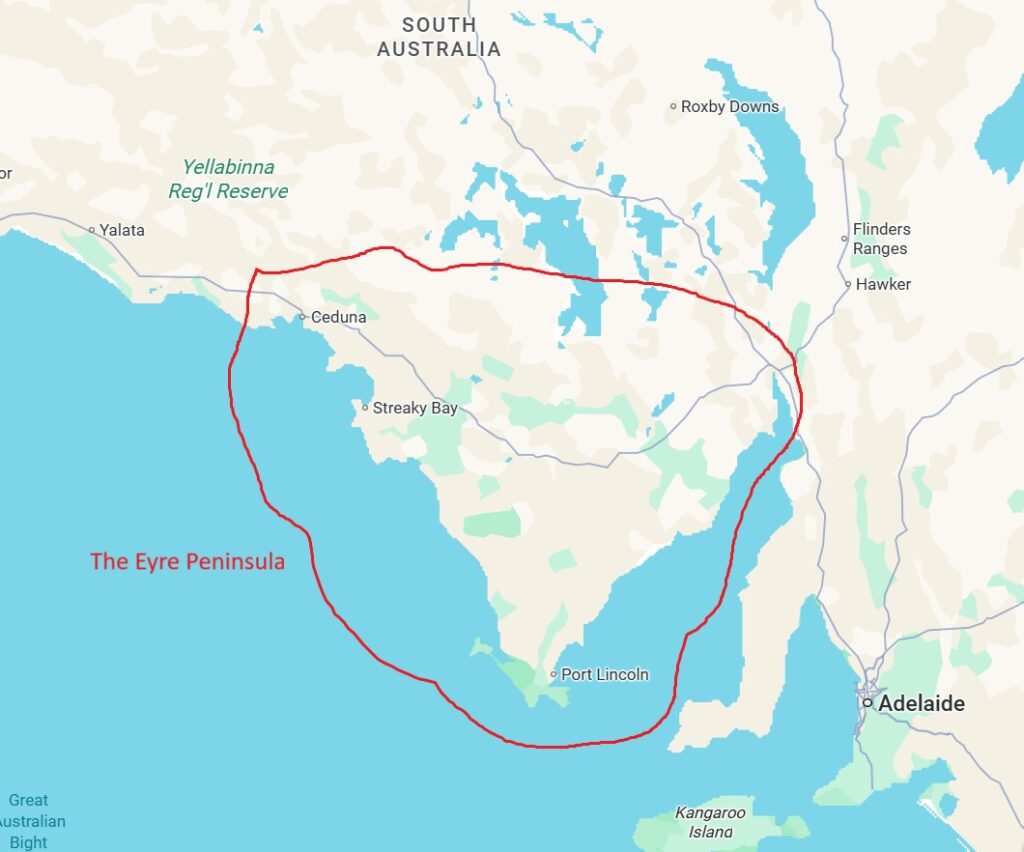
South Australia is a huge state, substantially bigger than New South Wales, and features stunning desert beauty as well as rich agricultural land, a vibrant wine-growing industry and some of the best coastline in Australia. Our focus over the next couple of weeks was going to be the Eyre Peninsula, a pizza wedge-shaped appendage of Australia poking out into the Great Southern Ocean and forming the eastern edge of the Great Australian Bight.
When I was growing up we were taught there were five oceans in the world – the Pacific, North Atlantic, South Atlantic, Indian and Arctic. When Julie was growing up she was taught there were six oceans – the five we learned plus the Great Southern Ocean. Not the Southern Ocean, mind you, the Great Southern Ocean. And so it is.
If you look at a map of Australia and it’s southern shore, the one facing the Great Southern Ocean which runs all the way to Antarctica, it has a huge banana-shaped coastline. This vast dent in the continent’s shape is called the Great Australian Bight, not Australian Bight, mind you, but Great Australian Bight. When I first came to Australia I thought it was Bite, not Bight, as in someone taking a great Australian Bite out of the continent. Oh well.
After doing the necessary refuelling and restocking, we left the attractive town of Ceduna, sitting pretty on the Great Australian Bight overlooking the Great Southern Ocean, and headed south on the western coast of the Eyre Peninsula, stopping at various places along the way to take in this beautiful coastline.
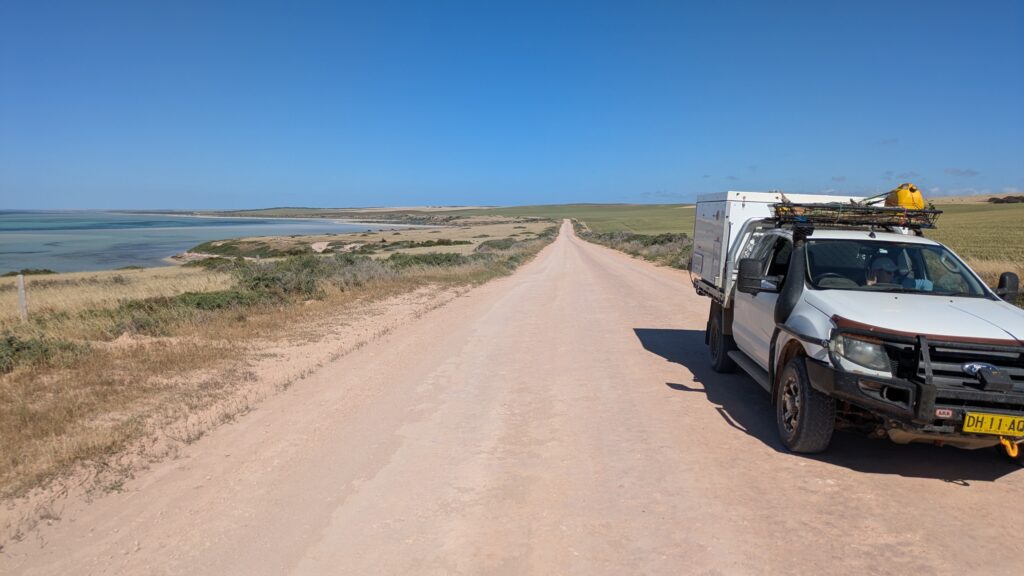
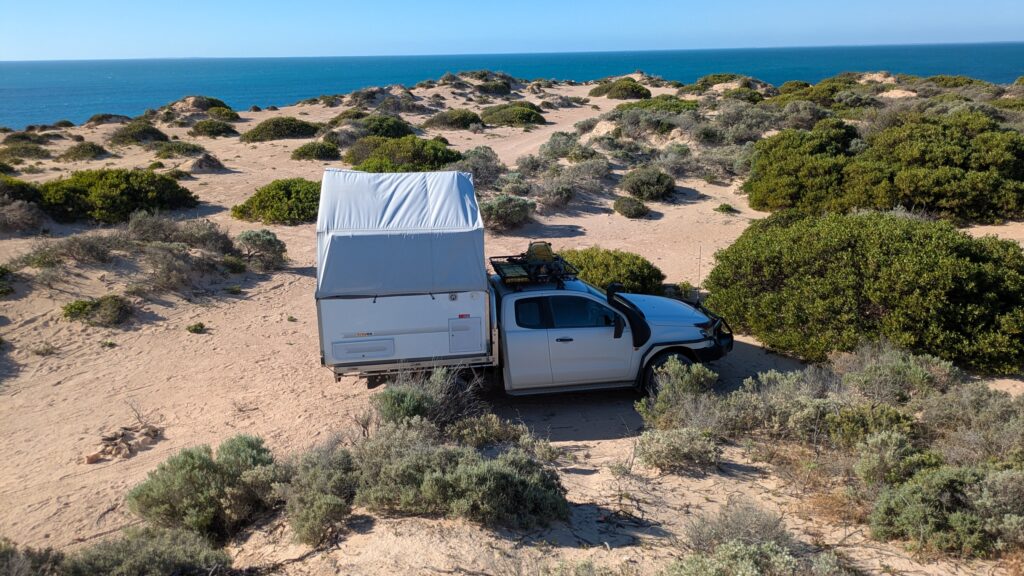
We made it to Streaky Bay, a popular seaside town of about 2,200 people and in the late afternoon did the scenic loop road out to Cape Bauer. Well, that was the plan but we found this coastline so inviting we found a little sandy track off to a point above the cliff line and tucked in behind some clumps of sand and rock to camp for the night. What a spot!
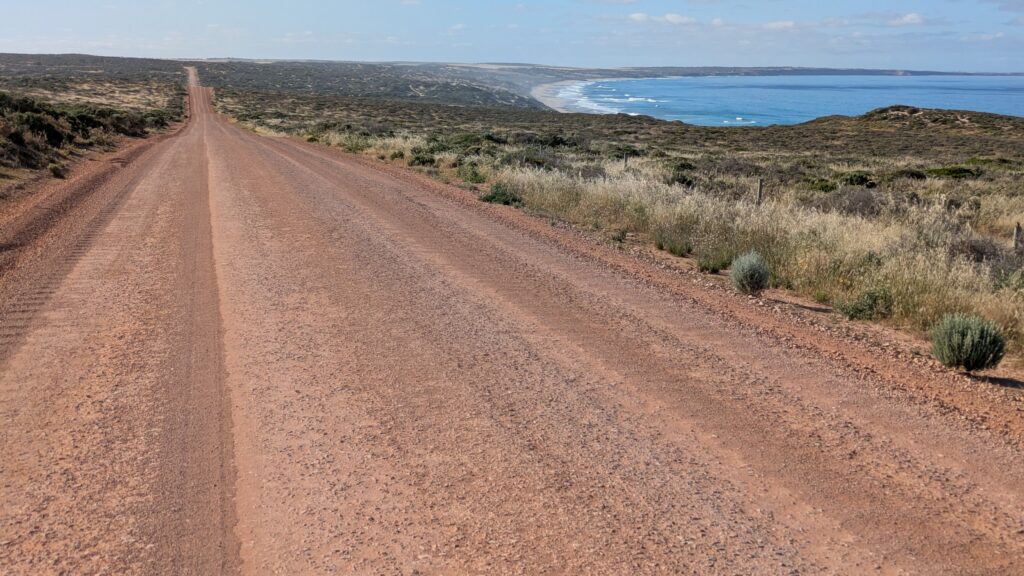

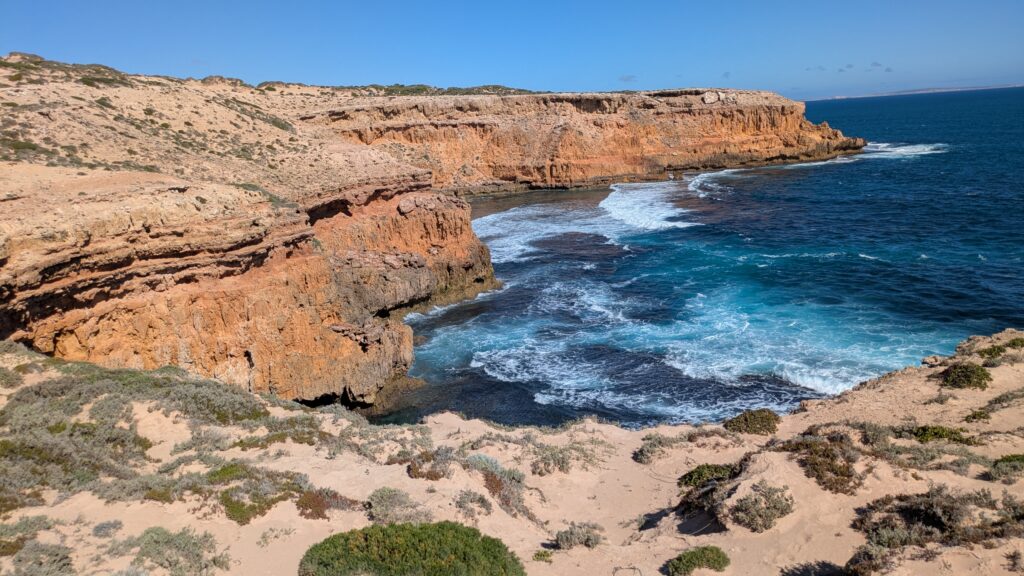
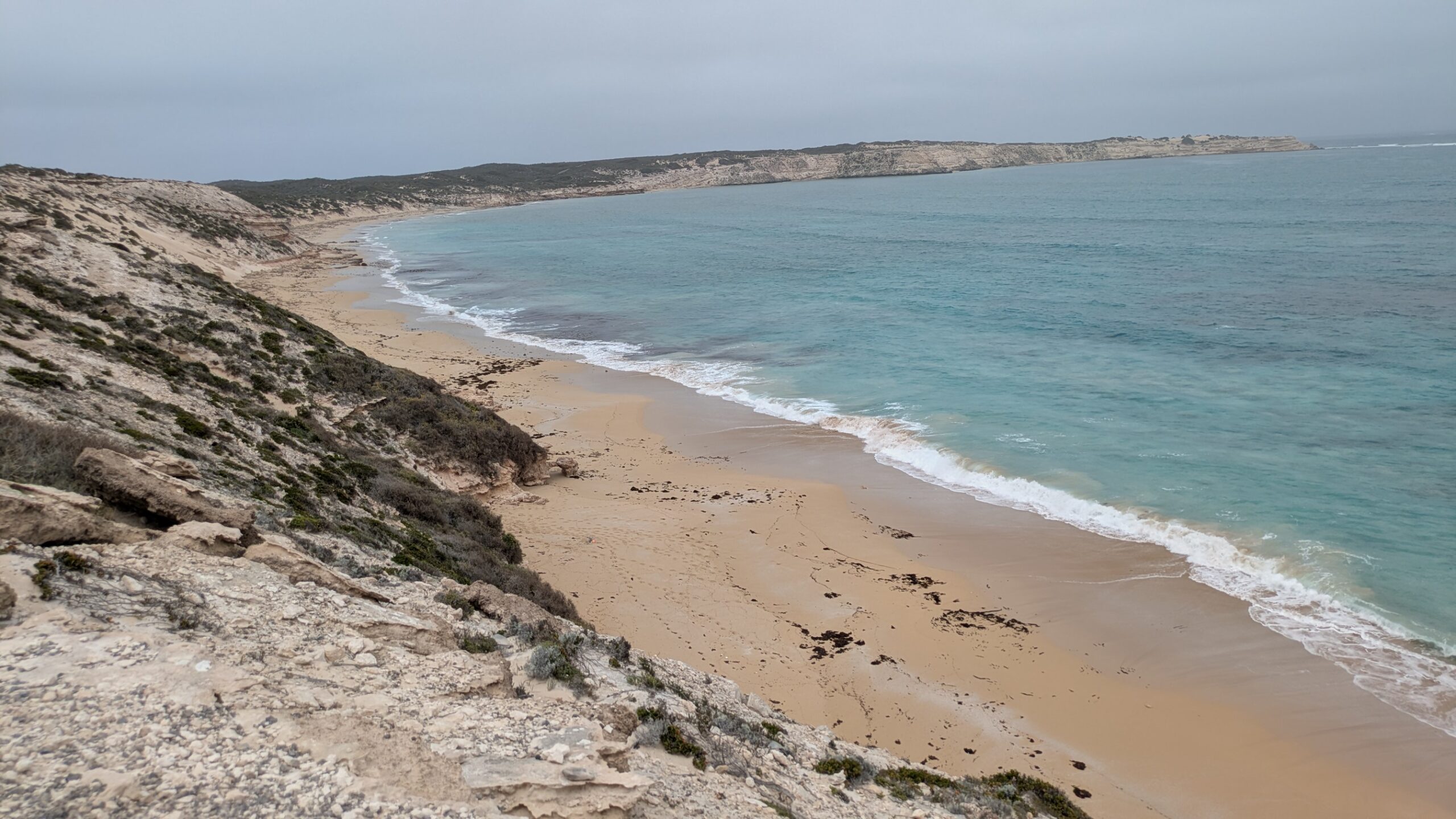
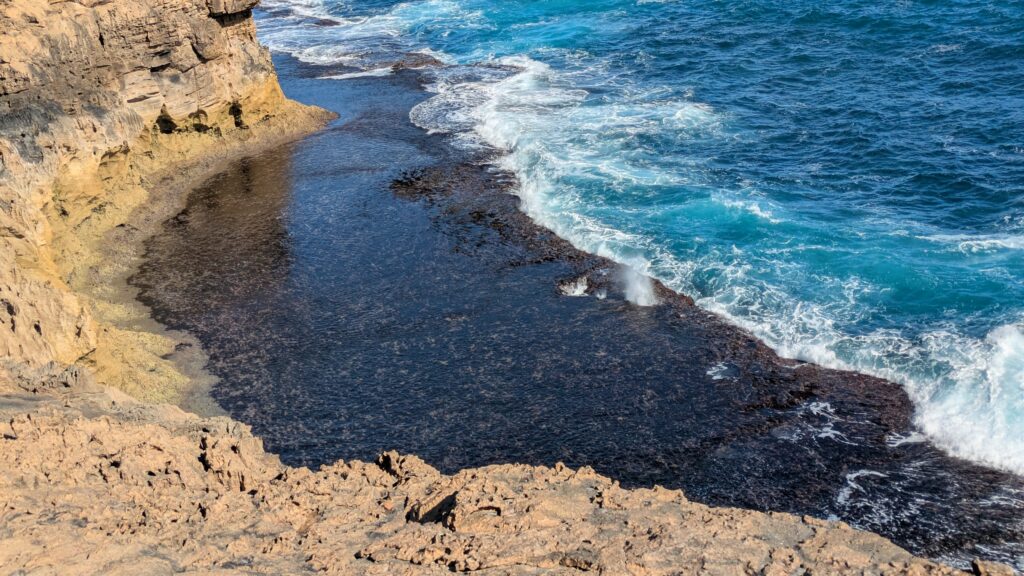
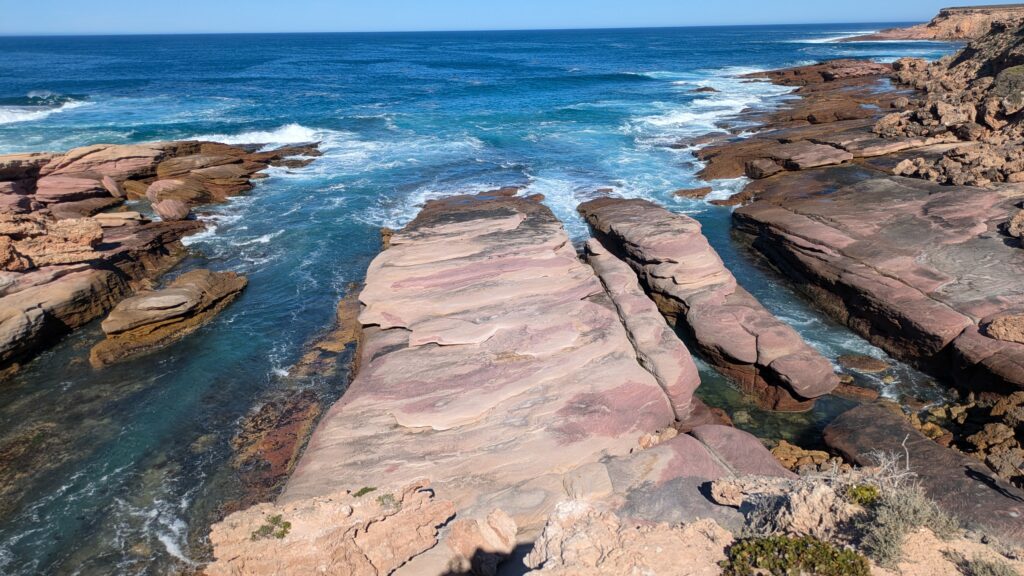
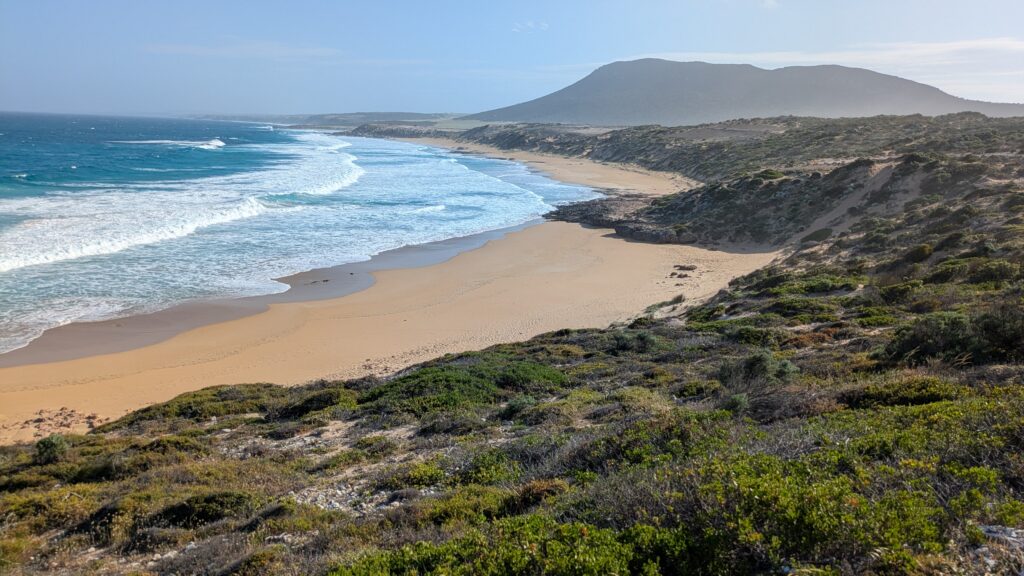
We had heard from friends and fellow travellers that Streaky Bay was a must do and we now understood why. The coastline was absolutely spectacular, a mix between high vertical cliffs and perfect sandy beaches, the later often unreachable due to the former. We continued to weave our way along the coast doing a couple of scenic loop drives and dined out on all this magic, made even better because we saw almost no one else.
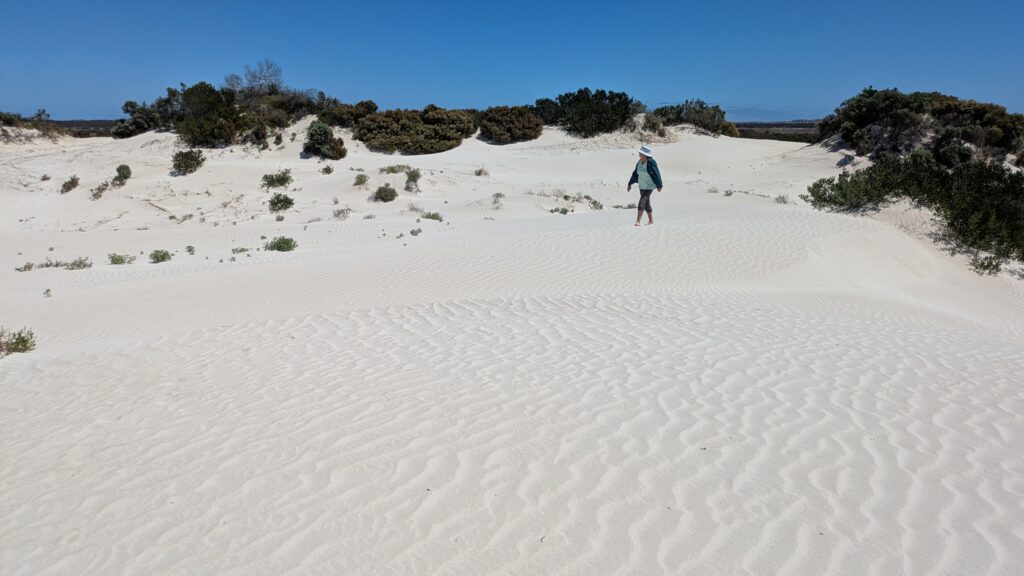
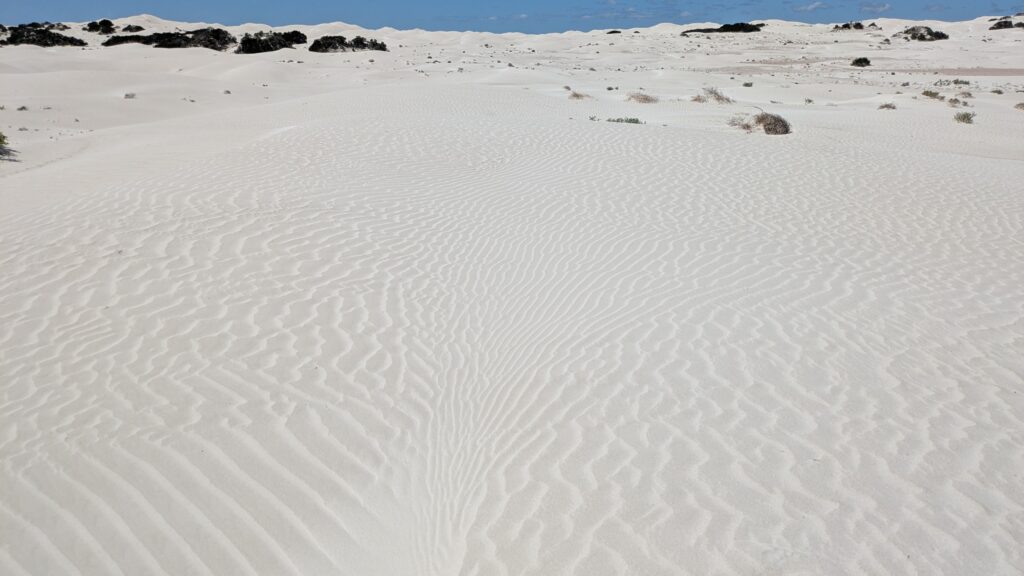
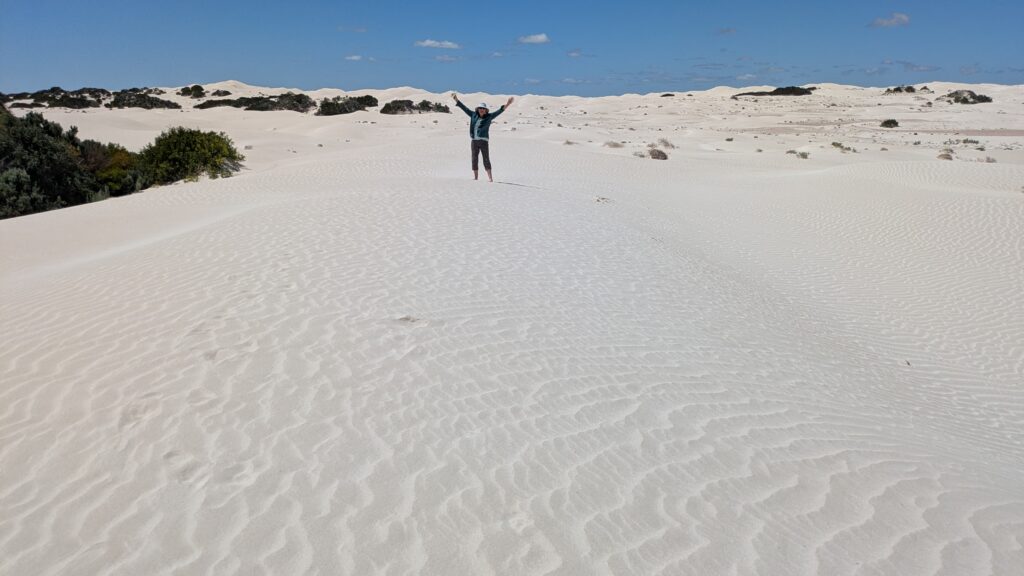
A highlight was the Yanerbie Sandhills, a massive range of blindingly white sand dunes that we didn’t see coming. The photos give you a glimpse of this amazing scene.

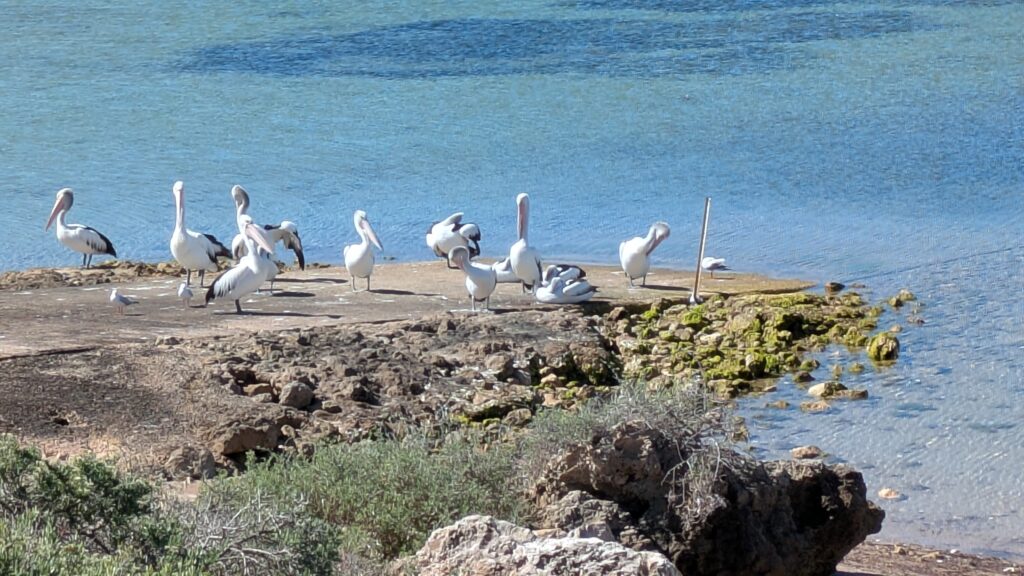
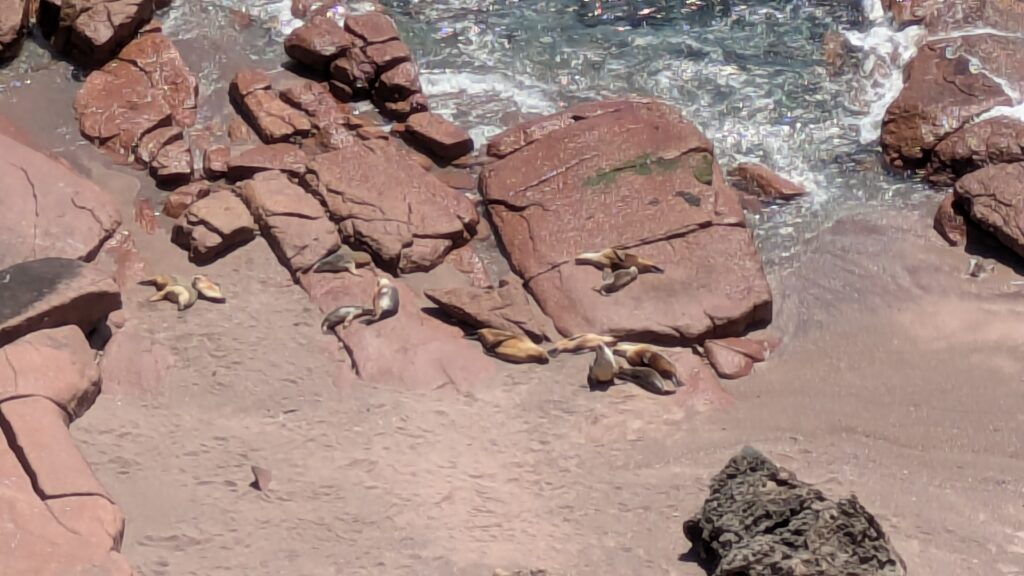
At Point Labatt Conservation Park we looked down on a group of Australian sea lions basking in the spring sunshine. These huge creatures, the males reaching two metres and 300 kilos (660 pounds) are endangered but have found a safe home on the rocks and beaches of this protected area.
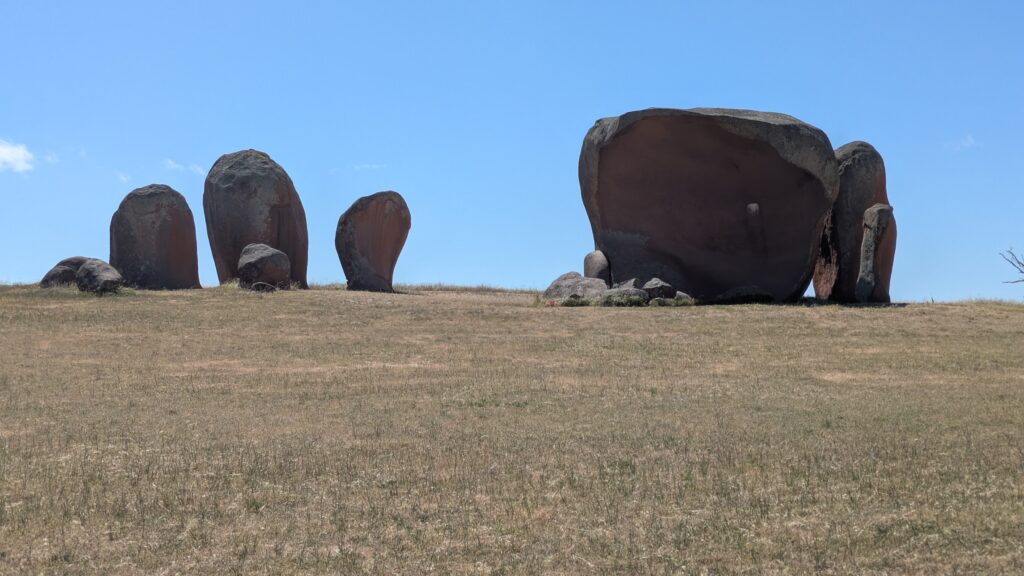
Away from the coast we found Murphy’s Haystacks, a wonderful group of worn granite rocks called Inselbergs that are poking out in the middle of a farmer’s field. What a hoot to walk amongst these strange beasts. We didn’t see them coming either.


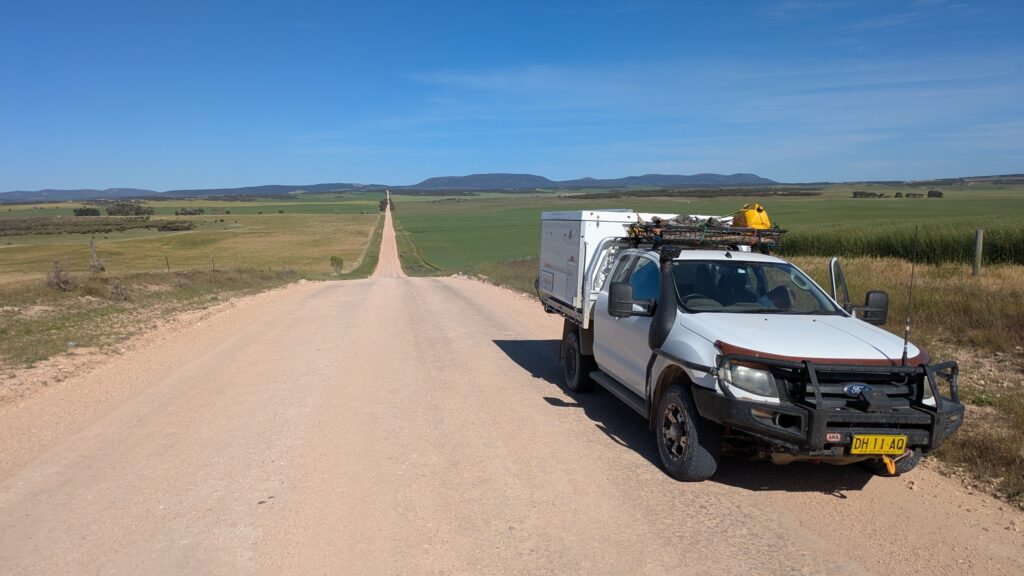
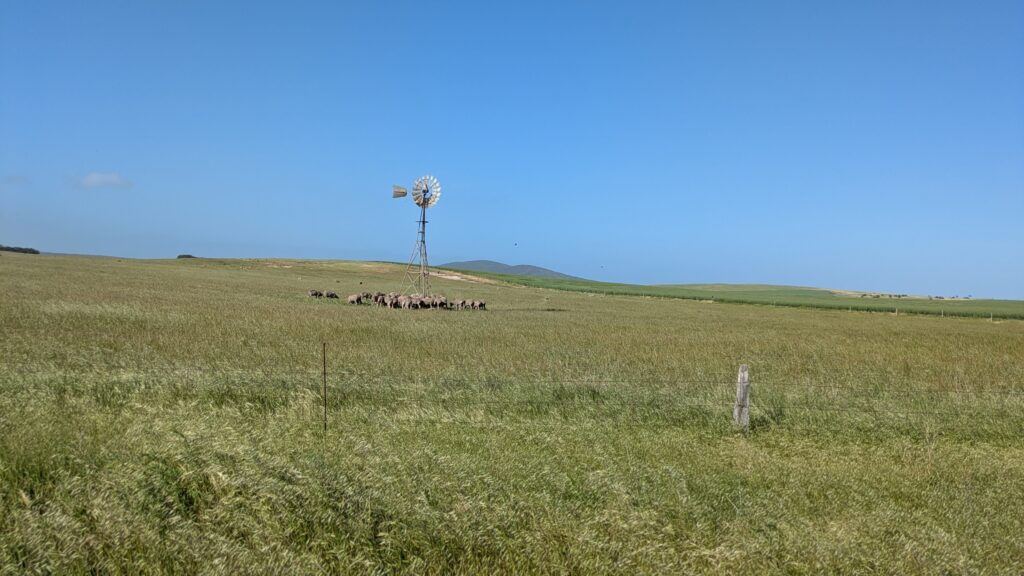
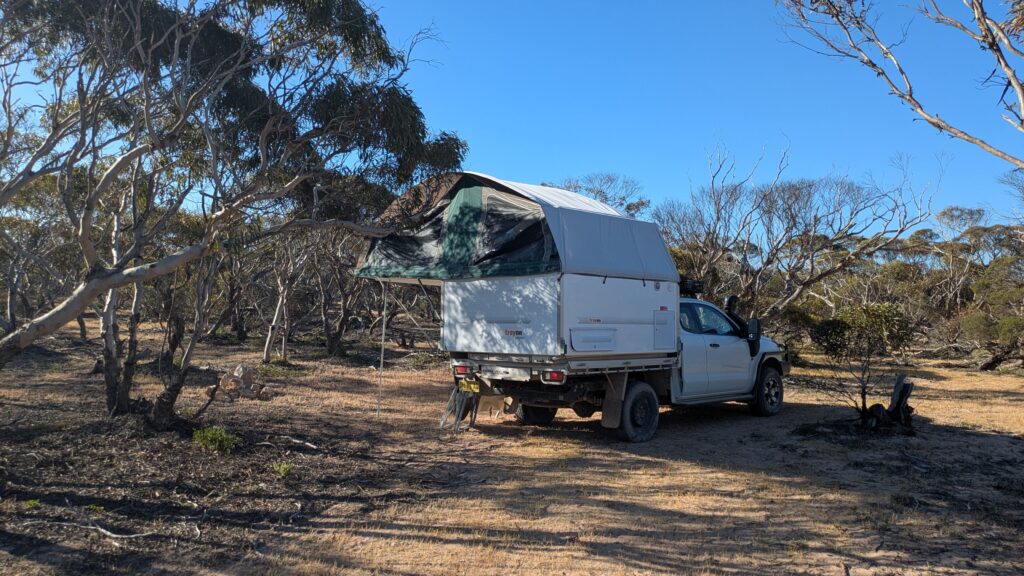
After showers at Port Kenny, a town whose font size on the map is greater than the town’s population, we camped near Venus Bay amongst the gum trees. We hadn’t made it very far around the Eyre Peninsula but we had seen some very special places. And as we headed south the next morning through rolling fields of grain we came to understand that the Eyre Peninsula, at least what we’ve seen so far, is a vast farming belt with very few people and a spectacular coastline.
Indeed, the coastline is the star of the show. The deep blue-green waters cross the Great Southern Ocean, last stop Antarctica, and finally arrive at the Great Australian Bight full of pent-up energy and destructive intent. Without warning they crash into the steep vertical cliffs of this ancient coastline and make a thunderous noise for all to behold, except for the most part nobody is there to behold it.
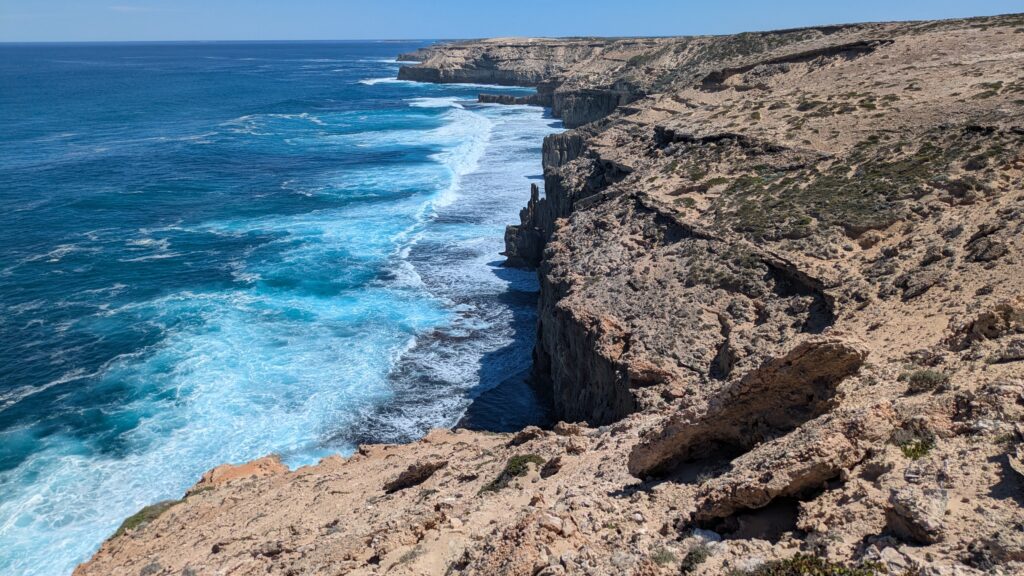
We took advantage of every dirt road leading down to the cliffs and the long golden beaches that separate the cliffs. At Woolshed Cave we marvelled at the how the waves had carved the rocks, including a giant cave At Walker’s Rock we saw our favourite beach of the day book-marked by the cliffs, pity the water was too dangerous to swim in.
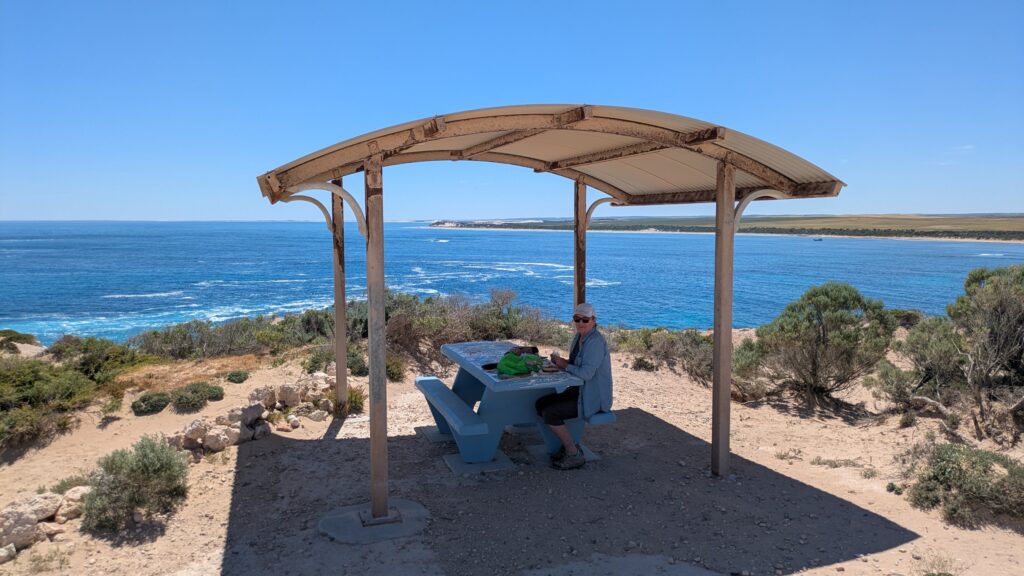
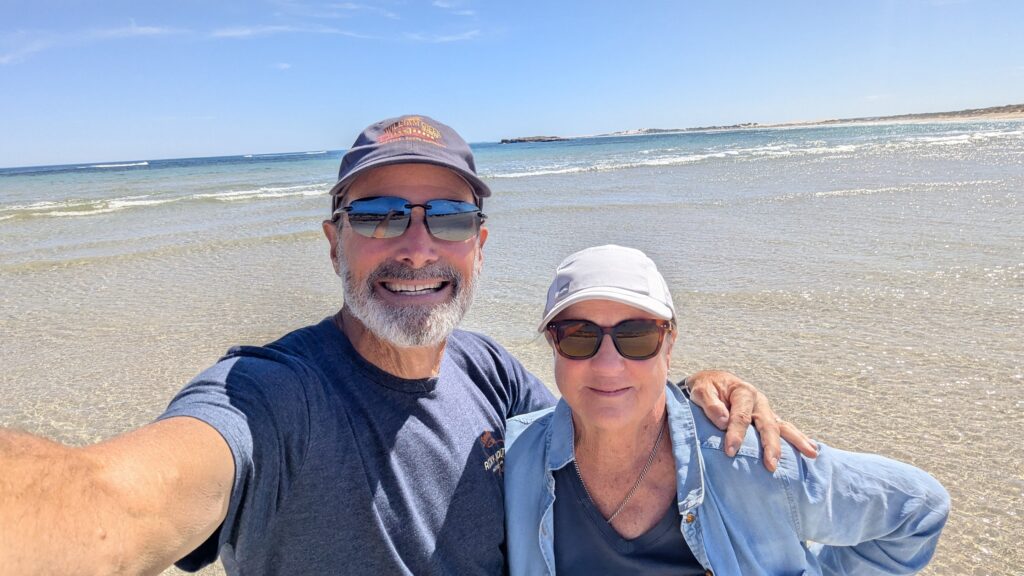
North of Elliston we did a fabulous scenic loop drive along the edge of the cliffs and could walk out on the edge to look straight down. In all we found numerous beaches to walk on and get our feet wet but finally settled at Greenly Beach where we pitched for the night on the ledge overlooking another stunner beach. There wasn’t a breath of breeze and the setting was absolutely sublime.
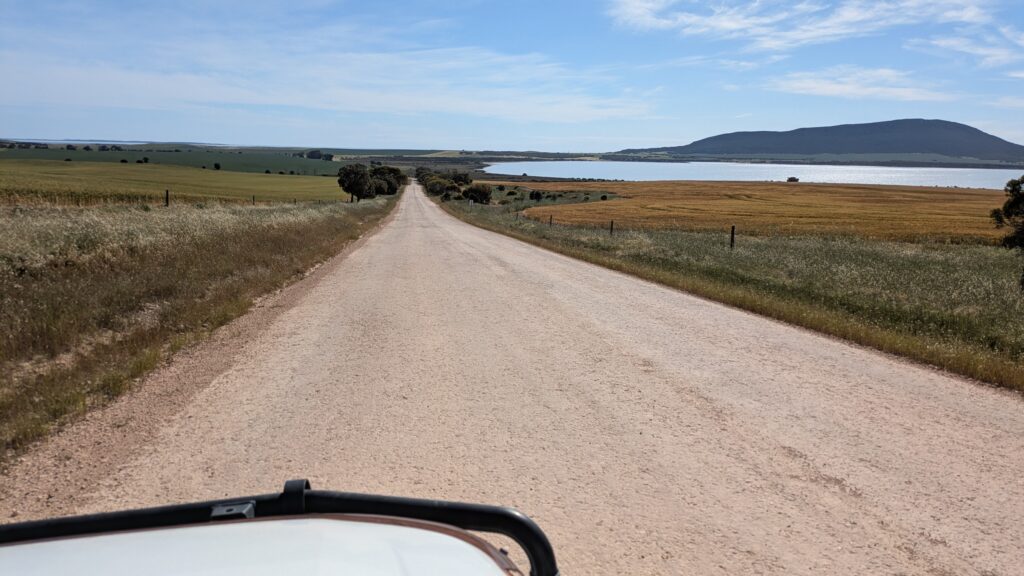
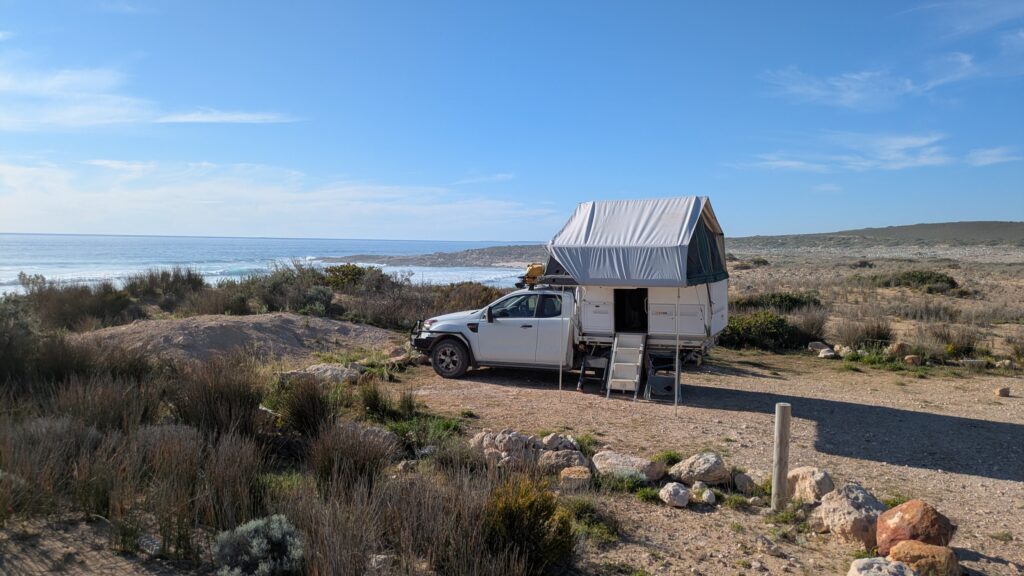
This coastline is said to be world famous for the waves and surfers come from near and far. For us it was just wonderful to watch the endless ocean and the giant continent collide. It is nature at it’s best when an unstoppable force meets an immovable object.
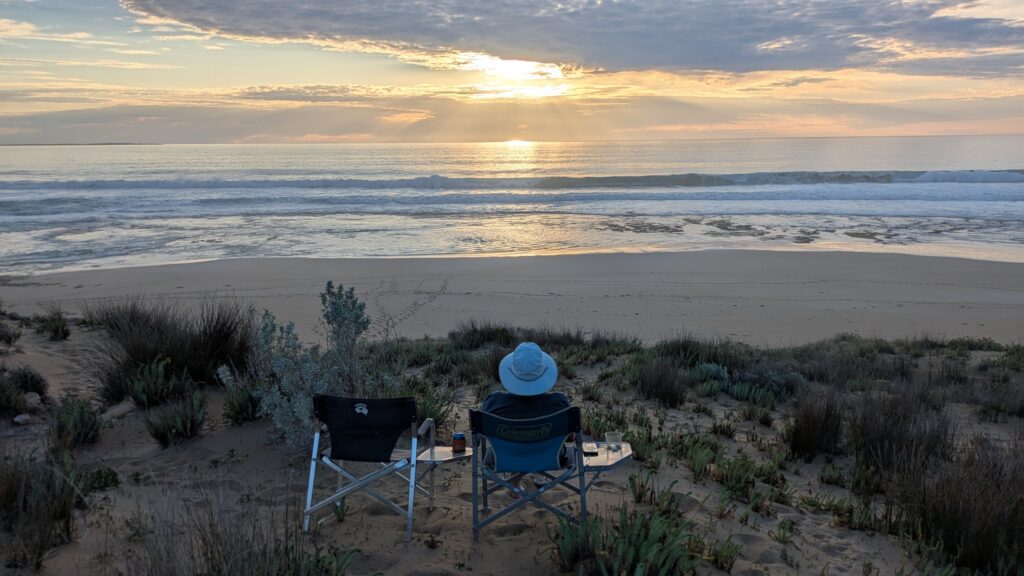
I cooked some steaks and mushies on the fire and we were about to settle in when a huge gust of wind blew off our hats and overturned our chairs. As the wind picked up we threw extra ropes over Wanda and battened her down as best we could. It was wind at full force, causing havoc on Wanda and nearly blowing us away. The gusts of wind were particularly frightening. Where the heck did it come from so suddenly?
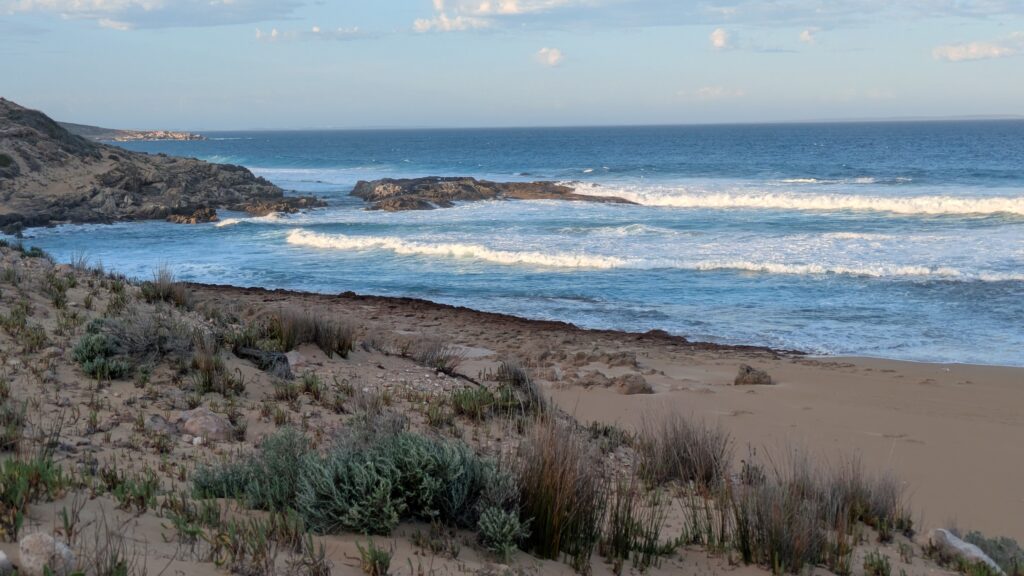
We have camped in some mighty winds before but never anything close to this. To give you an idea, with both Julie and I lying in our bed, which is suspended above the ground and is held down by ropes and held up by poles, huge gusts of wind would lift the bed up while we were lying in it. It was a very restless and somewhat scary night.
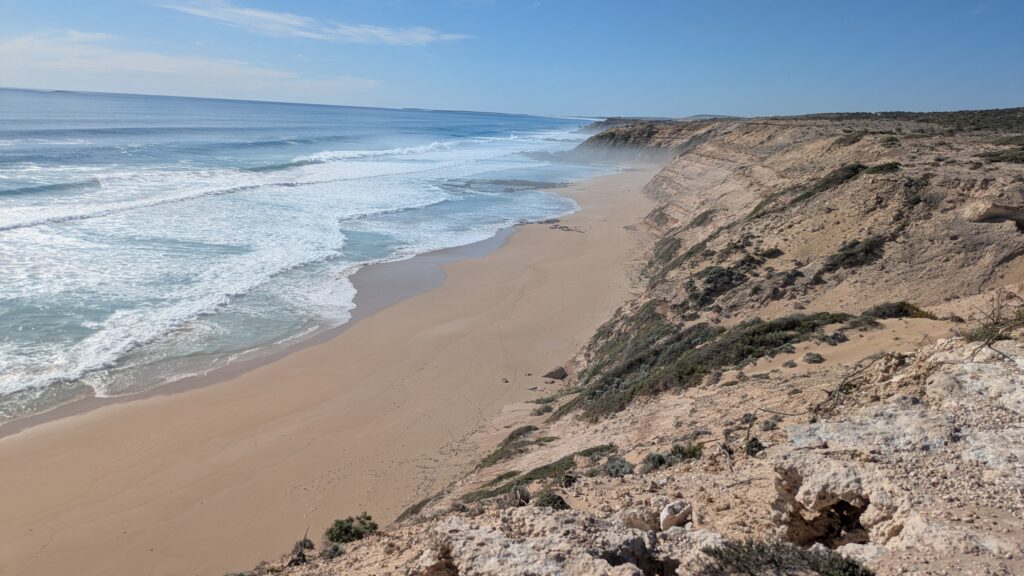
It was still blowing the next morning but thankfully not as hard so we packed up and moved south to Coffin Bay National Park. The town of Coffin Bay is famous for it’s oysters but it also has a spectacular national park covering the huge curving peninsula around the town.
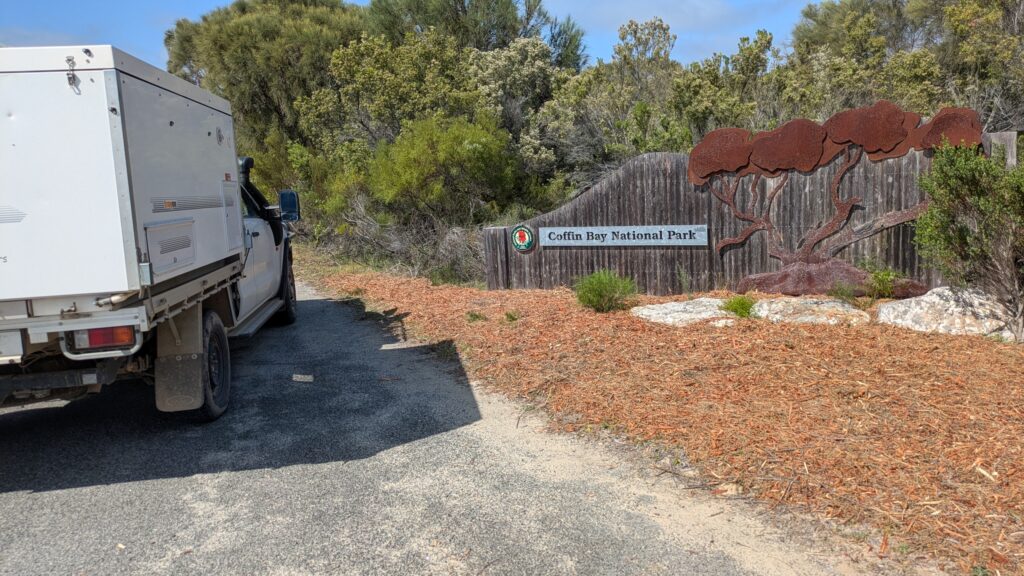
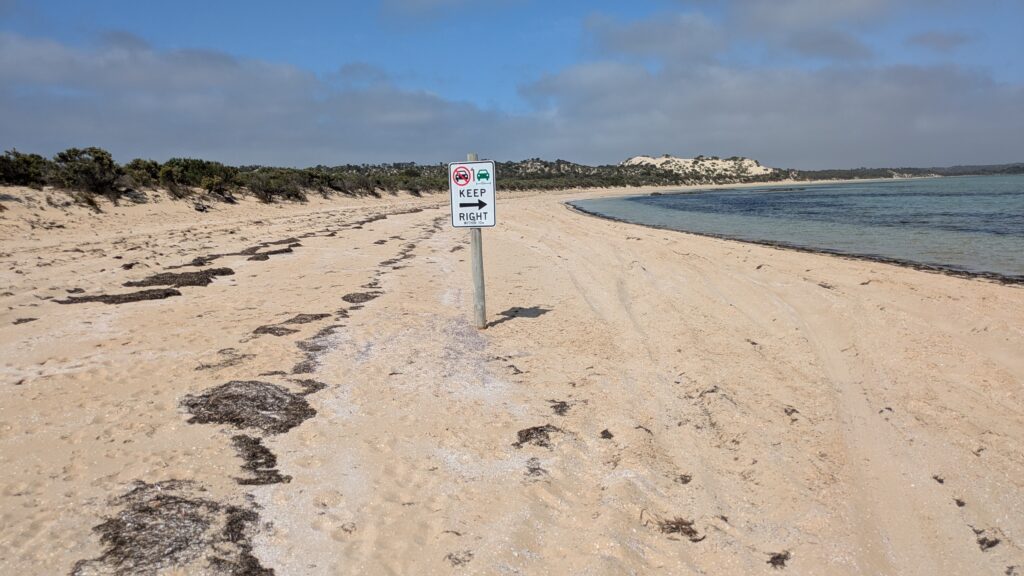
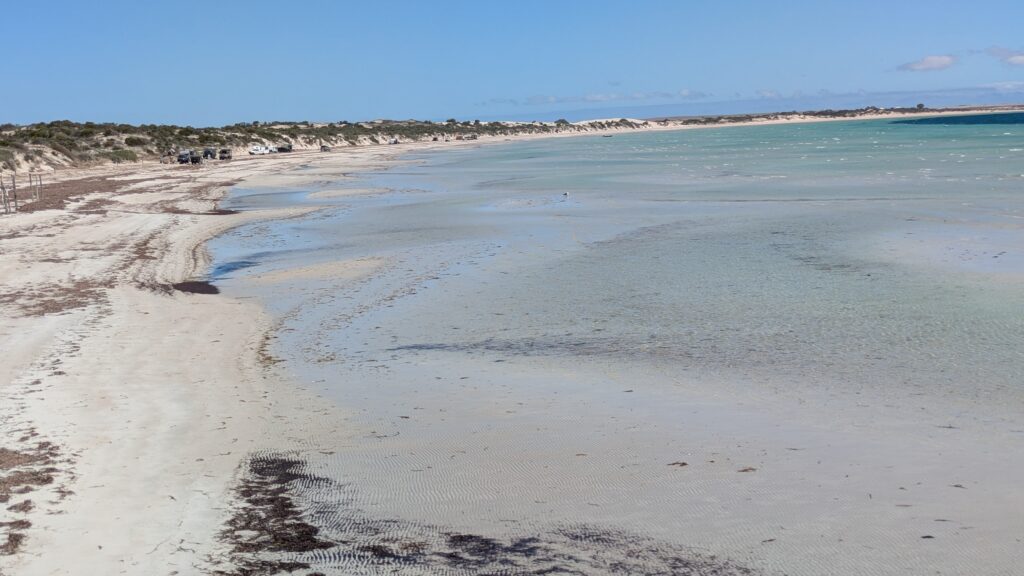
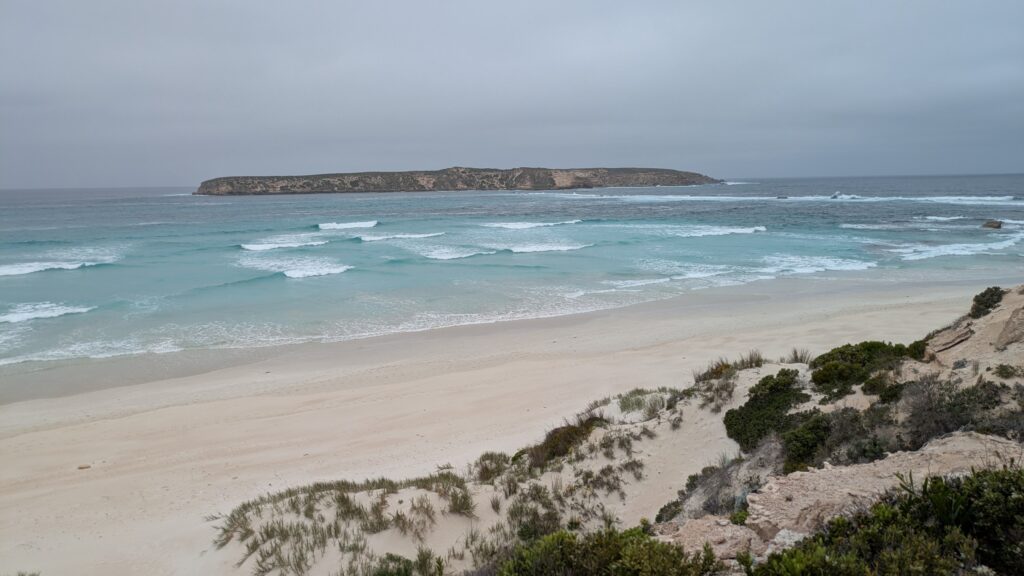
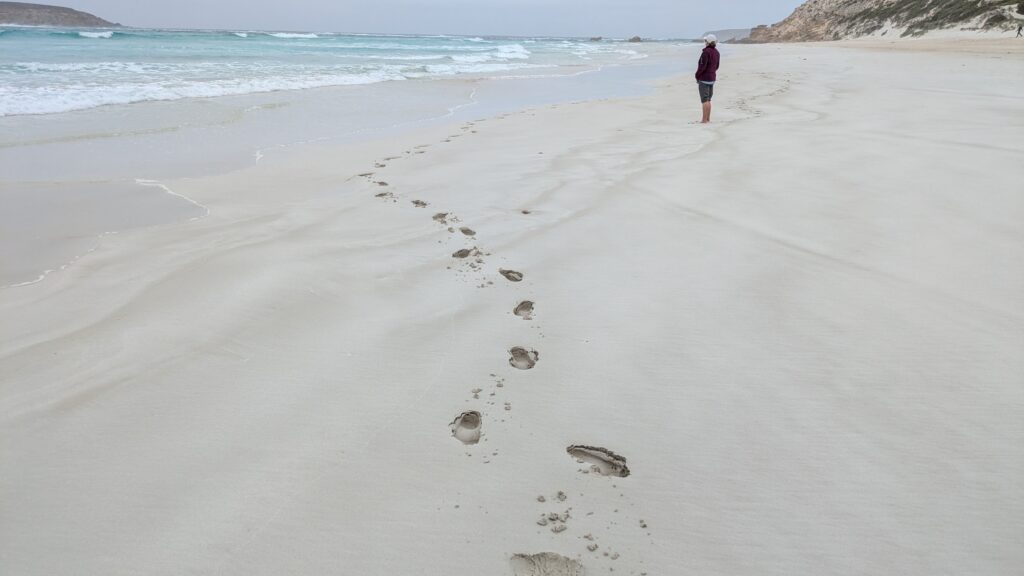
We drove to the various scenic lookouts in the park, finding our favourite beach in South Australia (so far) at Almonta Beach. We walked along this beach, totally taken by it, deep clean sand, a nice set of waves and clean water, a large island just offshore. If the weather hadn’t been so average we would have spent a few hours there.
But the true wonders of Coffin Bay National Park are only accessible after negotiating long challenging four wheel drive tracks, some of them featuring heavy sand. We did a couple of short tracks to gain some views but hard core stuff is not our thing this trip so we retreated to town, bought some oysters and hit the trail.
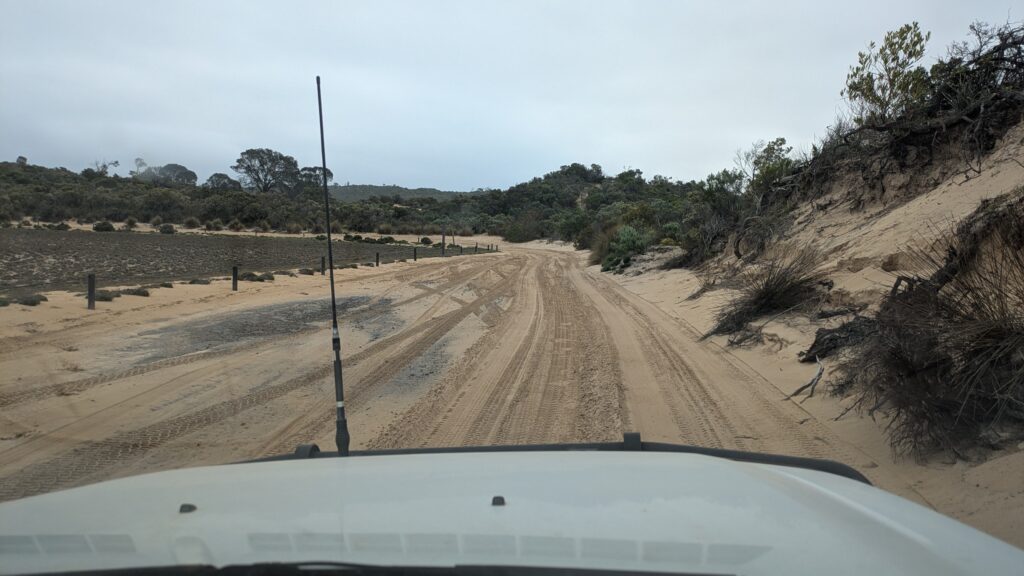
We made our way to the tip of the Eyre Peninsula and camped the night on the beach in a protected bay in Lincoln National Park. It was an absolutely beautiful setting and we felt we were much better positioned should the weather turn foul again. Once bitten…
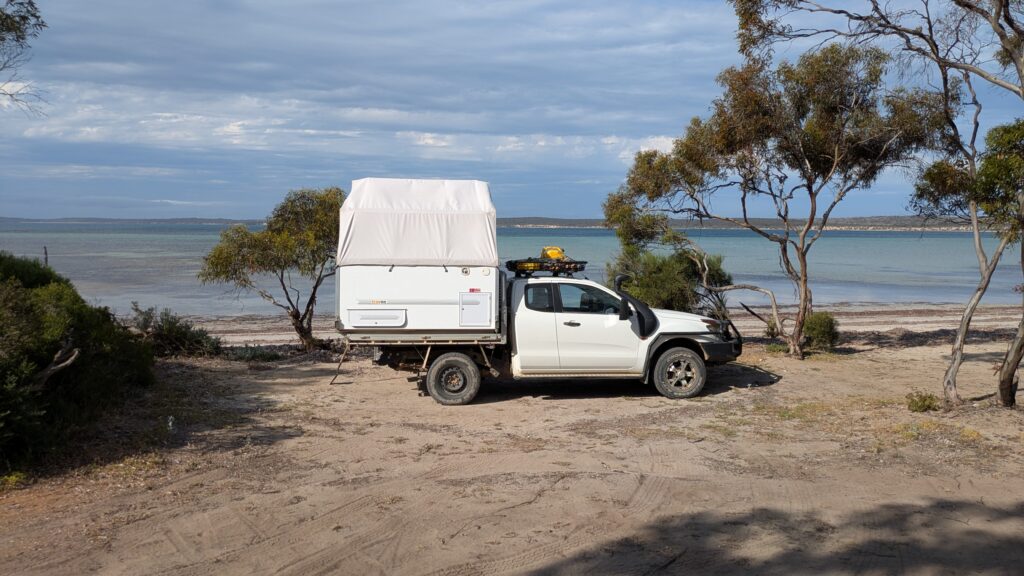
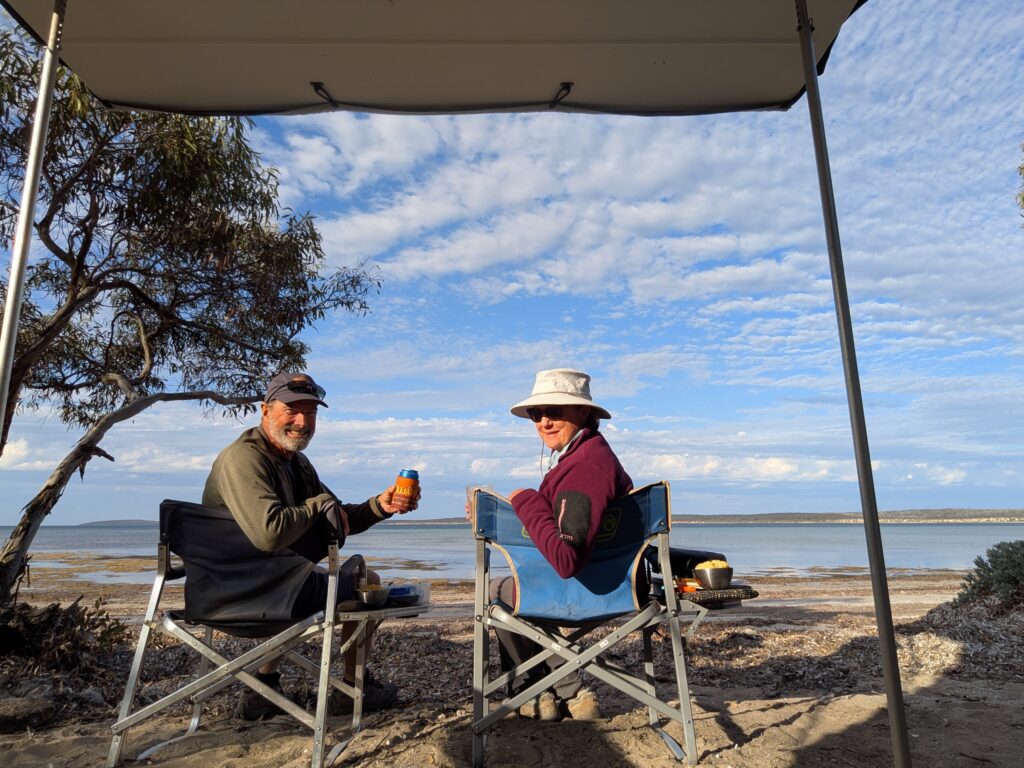
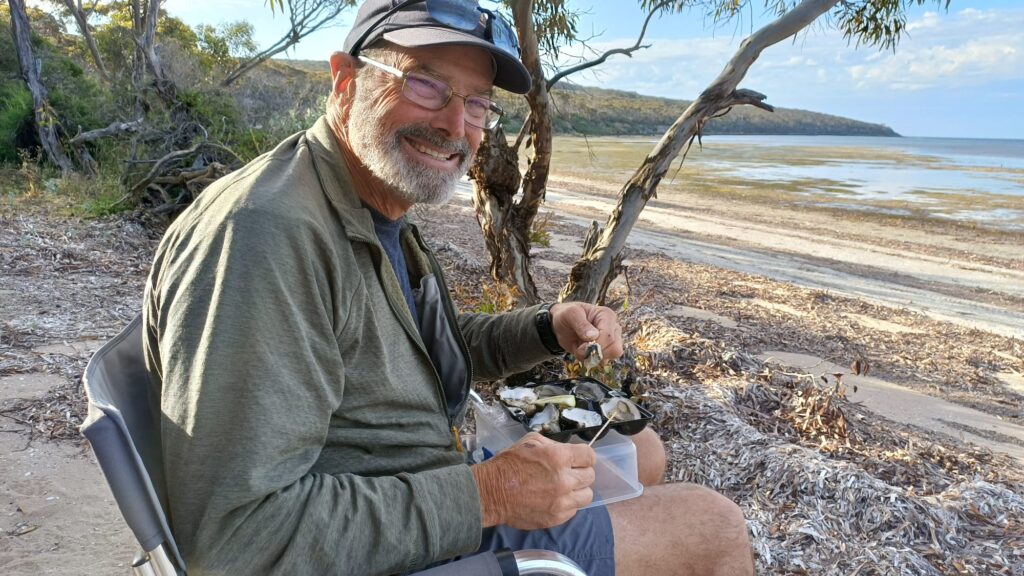
Julie and I agreed the west coast of the Eyre Peninsula, facing the Great Australian Bight and sculptured by the roaring waves of the Great Southern Ocean, is one of our favourite coastlines we’ve ever seen. It was that good. But we’ll soon be heading north on the east coast to see what it has to offer.
Comments
The Eyre Peninsula — No Comments
HTML tags allowed in your comment: <a href="" title=""> <abbr title=""> <acronym title=""> <b> <blockquote cite=""> <cite> <code> <del datetime=""> <em> <i> <q cite=""> <s> <strike> <strong>